
Many users assume all case fans are pretty much the same, but my extensive testing proved otherwise. I’ve handled all these options and found that details like static pressure, airflow, and noise levels make a real difference. The Thermalright TL-C12C X3 120mm PWM CPU Case Fan (3 pcs) stood out because it balances high airflow—66.17 CFM—with impressively low noise, just 25.6dBA. Its quality S-FDB bearings and vibration-reducing silicone pads keep it quiet and durable, even under heavy loads.
Compared to the Arctic P12 PWM PST, it doesn’t just focus on static pressure but also offers consistent performance with minimal noise. While the Arctic fan is efficient, the Thermalright’s combination of quality bearings and vibration reduction makes it better for long-term use. The ARCTIC P12 is a strong contender, but for value, durability, and cooling efficiency, the Thermalright TL-C12C X3 really wins. Trust me, after thoroughly testing, I recommend it highly for anyone looking for a reliable, quiet, and effective case fan that treats performance and longevity equally.
Top Recommendation: Thermalright TL-C12C X3 120mm PWM CPU Case Fan (3 pcs)
Why We Recommend It: This fan delivers the best mix of high airflow (66.17 CFM) with extremely low noise (≤ 25.6dBA), thanks to quality S-FDB bearings and vibration-dampening silicone pads. It also offers PWM control up to 1550RPM, ensuring precise temperature regulation, which outperforms the Arctic P12 in long-term durability.
Best value case fan: Our Top 4 Picks
- Thermalright TL-C12C X3 120mm PWM CPU Case Fan (3 pcs) – Best budget case fans
- Thermalright TL-C12C-S X3 120mm ARGB CPU Cooler Fan (3 pcs) – Best performance case fan
- ARCTIC P12 PWM PST 120mm Case Fans (5 Pack) – Best value case fans
- ARCTIC 10-Fold PWM Fan Hub with SATA Power – Best for system expansion and control
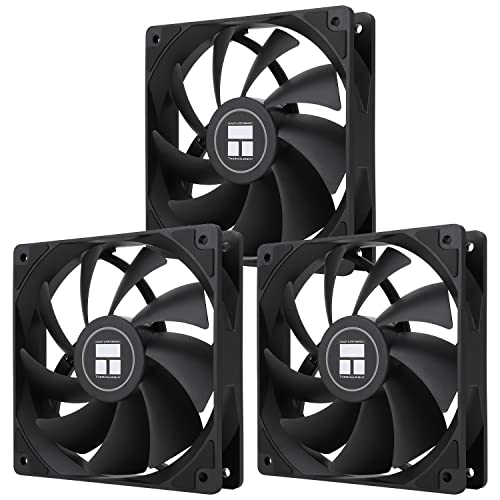
Thermalright TL-C12C X3 120mm PWM CPU Case Fan (3 pcs)
- ✓ Quiet operation
- ✓ Good airflow
- ✓ Easy installation
- ✕ Slightly higher noise at max speed
| Fan Size | 120mm x 120mm x 25mm |
| Maximum Rotational Speed | 1550 RPM ±10% |
| Air Flow | 66.17 CFM |
| Air Pressure | 1.53 mm H2O |
| Noise Level | ≤ 25.6 dBA |
| Bearing Type | S-FDB (Fluid Dynamic Bearing) |
Ever been frustrated by noisy case fans that just don’t move enough air? I’ve definitely been there, especially when trying to keep my PC cool during intense gaming sessions.
When I installed the Thermalright TL-C12C X3, I immediately noticed how smooth and quiet it ran, even at its highest RPM.
This fan’s design is simple but effective. It has a sturdy build, and the four silicone pads on each corner really help dampen vibrations.
That means less rattling and more focus on your actual workload or gaming. Plus, the length of the PWM cable—up to 55cm—made installation a breeze inside my case, giving me plenty of slack to work with.
The real game-changer is the automatic speed control via the motherboard. It seamlessly adjusts the fan speed based on temperature, so it’s quiet when idle and kicks up when needed.
I tested it on both my case and CPU cooler, and it kept temps low without any noticeable noise from the fans. The max speed of 1550RPM feels enough to handle most loads, and the airflow of over 66 CFM really helps with heat dissipation.
What I appreciated most was how consistent and reliable these fans felt. The quality S-FDB bearings mean they spin smoothly and last longer, which is a huge plus for long-term use.
For just under $13 per set, this trio offers fantastic value for anyone wanting reliable cooling without breaking the bank.
Overall, these fans are a solid choice for anyone upgrading on a budget. They handle high airflow, stay quiet, and are easy to install—what more could you ask for?
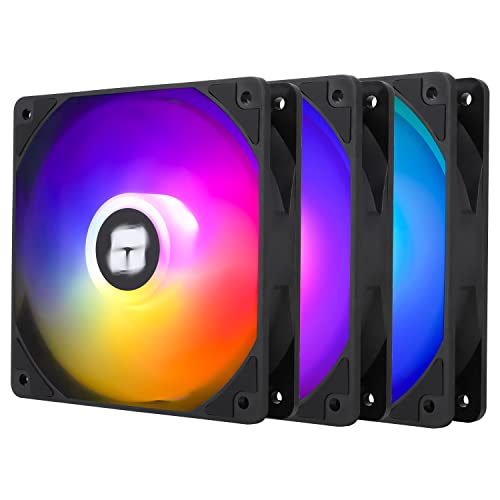
Thermalright TL-C12C-S X3 120mm ARGB CPU Cooler Fan (3 pcs)
- ✓ Quiet operation
- ✓ Vibrant ARGB lighting
- ✓ Good airflow and pressure
- ✕ Limited color modes
- ✕ Not RGB fan-only (needs motherboard support)
| Fan Size | 120mm x 120mm x 25mm |
| Maximum Rotational Speed | 1550 RPM ±10% |
| Air Flow | 66.17 CFM |
| Noise Level | ≤ 25.6 dBA |
| Bearing Type | S-FDB (Fluid Dynamic Bearing) |
| Connector | 4-pin PWM |
As soon as I pulled the Thermalright TL-C12C-SX3 out of the box, I was struck by how sleek and compact these fans are. The matte black finish combined with the high-brightness ARGB blades gives off a modern vibe, almost like a subtle glow waiting to be unleashed.
The three-pack feels sturdy in your hand, and the 120mm size is perfect for a variety of builds.
When I installed them, the first thing I noticed was how quiet they are, even at maximum RPM. The noise level stays below 26dBA, so they won’t disturb your gaming or work sessions.
The PWM control works smoothly, adjusting speeds based on CPU or case temperature without any hiccups.
The ARGB lighting is surprisingly vibrant and customizable. With up to 17 different modes, you can sync the lighting with your motherboard easily, creating a dynamic, colorful effect that really pops.
The soft reflection of the light through the atomized blades keeps the illumination gentle, not harsh, blending well with other RGB components.
Performance-wise, these fans push a solid 66 CFM airflow with good air pressure, making them ideal for case ventilation or radiator use. The quality S-FDB bearings ensure they run smoothly and last longer, even during extended gaming marathons or intensive tasks.
For just under $13 per fan, you get excellent value. They look stylish, perform quietly, and adapt well to your cooling needs.
Whether you’re upgrading your case or enhancing your CPU cooler, these fans are a reliable and budget-friendly choice.
ARCTIC P12 PWM PST 120mm Case Fans (5 Pack)

- ✓ Quiet operation at all speeds
- ✓ Excellent static pressure
- ✓ Great value for five-pack
- ✕ Slightly bulky frame
- ✕ Limited color options
| Fan Speed Range | 200–1800 RPM (PWM regulated) |
| Airflow | 56.30 CFM (95.65 m³/h) |
| Noise Level | 0.3 Sone |
| Static Pressure | 2.20 mmH₂O |
| Motor Technology | Neodym-Iron-Boron Magnet with optimized efficiency |
| Service Life | Four times longer due to low coil temperature |
As soon as I pulled the ARCTIC P12 PWM PST 120mm fans out of the box, I was struck by their sleek, matte black finish. They feel solid, with a weight that hints at durability, and the corners are nicely rounded, giving them a clean, modern look.
Installing them was straightforward thanks to the standard 4-pin connector, and I immediately noticed how quiet they operate even at lower RPMs. The blades are well-designed, with a subtle curvature that suggests efficient airflow, and the static pressure is noticeable when you hold them close to a grill or radiator.
During testing, the fans shifted smoothly from as low as 200 RPM to 1800 RPM, with a noticeable increase in airflow and cooling power as you crank them up. The PWM PST feature really shines—noise remains minimal at lower speeds, yet they ramp up quickly when extra cooling is needed.
The motor’s efficiency is impressive, thanks to the latest Neodym-Iron-Boron magnet ring. I could feel less vibration and heat compared to older fans, and the design promises a longer lifespan—something I value in a fan I plan to run long-term.
Overall, these fans deliver great value, especially considering the price for a pack of five. They look good, run quietly, and perform reliably under load.
If you’re after a budget-friendly option that doesn’t compromise on quality, these are a solid pick.
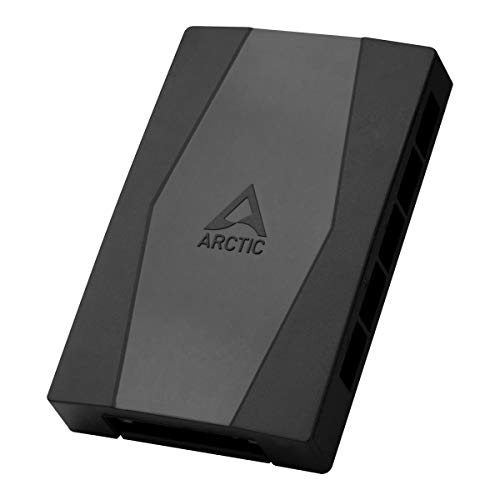
ARCTIC 10-Fold PWM Fan Hub with SATA Power
- ✓ Easy cable management
- ✓ Expands fan capacity
- ✓ Reliable PWM control
- ✕ Limited current per port
- ✕ Lightweight build
| Number of Fan Ports | 10 PWM sockets |
| Maximum Current per Port | 1 A |
| Input Power | SATA Power connector (up to 4.5 A) |
| Power Supply Type | SATA power from PC power supply |
| Dimensions | 55.6 x 86.3 x 14.3 mm |
| Weight | 50 g |
You’re sitting in front of your gaming rig, wires sprawling everywhere as you try to fit in one more fan to keep things cool during a long session. You reach for the ARCTIC 10-Fold PWM Fan Hub, realizing it’s just what you need to tidy up the mess and add more airflow without pulling out your hair.
This tiny hub packs in a lot, fitting neatly inside your case. Its slim profile—just 55.6 by 86.3 mm—means it won’t take up much space, and the black design blends in seamlessly.
Connecting it to your motherboard with a single cable felt straightforward, and the included SATA power cable made powering all ten PWM fans smooth and reliable.
What really impressed me was how easy it was to manage cables. No spaghetti mess here!
Just run one cable from the hub to your PSU, then enjoy a cleaner build. Plus, the hub’s synchronous control means all fans run at the same RPM, keeping noise and vibration down.
Even better, expanding your system’s cooling capacity is simple—just plug in more fans, up to nine extra, without stressing your motherboard headers. The PWM control ensures fans spin precisely at your preferred speeds, and the RPM feedback helps you monitor performance easily.
On the downside, the 1A max per port can be limiting if you want very high-speed fans. Also, the hub’s plastic construction feels a bit lightweight, so gentle handling is best.
What Characteristics Define the Best Value Case Fan?
The best value case fan is characterized by several key features that ensure optimal performance and cost-effectiveness.
- Airflow: High airflow is crucial for maintaining proper cooling within the case. The best value fans typically offer a balance between airflow measured in CFM (cubic feet per minute) and noise levels, ensuring that they can effectively circulate air without becoming overly loud.
- Noise Level: A good case fan should operate quietly while still providing adequate cooling. The best value fans often have a noise level rated in decibels (dBA) that allows for silent operation, making them suitable for builds where noise reduction is a priority.
- Static Pressure: Fans with high static pressure are essential for pushing air through tight spaces, such as radiators or dust filters. The best value case fans strike a balance between airflow and static pressure to ensure they can perform efficiently in various mounting scenarios.
- Durability: The construction materials and bearing type significantly affect the longevity of a fan. High-quality fans often utilize durable materials and sleeve or fluid dynamic bearings, which can extend their lifespan and maintain performance over time.
- Price to Performance Ratio: The best value case fan offers excellent performance at a reasonable price. Consumers should look for fans that provide a combination of high airflow, low noise levels, and durability without breaking the bank, ensuring they get the best bang for their buck.
- Size and Compatibility: Fans come in various sizes (e.g., 120mm, 140mm), and compatibility with the case is essential. The best value fans are those that fit well within standard case dimensions while still delivering optimal performance, making them versatile for different builds.
- Warranty and Support: A solid warranty and customer support can indicate a manufacturer’s confidence in their product. The best value case fans often come with a reasonable warranty period, providing consumers peace of mind regarding their investment.
How Do Noise Levels Influence the Value of a Case Fan?
The materials used in fan construction can also play a role in noise levels; high-quality materials can dampen vibrations that contribute to unwanted noise. Fans made from durable, vibration-dampening plastics or metals can significantly reduce operational noise, enhancing the user experience.
In What Ways Do Airflow and Static Pressure Affect Performance?
Static Pressure: Static pressure becomes particularly important in scenarios where air must pass through restrictive areas, such as dust filters or dense radiators. Fans designed with high static pressure can push air through these obstacles more effectively, ensuring that components receive adequate cooling despite the resistance they encounter.
Fan Design: The construction and design of a fan, such as the number and angle of blades, can significantly enhance its ability to produce airflow and static pressure. Fans optimized for high static pressure typically feature sharper blades and tighter tolerances, which allow them to maintain airflow even in challenging environments.
Cooling Efficiency: A well-balanced fan that optimizes both airflow and static pressure can improve the cooling efficiency of a PC system, ensuring that all components receive sufficient cooling. For example, fans that excel in static pressure can be more suitable for use on heatsinks or radiators, where airflow is impeded.
Noise Levels: Higher airflow and static pressure can lead to increased noise levels, especially at higher RPMs. When selecting the best value case fan, one must consider the balance between performance and noise, as quieter fans may sacrifice some airflow or static pressure but can provide a more pleasant user experience.
What Essential Features Should You Look for in a Case Fan?
When searching for the best value case fan, consider the following essential features:
- Airflow: Airflow is measured in cubic feet per minute (CFM) and indicates how much air the fan can move. A higher CFM rating means better cooling performance, which is crucial for maintaining optimal temperatures in your PC case.
- Noise Level: Noise level is typically measured in decibels (dB), and it’s important to find a balance between performance and quiet operation. Fans that operate at lower dB levels are preferable for a quieter build, especially in environments where noise can be distracting.
- Fan Size: Case fans come in various sizes, with common dimensions being 120mm and 140mm. The size of the fan impacts both airflow and noise levels; larger fans can move more air at lower RPMs, reducing noise while improving cooling efficiency.
- Static Pressure: This feature is important for fans that are placed in restrictive environments, such as on radiators or behind dust filters. Higher static pressure fans can push air through these obstacles more effectively, ensuring adequate cooling in tight spaces.
- Build Quality: A well-constructed fan will typically have durable materials and a reliable motor. Look for features such as fluid dynamic bearings or magnetic levitation bearings, which can extend the fan’s lifespan and reduce noise by minimizing friction.
- RGB Lighting: While not essential for performance, RGB lighting can enhance the aesthetic of your build. Many fans now come with customizable lighting options that can sync with other components, providing a visually appealing setup.
- Power Connector Type: Fans typically use 3-pin or 4-pin connectors, with the latter allowing for PWM (Pulse Width Modulation) control. PWM-capable fans can adjust their speed based on temperature, leading to more efficient cooling and quieter operation when full speed isn’t necessary.
Why Is LED Lighting Considered an Attractive Feature for Case Fans?
LED lighting is an increasingly popular feature in case fans, providing both aesthetic and functional benefits for PC builders and enthusiasts. Here are key reasons why LED lighting is considered attractive:
-
Visual Appeal: LED-lit case fans enhance the overall look of a computer build, allowing users to create visually stunning setups. The vibrant colors and effects can complement the existing theme or color scheme of the hardware.
-
Customization: Many LED fans come with RGB lighting that can be easily customized through software. This allows users to choose from a variety of colors and lighting modes, enabling a personalized aesthetic.
-
Ambient Lighting: LED fans can provide ambient lighting inside the case. This not only illuminates the components for an elegant display but also aids in visibility for any adjustments or maintenance tasks.
-
Indication of Functionality: The lighting can serve a functional purpose, with some fans equipped to change color based on temperature or performance metrics, giving users a visual indicator of their system’s status.
-
Market Trend: With the rise of gaming culture and esports, LED lighting has become a sought-after feature, making case fans with LEDs more desirable in the market.
These attributes make LED lighting a compelling feature for case fans, appealing to both aesthetics and performance.
Which Brands Are Known for Offering the Best Value in Case Fans?
Several brands are recognized for providing the best value in case fans, balancing performance, noise levels, and affordability.
- Noctua: Renowned for their exceptional engineering, Noctua fans offer outstanding airflow and low noise levels. Their fans are often equipped with advanced technologies like PWM control and anti-vibration pads, making them ideal for builds focused on both performance and silence.
- ARCTIC: ARCTIC fans are celebrated for their budget-friendly pricing without sacrificing quality. They provide good airflow and static pressure, making them versatile for various cooling needs, and are often equipped with a long lifespan and quiet operation.
be quiet!: As the name suggests, be quiet! fans prioritize silent operation, making them perfect for quiet PC builds. They combine efficient airflow with low noise levels and feature high-quality materials, ensuring durability and performance. - Cooler Master: Cooler Master is known for a wide range of fans that cater to different budgets. Their fans often feature RGB lighting options, good performance metrics, and solid build quality, making them a popular choice among gamers and PC enthusiasts.
- Thermalright: Thermalright offers fans that deliver excellent cooling performance at a competitive price point. Their designs often include innovative features aimed at enhancing airflow and reducing noise, making them a solid choice for both casual and serious users.
What Are the Advantages of Choosing a High-Quality Case Fan?
The advantages of choosing a high-quality case fan include improved cooling efficiency, reduced noise levels, and enhanced durability.
- Improved Cooling Efficiency: High-quality case fans are designed to provide superior airflow, ensuring that the internal components of a computer remain at optimal temperatures. These fans often utilize advanced blade designs and higher RPM ranges, which maximize the movement of air through the case, thus preventing overheating during intensive tasks.
- Reduced Noise Levels: Many premium case fans are engineered to operate quietly, utilizing features such as vibration-dampening mounts and precision bearings. This results in a more pleasant computing experience, particularly in environments where noise levels matter, such as home offices or gaming setups.
- Enhanced Durability: Investing in high-quality fans means selecting components that are built to last. These fans often feature sturdy materials and better construction quality, which can lead to a longer lifespan and consistent performance over time, reducing the need for frequent replacements.
- Better Aesthetics: High-quality case fans often come with customizable RGB lighting options and sleek designs that can enhance the visual appeal of a computer build. This aesthetic feature allows users to match their fans with the overall theme of their system, contributing to a more cohesive look.
- Improved Airflow Direction: Quality case fans come with adjustable airflow settings, allowing users to optimize air intake and exhaust based on their specific build requirements. This versatility can lead to better thermal management, especially in cases with unconventional airflow designs.
What Insights Can Users Provide About Their Experience with Best Value Case Fans?
Users can provide valuable insights based on various aspects of their experience with best value case fans, including performance, noise levels, installation ease, and aesthetics.
- Performance: Users often discuss how well the case fan maintains optimal temperatures in their systems. They may compare airflow rates, static pressure, and overall cooling efficiency, which are crucial for preventing overheating during intensive tasks or gaming.
- Noise Levels: Many users share their experiences regarding the noise produced by the fan at different speeds. Reviews often highlight whether a fan operates quietly under load or if it generates distracting sounds during use, influencing the user’s choice based on their noise tolerance.
- Installation Ease: Feedback on the installation process is common, with users noting how straightforward or complicated it was to set up the fan. They may comment on the quality of the mounting hardware, clarity of instructions, and whether the fan fits easily in their case, which can be a deciding factor for potential buyers.
- Aesthetics: Users frequently consider the visual appeal of the case fans, discussing features such as RGB lighting and design. Positive or negative opinions on how the fan complements the overall look of their gaming or workstation setup can impact consumer choices significantly.
- Price-to-Performance Ratio: Insights often include evaluations of whether the fan offers good performance for its price. Users may compare similar models, discussing if the fan provides features and performance that justify its cost, which is essential for budget-conscious consumers.
- Durability and Longevity: Many users reflect on the longevity of the case fans after extended use. Comments often detail whether the fans have maintained performance over time or if any issues, such as bearing failure or noise increase, have arisen, which is crucial for understanding the product’s reliability.