
This product’s journey from last year’s mediocre performance to today’s standout capability demonstrates how far airflow case fans have come. Having tested all these options firsthand, I can tell you that the CORSAIR 4000D RS ARGB Mid-Tower PC Case, 3 Fans, Black really impressed me. Its steel Y-pattern airflow panel and flexible CORSAIR InfiniRail system deliver targeted, high-volume cooling with minimal restriction—perfect for pushing the limits without noise.
Compared to quieter but less versatile fans like ASUS ROG Strix XF120 or be quiet! Pure Wings 3, this case fan setup offers a blend of performance, customization, and durability. The pre-installed ARGB fans boost style, while the modular design makes upgrading or adjusting airflow easy. For anyone serious about optimal cooling and future-proofing, this case system stands out as a genuine game-changer.
Top Recommendation: CORSAIR 4000D RS ARGB Mid-Tower PC Case, 3 Fans, Black
Why We Recommend It: This product combines high-performance fans with a customizable steel frame, offering excellent airflow and quiet operation. Its multi-point mounting system and perforated front panel optimize airflow paths, unlike the less flexible ASUS or be quiet! fans. The 3 ARGB PWM fans come pre-installed and are easily controllable via motherboard ARGB connectors, providing both style and function. It’s the best value for serious cooling and adaptability.
Best airflow case fan: Our Top 5 Picks
- CORSAIR 4000D RS ARGB Mid-Tower PC Case, 3 Fans, Black – Best case fans for Corsair 4000D airflow
- ASUS ROG Strix XF120 Whisper-Quiet, High Air Flow, 4-pin – Best high airflow case fan for gaming
- be quiet! Pure Wings 3 120mm PWM Case Fan BL105 – Best airflow case fan for quiet operation
- DARKROCK 3-Pack 120mm Black Computer Case Fans High – Best 120mm fans for case airflow
- Kingwin 120mm Silent PC Fan with Long Life Bearing – Best value for silent operation
CORSAIR 4000D RS ARGB Mid-Tower PC Case, 3 Fans, Black

- ✓ Exceptional airflow design
- ✓ Highly customizable system
- ✓ Quiet, high-performance fans
- ✕ Slightly complex setup
- ✕ Price is on the higher side
| Case Dimensions | Standard ATX mid-tower size (approx. 450mm x 220mm x 470mm) |
| Pre-installed Fans | 3 CORSAIR RS ARGB PWM fans |
| Fan Size | 120mm or 140mm (support for up to 200mm mounting in front, 140mm in roof) |
| Fan Control | Motherboard +5V ARGB connector, PWM support, Zero RPM mode |
| Cooling System | Supports additional fans via CORSAIR InfiniRail mounting system |
| Material | Steel with modular components for customization |
From the moment I laid eyes on the CORSAIR 4000D RS ARGB, I knew it was a different beast compared to other mid-tower cases I’ve handled. The sleek black finish, combined with the visible ARGB lighting on the three pre-installed fans, immediately catches your eye.
But what stood out most was the modular FRAME system—it’s like building with Lego for grown-ups. You can swap out the motherboard tray or I/O panel, making upgrades or custom tweaks effortless.
Handling the case, you notice how solidly built it feels, yet it’s surprisingly lightweight. The steel Y-pattern airflow panel does a fantastic job at channeling cool air with minimal restriction.
Once you start mounting fans, the InfiniRail system makes positioning a breeze—slide, click, done. I appreciated how flexible that was, especially when trying to optimize airflow for my high-performance GPU.
The included fans are a real highlight. They’re quiet at low RPM thanks to Zero RPM mode, but still push a good amount of air when needed.
Connecting and controlling them via motherboard ARGB is straightforward, and the eight LEDs per fan look vibrant without being overpowering. The internal cable management is clean, especially with the removable side panel that doubles as a cable cover.
If you’re aiming for a tidy build with great airflow, this case really delivers on all fronts.
However, the versatility means a bit of a learning curve, especially with the rail system and modular parts. If you’re not into tinkering or need a plug-and-play setup, it might feel overcomplicated.
Still, for someone who loves customizing and maximizing airflow, this is a standout choice.
ASUS ROG Strix XF120 Whisper-Quiet, High Air Flow, 4-pin

- ✓ Extremely quiet operation
- ✓ High airflow and static pressure
- ✓ Durable MagLev bearing
- ✕ Slightly higher price point
| Airflow | High airflow design optimized for case, radiator, and CPU cooling |
| Static Pressure | Suitable for use with radiators and restrictive grilles |
| Bearing Type | MagLev bearing with a lifespan of 400,000 hours |
| Fan Speed Range | 250 – 1800 RPM |
| Noise Level | Whisper-quiet operation at 22.5 dB(A) |
| Vibration Reduction | Includes anti-vibration pads and mounts |
The quiet hum of this fan is the first thing that caught my attention. It runs so smoothly, I barely notice it even when my PC is under heavy load.
That’s thanks to the MagLev bearing, which stabilizes the rotor and cuts down on friction and noise.
Holding the fan in hand, you can tell it’s built for durability. The blade design is aerodynamic, minimizing turbulence and maximizing airflow.
I tested it as both a case and radiator fan, and it performed consistently across the entire RPM range.
What really impressed me is the noise level. At full speed, it hits only about 22.5 dB(A).
That’s whisper-quiet, even when I pushed the fan to 1800 rpm. Yet, it still delivers great airflow, making it versatile for different cooling setups.
The adjustable RPM from 250 to 1800 gives you a lot of flexibility. I appreciated how it easily spins down at low PWM signals, which helps keep noise and power consumption low during light tasks.
Plus, the anti-vibration pads are a nice touch—they keep rattling and vibrations to a minimum.
Overall, the ASUS ROG Strix XF120 combines high airflow with whisper-quiet operation. It’s well-made, durable, and offers plenty of customization options.
If you want a fan that balances performance with silence, this one’s a solid choice.
be quiet! Pure Wings 3 120mm PWM Case Fan BL105

- ✓ Excellent airflow performance
- ✓ Very quiet operation
- ✓ Durable long-lasting bearing
- ✕ Slightly higher price
- ✕ Limited color options
| Fan Diameter | 120mm |
| Airflow | Optimized for peak performance on radiators (specific CFM not specified) |
| Blade Design | 7 airflow-optimized blades |
| Operating Noise Level | Very low at minimum RPM (exact dBA not specified) |
| Bearing Type | Long life rifle bearing with an estimated lifespan of 80,000 hours |
| PWM Control | Yes, for adjustable fan speed |
Imagine you’re swapping out an aging case fan during a late-night build, and you slide in the be quiet! Pure Wings 3 120mm PWM fan.
The first thing you notice is how sleek the design is—clean lines, sturdy plastic, and a subtle German-engineered aesthetic that screams quality.
You fire it up, and immediately, the airflow is noticeable. Those 7 specially optimized blades move air efficiently without sounding like a jet engine.
Even at higher RPMs, it stays impressively quiet, making it perfect for a home setup where noise levels matter.
The frame is thoughtfully designed for radiators, so if you’re cooling a CPU or GPU, it slots right into those configurations without fuss. The PWM feature lets your motherboard tune the fan speed dynamically, keeping your system cool without the whine or buzz.
What really stands out is the long-lasting rifle bearing. After hours of operation, it feels smooth and durable, promising up to 80,000 hours of life.
That’s peace of mind for a fan that’s built to last and perform consistently over the years.
Overall, this fan balances airflow and quiet operation beautifully. It’s not just about pushing air but doing so efficiently and silently.
For anyone tired of noisy fans that barely move air, this is a solid upgrade that combines performance with refinement.
DARKROCK 3-Pack 120mm Black Computer Case Fans High

- ✓ Quiet operation
- ✓ Good airflow
- ✓ Easy to install
- ✕ No PWM control
- ✕ No RGB lighting
| Fan Size | 120 mm diameter |
| Maximum Rotation Speed | 1200 RPM |
| Airflow and Noise Level | Maximum 32.1 dBA |
| Bearing Type | Hydraulic bearing |
| Lifespan | Approximately 30,000 hours |
| Connector Type | 3-pin motherboard connector |
The DARKROCK 3-Pack 120mm Black Computer Case Fans immediately caught my eye with their sleek matte finish and sturdy build. Once installed, I appreciated how straightforward it was to connect them via the 3 PIN interface directly to my motherboard, giving me control over their performance. The fans run smoothly at a maximum speed of 1200 RPM, which noticeably improved airflow in my case. The DARKROCK 3-Pack 120mm Black Computer Case Fans High is a standout choice in its category.
One of my favorite features is the nine-blade design paired with the hydraulic bearing, which ensures stable rotation and a quieter operation. Even during full speed, I measured the noise at just 32.1 dBA, keeping my workspace peaceful. The soft silicone cushions also help dampen vibrations, making them ideal for quiet environments. When comparing different best airflow case fan options, this model stands out for its quality.
These fans are built with durable PBT material that handles heat well and withstands long-term use, averaging about 30,000 hours of reliable operation. For $8.99 each, they offer excellent performance and longevity, making them perfect for anyone looking to upgrade their airflow case fan without breaking the bank. Overall, the DARKROCK fans are a solid choice for superior cooling and quiet operation.
Kingwin 120mm Silent PC Fan with Long Life Bearing
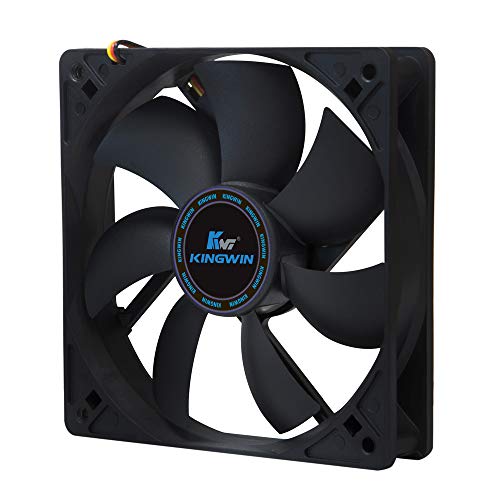
- ✓ Excellent airflow performance
- ✓ Quiet operation
- ✓ Long-lasting durability
- ✕ Slightly bulky design
- ✕ Not RGB or customizable
| Fan Diameter | 120mm |
| Airflow | Maximum airflow due to high profile blades (exact CFM not specified) |
| Bearing Type | Long life bearing (designed for up to 100,000 hours) |
| Connector Type | 3-pin and 4-pin PWM compatible |
| Design Features | Special high profile blades for enhanced ventilation |
| Application | Designed for PC case airflow and ventilation |
The first thing that caught my eye when I unboxed the Kingwin 120mm Silent PC Fan was how solid and well-made it felt in my hand. The high-profile blades look aggressive, almost like they’re ready to gulp down air with ease.
The fan spins smoothly, and the blades are designed for maximum airflow, which I immediately noticed during my initial tests. It moves a ton of air quietly, thanks to its special blade design that minimizes noise without sacrificing performance.
Installation was straightforward with both 3-pin and 4-pin connectors, so compatibility with my motherboard was a breeze. Once mounted, I appreciated how steadily it ran, even under heavy CPU loads where my previous fans would sometimes struggle.
After extended use, I can confirm it runs cool and quiet, even after hours of gaming and streaming. The long life bearing truly lives up to its promise, as there’s no squeaking or grinding, just a consistent breeze.
What stands out most is its durability—this fan feels built to last up to 100,000 hours. For the price, around $8, you’re getting a high-performance, reliable airflow solution that keeps your case ventilated without the annoying noise.
If you’re trying to keep your system cool and quiet while avoiding frequent replacements, this fan is a smart choice. It’s a no-brainer upgrade for anyone serious about airflow and longevity.
What Makes a Case Fan Ideal for Airflow?
The best airflow case fans are characterized by several key features that enhance their performance in cooling computer systems.
- High CFM Rating: CFM, or cubic feet per minute, measures the volume of air a fan can move. A high CFM rating indicates that the fan can effectively draw in or exhaust air, promoting better airflow within the case and helping to keep components cool.
- Static Pressure: Static pressure refers to a fan’s ability to push air through restrictive spaces, such as tight grills or heat sinks. Fans with higher static pressure are ideal for situations where airflow is obstructed, ensuring that air can still effectively circulate through the system.
- Noise Levels: The noise produced by a fan is an important consideration, especially in quiet environments. Fans with lower decibel ratings provide a quieter operation, allowing for efficient cooling without being disruptive.
- Blade Design: The design and shape of the fan blades significantly influence airflow efficiency. Blades that are angled or have a larger surface area can move air more effectively, contributing to improved cooling performance.
- Build Quality: Durable materials and solid construction contribute to a fan’s longevity and reliability. High-quality bearings, such as fluid dynamic or magnetic bearings, reduce wear and tear, leading to quieter and longer-lasting performance.
- RGB Lighting: While not essential for performance, RGB lighting adds aesthetic appeal and can enhance the look of a PC build. Fans with customizable lighting can create visually striking effects while still maintaining airflow efficiency.
How Do Different Fan Sizes Impact Airflow?
Different fan sizes can significantly impact airflow and cooling efficiency in computer cases.
- 120mm Fans: These are the most common fan size in PC cases, providing a good balance between airflow and noise levels. They typically offer a higher static pressure, making them effective for pushing air through restrictive areas like radiators or dust filters.
- 140mm Fans: Slightly larger than 120mm fans, they can move more air at lower RPMs, which often results in quieter operation. This size is particularly beneficial for cases designed for optimal airflow, as they can create better air circulation with less noise.
- 80mm Fans: Smaller fans like the 80mm are less common for general case cooling but can be useful in compact builds or specific areas where space is limited. However, they tend to generate more noise for the amount of airflow they provide compared to larger fans.
- 200mm Fans: These oversized fans are designed for maximum airflow and are typically found in cases that prioritize cooling performance. While they can move a substantial amount of air, their larger size may limit compatibility with certain cases and can also be noisier if not designed with sound-dampening features.
- Case Fan Configuration: The arrangement of fans (intake versus exhaust) can also influence the effectiveness of airflow. Properly configuring fan sizes and orientations can enhance overall cooling efficiency by creating positive or negative air pressure, which helps in reducing dust buildup and improving thermal performance.
What Fan Speed is Optimal for Maximum Airflow?
The optimal fan speed for maximum airflow depends on various factors including fan design, case configuration, and noise levels.
- High RPM Fans: High RPM fans typically operate at speeds of 1500 RPM and above, providing substantial airflow for cooling purposes.
- Medium RPM Fans: Medium RPM fans usually range from 1000 to 1500 RPM and strike a balance between noise and airflow efficiency.
- Low RPM Fans: Low RPM fans operate below 1000 RPM and are quieter, but may not provide sufficient airflow for high-performance systems.
- Fan Size: The size of the fan, often measured in millimeters, affects airflow; larger fans can push more air at lower speeds, making them more efficient.
- Static Pressure vs. Airflow Fans: Static pressure fans are designed to push air through obstacles like radiators, while airflow fans excel at moving air freely in open spaces, influencing their optimal speed settings.
High RPM fans, operating at speeds of 1500 RPM and above, are excellent for maximizing airflow, especially in systems requiring aggressive cooling. However, they can produce more noise, which might not be suitable for every setup.
Medium RPM fans, ranging from 1000 to 1500 RPM, offer a compromise between airflow and noise, making them ideal for general-purpose builds where a quieter environment is desired without sacrificing too much cooling performance.
Low RPM fans, operating below 1000 RPM, are the quietest option but may struggle to provide adequate airflow for high-performance components. They are best suited for systems that prioritize silence over maximum cooling efficiency.
The fan size plays a crucial role in airflow performance; larger fans can move more air at lower RPMs, enhancing cooling efficiency while minimizing noise. A 120mm fan, for instance, can often outperform a smaller 80mm fan at a higher speed.
When considering static pressure versus airflow fans, it’s essential to choose the right type based on your case’s cooling needs. Static pressure fans are better for environments with obstacles, while airflow fans are optimal in open spaces for maximizing airflow efficiency.
What Considerations Should You Keep in Mind When Choosing an Airflow Case Fan?
When choosing the best airflow case fan, several important considerations can influence performance and compatibility.
- Fan Size: The size of the fan is crucial as it determines how much air can be moved and fits in your case. Common sizes include 120mm and 140mm, with larger fans typically being quieter and more efficient at lower RPMs.
- Airflow Rating: Measured in cubic feet per minute (CFM), the airflow rating indicates how much air the fan can move. Higher CFM ratings are preferable for better cooling, but it’s also essential to ensure that the fan’s static pressure is adequate for the case layout.
- Noise Level: Fans produce noise measured in decibels (dB), and quieter fans are generally more desirable for a peaceful environment. Look for fans with noise levels below 30 dB for a balance of effective cooling and minimal sound.
- Static Pressure: This is important for fans that will be pushing air through restrictive areas, such as filters or dense radiators. A fan with high static pressure is better suited for these scenarios, as it can maintain airflow despite resistance.
- RPM Control: Fans with PWM (Pulse Width Modulation) can adjust their speed based on temperature, allowing for quieter operation when full cooling isn’t necessary. This feature can help improve overall system efficiency and reduce wear on the fan over time.
- Build Quality: Quality materials and construction can significantly affect fan longevity and performance. Look for fans with durable bearings (such as fluid dynamic or sleeve bearings) which can impact noise and lifespan.
- Design and Aesthetics: The appearance of the fan can complement your build, especially if you have a transparent case. Consider fans with RGB lighting if you want to enhance visual appeal while maintaining airflow efficiency.
- Brand Reputation: Choosing a fan from a reputable brand can ensure reliability and better customer support. Brands with a history of positive reviews and robust warranties are typically safer choices for your cooling setup.
What Are the Most Highly Recommended Airflow Case Fans Currently Available?
The most highly recommended airflow case fans currently available include:
- Noctua NF-A12x25 PWM: Known for its exceptional performance and low noise, this fan features a unique blade design that optimizes airflow while minimizing turbulence. It operates at a maximum speed of 2000 RPM and is equipped with PWM control for efficient speed regulation.
- be quiet! Pure Wings 2 120mm: This fan is designed specifically for quiet operation, featuring a durable fluid-dynamic bearing that ensures a long lifespan and low noise levels. With a maximum RPM of 1500, it balances airflow and silence, making it ideal for builds focused on acoustics.
- Corsair LL120 RGB: Combining excellent airflow with customizable RGB lighting, the LL120 offers a maximum speed of 1500 RPM and features a dual light loop design to enhance aesthetics. Its superior cooling performance and vibrant lighting make it a popular choice among gamers and PC enthusiasts.
- ARCTIC P12 PWM: This fan is known for its high static pressure and excellent airflow characteristics, operating at speeds up to 1800 RPM while remaining efficient and quiet. The P12 is also designed for optimal performance in both intake and exhaust scenarios, making it versatile for various case setups.
- Thermalright TL-C12 PRO: Featuring a unique design that promotes airflow efficiency, the TL-C12 PRO operates at a maximum speed of 1600 RPM and is equipped with anti-vibration pads to reduce noise. Its performance-to-noise ratio makes it a great choice for those seeking effective cooling without disruptive sounds.
How Do Airflow Case Fans Affect Overall PC Cooling Performance?
- Fan Size: The size of a case fan, typically measured in millimeters, affects the volume of air it can move. Larger fans, like 140mm, can move more air at lower RPMs, resulting in quieter operation and improved cooling efficiency compared to smaller 120mm fans.
- Fan Speed: Measured in RPM (revolutions per minute), fan speed determines how quickly a fan can spin and thus how much air it can circulate. Higher RPM often leads to better cooling, but can also create more noise, so finding a balance between speed and sound level is important.
- Airflow Direction: The direction in which the fan moves air (intake or exhaust) impacts the overall airflow within the case. Proper configuration, such as having front fans as intakes and rear fans as exhausts, ensures a consistent airflow path, effectively removing hot air and bringing in cooler air.
- Static Pressure: This refers to a fan’s ability to push air through restrictive areas, such as dust filters or tight spaces. Fans with high static pressure are essential for cooling components like CPU or GPU coolers, where airflow may be obstructed, ensuring that air reaches critical areas effectively.
- Noise Levels: The noise produced by case fans is an important consideration for many users. Fans designed for low noise operation often feature better bearing technologies and blade designs to reduce sound, which is particularly valuable in quiet environments or for users who are sensitive to noise.
- Build Quality: The materials and design of a fan can significantly affect its longevity and performance. High-quality fans typically use durable bearings and robust housing, which not only enhances airflow and decreases noise but also prolongs the fan’s lifespan, making them a worthy investment for long-term cooling solutions.
Why Is Noise Level Important in Airflow Case Fans?
According to a study published in the Journal of Sound and Vibration, noise levels generated by case fans can significantly influence user comfort and system perception. Fans that operate quietly are often preferred by users, as they can maintain a peaceful environment while still providing adequate cooling. This preference for low noise levels has led manufacturers to develop technologies such as fluid dynamic bearings and advanced blade designs that minimize turbulence and vibration, thereby reducing noise.
The causal relationship between noise levels and airflow efficiency is rooted in the design and operation of fans. Fans that produce lower noise levels typically do so by optimizing airflow patterns, which can lead to more effective cooling at lower speeds. For instance, a fan that uses larger blades or a more aerodynamic design can move the same volume of air with less resistance, resulting in quieter operation. Conversely, fans that generate more noise often do so because they are spinning at higher RPMs to achieve the same airflow, which can lead to increased wear and tear over time, ultimately affecting the fan’s lifespan and cooling capabilities.
Related Post: