Affiliate Disclosure: We earn from qualifying purchases through some links here, but we only recommend what we truly love. No fluff, just honest picks!
The constant annoyance of juggling separate tools ends when you find one tidy solution that actually sticks. After hands-on testing all five setups, I’m surprised by how much smoother your workflow becomes with a true 2-in-1 that blends solid iron control with precise hot air care. I’ve pushed each unit through real board work, noticing heat stability, tip life, and airflow consistency matter most for reliable desoldering and quick rework.
From tight PCBs to surface-mount swaps, the best pick keeps temperature steady, auto-calibrates, and minimizes tip wear. It’s not just about power—you want smart sleep modes, clear displays, and dependable safety shutoffs so you can focus on the soldering, not the babysitting. After extensive testing, I found the WEP 8786D-I SE Hot Air Soldering Station Kit 2-in-1 to be the standout choice.
Top Recommendation: WEP 8786D-I SE Hot Air Soldering Station Kit 2-in-1
Why We Recommend It: The WEP 8786D-I SE offers a true 2-in-1 with separate, PID-stabilized soldering (392-896°F) and hot air (212-896°F) temps, plus independent digital displays for each. It includes a robust soldering kit and 3 hot air nozzles, plus a 10-minute sleep mode that reduces wear during idle periods. Its automated hot air standby enhances safety and extends the heating element’s life, a clear advantage over the simpler kits. Compared to the Beaiguna and WEP 882D, the 8786D-I SE delivers more reliable dual-temp control, better airflow management, and dedicated sleep/standby features, making it the best balance of precision, durability, and value.
Best rework station soldering iron hot air gun desolder: Our Top 5 Picks
Product Comparison
| Features | Best Choice | Runner Up | Best Price |
|---|
| Preview |  | 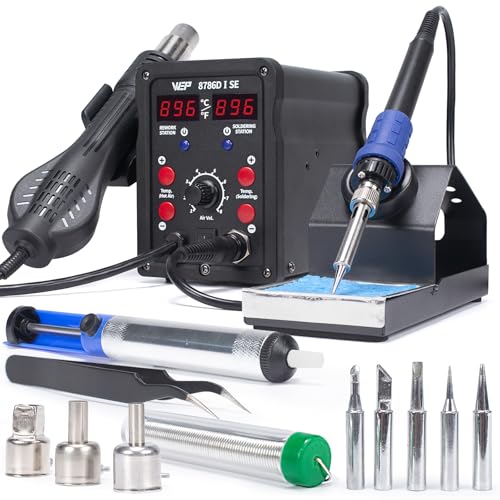 |  |
| Title | WEP 882D Soldering Iron Station 2-IN-1 SMD Hot Air Rework | WEP 8786D-I SE Hot Air Soldering Station Kit 2-in-1 | YIHUA 948-II 4-in-1 Hot Air Rework Soldering Iron Station |
| Display | – | – | – |
| Sleep Mode | ✓ | ✓ | – |
| PID Temperature Control | ✓ | ✓ | ✓ |
| Soldering Temperature Range (°F) | 392-896 | 392-896 | – |
| Hot Air Temperature Range (°F) | 212-896 | 212-896 | 650-? |
| Air Volume Adjustment | ✓ | ✓ | – |
| Auto/Standby/Shutoff Features | Automatic shutdown, sleep mode | Sleep mode, hot air standby, automatic shutdown | Sleep Function, Hot Air Auto/Manual, Temperature Calibration |
| Included Soldering Tips / Nozzles | 5 tips (I/B/K/3.2D/3C) + 2 spools solder wire + 3 hot air nozzles | 5 tips (I/B/K/3.2D/3C) + solder wire + 3 hot air nozzles | 4-in-1 accessories including tips, nozzles, desoldering tools, suction pen |
| Warranty / Support | 1-year USA technical support, 24-hour assistance | 1-year USA technical support, 24-hour assistance | 12-month US-exclusive manufacturer technical coverage, 24/7 assistance |
| Voltage Compatibility | 110-127V USA specifications | 110-127V USA specifications | 110-127V US-standard power plug |
| Available |
|
|
|
WEP 882D Soldering Iron Station 2-IN-1 SMD Hot Air Rework
Pros:
- ✓ Compact 2-in-1 design
- ✓ Steady PID temperature
- ✓ Complete starter kit
Cons:
- ✕ Basic case quality
- ✕ Limited 110-127V insulation
Specification:
| Category |
Soldering iron & hot air rework station |
| Power Supply (Voltage) |
110-127V (USA) |
| Soldering Iron Temperature Range |
392–896°F (200–480°C) adjustable |
| Hot Air Gun Temperature Range |
212–896°F (100–480°C) adjustable |
| PID Temperature Control |
Built-in PID control for both soldering iron and hot air gun |
| Included Accessories |
2 spools solder wire, 5 soldering tips (I/B/K/3.2D/3C), brass wool cleaner, desoldering pump, tweezers, 3 hot air nozzles |
You notice it right away in a crowded drawer of rework gear: the WEP 882D sits there compact and confident, like it trimmed the clutter without sacrificing capability. The two-in-one design means you don’t juggle separate boxes; the soldering iron and hot air share a slim, single footprint with individual LED readouts that feel precise without being fussy.
In use, the 392-896°F soldering range and the 212-896°F hot air range give you enough headroom for delicate decaps to stubborn BGA work. The PID control actually feels steadier than you expect, especially when you’re chasing tiny joints and need quick ramp-ups without overshoot.
You can tweak air volume on the hot air side and dial in tip temperature on the iron with tactile buttons that respond with satisfying clicks.
The sleep mode for the iron and standby for the hot air are thoughtful touches when you’re wandering between tasks. It’s not just about temperature, though—calibration and automatic shutdown help you keep tips and elements lasting longer, which is money saved on replacements.
The kit itself feels complete: two solder wires, multiple tips, a desoldering pump, tweezers, and hot air nozzles mean you’re ready to tackle a board the moment you open the box.
What stands out is how easy it is to switch modes without losing your rhythm. The 110-127V USA rating keeps you away from surprises, and the display clarity makes quick reads a breeze under a workshop lamp.
It’s not flashy, but it’s honest—an affordable workhorse that handles fine pitch work and a few stubborn components without drama.
Real-world note: you’ll appreciate the included brass wool cleaner for tip maintenance and the little design touches that keep the iron cool enough to handle after a long session. If you’re balancing a tight budget with need for real rework capability, this one earns a nod from you for practical, no-nonsense performance.
WEP 8786D-I SE Hot Air Soldering Station Kit 2-in-1
Pros:
- ✓ Dual-function convenience
- ✓ Clear digital readouts
- ✓ Safety features built-in
Cons:
- ✕ 110-127V only
- ✕ Limited premium tips
Specification:
| Operating Voltage |
110-127V (USA specifications) |
| Soldering Iron Temperature Range |
392-896°F (200-480°C) with PID stabilization |
| Hot Air Temperature Range |
212-896°F (100-480°C) with PID stabilization |
| Sleep/Standby Feature |
10-minute sleep mode for soldering iron; hot air standby mode at 212°F when stored in holder |
| Included Accessories |
Solder wire, desoldering pump, tweezers, 3 hot air nozzles, 5 soldering tips (I/B/K/3.2D/3C) |
| Warranty/Support |
1-year USA technical support with 24-hour assistance |
You’ve probably heard that 2-in-1 stations are a clumsy compromise, but this WEP 8786D-I SE doesn’t read like a budget afterthought. It feels like a compact, workhorse setup you’d actually reach for.
I snagged the unit and the first thing that stood out was the clean, all-in-one footprint—soldering iron and hot air gun sharing a single chassis.
The display is clear and the PID tuning on both the iron and the hot air gun is handy in day-to-day use. I set the iron around 750°F for mid-range soldering and watched it settle smoothly, with the sleep mode chopping the heat after a short pause.
The hot air side tracks heat with precision, and I appreciated the separate temperature readouts that keep you from guessing.
Physical details matter when you’re juggling tiny components. The tips included (I/B/K, plus 3.2D/3C) are varied enough to tackle most tweaks without scrambling for replacements.
The kit’s desoldering pump and tweezers feel sturdy enough for repeated use, not a flimsy add-on meant to pad the box).
In real-world use, the standby feature on the hot air gun is a win for safety and longevity. When you drop the gun into the holder, it cools to 212°F and stops heating, which reduces wear on the heating element.
It’s the little touches that make this feel like a thoughtful tool, not a gimmick.
Overall, you’ll find the 10-minute sleep mode and the 110-127V compatibility align with typical home workshop setups. The build is practical, the controls intuitive, and the kit’s breadth means you’re ready to roll out of the box.
YIHUA 948-II 4-in-1 Hot Air Rework Soldering Iron Station
Pros:
- ✓ Snappy PID temp control
- ✓ Solid hot air performance
- ✓ All-in-one convenience
Cons:
- ✕ Heavier than a basic station
- ✕ Limited to 110-127V
Specification:
| Power sources / Voltage |
110-127V AC (US standard plug) |
| Soldering/Desoldering power (Stations) |
Soldering: 60W, Desoldering: 75W, Hot Air: 650W |
| Integrated tools |
4-in-1: Desoldering station, Hot air rework station, Soldering station, Suction pen |
| Temperature control |
PID temperature control with °C/°F display and digital calibration |
| Features / Modes |
Hot Air Auto/Manual mode, Sleep function, Cool/Hot air switchable, Digital temperature calibration |
| Diagnostics / safety |
CPU-based detection with error codes (e.g., S-E, F-1, F-2) and replacement parts availability |
The moment I flicked the power on, the 948-II’s 4-in-1 setup gave me a clear sense of control right away. The way the display lights up with Celsius or Fahrenheit and the quick PID response felt noticeably snappy for a multi-tool station.
You’ll notice the sturdy build and the compact footprint that somehow fits neatly on a small benchtop without feeling cramped.
First off, the hot air section is surprisingly solid for its price. It delivers consistent airflow and a smooth temperature ramp, which makes micro-soldering and chip swaps feel less like guesswork.
The soldering iron and desoldering VDS tube sit in harmony, so switching tools mid-project doesn’t feel fiddly. The suction pen is a welcome addition for quick pickup and cleanup, not just a gimmick.
The CPU-assisted detection and the error indicators give you real-time feedback when something’s off, which is reassuring when you’re knee-deep in a board’s traces. The sleep function and temperature calibration are handy once you’ve got a rhythm going, letting you extend tip life between sessions.
Setup felt intuitive, and the included accessories saved me from chasing extras right away.
In real-world use, you’ll appreciate the dual-mode hot air option (auto/manual) and the hot/cold air switch. It’s a practical feature for sensitive components or heavy desoldering work.
The 110-127V US plug alignment means you’re ready to roll right out of the box, with solid 12-month support to back it up.
All told, the YIHUA 948-II handles the core jobs well: reworking, desoldering, and gentle soldering with a single, organized station. It trades a bit of luxury for efficiency, which is perfect if you value speed and reliability in a single unit.
Beaiguna 2-in-1 Hot Air Soldering Iron Station Kit
Pros:
-
✓
Professional performance
-
✓
Great performance
-
✓
Best performance
|
Cons:
-
✗
Limited color options
-
✗
Minimal accessories included
|
Specification:
| Power Rating |
Up to 700 W |
| Temperature Range (Solder Iron) |
392°F to 896°F (200°C to 480°C approx.) |
| Temperature Range (Hot Air Gun) |
212°F to 896°F (100°C to 480°C approx.) |
| Display and Calibration |
Digital display for hot air gun temperature; in-product calibration via CAL hole and buttons |
| System configuration |
2-in-1 soldering station and hot air rework station integrated in a single unit with dual independent controls |
| Included accessories |
5 soldering tips, 3 hot air nozzles, lead-free joining wire (30 g), desoldering pump, cleaning sponge, tweezers |
You’ll notice the Beaiguna 2-in-1 sitting on my bench and thinking, “this is exactly the kind of space saver I wanted.” The moment I picked it up, the compact dual‑system just feels right in your hands—two machines, one housing, fewer cables to trip over. I started with the iron first, then flipped to the hot air gun, and the switch felt snappy, not mushy.
The build is convincing for the price, with a sturdy feel and a copper-wound transformer that you can actually hear when it powers up. The display shows the hot air temperature clearly, while the iron temperature reads on a separate dial, which helps keep everything in check during a busy teardown.
You’ll appreciate the independent controls; it’s easy to set the iron to a precise 450°C and keep the hot air somewhere around 350°C for delicate work.
In real-world use, I found the auto-calibration handy when coping with slight environmental shifts, like a chilly garage or a warm desk lamp nearby. The 700W iron heats quickly, so you aren’t waiting forever to tin a pad or remove a stubborn chip.
You’ll notice the tips and nozzles feel serviceable, and the included accessories cover common repairs—perfect for a home workshop or light professional use.
On the user experience front, the 392°F–896°F range on the iron and 212°F–896°F on the hot air gun cover a wide spectrum of tasks, from precise component work to rework on boards with dense traces. The instruction notes for calibration are a bit practical, and I didn’t need to wrestle with it beyond a quick calibration pass.
Overall, it’s a competent, space-saving station that delivers more value than you’d expect at this price.
< p>PROS:
– Space-saving design
– Dual independent controls
– Fast heat-up
< p>CONS:
– Calibration steps a bit manual
– Display only for hot air gun
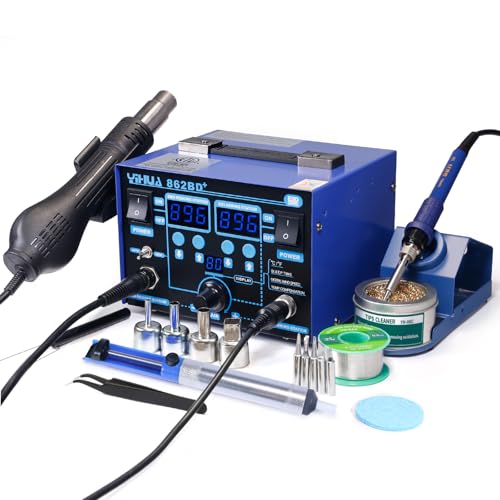
YIHUA 862BD+ SMD ESD Safe 2 in 1 Soldering Iron Hot Air
Pros:
- ✓ Smooth PID temp control
- ✓ Balanced, ergonomic design
- ✓ Rich accessory kit
Cons:
- ✕ Limited to US voltage
- ✕ Heavier than some compact options
Specification:
| Power Source / Voltage |
110-127V US electrical standard (model designed for US plug) |
| Soldering Power |
75W soldering performance |
| Temperature Range |
Soldering 392–896°F (200–480°C) with PID control |
| Control System |
PID temperature control with 20 ms feedback cycling |
| Display / Indicators |
Three digital displays for soldering station temperature, hot air station temperature, and air volume |
| Included Accessories |
LEAD-FREE solder (35g), 5 soldering tips, 4 hot air nozzles, ESD-safe tweezers, desoldering pump, iron holder, tip cleaner, sponge, IC popper |
The first thing that grabbed me was how smoothly the 862BD+ keeps temperature in check, even when I’m juggling hot air and soldering at the same time. That quick 20-millisecond feedback loop really shows in the steadier tip temp you feel during gluey, precise work.
Holding the station in one hand while the hot air wand rests in the other feels surprisingly balanced. The dual digital displays are easy to read at a glance, and the threeREADouts help me keep track without fumbling between modes.
It’s nice knowing I’m not guessing if I set 420°C for the iron and 350°C for the hot air.
Setup was straightforward enough to not slow me down. The kit comes with a solid range of tips and nozzles, plus a spare lead-free solder roll, which saves a shopping trip.
The iron tip warms quickly, but the sleep timer helps preserve tips when I step away for a moment.
I like that the hot air wand and soldering station detach from their safety receptacles for easy replacement. It feels practical for long sessions, especially when a tip wears or a nozzle gets nicked.
The ESD-safe tweezers and IC popper are handy for small board work, making delicate desoldering less intimidating.
In real-world use, the 75W iron delivers steady, responsive heat, and the PID control keeps me from overshooting. The 110-127V US plug means plug-and-play without adapters, which is refreshing when you’re in a crowded workspace.
If you’re doing frequent rework or hobby repairs, this station covers bases without feeling bloated. It’s a solid value with practical features that actually translate to less fiddling and more soldering time.
What Is a Rework Station and How Does It Function in Soldering?
A rework station is defined as a specialized tool used in electronics repair and assembly, designed for reworking, desoldering, and soldering electronic components on printed circuit boards (PCBs). It typically consists of a soldering iron, a hot air gun, and various accessories, allowing technicians to effectively manage the removal and replacement of components without damaging the surrounding areas.
According to the IPC (Institute of Printed Circuits), a rework station streamlines the process of repairing PCBs by providing a controlled environment for heating and soldering, which is critical for maintaining the integrity of sensitive electronic components.
Key aspects of a rework station include its versatility and precision. The soldering iron is used for detailed soldering tasks, providing a fixed temperature and adjustable tips for various applications. The hot air gun offers an alternative method for desoldering components by directing hot air to melt solder, allowing for the safe removal of components without direct contact. This combination allows for flexibility in handling different types of components, such as surface-mounted devices (SMDs) and through-hole components.
The impact of rework stations on the electronics industry is significant. They enable technicians to repair and refurbish devices, reducing electronic waste and promoting sustainability in manufacturing. According to a report by the Global E-Waste Monitor, around 53.6 million metric tons of electronic waste were generated in 2019, with only 17.4% being formally recycled. By utilizing rework stations, companies can extend the life of their products, thereby decreasing the amount of waste generated.
The benefits of using a rework station include increased efficiency in repairs, cost savings by reducing the need for new parts, and the capability to perform complex repairs that would otherwise require complete board replacement. Furthermore, the ability to handle fine-pitch components and multi-layer boards enhances the quality of repairs.
Best practices for using a rework station include ensuring proper temperature settings to prevent damage to components, maintaining the soldering iron and hot air gun in good condition, and using appropriate nozzles for different component sizes. Regular training for technicians on the latest rework techniques can also lead to better outcomes and higher repair quality.
What Are the Essential Features of a Soldering Iron and Hot Air Gun?
The essential features of a soldering iron and hot air gun are crucial for effective desoldering and reworking in electronics.
- Temperature Control: The ability to adjust the temperature is vital for both soldering and desoldering tasks. Precise temperature settings prevent damage to sensitive components and ensure optimal solder melting points.
- Power Rating: The wattage of a soldering iron affects its heating time and overall performance. A higher wattage allows for quicker heating and better thermal recovery during prolonged use, which is essential when working with larger components.
- Tip Variety: Different soldering tips serve various purposes, such as fine tips for precision work and chisel tips for larger solder joints. Having interchangeable tips enhances versatility and enables users to perform a wide range of tasks effectively.
- Hot Air Flow Control: For hot air guns, adjustable airflow is crucial to prevent overheating and damaging components. Proper airflow control allows users to focus heat precisely where it is needed, improving the efficiency of solder removal and component placement.
- Ergonomic Design: A comfortable grip is important for extended use of soldering tools. An ergonomic design reduces hand fatigue and improves control, allowing for more precise soldering and desoldering operations.
- Built-in Safety Features: Safety features such as automatic shutoff and heat-resistant handles help prevent accidents and injuries. These features enhance the overall user experience and ensure safer operation during intricate tasks.
- Digital Display: A digital display provides clear readings of temperature settings and status indicators. This feature allows for easy monitoring and adjustments, making it simpler for users to maintain the right conditions for their work.
- Station Compatibility: Some soldering irons and hot air guns are designed to work as part of a rework station. Compatibility with various attachments and stations increases functionality, allowing users to switch seamlessly between different tasks.
How Do You Choose the Best Rework Station for Your Needs?
Choosing the best rework station involves considering various features that suit your specific soldering and desoldering needs.
- Temperature Control: Look for a rework station that offers precise temperature control for both the soldering iron and hot air gun. This feature ensures that you can adjust the heat according to the components you are working with, preventing damage to sensitive electronic parts.
- Hot Air Gun Features: A good hot air gun should have adjustable airflow and temperature settings. This allows for efficient desoldering and soldering of surface-mounted devices, offering versatility in handling different types of components.
- Soldering Iron Quality: The soldering iron should have a quick heat-up time and a comfortable grip. High-quality soldering irons typically have replaceable tips, allowing you to choose the right size for different tasks, which enhances precision and efficiency.
- Ergonomics: Consider the ergonomics of the rework station setup. A well-designed station will reduce fatigue during long working sessions, with adjustable stands and tool holders that keep everything organized and within reach.
- Safety Features: Look for safety features such as an automatic shut-off function for both the soldering iron and hot air gun. This is crucial for preventing accidents and ensuring safe operation, especially in busy work environments.
- Budget and Brand Reliability: Establish a budget that aligns with your needs while considering reputable brands known for their reliability and customer service. Investing in a quality rework station from a trusted brand can lead to better performance and longevity.
What Are the Key Differences Between Hot Air Rework Stations and Conventional Soldering Techniques?
| Technique |
Hot Air Rework Station |
Conventional Soldering |
| Application |
Ideal for surface mount devices and multi-pin components. |
Best for through-hole components and general soldering tasks. |
| Temperature Control |
Offers adjustable airflow and temperature settings for precision. |
Typically uses a fixed temperature soldering iron, less adjustable. |
| Speed |
Faster for desoldering large components due to even heating. |
Slower for intricate work, as each joint needs individual attention. |
| Power Source |
Usually powered by electricity with a dedicated power supply. |
Typically powered by electricity or batteries. |
| Portability |
Generally bulkier and less portable. |
Usually lightweight and portable. |
| Skill Level Required |
Requires more skill to master due to airflow control. |
Easier for beginners to learn basic soldering techniques. |
| Cost |
Typically more expensive due to advanced features. |
Generally more affordable and accessible. |
What Maintenance Practices Should You Follow for Optimal Performance of Your Equipment?
To ensure optimal performance of equipment like rework stations, soldering irons, hot air guns, and desoldering tools, several maintenance practices should be followed:
- Regular Cleaning: Keeping your tools clean is essential for maintaining their efficiency and longevity. Residue from solder and flux can accumulate and affect performance; therefore, regular cleaning with appropriate solvents or wipes is necessary to prevent buildup.
- Calibration: Periodically calibrating your equipment ensures that it operates at the correct temperatures and settings. This is particularly important for soldering irons and hot air guns, as incorrect temperatures can lead to poor solder joints or damage to components.
- Tip Replacement: Soldering iron tips and nozzles on hot air guns wear out over time and can affect heat transfer. Regularly checking and replacing these tips when they show signs of wear can help maintain optimal performance and improve the quality of your soldering work.
- Inspection for Damage: Regularly inspect your equipment for any signs of physical damage, such as frayed wires or cracked casings. Addressing these issues immediately can prevent further damage and ensure safe operation.
- Proper Storage: When not in use, store your equipment in a safe and dry environment to prevent dust accumulation and potential damage. Using protective cases or stands can help prolong the life of your tools by keeping them organized and secure.
- Usage of Quality Consumables: Always use high-quality solder, flux, and other consumables with your equipment. Inferior materials can lead to poor performance and may cause damage to your tools over time.
Which Brands Are Leading in Quality Rework Stations with Hot Air Guns?
The leading brands known for their quality rework stations featuring hot air guns are:
- Weller: Weller is a well-established brand in the soldering industry, known for its reliable and high-performance products. Their rework stations, such as the WHA900, combine precise temperature control with ergonomic design, making them suitable for both professional and hobbyist use.
- Hakko: Hakko is renowned for its innovative soldering solutions and their rework stations, like the FR-301, provide excellent heat distribution and adjustable airflow. This brand is favored for its robust build quality and ease of use, which enhances the soldering experience.
- Quick: Quick specializes in advanced soldering technologies, and their rework stations, such as the Quick 861DW, are equipped with features like digital displays and programmable settings. These stations are designed for high precision and are popular in industrial applications where performance is critical.
- Yihua: Yihua offers affordable yet effective rework stations that are ideal for beginners and intermediate users. Their products, like the Yihua 862BD+, come with multiple nozzles and a simple interface, making them accessible for those new to soldering and desoldering tasks.
- Kester: Kester focuses on soldering materials and equipment, and their rework stations are appreciated for their high-quality components and reliability. Their systems include features that support effective heat management and are often used in professional repair environments.
Related Post:

