
Standing in pouring rain, I hefted three wet-leaf contenders and tested how they handle soggy messes. The best wet leaf vacuum should move heavy debris, not weigh you down. I found that the Greenworks 40V Leaf Blower/Vacuum shines with power, quiet operation, and real durability in wet leaves, plus a 3-year warranty that keeps faith with tough cleanup jobs. It’s lighter than gas models and feels nimble in tight corners, which matters when waterlogged leaves cling to driveways and gutters.
Compared with the YDblac 40V 3-in-1 and the PureSwirlz pool vacuum, the Greenworks kit delivers consistent suction, a reliable turbo boost, and a robust 40V ecosystem that partners with other tools. If you face damp, heavy debris across seasons, this one stands out for durability, performance, and value. Trust me, it’s the clean-up ally you’ll actually reach for after a rainstorm.
Top Recommendation: Greenworks 40V Leaf Blower/Vacuum 505 CFM 5.0Ah Kit
Why We Recommend It: It uses an efficient brushless motor delivering strong 505 CFM airflow with a turbo boost for wet leaves, while remaining lighter and quieter than gas options. The 3-year warranty signals long-term durability, and the expandable 40V ecosystem lets you pair with other Greenworks tools. Its 5.0Ah kit offers extended runtime, reducing downtime compared with the others, and it handles wet debris more effectively than the 600 CFM YDblac model or the PureSwirlz pool vacuum, which is more pool-focused than yard cleanup. This combination of power, reliability, and ecosystem value makes it the best overall choice.
Best wet leaf vacuum: Our Top 3 Picks
- YDblac 40V Cordless 3-in-1 Leaf Blower Vacuum Mulcher | 600 – Best Value
- Pool Leaf Vacuum with 71.7in Telescopic Pole (Rechargeable) – Best Premium Option
- Greenworks 40V Leaf Blower/Vacuum 505 CFM 5.0Ah Kit – Best Top Wet Leaf Vacuum
YDblac 40V Cordless 3-in-1 Leaf Blower Vacuum Mulcher | 600
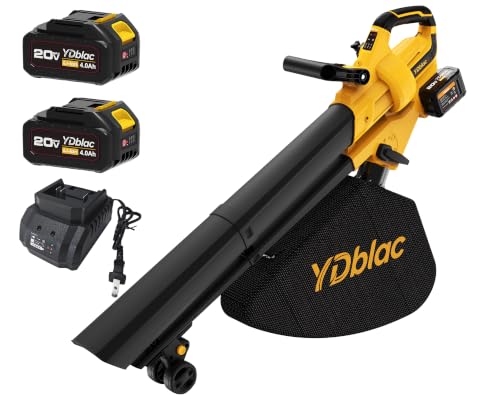
- ✓ Strong, adjustable airflow
- ✓ 15:1 mulching efficiency
- ✓ Big bag, easy to carry
- ✕ Heavier than a basic blower
- ✕ Battery life limited on turbo
| Power Source | Cordless, 40V battery system |
| Airflow and Velocity | Up to 600 CFM air volume with 160 MPH air speed |
| Mulching Ratio | 15:1 mulch reduction |
| Collection Capacity | 40 L collection bag |
| Speed Settings | 6-variable speed settings plus Turbo Boost |
| Included Battery Pack(s) | Includes two 4.0 Ah high-capacity batteries |
You’ve probably heard that a 3-in-1 yard tool never stretches a single bag’s worth of leaves. With the YDblac 40V, that misconception dissolves the moment you sling the 40L bag over your shoulder and feel how little waste you actually generate.
The moment you switch to mulch mode, the 15:1 reduction hits home—you’re not fighting piles, you’re squeezing them into a neat, compact heap.
I started with dry leaves and a light breeze, and the turbo boost surprised me with instant bite. The 600 CFM airflow moves faster than my old corded blower, yet it’s surprisingly quiet for the power level.
The dual 4.0Ah batteries mean I don’t chase a charger mid-cleanup, and you’ll notice the spare can stay charged while you work the yard in sections.
Switching through modes is straightforward: a quick flip from blower to vacuum, a gentle tilt of the nozzle, and you’re collecting. The 40L bag is generous, so you’re not emptying every ten minutes, and the wheels really help when you’ve got long sessions or a hilly patch to traverse.
In damp conditions, the mulching helps more than you’d expect—wet leaves compress nicely, and the 6-speed control lets you dial back for delicate debris or push power when grass clippings cling stubbornly. The ergonomic handle sits naturally in hand, and the weight feels balanced with the wheels supporting much of the load.
For me, the real win is how this tool streamlines cleanup on a typical weekend. You’ll clear a larger area with fewer passes, and you won’t dread the disposal step as much.
It’s a practical, well-rounded companion for a mid-size yard, especially if you want to minimize bag volume without sacrificing speed.
Pool Leaf Vacuum with 71.7in Telescopic Pole (Rechargeable)

- ✓ Strong surface suction
- ✓ Dual-filter versatility
- ✓ Long reach, comfy grip
- ✕ Not silent
- ✕ Slightly heavy handle
| SuctionPower | 83 GPM (gallons per minute) |
| Runtime | Up to 100 minutes on a single charge |
| FiltrationSystem | Two interchangeable filters: 150 μm (fine) and 300 μm (coarse); 1-gallon mesh bag |
| TelescopicPoleReach | Extendable up to 71.7 inches (1.82 meters) |
| PowerSource | Rechargeable cordless operation (battery-powered) |
| UsageVersatility | All-in-one tool for surface skimming to floor vacuum in inground pools, spas, and kiddie pools |
You twist the 71.7-inch telescopic pole and immediately feel the balance hit your shoulder a little higher than you expect. The handle is comfortable, and the grip gives a confident click when you lock the length in place.
It instantly feels like you’ve upgraded from a handheld chore to a proper pool-cleaning setup.
Unboxing reveals a compact chunk of cordless power, and the weight is reassuring without being a grip-wrench. The 83 GPM suction makes quick work of the particle chaos at the deep end, and you’ll notice how the water and leaves disappear from the pool floor in a satisfying whoosh.
It’s not whisper-quiet, but it’s steady enough for weekend cleaning sessions without ear fatigue.
The dual-filter system is a real win in practice. You’ll actually finish a full pass without your bag begging for mercy.
The 1-gallon mesh bag holds meals of debris, while the 150μm and 300μm filters swap in and out like you’re customizing a coffee order—fine for algae and dust, or chunky for bigger yard debris.
Surface-to-floor cleaning in one pass feels almost magical. You skim leaves off the surface and watch them vanish as the tool dives down to the bottom.
It’s a satisfying two-in-one motion that cuts your cleaning time in half, especially after a storm when the pool looks like a leaf dump.
The cordless runtime is a real everyday helper. Up to 100 minutes means you can tackle the pool in sections, take a break, and still have power ready for the next corner.
A full recharge is quick enough to squeeze in between tasks, so you’re never left staring at the idle device.
In real-world use, this tool shines for all pool types. Whether you’ve got an inground pool or a kiddie splash area, you won’t be juggling multiple cleaners.
It’s light enough to maneuver but sturdy enough to feel dependable in a busy cleaning session.
Overall, it slides into your routine with minimal fuss and delivers real time savings. If you want a single, capable tool that handles surface and floor without swapping heads, this one is worth a close look.
Would I recommend it for a busy weekend warrior? Absolutely—especially if you hate wrestling with multiple devices after a big storm.
It’s convenient, capable, and genuinely speeds up pool maintenance.
Greenworks 40V Leaf Blower/Vacuum 505 CFM 5.0Ah Kit

- ✓ Quiet operation
- ✓ Strong dry/wet performance
- ✓ Lightweight design
- ✕ Battery life could vary
- ✕ Limited runtime on Turbo
| Voltage and Battery System | 40V expandable e-system |
| Maximum Air Flow | 505 CFM cyclonic debris power |
| Maximum Air Speed | 185 mph (turbo boost) |
| Motor Type | Brushless motor design |
| Warranty | 3-year full tool protection |
| Included Battery Capacity | 5.0 Ah |
You’re standing at the edge of a damp, leaf-strewn driveway after a light rain, and the Greenworks 40V leaf blower/vacuum in your hands suddenly feels like the right tool for the moment. The turbo boost button sits under your thumb, and the 185 MPH surge actually rattles a few stubborn wet leaves free from the patio cracks.
It’s quiet enough to hear the rain tapping the canvas of your shed roof, yet powerful enough to tackle the mess in seconds.
The brushless motor is noticeable right away—the balance is solid, and the grip feels cushioned without slipping when you switch from blow to vac. You appreciate the 505 CFM cyclonic punch as it blasts through wet pileups and mud splatter with confidence.
It’s not just loud brute force; there’s a measured toe-dip into each setting that makes you feel in control, even at full throttle.
In dry-to-wet yard cleanup, this tool shines on tight corners and along the edge of the driveway where debris hides. The design is 40% lighter than gas models, and the weight distribution keeps your wrist from clamping up after a long session.
The on-demand turbo mode bursts through stubborn debris, and the ergonomic grip makes long sessions feel less fatiguing.
You’ll notice the expandable 40V ecosystem as you swap accessories later, but today you’re focused on clearing a wet patio and scraping mud from the doorway threshold. The vacuum action handles damp leaves and light sludge without bogging down, which is a small win when you’re racing against light rain.
Overall, it feels like a reliable partner for year-round yard work, with quiet operation and serious clearing power.
If you’re juggling wet vs. dry debris, this tool covers the spectrum with ease and keeps you out of the back-and-forth you don’t have time for.
It’s the kind of gadget you reach for first when you want real results, not excuses.
What Is a Wet Leaf Vacuum and How Does It Work?
A wet leaf vacuum is a specialized gardening tool designed for the efficient collection of wet leaves, debris, and other organic materials from lawns and gardens. Unlike standard leaf blowers or dry leaf vacuums, wet leaf vacuums are engineered to handle the challenges posed by damp leaves, which can be heavier and more difficult to collect. These devices typically combine suction with a powerful motor to easily gather wet foliage without clogging.
According to the American Society for Horticultural Science, the effectiveness of leaf vacuums in managing yard waste can significantly reduce the time and effort required for landscape maintenance. Wet leaf vacuums often feature a variety of attachments and settings to accommodate different types of debris, making them versatile tools in outdoor maintenance.
Key aspects of wet leaf vacuums include their design, which often incorporates a robust motor capable of generating substantial suction power, and a collection bag that can handle larger volumes of wet material. Many models also offer adjustable height settings and multiple speed options to cater to various lawn conditions. Some units come with additional functions, such as mulching capabilities, which shred the collected leaves into smaller pieces for easier composting or disposal.
The impact of using a wet leaf vacuum extends beyond mere convenience. Efficiently clearing wet leaves helps prevent potential lawn damage, such as mold growth or suffocation of grass beneath the debris. Additionally, timely removal of wet leaves can enhance the aesthetic appeal of a garden, promoting a healthier outdoor environment. Statistics indicate that homeowners who regularly maintain their yards with proper tools, such as wet leaf vacuums, can save up to 50% more time compared to manual raking and sweeping.
The benefits of employing a wet leaf vacuum include improved efficiency, reduced physical strain, and the ability to keep landscapes neat and healthy. These vacuums are particularly beneficial in regions with heavy rainfall, where leaves can stay wet for extended periods, leading to greater challenges in cleanup. Furthermore, the mulching function found in many wet leaf vacuums can contribute to sustainable practices by enabling homeowners to create nutrient-rich mulch for their gardens.
Best practices for using a wet leaf vacuum effectively include using the tool regularly during peak leaf-fall seasons, ensuring that the collection bag is emptied frequently to maintain suction power, and selecting a model that suits the specific needs of the yard’s size and leaf type. Additionally, maintaining the vacuum, such as cleaning filters and blades, can enhance its lifespan and performance.
What Key Features Should You Look for in a Wet Leaf Vacuum?
When searching for the best wet leaf vacuum, consider the following key features:
- Powerful Motor: A strong motor is essential for effectively sucking up wet leaves and debris, ensuring that the vacuum can handle heavier loads without clogging.
- Water Resistance: Look for models that have water-resistant components to prevent damage from moisture and to ensure longevity, especially when dealing with wet leaves.
- Capacity: The size of the collection bag or tank is crucial; a larger capacity allows for less frequent emptying, making the vacuum more efficient for larger areas.
- Weight and Maneuverability: A lightweight and easy-to-maneuver design will make it simpler to navigate around your yard, especially in tight spaces or when lifting the vacuum onto different surfaces.
- Versatile Attachments: Different attachments such as hoses, nozzles, and brushes enhance functionality, allowing the vacuum to adapt to various tasks beyond just leaf collection.
- Ease of Use: Features like easy-start mechanisms, adjustable speeds, and comfortable handles can significantly enhance user experience and efficiency during operation.
- Noise Level: Consider the noise level of the vacuum; quieter models will be more pleasant to use, especially in residential areas where noise restrictions may apply.
A powerful motor is essential for effectively sucking up wet leaves and debris, ensuring that the vacuum can handle heavier loads without clogging. The more powerful the motor, the faster and more efficiently the vacuum can operate, making it a critical feature for those tackling large areas with wet foliage.
Water resistance is another important feature to look for, as it prevents damage from moisture and ensures the vacuum’s longevity. Many models come with seals or coatings that protect electrical components from water, which is especially valuable when dealing with wet leaves.
The capacity of the collection bag or tank also plays a significant role; larger capacities mean you can collect more debris before needing to stop and empty the vacuum. This is particularly beneficial for extensive yards or during heavy leaf fall seasons.
A lightweight and easy-to-maneuver design will enhance your ability to navigate around your yard, especially in tight spaces or when lifting the vacuum onto different surfaces. Models that are too heavy may cause fatigue during prolonged use, making this a key consideration.
Versatile attachments such as hoses, nozzles, and brushes can greatly enhance the functionality of the vacuum, allowing it to perform multiple tasks beyond just leaf collection. These attachments make it easier to clean different surfaces and access hard-to-reach areas.
Ease of use features, including easy-start mechanisms, adjustable speeds, and comfortable handles, can significantly enhance the user experience. A vacuum that is simple to operate allows users to focus more on the task at hand rather than struggling with complicated controls.
Finally, the noise level of the vacuum is an important consideration, especially in residential areas where noise restrictions may apply. Quieter models will be more pleasant to use and less disruptive to neighbors, making this an important feature for many homeowners.
How Important Is Suction Power in a Wet Leaf Vacuum for Effective Cleaning?
Suction power is a crucial factor in determining the effectiveness of a wet leaf vacuum for cleaning tasks.
- Efficiency in Debris Collection: Higher suction power enables the vacuum to pick up wet leaves and other debris more efficiently, ensuring that the cleaning process is quick and thorough. This is especially important in areas with dense foliage where leaves can become compacted and difficult to remove.
- Versatility: A vacuum with strong suction can handle a variety of materials, including wet leaves, mud, and small branches, making it versatile for different cleaning scenarios. This versatility allows users to tackle various outdoor cleaning tasks without needing multiple tools.
- Reduced Clogging: Suction power plays a significant role in preventing clogs in the vacuum hose and collection bag. A strong suction force helps to pull debris through the system more effectively, minimizing the risk of blockages that can hinder performance.
- Time-Saving: Vacuums with greater suction power can significantly reduce the time spent on cleaning. By efficiently collecting more debris in a single pass, users can complete their yard maintenance tasks faster, allowing them to move on to other activities.
- Performance in Various Conditions: Wet leaf vacuums often encounter different moisture levels and types of debris. Strong suction power ensures effective performance even in challenging conditions, such as after heavy rain when leaves are soaked and heavier.
Why Does Tank Capacity Matter When Choosing a Wet Leaf Vacuum?
Tank capacity matters when choosing a wet leaf vacuum because it directly influences the efficiency and convenience of the cleaning process. A larger tank allows for more debris and liquid to be collected before needing to be emptied, which means less frequent interruptions and more time spent on cleaning.
According to a study published by the American Society of Agricultural and Biological Engineers, equipment efficiency is closely linked to its capacity in handling materials. Larger capacity tanks can accommodate more material, allowing users to cover larger areas without stopping to empty the tank frequently (ASABE, 2019). This is particularly important during fall when wet leaves can accumulate rapidly, potentially leading to clogs or reduced performance in smaller vacuum models.
The underlying mechanism of this relationship involves the balance between suction power and tank capacity. A vacuum with a smaller tank might have strong suction but can become less effective as it fills up quickly, leading to reduced airflow and potential overheating. In contrast, a vacuum with a larger tank can maintain optimal performance over extended use, as it can hold more debris, ensuring that the suction remains strong and effective throughout the cleaning session. This efficiency is crucial for homeowners or professionals who need to manage large quantities of wet leaves in a timely manner, thus making tank capacity a critical consideration.
What Types of Wet Leaf Vacuums Are Available: Electric vs. Gas?
| Feature | Electric | Gas |
|---|---|---|
| Power Source | Powered by electricity, ideal for residential use. | Uses gasoline, suitable for larger areas and heavy-duty tasks. |
| Weight | Generally lighter, easier to maneuver and store. | Heavier due to the engine, may require more strength to operate. |
| Noise Level | Quieter operation, more suitable for noise-sensitive environments. | Louder operation, can be disruptive in quiet neighborhoods. |
| Price Range | Typically ranges from $100 to $300. | Usually ranges from $200 to $600. |
| Run Time | Limited by battery life, often 30-60 minutes per charge. | Can run as long as fuel is available, typically 1-3 hours. |
| Fuel Efficiency | N/A | Average consumption is about 1 gallon per hour. |
| Maintenance Requirements | Low maintenance, mainly battery care. | Requires regular maintenance, including oil changes and spark plug replacements. |
| Best Use Cases | Small yards, residential areas, and light-duty tasks. | Large properties, commercial use, and heavy-duty tasks. |
What Are the Advantages of Using an Electric Wet Leaf Vacuum?
The advantages of using an electric wet leaf vacuum include efficiency, versatility, and ease of use.
- Efficiency: Electric wet leaf vacuums are designed to handle both wet and dry debris, making them highly effective for cleaning up leaves after rain or during fall. Their powerful motors allow for quick suction of large volumes of material, enabling users to complete their yard work in less time than traditional methods.
- Versatility: These vacuums can often be used for various types of debris beyond just leaves, including grass clippings, small twigs, and even some types of litter. This multi-functionality makes them a valuable tool for maintaining cleanliness in gardens, patios, and driveways throughout the year.
- Ease of Use: Electric wet leaf vacuums are generally lightweight and equipped with ergonomic handles, making them easy to maneuver around different terrains. Many models also feature adjustable suction power and detachable bags, simplifying the process of collecting and disposing of debris.
- Environmentally Friendly: Since they are electric, these vacuums produce no emissions, which makes them a more environmentally friendly option compared to gas-powered equipment. This aspect is particularly appealing to eco-conscious consumers who wish to minimize their carbon footprint while maintaining their outdoor spaces.
- Low Maintenance: Electric models typically require less maintenance than gas-powered versions, which may need regular oil changes and fuel management. With fewer moving parts and simpler mechanisms, users can enjoy a hassle-free experience with less frequent repairs and upkeep.
How Do Gas-Powered Wet Leaf Vacuums Compare in Performance?
| Feature | Vacuum A | Vacuum B |
|---|---|---|
| Suction Power | High suction power at 300 CFM – Suitable for heavy debris. | Moderate suction at 250 CFM – Effective for lighter leaves and wet debris. |
| Weight | Weight is 15 lbs – Easy to maneuver but can be heavy for extended use. | Weight is 10 lbs – Lightweight design for easier handling. |
| Fuel Efficiency | Uses 1 gallon per hour – More fuel consumption for larger areas. | Uses 0.5 gallons per hour – More efficient for small to medium tasks. |
| Noise Level | Operates at 85 dB – Considered loud, may require hearing protection. | Operates at 75 dB – Quieter operation, more neighborhood-friendly. |
| Price | Price is $299 – Offers good value for performance. | Price is $199 – More budget-friendly option. |
| Warranty | Warranty is 2 years – Covers parts and labor. | Warranty is 3 years – Extended coverage for peace of mind. |
| Bag Capacity | Collection bag capacity of 3 bushels – Suitable for large cleanups. | Collection bag capacity of 2 bushels – Ideal for smaller tasks. |
| Additional Features | Includes mulching capability and easy start system. | Features lightweight design and simple pull-start mechanism. |
Who Are the Leading Brands in the Wet Leaf Vacuum Market?
The leading brands in the wet leaf vacuum market are:
- Billy Goat: Known for its powerful and efficient leaf vacuums, Billy Goat specializes in making equipment that handles both wet and dry debris. Their models are often equipped with high suction power and durable construction, making them ideal for commercial landscaping and large residential properties.
- Echo: Echo offers a range of wet leaf vacuums that are highly regarded for their reliability and performance. Their products are designed with user comfort in mind, featuring ergonomic handles and low vibration for extended use, while also ensuring effective suction and debris collection.
- Worx: Worx is popular for its innovative and lightweight wet leaf vacuum solutions. Their vacuums often come with multiple functions, allowing users to easily switch between vacuuming and blowing, which adds versatility and convenience for maintaining yards and gardens.
- Craftsman: Craftsman has a solid reputation for producing durable and affordable wet leaf vacuums that cater to both homeowners and professionals. Their vacuums typically include features such as powerful motors and large capacity bags, making yard cleanup efficient and manageable.
- RYOBI: RYOBI is well-known for its battery-powered wet leaf vacuums, which provide the convenience of cordless operation without sacrificing performance. Their models are designed for ease of use and portability, making them suitable for a variety of landscaping tasks, especially in areas where access to power outlets may be limited.
What Factors Should You Consider Before Buying a Wet Leaf Vacuum?
When considering the purchase of a wet leaf vacuum, several key factors should be taken into account to ensure you choose the best model for your needs.
- Power and Performance: The vacuum’s motor power is crucial as it determines the suction strength and efficiency in handling wet leaves and debris. Look for models with higher horsepower ratings for better performance in challenging conditions.
- Capacity: The size of the collection bag or tank is important, especially if you have a large area to cover. A larger capacity means less frequent emptying, which can save time and effort during cleanup.
- Weight and Portability: Consider the weight of the vacuum, as a lighter model will be easier to maneuver and transport. Some models come with wheels or are designed to be carried, which can make them more user-friendly in various terrains.
- Durability and Build Quality: Look for vacuums made from high-quality materials that can withstand outdoor conditions, including moisture and potential impacts from debris. A sturdy construction will ensure a longer lifespan for the vacuum.
- Versatility: Some wet leaf vacuums offer additional features, such as mulching capabilities or the ability to also handle dry leaves and other debris. A versatile model can be more cost-effective as it can perform multiple tasks, reducing the need for additional equipment.
- Noise Level: Check the decibel rating of the vacuum, as some models can be quite loud, which may be a concern in residential areas. Quieter models can provide a more pleasant user experience and minimize disturbances to neighbors.
- Price and Warranty: Evaluate your budget and consider the price of the vacuum in relation to its features and performance. Additionally, a good warranty can provide peace of mind and protection against defects or issues that may arise after purchase.