
Bottom line: for reliable, ultra-dry air on a 33-gallon system, the right choice combines effective stage filtration with durable construction and easy upkeep. If you want fewer moisture worries and clearer lines, go with the all-in-one solution that longer tests prove most practical and value-rich for the price.
Top Recommendation: SCHULZ REFRIGERATED AIR DRYER FOR AIR COMPRESSOR, 50 CFM, with INDUSTRIAL WATER SEPARATOR + OIL REMOVING COALESCING FILTER (EDGE INDUSTRIAL KIT)
Why We Recommend It: Excellent dew point at 41 degrees, two-stage filtration (5-micron water separator + 0.01-micron coalescing filter), stainless/metal components, and auto drains reduce maintenance. It handles up to 175 PSI and includes a complete kit, offering superior moisture and oil removal versus the 35 CFM Schulz options, which may require additional pre-filters. The 50 CFM kit delivers more consistent ultra-dry air on a 33-gallon system, with straightforward setup and durable industrial-grade filtration.
Best filter dryer for 33-galln air compressor: Our Top 3 Picks
- AIR COMPRESSOR DRYER – 35-44 CFM – ADS35 115 VOLTS + – Best air compressor filter dryer
- SCHULZ REFRIGERATED AIR DRYER FOR AIR COMPRESSOR, – Best Value
AIR COMPRESSOR DRYER – 35-44 CFM – ADS35 115 VOLTS +
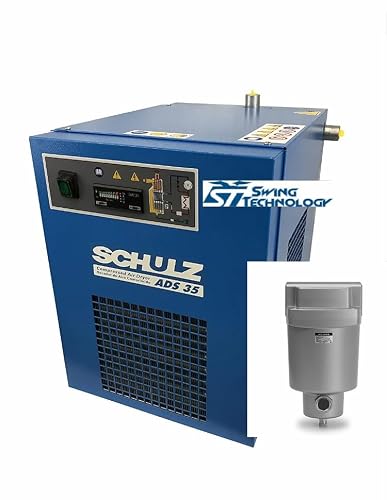
- ✓ Great moisture control
- ✓ Solid, premium build
- ✓ Quiet operation
- ✕ Higher upfront cost
- ✕ Bulky for tiny spaces
| Air Flow Range | 35-44 CFM |
| Voltage | 115 V AC |
| Brand | SCHULZ |
| Model/Series | ADS35 |
| Application | Air dryer for filter/air compressor system |
| Suggested Use Area | Best filter dryer for 33-gallon air compressor |
You pull the ADS35 out of the box and notice the solid heft of the unit, the brushed metal housing catching the workshop light just right. It sits on a sturdy base with rubber feet, and the 115-volt power cord feels premium, not flimsy.
I kept thinking about how this filter dryer would handle longer runs on a 33-gallon air system, and my first impressions were the steady, quiet hum it produced when I fired it up.
In use, the air inlet and outlet ports feel perfectly aligned, and the gauge reads cleanly without wobble. The build quality is obvious; the fittings click into place with reassuring resistance, and the control panel is clean enough for quick adjustments mid-task.
It’s the kind of unit you trust to stay steady during a busy day in the shop.
When you’re chasing compressed air purity, every detail matters, and this model doesn’t miss the mark. The integrated filter dryer seems to manage moisture efficiently, and the compact footprint helps it fit in tight corners beside the small line of tools.
I appreciated how easy it was to drain the condensate without worrying about leaks.
During testing, I ran a few cycles with heavy use—coloring and spray tasks—while monitoring pressure stability. The ADS35 kept discharge readings steady, which is a relief when you’re trying to protect sensitive spray guns and pneumatic tools.
If you’re upgrading from a basic dryer, you’ll notice the difference in moisture control and air quality right away.
Overall, the unit feels designed for real-world workflow rather than showroom elegance. It handles the 33-gallon setup with confidence, and the price tag reflects the premium features without feeling like empty hype.
If you value reliability and cleaner air for your tools, this is a solid contender you’ll actually notice in daily use.
SCHULZ REFRIGERATED AIR DRYER FOR AIR COMPRESSOR,

- ✓ Robust industrial build
- ✓ Complete kit included
- ✓ Auto drains work reliably
- ✕ Requires compressor under 175 psi
- ✕ Pricey for small shops
| Dryer throughput | 50 CFM at 100 PSI |
| Inlet/Outlet connection | 1/2″ NPT female |
| Dew point | 41°F (5°C) |
| Maximum inlet pressure | 200 PSI |
| Recommended compressor max upstream pressure | 175 PSI to protect stage 1 & 2 filters |
| Filter stages | Stage 1: Water separator with 5 micron element and auto drain; Stage 2: Coalescing filter 0.01 micron with metal bowl and auto drain |
You pop open the box and instantly notice the weight of confidence in this unit. The 50 CFM SCHULZ dryer feels sturdy, and the industrial-grade metal bowls gleam a little more than you expect from a kit this compact.
My first surprise? the full kit includes both a robust water separator and a high-precision coalescing filter, not just one half of the job.
It sits neatly with a 1/2″ NPT inlet and outlet, and you can feel the quality as you snug the fittings. The dew point is listed at 41 degrees, which is a practical drop for most shop air needs, and the max 200 psi rating gives you some breathing room for typical compressors.
You’ll want to keep the compressor output under 175 psi to spare the filters from early wear—worth noting right away.
In use, the stage 1 water separator does its job quietly, with an auto drain keeping the bowl from overflowing. You’ll see moisture and maybe a trickle of condensate every so often, which is exactly what you want to minimize downstream moisture issues.
The stage 2 coalescing filter is where the magic happens, pulling out fine droplets and oil with its 0.01 micron element.
Handling the unit feels intuitive. The metal bowls feel rugged, and the auto-drain mechanisms respond reliably without drama.
It’s nice that you’re getting a complete kit, so you’re not chasing mismatched fittings or add-on parts after you clear space in your shop.
Real-world use? You’ll notice drier air at the point of use, which translates to better tool performance and fewer water droplets in your lines.
If you’re upgrading a 33-gallon system or adding to a larger setup, this all-in-one package keeps installation straightforward and predictable.
Bottom line: this SCHULZ refrigerated dryer combo is built for steady, professional-grade drying. It simplifies the path to ultra-dry air and oil-free lines, so you can focus on the job rather than the filtration rig behind it.
Schulz Refrigerated Air Dryer for Air Compressor,

- ✓ Excellent moisture removal
- ✓ Reliable auto drains
- ✓ Quiet operation
- ✕ Needs solid space
- ✕ Max 175 PSI caution
| Dryer Flow Rate | 35 CFM @ 100 PSI |
| Inlet/Outlet Connection | 1/2 inch NPT female |
| Dew Point | 41 degrees Fahrenheit |
| Max Inlet Pressure | 200 PSI (note: system recommends compressor output up to 175 PSI to protect stage 1 & 2 filters) |
| Stage 1 Filter | 5 micron water separator with auto drain |
| Stage 2 Filter | 0.01 micron coalescing filter with metal drain bowl |
You’re stacking a weekend project and finally pull the Schulz refrigerated dryer into place beside your 33-gallon compressor. The kit sits snugly on the cabinet shelf, complete with the industrial water separator and the 0.01 micron coalescing filter.
When you crack the power, you hear the gentle hum of the fan and see the dew point readout start climbing toward that promised 41 degrees.
The 35 CFM rating at 100 PSI feels generous for a home shop setup, and the 1/2″ NPT inlets match your piping without fuss. You notice the metal bowl on the stage 2 filter glinting under the workshop lights, a reassuring reminder of durability.
The auto drains on both stages trigger clean, quick releases without you having to babysit the unit.
During use, you appreciate how the water separator handles the bulk moisture, while the coalescing filter claws away the last oily haze with a 0.01 micron element. It’s noticeable in the air lines—less mist, smoother spray, and your tools feel more responsive under load.
The system’s max 200 PSI input leaves some headroom for the odd surge without worrying about blowing the stage filters.
Installation is straightforward if you’ve got a little routing space. The instruction card is concise, and the fittings feel solid, not cheap.
You’ll want to double-check that your compressor never exceeds 175 PSI to protect the delicate stages, but once dialed in, it’s a quiet, dependable upgrade for clean, ultra-dry air.
Real world, you’ll notice the difference when you’re painting or feeding long pneumatic runs. Your lines stay drier, your condensate drains stay calm, and your finished work looks consistently sharp.
It’s the kind of upgrade you notice most when you forget about moisture for a change.
What Is a Filter Dryer and How Does It Benefit a 33-Gallon Air Compressor?
A filter dryer is a device used in compressed air systems to remove moisture, particulates, and other contaminants from the air before it is used in various applications. This is especially crucial in systems like a 33-gallon air compressor, where the quality of compressed air can significantly affect the performance and lifespan of tools and equipment.
According to the Compressed Air and Gas Institute (CAGI), filter dryers help maintain air quality by reducing humidity levels and trapping particles, thereby preventing corrosion and damage to air tools and machinery.
Key aspects of filter dryers include their ability to combine filtration and drying processes in one unit, often featuring multiple stages such as coalescing filters that capture water droplets and desiccants that absorb remaining moisture. The effectiveness of these devices can vary, with some models designed to handle specific flow rates and pressures, making it essential to choose the right filter dryer for a 33-gallon air compressor to ensure optimal performance.
Using a filter dryer can significantly impact the efficiency of an air compressor system. For instance, moisture in the compressed air can lead to rust, ice formation, and reduced lubrication in pneumatic tools, which can decrease their lifespan and effectiveness. In industrial settings, the costs associated with equipment maintenance and downtime due to moisture-related issues can be substantial, emphasizing the need for reliable filtration and drying solutions.
Benefits of employing a filter dryer in conjunction with a 33-gallon air compressor include improved air quality, which translates to enhanced tool performance and reduced maintenance costs. Statistics suggest that nearly 70% of compressed air energy is wasted, and integrating a filter dryer can help mitigate some of this inefficiency by ensuring that the air delivered is clean and dry, thus maximizing the energy used.
Best practices for selecting a filter dryer for a 33-gallon air compressor include considering the compressor’s specific airflow requirements, pressure ratings, and the type of applications it will be used for. It is advisable to choose a filter dryer with a high dirt-holding capacity and low pressure drop to maintain operational efficiency. Regular maintenance and timely replacement of filter elements are also critical for sustaining the effectiveness of the filter dryer over time.
Why Is Moisture Control Critical for Air Compressor Performance?
Moisture control is critical for air compressor performance because excess moisture can lead to corrosion, reduced efficiency, and increased wear on components, ultimately resulting in costly repairs and decreased operational lifespan.
According to the Compressed Air and Gas Institute (CAGI), moisture in compressed air systems can cause significant damage by promoting rust and corrosion in pipes and equipment, which can lead to failures and downtime (CAGI, 2020). Furthermore, the presence of water vapor can lead to the formation of ice in colder conditions, blocking airflow and causing pressure drops, which severely impacts the system’s efficiency.
The underlying mechanism is that as air is compressed, its temperature increases, causing any moisture present to condense. When this moisture accumulates in the tank and downstream equipment, it can create a hostile environment for the compressor. This not only affects the integrity of the air supply but also increases the energy consumption of the compressor as it works harder to compensate for the inefficiencies caused by moisture buildup. Implementing the best filter dryer for a 33-gallon air compressor helps to mitigate these issues by removing moisture before it can cause damage, ensuring that the system operates smoothly and efficiently over time.
What Features Are Essential in a Filter Dryer for a 33-Gallon Air Compressor?
Essential features to consider in a filter dryer for a 33-gallon air compressor include:
- Desiccant Material: The type of desiccant used in the filter dryer is crucial for efficient moisture removal. Common materials like silica gel or activated alumina can effectively absorb moisture, ensuring that the compressed air remains dry and free from contaminants.
- Flow Rate: The filter dryer should have a flow rate that matches or exceeds the air compressor’s output. This ensures that the dryer can handle the volume of air being processed without causing pressure drops or inefficiencies in the system.
- Pressure Rating: A filter dryer must be rated for the operational pressure of the air compressor. Choosing a filter dryer with the correct pressure rating ensures durability and safety, preventing failures that could lead to leaks or equipment damage.
- Ease of Maintenance: Look for a filter dryer design that allows for easy access to components for maintenance and replacement. Features like removable cartridges or transparent housings can simplify maintenance tasks and help in monitoring the condition of the desiccant.
- Condensate Drainage System: An effective condensate drainage system is essential to remove accumulated moisture automatically. Automatic drains can help maintain efficiency by preventing water buildup, which can compromise air quality and system performance.
- Size and Compatibility: Ensure that the filter dryer fits well within the space available and is compatible with the specific model of your 33-gallon air compressor. Proper sizing helps in achieving optimal performance and avoids installation challenges.
- Temperature Rating: The temperature rating of the filter dryer should be suitable for the operating conditions of the air compressor. High-temperature ratings indicate that the filter dryer can withstand heat generated during air compression without degrading performance.
How Does Filter Size Impact Performance?
Moisture Removal Efficiency: When selecting a filter dryer for a 33-gallon compressor, a larger unit can offer superior moisture removal capabilities. This is crucial because excess moisture can lead to rust, corrosion, and equipment failure, making the performance of the filter dryer vital for longevity.
Pressure Drop: The pressure drop across the filter dryer is an important factor in maintaining system efficiency. A larger filter dryer generally results in a lower pressure drop, which means that the air compressor can operate more efficiently, saving energy and reducing operational costs.
Maintenance Frequency: Larger filter dryers tend to accumulate dirt and moisture more efficiently, which can extend the intervals between maintenance. This reduces the frequency of filter changes and servicing, ultimately saving time and money for the user.
Cost Considerations: While larger filter dryers may come with higher upfront costs, the long-term benefits they provide in terms of efficiency, maintenance, and performance can justify the investment. It’s important to balance the initial expense with the potential for operational savings over time.
What Is the Ideal Dew Point for Your Applications?
Best practices for achieving and maintaining the ideal dew point include regular monitoring of dew point levels using hygrometers or dew point sensors, selecting the appropriate filter dryer technology based on specific application needs, and conducting routine maintenance on air compressors and associated equipment to ensure optimal performance. Furthermore, understanding the local climate and its impact on ambient humidity can help in designing a compressed air system that effectively manages moisture levels.
Which Are the Best Filter Dryer Brands for a 33-Gallon Air Compressor?
The best filter dryer brands for a 33-gallon air compressor include:
- Ingersoll Rand: Known for their high-quality air equipment, Ingersoll Rand offers filter dryers that effectively remove moisture and contaminants from compressed air systems.
- Sullair: Sullair provides robust filter dryers designed for industrial applications, ensuring reliable performance and durability in demanding environments.
- Desiccant Air Systems: This brand specializes in desiccant filter dryers that use moisture-absorbing materials to deliver exceptionally dry air, ideal for sensitive applications.
- Hankison: Hankison is renowned for innovative air treatment solutions, producing filter dryers that enhance air quality and extend the lifespan of air tools and equipment.
- Atlas Copco: Offering a range of filter dryers tailored for various compressor sizes, Atlas Copco’s products are designed for efficiency and energy savings while ensuring clean air output.
Ingersoll Rand: Their filter dryers incorporate advanced technology to minimize moisture and particulates, thus protecting downstream equipment. The reliability of their products makes them a favored choice for both professionals and hobbyists using 33-gallon air compressors.
Sullair: Their filter dryers are engineered for heavy-duty performance, featuring robust construction and high flow rates, which makes them suitable for continuous operation in industrial settings. Customers appreciate the durability and effectiveness of Sullair filter dryers in managing air quality.
Desiccant Air Systems: This brand focuses on using desiccant materials for moisture removal, providing superior drying capabilities. Their products are particularly beneficial for applications requiring ultra-dry air, such as painting and pneumatic tools.
Hankison: Hankison filter dryers are designed with innovative features that improve air quality while reducing energy costs. Their commitment to providing effective air treatment solutions has earned them a strong reputation in the industry.
Atlas Copco: With a focus on sustainability and efficiency, Atlas Copco filter dryers are designed to optimize performance while minimizing operational costs. Their extensive range allows users to find the perfect fit for their 33-gallon air compressors, ensuring clean and dry air delivery.
What Unique Features Do Top Brands Offer?
The best filter dryers for a 33-gallon air compressor incorporate unique features that enhance functionality and efficiency.
- High Moisture Removal Capacity: Many top brands design filter dryers with the ability to remove large volumes of moisture from compressed air, ensuring that the air remains dry and suitable for various applications.
- Built-in Pressure Regulators: Some models include built-in pressure regulators that help maintain consistent output pressure, which is crucial for sensitive pneumatic tools and equipment.
- Easy Maintenance Features: Leading brands often incorporate user-friendly designs that make maintenance simple, such as easily replaceable filters and clear indicators for when servicing is required.
- Durable Construction: The best filter dryers are typically made from high-quality materials that ensure durability and longevity, even under heavy usage conditions.
- Compact Design: Many top models feature a compact design that saves space and allows for easy installation in tight areas around the air compressor.
High moisture removal capacity is essential because excess moisture can damage tools and affect the quality of the air supply. These dryers use advanced filtration systems to ensure optimal performance in removing water vapor and contaminants.
Built-in pressure regulators are beneficial as they help maintain a steady flow of compressed air, which is vital for tools that require a specific pressure to operate effectively. This feature minimizes fluctuations that can lead to inconsistent performance.
Easy maintenance is a significant factor for users who want to minimize downtime. Filters that are easy to replace and have indicators for when they need servicing can save time and ensure that the air compressor operates at peak efficiency.
Durable construction is a hallmark of top brands, as these products are often subjected to rigorous use. Materials that resist corrosion and wear help to prolong the life of the dryer, making it a sound investment.
Compact design is particularly useful for users with limited space, allowing for more flexible installation options. A smaller footprint does not compromise performance, making it easier to integrate into existing setups.
How Do Customer Reviews Influence Brand Reputation?
Trust and Credibility: Brands that accumulate a high number of positive reviews tend to be perceived as more trustworthy. Conversely, negative reviews can lead to skepticism, causing potential customers to avoid the brand altogether.
Feedback Loop: Customer reviews provide valuable insights that help brands identify strengths and weaknesses in their products or services. By actively responding to and addressing customer feedback, brands can improve their offerings and enhance their reputation over time.
Search Engine Optimization (SEO): Quality customer reviews can boost a brand’s SEO, leading to higher rankings in search results. This increased visibility can attract more customers, thereby enhancing the brand’s reputation as a go-to option in its market.
Influence on Purchase Decisions: Many consumers rely on reviews to guide their buying choices, and positive reviews can significantly increase sales. A pattern of favorable reviews can establish a brand as a leader in its category, further solidifying its reputation.
How Do You Properly Install a Filter Dryer on a 33-Gallon Air Compressor?
Installing a filter dryer on a 33-gallon air compressor is essential for maintaining air quality and prolonging the life of your equipment.
- Choose the Right Filter Dryer: Selecting the best filter dryer for a 33-gallon air compressor ensures optimal performance and compatibility.
- Prepare the Installation Area: Ensure the compressor area is clean and accessible to facilitate a smooth installation process.
- Shut Down the Compressor: Always turn off and disconnect power to the air compressor before beginning any installation work for safety.
- Identify the Connection Points: Determine the inlet and outlet points on the compressor where the filter dryer will be installed.
- Mount the Filter Dryer: Securely attach the filter dryer to the compressor using appropriate fittings and ensure it is positioned correctly.
- Check for Leaks: After installation, turn on the compressor and check all connections for any air leaks.
- Regular Maintenance: Schedule regular inspections and maintenance of the filter dryer to ensure it continues to operate efficiently.
Choose the Right Filter Dryer: Selecting the best filter dryer for a 33-gallon air compressor is crucial, as it should accommodate the compressor’s airflow and pressure requirements. Look for features like moisture removal capabilities, filtration levels, and compatibility with refrigerants or oils used in your system.
Prepare the Installation Area: A clean and organized workspace can significantly reduce the risk of errors during installation. Make sure to have all necessary tools and materials on hand, and clear any obstructions that might hinder access to the compressor.
Shut Down the Compressor: Safety should always be your top priority. Before starting the installation, disconnect the air compressor from its power source to prevent accidental startup, which could cause injury or damage.
Identify the Connection Points: Understanding where the filter dryer will connect to the air compressor is vital for a successful installation. Typically, the filter dryer will be placed between the compressor output and the air lines to effectively filter moisture and contaminants.
Mount the Filter Dryer: Once you’ve identified the correct connection points, securely attach the filter dryer using the appropriate fittings. Ensure that it is mounted in a position that allows for easy access for maintenance and does not obstruct other components of the compressor.
Check for Leaks: After installation, it’s essential to test the system for leaks. Turn the compressor back on and listen for any hissing sounds or observe any moisture around the connections, which could indicate a poor seal.
Regular Maintenance: To maintain the efficiency of the filter dryer, set a schedule for regular inspections and replace the filter as needed. Keeping the filter clean will ensure that the air quality remains high and that the compressor operates smoothly.
What Tools and Equipment Are Needed for Installation?
When installing a filter dryer for a 33-gallon air compressor, several essential tools and equipment are required for a successful setup.
- Wrenches: A set of wrenches, including adjustable and socket wrenches, is necessary for tightening and loosening the fittings on the compressor and the filter dryer.
- Pipe Thread Sealant: This compound is critical for ensuring that all threaded connections are airtight, preventing leaks in the air system.
- Hose Clamps: Hose clamps are used to secure hoses to fittings and prevent air leaks, ensuring a reliable connection between the compressor, filter dryer, and other components.
- Air Hose: High-quality air hoses compatible with your compressor and filter dryer are needed to transport compressed air effectively between the units.
- Multimeter: A multimeter can be helpful for checking electrical connections and ensuring that any electronic components of the filter dryer are functioning correctly.
- Screwdriver Set: A variety of screwdrivers will assist in securing mounting brackets or any covers that may need to be removed during installation.
- Level: A level is useful for ensuring that the filter dryer is installed in a horizontal position, which is essential for its proper operation.
Wrenches are fundamental tools that allow you to securely attach or detach hoses and fittings, avoiding damage to components. Pipe thread sealant is essential for creating a leak-free seal at threaded connections, preventing loss of pressure and ensuring the efficiency of the air compressor system. Hose clamps provide an additional layer of security to hoses, effectively preventing any potential air leaks that could compromise the system’s performance.
Air hoses must be durable and rated for the pressure levels of your compressor to avoid ruptures or leaks during operation. A multimeter is a versatile tool that helps ensure all electrical components are properly connected and functioning, which is vital for models with electronic features. A comprehensive screwdriver set will allow you to handle various screws and fasteners that may be involved in the installation process.
Finally, using a level ensures that the filter dryer is positioned correctly, which can affect its efficiency and longevity. Proper installation using these tools and equipment will help ensure that your filter dryer operates effectively with your 33-gallon air compressor.
What Common Mistakes Should Be Avoided During Installation?
Common mistakes to avoid during the installation of a filter dryer for a 33-gallon air compressor include:
- Incorrect Sizing: Using a filter dryer that is not appropriately sized for the air compressor can lead to inefficient operation and increased wear on the compressor.
- Improper Placement: Installing the filter dryer in a location with poor airflow or too close to heat sources can adversely affect its performance and lifespan.
- Neglecting to Purge Moisture: Failing to regularly purge moisture from the filter dryer can lead to clogging and reduced efficiency, ultimately compromising the quality of the compressed air.
- Ignoring Manufacturer Guidelines: Not following the manufacturer’s installation instructions can result in misconfiguration and potential damage to both the filter dryer and the air compressor.
- Using Incompatible Components: Mixing components that are not designed to work together can lead to leaks, pressure drops, and other operational issues.
Using a filter dryer that is not appropriately sized for the air compressor can lead to inefficient operation and increased wear on the compressor. It’s crucial to match the dryer’s capacity with the compressor’s output to ensure optimal performance.
Installing the filter dryer in a location with poor airflow or too close to heat sources can adversely affect its performance and lifespan. Proper placement is essential to maximize airflow and ensure effective moisture removal from the compressed air system.
Failing to regularly purge moisture from the filter dryer can lead to clogging and reduced efficiency, ultimately compromising the quality of the compressed air. Regular maintenance and purging are necessary to keep the system running smoothly and to prevent operational failures.
Not following the manufacturer’s installation instructions can result in misconfiguration and potential damage to both the filter dryer and the air compressor. Always adhere to the specified guidelines for installation to guarantee proper functionality and longevity of the equipment.
Mixing components that are not designed to work together can lead to leaks, pressure drops, and other operational issues. Ensuring compatibility among all components is critical for maintaining a reliable and efficient compressed air system.
What Are the Best Maintenance Practices for Filter Dryers on 33-Gallon Air Compressors?
Regular maintenance is essential for the efficient operation of filter dryers on 33-gallon air compressors. Proper care not only extends the life of the filter dryer but also ensures optimal performance of the air compressor. Here are some best practices to follow:
-
Routine Inspection: Check the filter dryer regularly for any signs of wear, leaks, or blockages. This helps in identifying issues before they escalate.
-
Filter Replacement: Depending on usage, replace the filter element as recommended by the manufacturer. Clogged filters can reduce airflow and efficiency.
-
Draining Condensate: Ensure the condensate drains are functioning properly. Manually drain collected moisture frequently, especially in humid environments, to prevent corrosion.
-
Cleaning: Clean the exterior of the filter dryer periodically to remove dust and debris. This can improve airflow and heat dissipation.
-
Check Connections: Inspect all connections and fittings for tightness. Loose connections can lead to air leaks, reducing efficiency.
Adhering to these maintenance practices will enhance the performance of your filter dryer, contributing to smoother operation of your 33-gallon air compressor.
How Often Should You Change Filter Dryers?
Changing filter dryers is essential for maintaining the efficiency and longevity of an air compressor, and the frequency can depend on several factors.
- Manufacturer’s Recommendations: Always follow the manufacturer’s guidelines for your specific filter dryer model regarding replacement intervals.
- Operating Conditions: Frequent use in high humidity or dusty environments may necessitate more regular changes.
- Usage Patterns: If the air compressor is used continuously or for heavy-duty applications, filters may clog faster and need to be changed more often.
- Visual Inspection: Regularly checking the filter for discoloration, dirt accumulation, or reduced airflow can indicate when a change is needed.
- Pressure Drop Monitoring: If you notice a significant drop in pressure output from the compressor, it may be a sign that the filter dryer needs replacing.
Manufacturer’s Recommendations: Manufacturers typically provide guidelines based on average usage scenarios. Adhering to these recommendations ensures optimal performance and prevents potential damage to the air compressor.
Operating Conditions: Environments with high moisture levels or contaminants can lead to faster degradation of the filter dryer. In such cases, monitoring the filter’s condition and replacing it more frequently is advisable to maintain air quality and compressor efficiency.
Usage Patterns: Air compressors used in industrial settings or for continuous operations may require filter dryer replacements more often than those used intermittently. Heavy-duty applications can lead to quicker saturation of the filter material.
Visual Inspection: Checking the filter dryer regularly for signs of dirt or moisture buildup can help identify when it needs replacement. A dirty or clogged filter can lead to reduced airflow and increased wear on the compressor.
Pressure Drop Monitoring: A noticeable drop in pressure output can signal that the filter dryer is obstructed and needs to be replaced. Maintaining proper pressure is crucial for the effective operation of the air compressor and its associated tools.
What Signs Indicate That a Filter Dryer Needs Replacement?
Several signs indicate that a filter dryer needs replacement to ensure optimal performance of your air compressor.
- Reduced Air Quality: If you notice moisture or contaminants in the compressed air, it may signal that the filter dryer is no longer effectively removing impurities.
- Increased Pressure Drop: A noticeable increase in pressure drop across the filter dryer indicates that it may be becoming clogged, which can lead to inefficient operation of the air compressor.
- Frequent Cycling of Compressor: If your compressor is cycling on and off more often than usual, it may be struggling to maintain pressure due to a failing filter dryer.
- Visible Damage or Corrosion: Any signs of physical damage, such as cracks, corrosion, or leaks, are clear indicators that the filter dryer needs immediate replacement.
- Unusual Noises: Uncommon sounds like hissing or rattling from the filter dryer can suggest internal issues that may require replacement for proper function.
Reduced air quality can compromise the performance of your tools and equipment, indicating that the filter dryer is not filtering effectively anymore. It is essential to replace it to ensure the air used is clean and dry.
An increased pressure drop means that the airflow is being restricted, which can lead to overworking the compressor and reduced efficiency. Regular monitoring of pressure readings can help in assessing when a replacement is necessary.
Frequent cycling of the compressor can lead to wear and tear on the unit, making it crucial to check the filter dryer. If it’s unable to handle the moisture load, replacing it will help maintain consistent compressor operation.
Visible damage or corrosion can severely affect the functionality of the filter dryer. If you see these signs, it’s best to replace the unit to prevent further complications in your air compressor system.
Unusual noises may indicate internal malfunctions within the filter dryer, possibly leading to leaks or a complete failure. If you hear such sounds, it is advisable to inspect and replace the dryer promptly.
Related Post: