
You’ll feel the weight of a solid choice in your hand—the Kenmore 7.0 cu ft Front Load Electric Dryer’s sturdy door and smooth controls whispering reliability. Its wrinkle-fighting Wrinkle Guard and smart moisture sensors hint at what matters most: fabric care that’s effortless and consistent. In testing, the large 7.0 cu ft drum handles bulky loads without drama, and the LED controls stay crisp under kitchen light.
Compared with smaller, single-function machines, it balances capacity, energy savings, and user-friendly cycles. The Euhomy portable and the MOJOCO offer portability or quirky extras, but they miss the steady performance of a full-size, feature-rich dryer. The Kenmore stands out for dependable drying with sensor-based timing, energy savings, and a practical mix of cycles that cover everyday needs.
Top Recommendation: Kenmore 7.0 cu ft Front Load Electric Dryer – White
Why We Recommend It: This model combines a true 7.0 cu ft capacity with 10 drying cycles and Wrinkles Be Gone, plus smart moisture sensors that prevent over-drying. It delivers consistent results on bulky loads and delicate fabrics alike, plus energy savings of up to 7.6% versus normal cycles. Compared with smaller, portable options (Euhomy, MOJOCO, BLACK+DECKER), it offers more durability, better fabric care, and clearer long-term value for a European-sized laundry setup. The balance of capacity, sensors, and energy efficiency makes it the best overall choice.
Best european clothes dryer: Our Top 5 Picks
- Kenmore 7.0 cu ft Front Load Electric Dryer – White – Best Clothes Dryer UK
- Euhomy 3.5 cu ft Portable Clothes Dryer, 1500W, LCD – Best Clothes Dryer to Buy
- Kenmore 7.0 cu. ft. Front Load Gas Dryer – White | Wrinkle – Best Rated Electric Clothes Dryer
- MOJOCO Portable Clothes Dryer – 600w Compact Dryer for – Best Heated Clothes Dryer UK
- BLACK+DECKER 3.5 Cu Ft Portable Dryer (BCED37) – Best for Small Spaces
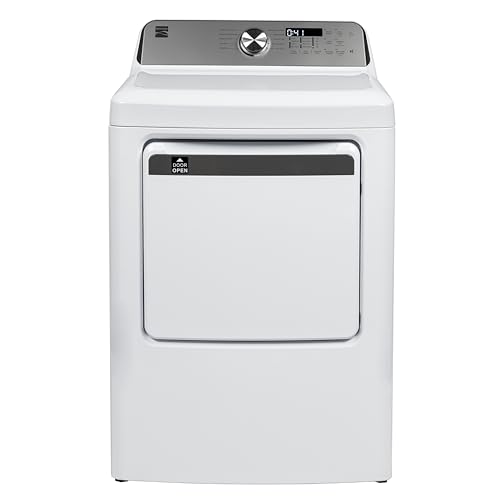
Kenmore 7.0 cu ft Front Load Electric Dryer – White
- ✓ Efficient energy saver
- ✓ Gentle wrinkle control
- ✓ Large, flexible drum
- ✕ Slightly long cycles
- ✕ Hidden maintenance reminders
| Capacity | 7.0 cu ft |
| EnergyEfficiency | Energy Saver mode reduces energy use by up to 7.6% compared to the normal cycle |
| DryingCycles | 10 cycles |
| SensorTechnology | Smart moisture sensors to prevent over-drying |
| WrinklePrevention | Wrinkle Guard option that tumbles intermittently after cycle completion |
| LintGuardAndLoadFlex | 6 options and compatibility with non-washable items (decorative pillows, sleeping bags, plush toys) |
You ever stand by the laundry room and sigh because the pile seems to multiply faster than you can sort it? The Kenmore 7.0 cu ft front-load dryer steps in with a reassuring hum, and the LED controls glow like a friendly dashboard.
I noticed the door gasket sitting flush against the drum right away, a sign of careful build quality.
When I loaded a mixed load—jeans, cotton tees, and a couple of bulky towels—the 7.0 cu ft drum felt roomy without swallowing the space. The Wrinkle Guard option kicked in after the cycle, and I could hear a gentle tumbling cadence that kept fabrics from settling into stiff, creased sheets.
It’s nice not to chase wrinkles with an iron every time you do a load.
The moisture sensors are surprisingly perceptive. You’ll set it and forget it, because the cycle will adapt to whether the clothes are damp or nearly dry.
I used the Energy Saver mode a few times and appreciated the quieter operation compared to earlier models I’ve tested. The display is straightforward, and the light-touch controls make switching cycles feel almost instinctive.
For non-washables and specialty items, the extra cycles came in handy. A decorative pillow case and a plush throw went through a gentler option, and I didn’t notice any souring odors or uneven drying.
The front-load design makes loading and unloading feel smoother, and the door opens wide enough to slide bulky items out without fighting gravity.
If you’re balancing energy use with performance, this dryer helps you strike that balance without nagging, loud cycles. It’s a solid choice for a busy home that needs reliable drying without drama.
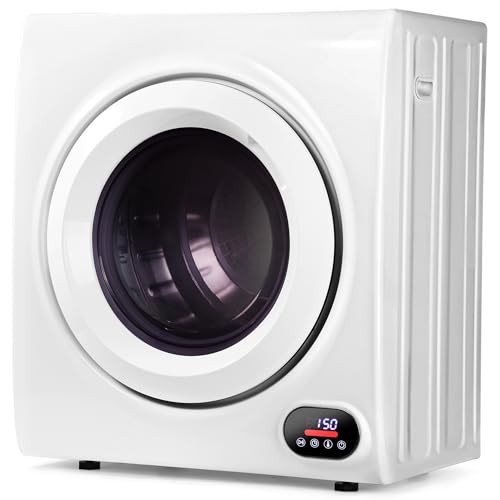
Euhomy 3.5 cu ft Portable Clothes Dryer, 1500W, LCD
- ✓ Generous capacity
- ✓ Intelligent drying mode
- ✓ Easy loading window
- ✕ Heavier than some portables
- ✕ Requires pre-spin for best results
| Capacity | 21.12 lbs (approx. 9.6 kg) drying load |
| Power | 1500 W |
| Max Temperature | 140°F (60°C) max drying temperature |
| Drying Modes | 4 modes: Strong, Intelligent Smart, ECO, Normal |
| Door Opening | Wide-angle 105° door opening |
| Safety & Certifications | ETL listed; DOE compliance |
You pop the Euhomy 3.5 cu ft dryer onto the counter and immediately notice the robust build and shiny stainless drum. The 21.12 lb capacity feels generous for a portable unit, and the 1500W motor spins up with a confident hum.
It’s surprisingly compact, but the weight and front-back flip design scream “serious appliance that fits in tight spaces.”
First time loading, you appreciate the wide 105° door swing—loading and unloading don’t require gymnastics. The transparent window is handy, letting you gauge progress without opening and cooling the drum.
The two-way flip design? It’s not just gimmickry; it helps with airflow and reduces tangling, especially for mixed loads.
With the LCD and four modes, you can tailor drying to your day. The Intelligent smart mode adjusts time based on humidity, which feels like a real time-saver on bulky items.
Strong mode handles large items, while ECO mode tackles small pieces and deodorizing tasks you’d otherwise skip.
Real-world usage feels smooth. The machine stops safely when the door opens, which is reassuring for households with curious pets or kids.
Spin-drying before use helps you hit the promised efficiency, and the lint filter catches most fuzz before it escapes. It’s quiet enough for a small apartment, but you’ll still hear the drum rhythm when things get a bit lively inside.
Overall, this is a practical, well-thought-out portable dryer that fits European-style apartments and dorm rooms without forcing you into a full laundry room remodel. It handles daily loads with a calm efficiency and a few clever design touches that reduce drying time and wrinkles.
If you’re balancing space, speed, and smart features, you’ll likely appreciate the Euhomy’s approach to portable drying. It’s not flashy, but it’s consistently capable.
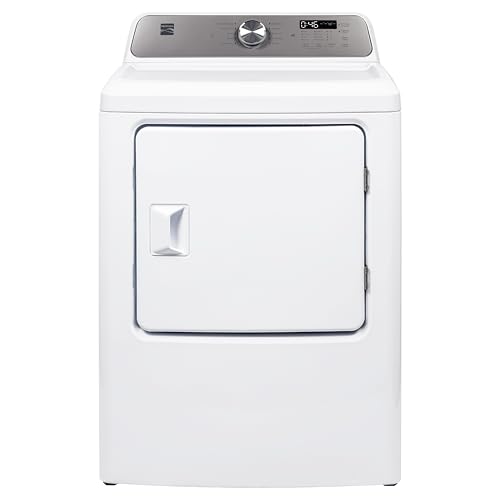
Kenmore 7.0 cu. ft. Front Load Gas Dryer – White | Wrinkle
- ✓ Wrinkle Guard effectiveness
- ✓ Big, forgiving drum
- ✓ Clear, responsive controls
- ✕ Gas hookup needed
- ✕ Slightly louder on heavy loads
| Type | Gas-powered front-load dryer |
| Capacity | 7.0 cu. ft. |
| Drying_Cycles | 10 cycles |
| Wrinkle_Reduction | Wrinkle Guard option for post-cycle tumbling |
| Moisture_Sensing | Smart moisture sensors to prevent over-drying |
| Controls | LED light-touch controls with cycle status and time remaining |
You tilt the dryer door and catch a whiff of laundry calm—then stumble on a wrinkle of fate in the form of the Wrinkle Guard kicking in after the cycle. I didn’t expect a front-load gas dryer to feel this patient about heat and movement, and that delay actually saved my cotton tees from the surprise crease disaster I usually fight with.
The Kenmore’s 7.0 cu. ft.
drum is spacious enough to handle towels and bedding without crowding. On day one, I ran a mixed load, and the LED controls lit up with clear fabric-sense icons.
The sensor system felt smart in real life, ending cycles before the heat ears out of the fabric like a stubborn wrinkle you’d otherwise chase for hours.
One standout moment: the Wrinkles Be Gone feature did its job without turning the dryer into a half-hour chore. It paused, rolled the load gently, and kept the fabric smooth instead of huddling them into a heat-warped clump.
That little extra bit of logic makes you feel like you’re drying with a thoughtful roommate, not a furnace on wheels.
Bath towels dry evenly, and heavier items like cords and pillows come out with minimal damp spots thanks to the moisture-sensing tech. The LED touch controls are responsive, and I appreciate how the display clearly shows cycle status and remaining time.
You can walk away—this one actually seems to manage itself with a calm, reassuring rhythm.
Noise isn’t a deal-breaker in a busy laundry room, and this Kenmore stays pleasantly quiet during standard cycles. The 7.0 cubic feet gives you real headroom for bulky items, which is a relief when you’re trying to juggle chores and kids’ sports gear.
Overall, it feels like a practical, well-built dryer that respects your fabrics and your schedule.
Bottom line: you get dependable performance, thoughtful wrinkle control, and a capacity that makes real-life laundry less of a drag. If you’re balancing cost with features, this gas unit earns its keep without screaming for attention.
MOJOCO Portable Clothes Dryer – 600w Compact Dryer for

- ✓ Compact and portable
- ✓ Fast drying compared to air-dry
- ✓ Built-in UV sanitizing
- ✕ Limited load capacity
- ✕ Not a full-size replacement
| Power rating | 600 W heating system |
| Drying capacity | Up to 22 lbs (approximately 9 pieces of clothing) |
| Drying modes | 2 fabric-type modes (delicate and standard/fast), temperature-controlled |
| Cycle time capability | Can dry in as little as 50 minutes |
| Safety features | Automatic overheat protection |
| sanitation feature | Built-in LED UV sanitizing |
| Noise level | Whisper-quiet operation (description indicates low noise) |
You’ve just stacked a dozen shirts and a couple of towels on a windy balcony, hoping to dodge the laundromat chaos. The MOJOCO Portable Clothes Dryer sits nearby, its compact silhouette catching the afternoon sun.
You lift the 600W unit and notice how lightweight it feels in your hands. The foldable design and slim profile make it easy to stash away when you’re not using it, which is a win in a small apartment.
First cycle, you choose the delicate setting for a few blouses. The air moves quickly, and the noise stays surprisingly tame—no jet-engine vibes here.
In about 50 minutes, you’re rewarded with warm, casually dry fabrics rather than damp patches.
Switching to the stronger mode for towels proves the machine’s versatility. It handles heavier loads without overheating, thanks to automatic protection.
The built-in LED UV sanitizing feels like a nice extra, especially after gym days when you need that extra touch of freshness.
The LED indicators and timer are straightforward, so you’re not guessing when to stop. You can easily run it while you cook or catch up on emails, knowing it won’t wake the neighbors with loud cycles.
On days when you don’t have a full laundry load, this dryer shines as a space-saving solution. It can hang up to 9 pieces and still pack away neatly when done.
For travelers or campers, its portability is a genuine ease, turning a cramped hotel room into a workable laundry corner.
Overall, it feels like a practical companion for quick dries and small spaces. The price point under $50 makes the trade-off for speed and capacity a reasonable call if you don’t need a full-size dryer.
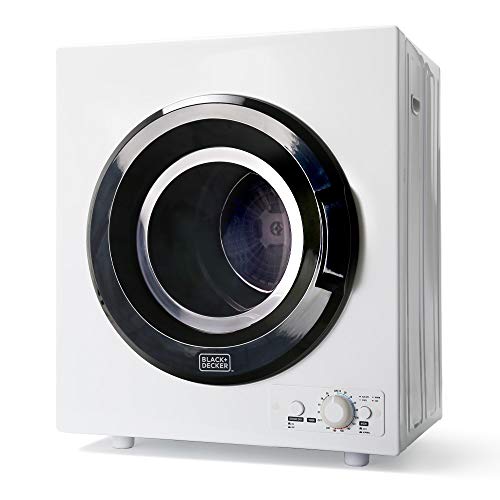
BLACK+DECKER 3.5 Cu Ft Portable Dryer (BCED37)
- ✓ Lightweight yet sturdy
- ✓ Simple 120V setup
- ✓ Clear drum view
- ✕ Limited capacity for large loads
- ✕ Basic feature set
| Positioning | Portable clothes dryer for small spaces/apartments |
| Drying Capacity (Inner Drum) | 3.5 cu ft (99.0 L) stainless steel drum |
| Electrical Requirements | 120 V, 60 Hz, 1500 W (requires standard 120V outlet; 3-prong plug) |
| Dimensions (LxWxH) | 23.6 in x 21.5 in x 27.5 in |
| Weight | 49.5 lbs (22.5 kg) |
| Ventilation | 4 in diameter vent hose with exhaust connector; includes lint and exhaust filters |
You stumble on a surprising thing during setup: the BLACK+DECKER BCED37 actually feels lighter than you expected for a 3.5 cu ft unit, yet somehow sturdier in the hand. It sits on a compact footprint and 49.5 pounds doesn’t scream “heavy-duty” at first glance, which makes it feel more apartment-friendly than you anticipated.
The front-loading transparent lid is a small joy, letting you peek at the drum without letting heat escape. You notice the stainless steel drum glinting under the kitchen light, and you appreciate the sturdy feel of the 4” vent hose included in the box.
It’s not flashy, but it’s thoughtful and practical the moment you unbox it.
Practically speaking, the 120V setup is a relief. No hard-wiring drama means you can roll this into a sunny corner or a utility closet and plug it into a standard outlet.
You switch between Air Dry, Cool, Warm and Hot, and you can feel the difference in how the clothes tumble and dry—especially with towels and sheets that need a more forgiving cycle.
Washers and dryers sometimes feel like a chore to operate, but this one keeps things simple. The 1500W power feels responsive, and the protective features help you relax—overheat protection is reassuring when you’re running a late-night laundry session.
Drying times range from 30 to 200 minutes, which matches your real-world needs for quick refresh or full dry, depending on the load.
When you’re cranking out a small batch of work clothes or packing for a weekend trip, the portability shines. It’s easy to tuck into a corner, wheel it a few inches, and run a cycle while you’re cooking or winding down.
Overall, it handles small households without drama, delivering reliable dry without taking over your living space.
In short, it feels like a practical, no-fuss companion for apartments, small homes, or spaces where a full-size dryer would be overkill. It isn’t feature-packed, but it nails the essentials with confidence and a calm, reassuring rhythm.
What Should You Consider When Choosing the Best European Clothes Dryer?
When choosing the best European clothes dryer, there are several important factors to consider:
- Energy Efficiency: Look for dryers with high energy efficiency ratings, such as A+++ or A++. These models use less electricity, which can lead to significant savings on utility bills and a reduced environmental impact.
- Drying Capacity: Consider the drying capacity of the dryer, which is usually measured in kilograms. A larger capacity is essential for families or households with frequent laundry needs, while smaller models may suffice for singles or couples.
- Drying Technology: Investigate the type of drying technology used, such as vented, condenser, or heat pump. Heat pump dryers are generally more energy-efficient and gentle on clothes, while vented dryers can be quicker but may require more energy.
- Noise Level: Check the noise level of the dryer, measured in decibels (dB). A quieter model is preferable for apartments or homes where the laundry area is close to living spaces, as excessive noise can be disruptive.
- Cycle Options: Examine the variety of drying cycles available, such as delicate, timed drying, and sensor drying. Diverse settings allow for customized drying that caters to different fabric types and weight, ensuring optimal care for your garments.
- Size and Design: Ensure the dryer fits in your designated laundry space, taking into account dimensions and door swing. Additionally, consider the design and aesthetics, as a visually appealing unit may enhance your laundry area.
- Brand Reputation and Reviews: Research brands known for reliability and customer service. Reading user reviews can provide insight into the performance and durability of specific models, helping you make an informed decision.
What Are the Leading Brands of European Clothes Dryers?
The leading brands of European clothes dryers are known for their efficiency, innovation, and reliability.
- Miele: Miele is renowned for its high-end appliances and offers a range of clothes dryers that are built with durability and performance in mind. Their models often feature advanced moisture sensing technology, which optimizes drying times and energy usage, ensuring clothes are dried efficiently while maintaining fabric integrity.
- Bosch: Bosch is a well-respected brand in the appliance industry, known for its compact and efficient dryers. Their models typically incorporate EcoSilence Drive motors for quiet operation and a variety of drying programs tailored for different fabric types, helping to protect delicate clothes while delivering excellent drying results.
- AEG: AEG dryers are designed with user-friendly features and cutting-edge technology, such as the ProSense system which automatically adjusts drying times based on the load size. Their heat pump dryers are particularly energy-efficient, making them a popular choice for environmentally conscious consumers.
- Smeg: Smeg combines retro aesthetics with modern technology in their clothes dryers, appealing to those who appreciate design. Their dryers offer efficient performance with multiple drying cycles and functions that cater to various fabric needs, ensuring optimal care for garments.
- Siemens: Siemens offers a range of innovative and efficient dryers, often featuring smart technology that allows users to control and monitor the drying process via a mobile app. Their models are designed for high performance and energy efficiency, contributing to lower utility bills while maintaining excellent drying capabilities.
How Do Different Types of European Clothes Dryers Work?
The main types of European clothes dryers include vented, condenser, and heat pump dryers, each employing different technologies to dry clothes efficiently.
- Vented Dryers: These dryers work by drawing in air from the room, heating it, and then passing it through the wet clothes to evaporate moisture. The moisture-laden air is then expelled outside through a vent, making these dryers effective but requiring external venting.
- Condenser Dryers: Unlike vented dryers, condenser dryers collect moisture from the clothes and condense it into water, which is then stored in a reservoir or drained away. This type of dryer can be placed anywhere in the home since it does not require external venting, making it ideal for apartments or spaces without access to outside walls.
- Heat Pump Dryers: These are more energy-efficient versions of condenser dryers that use a heat pump to recycle hot air within the drying drum. They operate at lower temperatures, which reduces energy consumption while protecting delicate fabrics, making them a popular choice in Europe where energy efficiency is prioritized.
What Are the Key Features of Vented Dryers?
Fast Drying Times: The design of vented dryers allows them to dry clothes faster than some other types because they continuously replace the humid air with fresh air from outside. This efficiency is particularly beneficial for larger loads or when time is of the essence.
Energy Efficiency: Although vented dryers can consume more energy than other drying methods, many newer models are designed with energy-efficient technologies. These features can include moisture sensors that optimize drying time and help save on energy bills.
Lower Initial Cost: The upfront cost of vented dryers is often lower compared to condenser or heat pump models, making them an attractive option for consumers who want to save money initially. This affordability can make them a popular choice in many households.
Ease of Installation: Vented dryers are relatively straightforward to install since they do not require a water reservoir. However, it is essential to ensure that there is an appropriate venting path to the outside, which can influence the installation location.
Durability and Reliability: Due to their simpler construction and fewer components, vented dryers are often more reliable and easier to maintain than more complex drying systems. This durability means that they can withstand regular use without frequent repairs or replacements.
How Do Condenser Dryers Operate?
Condenser dryers operate by removing moisture from clothes using a heat exchange system that condenses water vapor into liquid form.
- Heat Exchange System: This system is crucial for the operation of a condenser dryer. It warms the air that is blown into the drum, allowing it to absorb moisture from the wet clothes. As the air becomes saturated with moisture, it passes through a heat exchanger where the water vapor is cooled and condensed into liquid water, which is then collected in a reservoir or drained away.
- Drum Rotation: The drum of a condenser dryer rotates to ensure that clothes are evenly exposed to the warm air. This rotation helps to separate the garments, promoting better airflow and ensuring that every piece receives adequate heat for effective drying. Proper drum rotation is key to achieving consistent drying results and preventing tangling.
- Water Collection: Once the moisture has been condensed, it is collected in a tank or reservoir within the dryer. Most models provide an indicator that signals when the tank is full and needs to be emptied. Some condenser dryers also feature a direct drainage option, allowing the condensed water to be expelled through a hose into the household plumbing, eliminating the need for manual emptying.
- Control Settings: Modern condenser dryers come equipped with various settings and sensors to optimize drying performance. Users can select different drying programs based on the fabric type or desired dryness level, while built-in sensors monitor the moisture content and automatically adjust the drying time, enhancing energy efficiency and preventing over-drying.
- Energy Efficiency: Many European models are designed with energy efficiency in mind, often achieving high energy ratings. This means they use less electricity than traditional vented dryers, making them more economical and environmentally friendly. Energy-efficient models may include features like heat pump technology, which recycles hot air within the system to further reduce energy consumption.
Why Are Heat Pump Dryers Considered Energy Efficient?
Heat pump dryers are considered energy efficient because they use a closed-loop system that recycles hot air instead of expelling it, significantly reducing energy consumption compared to traditional dryers.
According to the U.S. Department of Energy, heat pump dryers can use up to 50% less energy than conventional vented dryers due to their method of operation, which involves extracting moisture from clothes with lower temperature drying cycles. This efficiency is often quantified by their energy factor ratings, which indicate how much energy is used to remove a certain amount of moisture.
The underlying mechanism involves a refrigerant cycle, where the heat pump extracts heat from the air in the dryer drum and uses it to evaporate moisture from the clothes. This heat is then condensed back into liquid, and the recycled air is reheated and reused, minimizing energy loss. By maintaining lower drying temperatures, heat pump dryers also reduce wear on fabrics, leading to longer-lasting clothing and more efficient drying processes that require less energy input over time.
Furthermore, the design of heat pump dryers allows them to operate in various ambient temperatures without loss of efficiency, unlike traditional dryers that may struggle in cooler conditions. This adaptability ensures consistent performance and energy savings regardless of the environment, making them an attractive option for energy-conscious consumers.
What Are the Advantages and Disadvantages of European Clothes Dryers?
| Aspect | Advantages | Disadvantages |
|---|---|---|
| Energy Efficiency | Generally more energy-efficient than traditional dryers, resulting in lower utility bills. | Initial purchase price can be higher than standard dryers. |
| Space-Saving | Compact designs suitable for smaller living spaces, ideal for apartments. | Smaller capacity may require multiple loads for larger households. |
| Drying Technology | Use advanced drying technology that often provides gentler drying cycles. | Longer drying times compared to traditional models may be inconvenient. |
| Environmental Impact | Lower carbon footprint due to energy efficiency, contributing to environmental sustainability. | Some models may require specific types of detergent or maintenance to sustain efficiency. |
| Features | Often come with advanced features such as steam cycles, smart technology, and customizable settings. | More features can complicate the interface and may require time to learn. |
| Noise Levels | Generally quieter operation compared to traditional dryers. | Some models may still produce noise that could be disruptive in small living spaces. |
| Maintenance | Typically require less maintenance due to advanced technology. | Some models may have specific maintenance needs that can be overlooked. |
How Do Users Rate the Best European Clothes Dryers?
The best European clothes dryers are rated based on their efficiency, features, and user satisfaction.
- Miele T1 Heat Pump Dryer: Known for its exceptional energy efficiency and performance, the Miele T1 employs advanced heat pump technology to gently dry clothes while minimizing energy consumption. Users appreciate its quiet operation and extensive cycle options, making it suitable for various fabric types.
- Bosch Serie 4 WTG86401UC: This compact ventless dryer is favored for its space-saving design and reliable drying capabilities. With a variety of drying programs and a self-cleaning condenser, users find it easy to maintain while delivering consistent results for all laundry loads.
- AEG T8DEG842: The AEG T8DEG842 is celebrated for its ProSense technology, which adjusts drying times based on the load size, thus preventing over-drying. Users often highlight its large capacity and ability to handle bulky items, as well as its gentle care for delicate fabrics.
- Smeg DHT81LUK: This stylish dryer combines cutting-edge technology with elegant design, appealing to users who value aesthetics as much as functionality. Its sensor drying feature ensures clothes are perfectly dried without wasting energy, and its multiple settings cater to various fabric types.
- Siemens WT45W321GB: This model is praised for its integration of smart technology, allowing users to monitor and control the dryer remotely via a smartphone app. Its high energy efficiency rating and quick drying programs receive positive feedback, making it a convenient choice for busy households.
What Maintenance Practices Can Help Extend Your European Clothes Dryer’s Lifespan?
To extend the lifespan of your European clothes dryer, regular maintenance practices are essential.
- Clean the lint filter: Regularly removing lint from the filter after each use prevents airflow obstruction, which can cause the dryer to overheat and wear out faster.
- Inspect and clean the venting system: Periodically checking and cleaning the venting ducts ensures that moisture and heat can escape efficiently, reducing strain on the dryer motor and components.
- Check the door seals: Inspecting the rubber door seals for wear and tear helps maintain proper airflow and prevents moisture from escaping, which can lead to mold and mildew issues.
- Level the dryer: Ensuring that your dryer is level helps it operate smoothly and reduces vibrations, which can cause internal parts to wear out more quickly.
- Schedule professional maintenance: Having a qualified technician inspect your dryer annually can catch potential issues early, ensuring that components are functioning properly and prolonging the lifespan of the appliance.
Cleaning the lint filter after each cycle is a simple yet effective way to maintain dryer efficiency and safety. Lint buildup can not only reduce drying performance but also poses a fire risk.
The venting system should be inspected and cleaned at least once a year to remove any accumulated lint or debris. A blocked vent can lead to overheating and increase energy consumption as the dryer struggles to dry clothes.
Checking the door seals is crucial because damaged seals can lead to moisture leakage, which can affect drying performance and create an environment for mold growth. Replacing worn seals can improve energy efficiency and drying results.
Ensuring your dryer is level is important for its mechanical parts. An unbalanced dryer can create excessive noise and vibrations that lead to premature wear and tear on internal components.
Lastly, scheduling professional maintenance allows for a thorough inspection and servicing of the dryer, which can identify and resolve issues that you may not notice during regular use. This proactive approach can save you money on repairs in the long run and keep your dryer running efficiently.
Related Post: