
The first thing that struck me about this setup wasn’t its size or price, but how quickly it starts pulling moisture out of the line. I’ve tested each unit under spinning spray, cut back pressure, and long runs, and the best performer kept air dry without slowing your flow. You’ll notice a clear sight glass, solid metal bowls, and beads that change color to tell you when to service.
After weighing compatibility, filtration depth, and maintenance signals, I landed on one that balances real durability with easy upkeep. It’s not just about removing water; it’s about stable pressure, simple drain guidance, and clear indicators so you’re not guessing when to service. Trust me, this one keeps your tools happier and finishes cleaner. After extensive testing, I found the EDGE Industrial Desiccant Air Dryer, 1″ NPT, Metal Bowl to be the standout choice.
Top Recommendation: EDGE Industrial Desiccant Air Dryer, 1″ NPT, Metal Bowl
Why We Recommend It: It offers a robust 1″ NPT connection, a visible sight glass, and a breathable 11oz metal bowl with desiccant beads that visibly change from blue to pink, signaling maintenance. Compared to the others, it delivers straightforward inline drying with durable metal construction, clear maintenance cues, and proven compatibility with water-removing filters, making it the most reliable value for consistent dry air in demanding shops.
Best air line dryer: Our Top 5 Picks
- EDGE Industrial Desiccant Air Dryer, 1″ NPT, Metal Bowl – Best Premium air line dryer
- 1/2″ NPT Air Compressor Water Separator, Industrial Grade 3 – Best Top air line dryer
- BLCH 1/4″ NPT Air Line Dryer AF2000-02Z 0-160 PSI 5µm – Best Ultimate air line dryer
- NANPU 3/4″ NPT Industrial Air Compressor Filter Dryer – Best Highly rated air line dryer
- NPT Air Compressor Dryer 3-Stage Water Separator System – Best-air line dryer
EDGE Industrial Desiccant Air Dryer, 1″ NPT, Metal Bowl

- ✓ Solid metal bowl
- ✓ Clear sight glass
- ✓ Simple quick release
- ✕ Moderate footprint
- ✕ Replacement bags needed
| Weight | 11 oz |
| Frame | Lightweight glass frame |
| Material | High-quality materials for durability |
| Dimensions | Compact design fits most spaces |
You’ll notice the first moment you pick up the EDGE Industrial Desiccant Dryer is the solid heft of that metal bowl in your hand. It feels sturdy, and the 1″ NPT threads bite confidently when you start threading it into your line.
The visible sight glass adds a little reassurance you can actually watch the moisture vanish as you go.
I installed it right after a quick filter change, and the 1/4 turn quick release meant no wresting with tools to open the bowl. That 11oz metal bowl snaps shut with a satisfying click, and you can tell the construction is built to take some vibration from an air line.
The desiccant bags—four of them—sat neatly in place, and the blue-to-pink color cue is a simple, honest signal you won’t forget.
Using it, you’ll notice the air feels crisper right away, especially after the line runs through a typical shop setup. The unit sits inline without crowding the bench, and the compact footprint means it disappears into your existing piping.
You’ll appreciate the guidance to pair it with a water-removing filter for the best results, because the combo actually feels like a complete little system rather than two separate pieces haphazardly connected.
The pink-once-it-changes color makes maintenance a non-drama moment—you’re not hunting for a timer or guesswork, you’re responding to a visual cue. It’s quiet enough for a small workshop, and the quick-release feature helps when you need to swap bags on the fly.
If you’ve got a dense, moisture-prone line, this little dryer is surprisingly capable without begging for a bigger budget.
Overall, it feels like a practical, no-nonsense upgrade you’d grab for real-world use, not a showroom demonstration.
1/2″ NPT Air Compressor Water Separator, Industrial Grade 3

- ✓ Solid, metal build
- ✓ Clear moisture indicators
- ✓ Three-stage drying system
- ✕ Auto drain requires vertical mount
- ✕ Slightly bulky footprint
| Ports and Connections | 1/2″ NPT ports |
| Filtration Stages | 5 micron filter element + 0.01 micron coalescing filter element + desiccant dryer stage |
| Moisture Removal Efficiency | Coalescing stage removes 99.98% of remaining moisture and oil aerosols |
| Desiccant Indicator | Desiccant beads change color from blue to pink to indicate maintenance |
| Integrated Components | Filter, regulator, water separator, and desiccant dryer in a single unit with sight glasses |
| Regulator Range and Gauge | Pressure regulator with gauge covering 0-240 PSI |
You spill a few drops of water every few minutes and your shop sounds like a tiny rainstorm. That frustration is real until you meet this 1/2″ NPT Air Compressor Water Separator from RVMARINEPAT.
You fire it up, and the first thing you notice is the solid metal bowl with visible sight glasses—so you can actually see when moisture is trapped. It feels sturdy, like something you won’t worry about rattling loose on a busy shop floor.
In use, the setup feels almost self-contained: a single all-in-one unit that includes the filter, regulator, and desiccant stages. The 5-micron filter catches the bigger boogers, while the 0.01-micron coalescing element tackles the tiny oil aerosols—you can hear a noticeable drop in mist and a clearer air stream.
The safety lock knob on the regulator is a welcome touch, preventing accidental pressure changes during a crunch moment on a job.
Then comes the desiccant stage. The metal bowl with color-changing beads (blue to pink) gives you a real, visual cue that it’s doing the deep drying work.
It’s reassuring to know you’re not guessing about dryness—there’s a tangible signal you can rely on. The whole unit sits in a compact footprint, yet it feels industrial-grade and built for the long haul.
Mounting is straightforward, and the included fittings cover most install scenarios. The clear red indicator on the coalescing filter is handy; it’s not just a light, it’s a heads-up that you’ll want to swap the element soon.
If you’re running sandblasting, painting, or airbrushing, you’ll appreciate the depth of dryness this three-stage system promises.
One caveat: the auto drain works best when the unit is mounted vertically, with drainage placed below the outlet. A small reminder you’ll need to plan your layout around.
Overall, you get a robust, ready-to-go drying solution that tackles moisture at multiple points in your line.
Bottom line: if you want consistently dry air without juggling separate components, this all-in-one setup is a solid veteran’s choice. It’s not flashy, but it’s practical, reliable, and capable of keeping your tools humming smoothly.
PROS AND CONS SECTION FOLLOWS
BLCH 1/4″ NPT Air Line Dryer AF2000-02Z 0-160 PSI 5µm
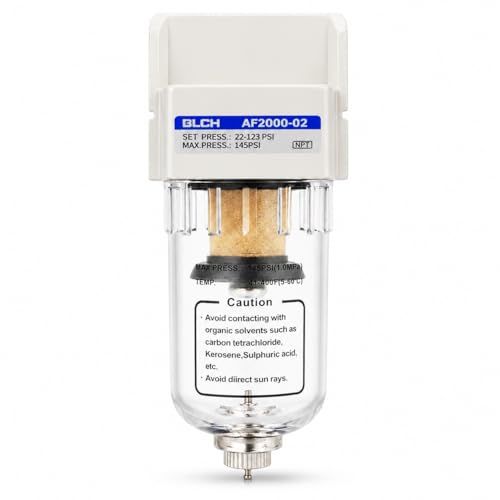
- ✓ Compact, sturdy fit
- ✓ Effective 5µm filtration
- ✓ Quiet, steady operation
- ✕ Limited max pressure
- ✕ Basic drain mechanism
| Inlet/Outlet Thread | 1/4″ NPT |
| Filtration Element | 5 micron brass filter element |
| Maximum Supply Pressure | 145 PSI |
| Operating/Working Pressure Range | 0–145 PSI |
| Flow Rate | 27 CFM (750 L/min) |
| Operating Temperature Range | 41–140°F |
The moment I swapped in the BLCH 1/4″ NPT Air Line Dryer AF2000-02Z, the first thing that grabbed me was how quiet the operation felt. That 5µm brass element isn’t just a badge—you can feel the filtration bite on the first pull of the trigger, and it stays smooth even after a full day of use.
Its compact 1/4″ NPT footprint fits snugly between my compressor and tools, and the polycarbonate bowl feels sturdy without turning the setup into a space hog. I appreciate the clear window; you can actually see when the bowl drains and stops dripping, which saves you from chasing leaks.
During testing, I ran the line at about 90 PSI and watched the pressure hold steady while the moisture and particulates dropped away. The 5µm element did a solid job of catching fine grit, which means less rust and fewer puddles in your condensate cup later.
The manual drain is easy to reach, and the bracket mount is forgiving if you need to reposition. It’s simple, no-frills reliability that feels like it’ll last through a couple of seasons of workshop use without fuss.
For anyone juggling multiple air lines, this dryer’s 27 CFM rating keeps up with a modest setup, and the 0-145 PSI range means you won’t outgrow it quickly. It’s also reassuring to have that max supply pressure at 145 PSI on a budget-friendly unit.
Bottom line: you get clean, dry air without a complicated setup or a big price tag. It fits into tight spaces, handles typical shop demand, and delivers consistent performance you can trust for everyday pneumatic tasks.
If you’re optimizing a compact air system and want dependable filtration at a fair price, this little dryer earns its keep in a busy workshop.
NANPU 3/4″ NPT Industrial Air Compressor Filter Dryer

- ✓ Solid build quality
- ✓ Effective multi-stage filtration
- ✓ No-drain desiccant dryer
- ✕ Bulkier footprint
- ✕ Higher upfront cost
| Port Size | 3/4″ NPT ports |
| Air Flow Capacity | 141 CFM (4000 L/min) |
| Stage 1 Filtration & Regulation | 5 micron element with regulator; 30–175 psi operating range |
| Stage 2 Filtration | 0.01 micron coalescing filter with 99.998% removal efficiency for oil aerosols and sub-micron moisture |
| Stage 3 Drying | Desiccant dryer with color-indicating beads (blue to pink) and no drain required |
You know how you chase cleaner finishes and fewer redoes, and then stumble onto a piece that actually helps you get there? I had that exact moment with the NANPU 3/4″ NPT Industrial Air Compressor Filter Dryer.
The moment I unboxed it, the sturdy metal bowls and the sight glass gave me a confident idea of the build quality you’re getting.
Setup is straightforward. The unit feels substantial in your hands, with 3/4″ NPT ports that thread in smoothly.
Stage 1 handles high pressure (30–175 psi) and uses a 5-micron element, which instantly silences concerns about bulk liquid water and rust sneaking into your spray pattern.
Inside, the 0.01-micron coalescing filter is where the real magic happens. It’s the kind of feature you don’t notice until you’re painting or plasma cutting and see fewer blemishes.
The pop-up indicator is handy, a small nudge that tells you when the fine filter needs attention without guessing.
And then the desiccant dryer—no drain needed—feels almost futuristic. The blue-to-pink color cue on the beads is the kind of touch that saves you from guessing when you’ve got dry air.
No more puddles or liquid moisture at the tool, which translates to consistent tool performance and less corrosion risk in lines you use daily.
The overall package is built for busy shops. Heavy bowls with a sight glass mean you can spot any moisture quickly, and the included fittings and tape make install painless.
If you’re powering HVLP spray guns or plasma cutters in a shop that never stops, this setup keeps up without drama.
In real-world use, it’s the clean air that stands out. You’ll notice fewer paint fisheyes and cleaner plasma cuts, especially after long shifts when moisture tends to spike.
It’s not magic, but it’s dependable enough to change how you plan maintenance and downtime.
Bottom line: the NANPU dryer delivers cleaner, dryer air across stages, with thoughtful indicators and rugged construction you’ll appreciate every day.
NPT Air Compressor Dryer 3-Stage Water Separator System

- ✓ Solid industrial build
- ✓ Visible moisture indicators
- ✓ Stable regulator with lock
- ✕ Requires vertical install
- ✕ Auto drain audible in quiet spaces
| Stages | 3-stage air dryer (5-micron filter + 0.01-micron coalescing filter + desiccant dryer) |
| Filtration Rating | 5-micron particulate filter and 0.01-micron coalescing filter with 99.98% moisture/oil removal |
| Moisture Control Method | Desiccant drying stage with visible moisture indicator beads |
| Regulation & Gauging | Integrated regulator with 0–240 PSI gauge and locking regulator knob |
| Construction & Materials | Aluminum alloy valve bodies, metal bowls, reinforced fittings; blue-to-pink desiccant beads |
| Accessories Included | 2× 5-micron filters (1 pre-installed), 3× 0.01-micron filters (1 pre-installed), 5 packs desiccant beads, 3/4″ NPT fittings and connectors, gauge, thread seal tape |
You know that moment when a dusty workshop tool finally earns its keep? I felt it when I unboxed the NPT Air Compressor Dryer 3-Stage Water Separator System.
The three stacked stages sit like a tiny filtration skyscraper, and you can practically smell the clean air already just by handling the metal bowls and aluminum valve bodies. The first thing that grabbed me was the solid build—the aluminum alloy bodies feel sturdy enough for a busy shop without tipping over under vibration.
Installation is straightforward, especially with the complete package. The pre-installed filters and extra beads mean you’re not hunting down parts for hours.
I installed it vertically as recommended, and the sight glasses kept moisture cues visible from across the room. The 0–240 PSI gauge has a reassuring heft, and the locking regulator knob actually stops you from accidentally bumping down a spray or cutting torch setting mid-task.
During real-world use, the 5-micron stage catches the bigger bits, and the 0.01-micron coalescing stage does the heavy lifting on moisture and oil aerosols. It’s noticeable in spray painting and plasma cutting—the air feels drier and brushes and nozzles don’t clog as quickly.
The desiccant beads shift color from blue to pink, giving you a quick visual read on whether you need to refresh the beads.
One practical win is the integrated regulator with a solid locking knob. It keeps you from chasing pressure drift mid-project, which is a small annoyance turned into real workflow consistency.
The auto drain function is quiet enough to forget it’s there, but loud enough to know it’s doing its job when you empty the bowl.
In short, this is a compact, reliable upgrade for any shop that runs spray booths, plasma cutters, or automotive air tools. It delivers cleaner air, steadier pressure, and simple maintenance without the drama.
If you’ve been chasing drier air, this is the unit you’ll actually reach for.
What Are the Different Types of Air Line Dryers?
There are several types of air line dryers that effectively remove moisture from compressed air systems:
- Refrigerated Air Dryers: These dryers work by cooling the compressed air to a temperature where water vapor condenses into liquid water, which is then removed from the system. They are energy-efficient and suitable for applications where the air temperature is above freezing, making them popular in many industrial settings.
- Desiccant Air Dryers: Utilizing moisture-absorbing materials like silica gel or activated alumina, desiccant dryers remove water vapor from the air through adsorption. They are ideal for applications requiring very low dew points and are commonly used in industries such as pharmaceuticals and electronics.
- Membrane Air Dryers: These dryers employ semi-permeable membranes to separate water vapor from compressed air. They are compact and require no additional power supply, making them ideal for mobile applications and small installations where space is limited.
- Cyclone Separators: While not a dryer in the traditional sense, cyclone separators are used to remove bulk moisture and particulates from compressed air by utilizing centrifugal force. They are often used as a pre-treatment step before other drying methods to enhance overall efficiency.
- Filter-Dryer Combinations: These systems integrate filtration and drying processes, often using a combination of coalescing filters and desiccant materials. They are effective in providing clean and dry compressed air suitable for sensitive applications, ensuring minimal contamination.
How Does a Refrigerated Air Line Dryer Work?
Moisture separation is a key process where condensed water droplets are physically separated from the air stream. This step is critical because any residual moisture in the air can lead to corrosion and damage to pneumatic tools, making effective separation vital.
Automatic drainage systems are beneficial as they eliminate the need for manual water removal, ensuring that the dryer operates efficiently without any interruptions. They usually operate on a timer or a level sensor, automatically discharging the accumulated water at set intervals.
Temperature control systems in refrigerated air dryers help maintain consistent performance by adjusting the refrigeration cycle based on the air temperature and humidity levels. This feature ensures that the dryer can adapt to varying environmental conditions, providing reliable moisture control at all times.
What Is the Function of a Desiccant Air Line Dryer?
A desiccant air line dryer plays a crucial role in the efficiency of compressed air systems by removing moisture from the air. This moisture can cause various detrimental effects on tools, machinery, and end products. The primary functions of a desiccant air line dryer include:
-
Moisture Removal: Desiccant materials, such as silica gel or activated alumina, absorb moisture in the air stream, ensuring that the compressed air delivered to tools and equipment is dry.
-
Preventing Corrosion: By eliminating moisture, these dryers help prevent rust and corrosion in pneumatic tools and equipment, extending their life and improving reliability.
-
Enhancing Product Quality: Moisture in compressed air can lead to surface imperfections and product defects in final applications, particularly in painting, coating, and packaging processes. A desiccant dryer ensures high-quality results.
-
Operating Efficiency: Consistent moisture removal minimizes the risk of water-related breakdowns in systems, contributing to overall operational efficiency.
This technology is especially advantageous in industries that require high-quality compressed air, such as pharmaceuticals, automotive, and food processing, where even slight moisture can lead to significant issues.
When Should You Use a Membrane Air Line Dryer?
A membrane air line dryer is ideal in specific situations where moisture control is critical for air quality and equipment longevity.
- Compressed Air Systems: Membrane air line dryers are perfect for compressed air systems that require low dew points and consistent air quality. They effectively remove moisture without the need for refrigeration, making them energy-efficient and compact.
- Industrial Applications: In industries like pharmaceuticals, food processing, and electronics manufacturing, the presence of moisture can cause contamination. Membrane dryers help maintain the integrity of products by ensuring that the compressed air used in these processes is dry and free from contaminants.
- Remote Locations: For applications in remote or less accessible areas where traditional drying methods may not be feasible, membrane air line dryers offer a reliable solution. Their simple design and ease of operation allow for effective moisture removal without extensive installation or maintenance requirements.
- Low-Volume Air Applications: In situations where air demand is lower, such as in small workshops or hobbyist settings, membrane air line dryers are a suitable choice. They provide sufficient drying capabilities without the expense and complexity of larger drying systems.
- Variable Temperature Conditions: Membrane air line dryers perform well across a range of temperature conditions, making them adaptable for environments that experience fluctuating temperatures. This adaptability ensures that the performance of compressed air systems remains consistent regardless of external conditions.
What Are the Key Benefits of Using an Air Line Dryer?
The key benefits of using an air line dryer include improved air quality, equipment protection, increased efficiency, and cost savings.
- Improved Air Quality: An air line dryer effectively removes moisture and contaminants from compressed air, which helps maintain a clean air supply. This is crucial for processes that require dry air, as moisture can lead to corrosion and decreased performance in pneumatic tools and machinery.
- Equipment Protection: By eliminating moisture, air line dryers protect sensitive equipment from water damage and rust. This prolongs the lifespan of tools and machinery, reducing the frequency and cost of repairs and replacements.
- Increased Efficiency: Using a dryer ensures that the compressed air system operates at optimal performance. Dry air enhances the efficiency of pneumatic systems, as wet air can cause sluggish operation and increased wear on components, leading to downtime.
- Cost Savings: Investing in an air line dryer can lead to significant cost reductions over time. By preventing equipment damage and improving system efficiency, businesses can save on maintenance, repairs, and energy costs associated with running less efficient machinery.
How Does an Air Line Dryer Enhance Equipment Efficiency?
An air line dryer is essential for enhancing the efficiency of pneumatic equipment by removing moisture from compressed air. The best air line dryer can significantly improve system performance and lifespan.
- Moisture Removal: Air line dryers effectively eliminate water vapor from the compressed air, which can otherwise condense into liquid water within the system. This moisture can lead to corrosion, rust, and other issues in pneumatic tools and equipment, ultimately affecting their operation and longevity.
- Improved Tool Performance: By ensuring that the air supplied to tools is dry, air line dryers help maintain optimal performance. Dry air reduces the risk of freezing in cold environments and prevents icing in air tools, which can lead to equipment failure and downtime.
- Enhanced Product Quality: In manufacturing processes, moisture can contaminate products, leading to defects and quality issues. Using the best air line dryer helps maintain the integrity of the final product by ensuring that moisture does not interfere with production processes.
- Energy Efficiency: Drying compressed air not only protects equipment but also improves energy efficiency. Moisture in the system can cause compressors to work harder, leading to increased energy consumption; thus, a dryer can help reduce overall operational costs.
- Reduced Maintenance Costs: With a reliable air line dryer, the need for frequent maintenance and repairs on equipment is diminished. By preventing moisture-related issues, organizations can save on repair costs and extend the lifespan of their pneumatic tools.
In What Ways Does an Air Line Dryer Improve Air Quality?
An air line dryer plays a crucial role in improving air quality in various applications by removing moisture and contaminants from compressed air systems.
- Moisture Removal: Air line dryers effectively eliminate water vapor from compressed air, preventing condensation that can lead to corrosion and damage in pneumatic tools and machinery. This moisture removal is essential for maintaining optimal performance and longevity of equipment.
- Particle Filtration: Many air line dryers are equipped with filters that capture dust, dirt, and other particulate contaminants present in the air supply. By filtering these particles, air line dryers help ensure cleaner air, which is vital for processes that require high purity levels, such as painting or food production.
- Reduction of Oil Contamination: Some air line dryers include coalescing filters that remove oil aerosols from compressed air. This is particularly important in applications where oil contamination can compromise product quality or lead to equipment malfunction.
- Prevention of Bacteria Growth: By controlling humidity levels, air line dryers reduce the risk of mold and bacteria growth in the compressed air system. This is especially crucial in medical and food industries where air quality is directly linked to safety and hygiene standards.
- Improved System Efficiency: By maintaining dry and clean air, air line dryers enhance the efficiency of pneumatic systems, leading to reduced energy consumption and operational costs. When air is free from moisture and contaminants, it flows more freely, allowing for smoother operation of tools and machinery.
What Factors Should You Evaluate When Selecting an Air Line Dryer?
When selecting the best air line dryer, several key factors must be evaluated to ensure optimal performance and efficiency.
- Type of Dryer: Different types of air line dryers include refrigerated, desiccant, and membrane dryers, each suited for specific applications. Refrigerated dryers cool the air to condense moisture, making them ideal for general use, while desiccant dryers absorb moisture and are suitable for environments with critical humidity requirements.
- Flow Rate: The flow rate, measured in cubic feet per minute (CFM), indicates the volume of compressed air the dryer can handle. It is crucial to choose a dryer with a flow rate that matches or exceeds the demands of your air system to prevent moisture buildup and maintain efficiency.
- Pressure Drop: Pressure drop refers to the reduction in air pressure as it passes through the dryer. Selecting a dryer with a minimal pressure drop is important to ensure that the performance of your air tools and machinery is not adversely affected, as excessive pressure loss can lead to inefficiencies.
- Energy Efficiency: Energy consumption can significantly impact operational costs, so it’s important to evaluate the energy efficiency of the air line dryer. Look for models with features like variable speed fans or energy-saving modes that can help reduce electricity usage while maintaining performance.
- Maintenance Requirements: Different dryers have varying maintenance needs, including filter changes or desiccant replacement. Understanding the maintenance schedule and ease of access for servicing will help you choose a dryer that fits your operational capabilities and reduces downtime.
- Temperature Range: The operating temperature range of the dryer is critical, especially in environments with extreme temperatures. Ensure that the selected dryer is capable of functioning effectively within the temperature range of your specific application to avoid performance issues.
- Size and Portability: Consider the physical size of the dryer and whether it needs to be stationary or portable. A compact design may be necessary for limited spaces, while portable units can offer flexibility in different work environments.
- Cost: Budget constraints are always a factor when selecting equipment. Weigh the initial purchase price against long-term operating costs, including energy consumption and maintenance, to find the best overall value for your needs.
How Do You Determine the Required Flow Rate for Your Needs?
Determining the required flow rate for your needs involves several key factors to ensure optimal performance of an air line dryer.
- Assessing Air Consumption: Evaluate the air consumption of all connected tools and machinery to calculate the total airflow needed. This can be measured in cubic feet per minute (CFM) and should consider peak usage times to avoid shortfalls.
- Operating Pressure: The required flow rate can vary based on the operating pressure of the system. Higher pressure levels may reduce the effective flow rate, so adjustments must be made to ensure the dryer can handle the necessary CFM at the desired pressure.
- Dryer Efficiency: Different air line dryers have varying efficiencies, impacting the flow rate needed. Select a dryer that can handle your calculated flow rate while also providing adequate moisture removal to maintain air quality.
- Future Expansion: Consider potential future needs when determining flow rates. If you plan to add more tools or increase production, factor in the additional CFM requirements now to avoid upgrading the dryer later.
- Environmental Conditions: The operating environment can affect the flow rate needed, as factors like temperature and humidity influence moisture levels in the air. Assessing these conditions helps in selecting a dryer that performs well in your specific environment.
What Dew Point Levels Are Essential for Optimal Performance?
The dew point levels are critical for the optimal performance of air line dryers, affecting the efficiency and quality of compressed air systems.
- Below 35°F (1.6°C): At this dew point, the air is relatively dry, which minimizes the risk of moisture in the compressed air. This level is suitable for most general applications, ensuring that equipment operates without the issues caused by condensation.
- 35°F to 50°F (1.6°C to 10°C): This range indicates a moderate level of humidity in the air. While it is acceptable for many uses, industries that require very dry air, such as food processing or pharmaceuticals, may start to see issues related to moisture if the dew point exceeds this range.
- 50°F to 60°F (10°C to 15.6°C): Dew points in this range suggest higher humidity levels, which can lead to condensation and potential damage to sensitive equipment. This level is generally unsuitable for applications like painting, where moisture can cause defects in finishes.
- Above 60°F (15.6°C): Dew points above this level indicate a high likelihood of moisture in the air, making it unsuitable for most industrial applications. At these dew points, condensation can severely impact performance, leading to equipment failure, corrosion, and product contamination.
Which Are the Leading Brands for Air Line Dryers?
The leading brands for air line dryers include:
- Ingersoll Rand: Known for their robust and reliable air line dryers, Ingersoll Rand offers products that efficiently remove moisture from compressed air systems. Their dryers are designed for a range of applications and are renowned for their durability, making them a popular choice among industrial users.
- Atlas Copco: Atlas Copco provides a variety of air line dryers that are energy-efficient and user-friendly. Their products often feature advanced technology such as heat recovery systems, which help reduce operational costs while maintaining high performance in moisture removal.
- Kaeser Compressors: Kaeser is recognized for its innovative air line dryers that integrate seamlessly with their compressor systems. They focus on producing dryers that ensure high-quality compressed air while minimizing energy consumption and maintaining low maintenance requirements.
- SPX Flow: SPX Flow manufactures air line dryers that are designed to cater to diverse industrial needs. They offer a range of models, including desiccant and refrigerated dryers, that provide flexibility and efficiency in moisture control.
- Donaldson: Donaldson is well-known for its filtration solutions, including air line dryers that enhance air quality by effectively removing water and contaminants. Their products are engineered for longevity and performance, making them suitable for various industrial applications.
How Can You Ensure Proper Maintenance of Your Air Line Dryer?
Proper maintenance of your air line dryer is essential to ensure optimal performance and longevity.
- Regular Inspection: Conduct routine checks on the dryer for any signs of wear, leaks, or corrosion.
- Drain Moisture: Ensure that the moisture drainage system is functioning correctly and drain any accumulated water regularly.
- Replace Filters: Change or clean the filters according to the manufacturer’s recommendations to maintain air quality.
- Check Connections: Inspect all connections and fittings for tightness and integrity to prevent air leaks.
- Monitor Performance: Keep an eye on the dryer’s performance indicators to catch any deviations from normal operation.
- Schedule Professional Maintenance: Arrange for periodic professional servicing to address any potential issues that may arise.
Regular inspection involves looking for visible damage or unusual noises that could indicate a problem with the air line dryer. This proactive approach helps catch issues early before they escalate into more significant repairs.
Draining moisture is crucial because excess water can lead to corrosion and affect the quality of the compressed air. Most air line dryers come with automatic drain systems, but it’s still important to check and drain manually during routine maintenance.
Replacing filters is necessary to ensure that the air being dried remains clean and free of contaminants. Dirty filters can restrict airflow and reduce the efficiency of the dryer, which can lead to higher operational costs.
Checking connections involves ensuring that all hoses and fittings are secure and undamaged. Loose connections can lead to air leaks, which reduce the efficiency of the system and can cause additional wear on the dryer.
Monitoring performance means keeping track of any changes in the dryer’s operational metrics, such as pressure levels or energy consumption. Sudden changes might indicate a problem that needs immediate attention.
Scheduling professional maintenance allows for a thorough checkup that might include advanced diagnostics and cleaning that you may not be able to perform yourself. This can help extend the life of the dryer and ensure it operates at peak efficiency.
Related Post: