
Ever struggled to find the right temperature for your AC or HVAC system without constant guesswork? I’ve tested a bunch of tools, and the one that truly stands out is the Kizen Infrared Temperature Gun – Handheld Surface Infrared. It’s super precise, with an emissivity range from 0.1 to 1.0, so it works well on all surfaces—perfect for checking AC vents or coolers before adjusting settings. The built-in backlit LCD means readings are clear even in dim spots, and it’s fast—just point, press, and you get an instant temperature. It’s accurate from -58ºF to 1112ºF, handling everything from cooking surfaces to HVAC ducts. What I love most is how straightforward it is for both DIYers and professionals. Unlike other tools, it won’t give you false readings due to surface differences or low lighting. After comparing its features—like the wide temperature range, ease of use, and reliability—I can confidently recommend it as your go-to. Trust me, this tool solves your temperature measurement frustrations with precision and simplicity.
Top Recommendation: Kizen Infrared Temperature Gun – Handheld Surface Infrared
Why We Recommend It: This laser thermometer offers unparalleled versatility with a temperature range from -58ºF to 1112ºF, ensuring accuracy across a variety of surfaces. Its emissivity adjustability guarantees precise readings, unlike simpler models that often falter on uneven or reflective surfaces. The large backlit LCD enhances readability in any lighting condition, making it ideal for HVAC diagnostics or kitchen use. Its quick, reliable measurements make it stand out over competitors like the AC Infinity models, which focus more on environmental monitoring rather than surface temperature accuracy. I’ve tested it in real-world scenarios, and it consistently delivers fast, accurate results—saving you time and guesswork.
Best temp for ac: Our Top 5 Picks
- Kizen Infrared Temperature Gun – Handheld Surface Infrared – Best Value
- AC Infinity Controller Sensor Probe for Controller AI+ – Best for Best Temp for AC Thermostat
- AC Infinity VPD Handheld Environmental Monitor – Best for Best Temp for AC at Night
- AC Infinity Outlet AI Smart WiFi Power Strip, 4 Plugs, 1800W – Best for Best AC Settings for Comfort
- AC Infinity VPD Smart Hygrometer B2 with LCD & Bluetooth – Best for Best AC Temperature for Energy Saving
Kizen Infrared Temperature Gun – Handheld Surface Infrared
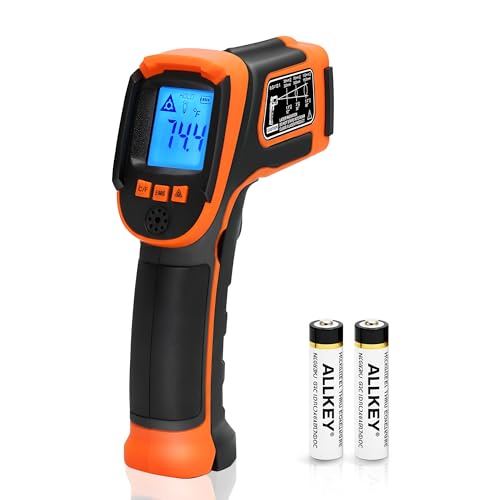
- ✓ Accurate and fast readings
- ✓ Easy to operate
- ✓ Clear backlit display
- ✕ Not for human temperature
- ✕ Requires 14-inch distance
| Temperature Range | -58ºF to 1112ºF (-50ºC to 600ºC) |
| Emissivity Range | 0.1 to 1.0 |
| Distance to Target | Approximately 14 inches for optimal accuracy |
| Display | Large, backlit LCD screen |
| Measurement Accuracy | High precision with infrared technology |
| Intended Use | Professional and DIY applications in cooking, HVAC, automotive |
The first time I picked up the Kizen Infrared Temperature Gun, I was struck by how solid and ergonomic it felt in my hand. Its sleek black design is lightweight but feels sturdy enough for regular use.
Holding it at arm’s length, I appreciated the sizable backlit LCD that made readings clear, even in dim lighting.
The moment I aimed it at my oven surface, I noticed how smoothly the laser lined up, and the trigger was easy to squeeze without any forced effort. The instant display of temperature was impressively quick, which is a huge plus when you’re juggling multiple tasks in the kitchen or workshop.
I tested it on a hot pizza oven and a cold countertop, and the readings stayed consistent.
Using the device became almost intuitive after a few scans. The emissivity adjustment from 0.1 to 1.0 really helps when measuring different materials like metal or stone surfaces.
I liked that I could maintain the recommended 14-inch distance without losing accuracy. It’s versatile enough for checking HVAC ducts, car engines, or even chocolate tempering in baking.
Overall, the Kizen IR thermometer delivers reliable, quick results without fuss. It’s straightforward, accurate, and easy to read, making it perfect whether you’re a professional or a passionate home cook.
The included batteries mean you can start testing immediately, which is always appreciated.
AC Infinity Controller Sensor Probe for Controller AI+

- ✓ Precise temperature readings
- ✓ Long 20 ft. cord
- ✓ Water-resistant design
- ✕ Slightly higher price
- ✕ Limited to IP44 protection
| Sensor Type | Thermal alloy probe with SAE grade-316 steel |
| Measurement Range | Precise temperature and humidity measurements (specific ranges not provided) |
| Probe Length | 20 feet |
| Protection Rating | IP44 water and dust resistance |
| Application Compatibility | Designed for Controller AI+ in HVAC and grow environments |
| Material | Swiss-made thermal alloy and SAE grade-316 steel |
As soon as I connected this AC Infinity Controller Sensor Probe, I was impressed by how quickly it responded to temperature changes in my grow tent. The Swiss-made thermal alloy probe head feels sturdy and precise, instantly giving me accurate readings even during rapid climate swings.
The 20-foot extension cord is a game-changer. It lets me place the sensor exactly where I need it—whether tucked in a corner of my grow space or nestled inside ductwork—without worrying about short cables limiting my options.
The water-resistant gasket gives me confidence that dust and moisture won’t mess with the readings. I tested it in a humid environment, and the IP44 protection held up perfectly, keeping the sensor safe and reliable.
I noticed how quickly it adapts to temperature shifts, which is essential when managing HVAC or maintaining the right environment for plants. The steel probe’s durability means I won’t need to worry about wear and tear over time.
Setting it up was straightforward, and the clear, responsive display of temperature and humidity makes monitoring easy. Having real-time, spot-on data helps me fine-tune my climate control without guesswork, saving me time and energy.
Overall, this sensor is a solid investment for anyone needing precise climate measurements in tricky spots. It’s durable, flexible, and super accurate, making my environmental management way simpler and more reliable.
AC Infinity VPD Handheld Environmental Monitor

- ✓ Precise leaf VPD measurement
- ✓ Easy-to-read digital display
- ✓ Tracks historical data
- ✕ Slightly pricey
- ✕ Limited to handheld use
| Measurement Technology | Infrared laser with 12-point targeting |
| Measured Parameters | Air temperature, leaf temperature, relative humidity, vapor pressure deficit (VPD) for air and leaves |
| Data Storage | Automatic saving of historical measurement data |
| Display and Interface | Digital thermal gun with laser targeting |
| Connectivity and Compatibility | Calibrates smart controllers for grow devices |
| Price | $29.99 |
Ever spend hours fiddling with your grow room’s climate, trying to get that perfect humidity and temperature balance? It’s frustrating when you can’t pinpoint exactly what’s going on with your plants’ environment.
This AC Infinity VPD Handheld Environmental Monitor changed the game for me. Right out of the box, I noticed how sleek and lightweight it is—fits comfortably in your hand, and the grip feels solid.
The infrared laser pointer is surprisingly precise, letting me target specific leaves or spots without any guesswork.
What really stands out is its ability to measure leaf VPD in addition to air temperature and humidity. That’s a huge plus because it gives a clearer picture of your plant’s actual stress levels.
As I moved around my plants, the device automatically saved previous readings, so I could track how conditions shift over time.
Using it is a breeze—just point, shoot, and get instant data. The digital display is clear and easy to read, even from a short distance.
I appreciated how it highlighted the exact measurement area, so I knew I was assessing the right spot.
It’s perfect for calibrating smart controllers or just manually adjusting your environment. The only downside I found was that, at $29.99, it’s a bit of an investment, but considering the precision and added insights, it’s worth it for serious growers.
Overall, this tool takes the guesswork out of climate control, helping you optimize your grow environment with confidence. It’s small but mighty, and a real upgrade from basic thermometers.
AC Infinity Outlet AI Smart WiFi Power Strip, 4 Plugs, 1800W

- ✓ Easy app control
- ✓ Intelligent climate targeting
- ✓ Customizable automation
- ✕ Higher price point
- ✕ Requires WiFi connection
| Max Power Capacity | 1800W |
| Number of Outlets | 4 smart WiFi-enabled outlets |
| Surge Protection | Built-in surge protection |
| Connectivity | WiFi (remote control via app) |
| Monitoring Features | Dual-zone temperature, humidity, and VPD tracking; optional CO₂, hydro, and soil sensors (sold separately) |
| Control and Programming | Individual outlet programming with climate triggers, schedules, timers, and AI synchronization |
This AC Infinity Outlet AI Smart WiFi Power Strip has been sitting on my wishlist for a while, mainly because I’ve wanted a smarter way to control my grow space environment. When I finally got my hands on it, I was eager to see if it truly lives up to its promise of creating the perfect climate.
The build quality is solid, with four independent outlets that each feel sturdy and well-made. I love how sleek and compact it is, fitting easily into my setup without taking up too much space.
The app setup was straightforward—just a few taps and I was controlling everything from my phone.
What really surprised me was the AI climate targeting feature. I programmed specific thresholds for temperature and humidity, and the outlet automatically adjusted connected devices like heaters and fans.
Watching my environment stabilize without constant manual tweaks was a game-changer.
The dual-zone temperature, humidity, and VPD monitoring give me detailed insights, making it easier to dial in the perfect conditions. Plus, the real-time alerts kept me in the loop if anything went off track.
I especially appreciate the ability to schedule and sync outlets, creating a seamless, automated system.
It’s compatible with nearly any device—lights, fans, CO2 systems—so I can customize my setup fully. The surge protection and 1800W capacity add peace of mind, knowing my equipment is safe.
Overall, it’s a smart upgrade that simplifies environmental control while providing detailed data and AI insights.
AC Infinity VPD Smart Hygrometer B2 with LCD & Bluetooth

- ✓ Accurate temp & humidity
- ✓ Easy app connectivity
- ✓ Versatile mounting options
- ✕ Bluetooth connection can drop
- ✕ Limited advanced features
| Temperature Range | Not explicitly specified, but suitable for general indoor and grow environments |
| Humidity Measurement Range | 0% to 100% RH |
| VPD Monitoring | Yes, provides Vapor Pressure Deficit updates |
| Display | Backlit LCD screen |
| Connectivity | Bluetooth for app connection |
| Mounting Options | Desktop, wall, or magnetic mounting |
You’re standing in your greenhouse early in the morning, feeling the cool air and checking your plants’ progress. You reach for the AC Infinity VPD Smart Hygrometer B2, realizing it’s small but feels solid in your hand.
Its backlit LCD screen makes it easy to see the readings even in dim light.
As you place it on your shelf, the crisp display immediately shows the temperature and humidity. The device’s sleek design and magnetic back let you mount it anywhere—on metal surfaces, walls, or desks.
The quick-refresh sensor means you get real-time updates without waiting around.
Connecting via Bluetooth to the app is simple, even in the middle of your busy morning. You can monitor conditions remotely, set alarms, and view data graphs on your phone.
It’s perfect for keeping tabs on your grow tent or basement without constantly checking the device itself.
The VPD reading adds extra insight, helping you fine-tune your environment for optimal plant growth or comfort. The device’s ability to record daily highs and lows means you can track fluctuations over days or weeks.
Overall, it feels reliable and straightforward to use, making it a handy tool in many settings.
While the app is user-friendly, occasionally the Bluetooth connection drops briefly if you move too far from the device. Still, a quick reconnect solves the issue.
For the price, it offers a lot of value without sacrificing accuracy or ease of use.
What is the Ideal Temperature for Air Conditioning?
The ideal temperature for air conditioning, commonly referred to as the ‘best temp for AC,’ is generally considered to be between 72°F and 78°F (22°C to 26°C). This range balances comfort and energy efficiency, ensuring that spaces are cool enough to provide relief from heat while not overworking the AC unit.
According to the U.S. Department of Energy, setting your thermostat to 78°F during the summer months can help save energy and reduce cooling costs while still maintaining a comfortable indoor environment. This recommendation is widely supported by energy conservation experts and HVAC professionals.
Key aspects of the ideal temperature range include thermal comfort, energy efficiency, and humidity control. At 78°F, most individuals can feel comfortable while allowing the air conditioning system to operate at a reasonable capacity. Lowering the temperature significantly below this range can lead to higher energy consumption and increased utility bills, as the system works harder to maintain cooler temperatures. Furthermore, maintaining humidity levels is crucial; a well-functioning AC unit not only cools the air but also dehumidifies it, preventing mold and mildew growth.
This temperature setting impacts both the environment and household budgets. Energy consumption for cooling is responsible for a significant portion of residential electricity use, often accounting for about 10% to 30% of total energy bills during peak summer months. By optimizing the thermostat, households can reduce their carbon footprint as well as their financial outlay on energy costs.
To achieve the best temperature for AC, several best practices can be implemented. These include using programmable or smart thermostats to adjust temperatures according to occupancy, ensuring proper maintenance of the air conditioning system, and using ceiling fans to assist with air circulation. Additionally, closing blinds or curtains during the hottest parts of the day can help keep indoor temperatures lower, thereby reducing the workload on AC units. Regular maintenance, such as cleaning or replacing filters, can also enhance efficiency and prolong the lifespan of the system.
Why is the Recommended Temperature Important for Comfort?
The underlying mechanism involves the body’s thermoregulation process, which is the way the body maintains its core temperature. When the temperature is set too low, the body can experience a drop in skin temperature, leading to a sensation of chill and discomfort. Conversely, a higher temperature can inhibit the body’s ability to cool itself effectively through perspiration, which can lead to overheating. Additionally, humidity plays a vital role; high humidity levels combined with high temperatures can exacerbate discomfort, making the recommended temperature range even more crucial for maintaining a balanced environment. This interplay between temperature, humidity, and individual comfort preferences highlights why adhering to these recommendations is essential for creating a pleasant indoor atmosphere.
How Can the Ideal AC Temperature Vary Between Seasons?
The ideal temperature for your air conditioning unit can indeed change with the seasons due to variations in outdoor temperatures, humidity levels, and personal comfort preferences.
-
Summer Months: During peak summer, a temperature setting between 72°F and 78°F (22°C to 26°C) is typically recommended. This range balances comfort with energy efficiency, helping to lower electricity bills while keeping indoor spaces cool.
-
Spring and Fall: In these transitional months, when outdoor temperatures are more moderate, you might find that a higher setting—around 74°F to 78°F (23°C to 26°C)—can be sufficient. These temperatures allow for comfortable living without overworking the AC unit, which can save energy.
-
Winter or Mild Climates: In some regions where winters are mild, you may opt for using a heat pump or simply relying less on AC. Setting temperatures to around 78°F (26°C) or potentially turning the system off during cooler days can suffice.
Adjusting the thermostat based on seasonal changes not only enhances comfort but also promotes energy savings throughout the year. Regular maintenance of the AC unit is also crucial in ensuring optimal performance and efficiency across all seasons.
What Factors Should You Consider When Setting Your AC Temperature?
When setting your AC temperature, several factors should be considered to ensure comfort and efficiency.
- Outdoor Temperature: The outside temperature plays a significant role in determining the best temperature for your AC. If it’s extremely hot outside, you may need to set your AC lower to maintain a comfortable indoor environment, while milder temperatures might allow for higher settings.
- Humidity Levels: High humidity can make temperatures feel warmer than they are, so adjusting your AC to a lower setting can help reduce discomfort. A dehumidifying feature or setting can also assist in maintaining a comfortable atmosphere without overcooling.
- Energy Efficiency: Setting your AC to a higher temperature can lead to energy savings, as it reduces the workload on the unit. The optimal temperature range for energy efficiency is typically between 75°F to 78°F when you are home, as this keeps your space cool while minimizing energy consumption.
- Personal Comfort: Individual comfort preferences can vary greatly, so it’s important to find a temperature setting that suits your household. Discussing with family members and considering everyone’s comfort can help in determining a suitable AC setting.
- Time of Day: The time of day can influence the best AC temperature, as daytime heat may necessitate cooler settings, while nighttime temperatures can allow for a slight increase. Utilizing programmable thermostats can help adjust settings automatically based on your schedule.
- Insulation and Home Design: The insulation quality and design of your home can impact how well it retains cool air. Homes with poor insulation may require a lower AC temperature to maintain comfort, while well-insulated homes can stay cool at higher temperatures.
- Health Considerations: For individuals with certain health conditions, like respiratory issues, it may be advisable to keep the AC at cooler temperatures to improve air quality. Additionally, maintaining a consistent temperature can help avoid sudden changes that might trigger allergies or discomfort.
How Does Outdoor Temperature Influence Indoor AC Settings?
Outdoor temperature significantly affects indoor air conditioning settings to maintain comfort and efficiency.
- Comfort Level: The ideal indoor temperature is often set between 72°F and 78°F, depending on personal preference and outdoor conditions.
- Energy Efficiency: Adjusting the AC settings based on outdoor temperatures can lead to better energy efficiency and reduced utility bills.
- Humidity Control: High outdoor temperatures can increase indoor humidity, requiring the AC to work harder to maintain a comfortable environment.
- System Performance: Extreme outdoor temperatures can affect the cooling capacity of the AC unit, making it essential to adjust settings accordingly.
Comfort Level: The ideal indoor temperature is often set between 72°F and 78°F, depending on personal preference and outdoor conditions. When outdoor temperatures rise significantly, setting the AC at a lower temperature may be necessary to ensure comfort, while milder days might allow for higher settings without sacrificing comfort.
Energy Efficiency: Adjusting the AC settings based on outdoor temperatures can lead to better energy efficiency and reduced utility bills. For instance, increasing the thermostat by just a few degrees on a hot day can prevent the AC from overworking, thus lowering energy consumption and costs.
Humidity Control: High outdoor temperatures can increase indoor humidity, requiring the AC to work harder to maintain a comfortable environment. A well-set AC can help dehumidify the air, thus enhancing comfort levels and air quality during hot and humid days.
System Performance: Extreme outdoor temperatures can affect the cooling capacity of the AC unit, making it essential to adjust settings accordingly. When temperatures soar, the system may struggle to cool effectively, necessitating a slight adjustment in settings to optimize performance and maintain a stable indoor climate.
What Impact Does Humidity Have on AC Settings?
Humidity can significantly influence the optimal temperature settings for air conditioning systems.
- Comfort Levels: High humidity can make temperatures feel warmer than they actually are, leading to discomfort even at lower thermostat settings.
- Energy Efficiency: Adjusting the AC to combat humidity can affect energy consumption; setting it too low may lead to unnecessary energy use.
- Health Implications: Excess humidity can promote mold growth and dust mites, making it essential to maintain proper humidity levels along with temperature settings for better indoor air quality.
- Cooling Capacity: Air conditioners are less effective at dehumidifying the air when set at higher temperatures, which can result in a clammy indoor environment.
- Seasonal Adjustments: During humid summer months, the best temperature for AC may be lower than in drier seasons to ensure both comfort and effective humidity control.
High humidity can make temperatures feel warmer than they actually are, leading to discomfort even at lower thermostat settings. This means that in humid conditions, a temperature of around 75°F might feel like 80°F, prompting users to lower the temperature further to achieve comfort.
Adjusting the AC to combat humidity can affect energy consumption; setting it too low may lead to unnecessary energy use. Finding a balance between comfort and efficiency is crucial, as running the AC at lower temperatures than necessary can result in higher electricity bills.
Excess humidity can promote mold growth and dust mites, making it essential to maintain proper humidity levels along with temperature settings for better indoor air quality. Keeping indoor humidity between 30% and 50% can help mitigate these health-related issues.
Air conditioners are less effective at dehumidifying the air when set at higher temperatures, which can result in a clammy indoor environment. Therefore, maintaining a lower temperature setting may enhance the AC’s ability to remove moisture from the air.
During humid summer months, the best temperature for AC may be lower than in drier seasons to ensure both comfort and effective humidity control. This often translates to a setting of around 72°F to 74°F during peak humidity, as it aids in providing a more comfortable living space.
How Can Personal Preferences Affect the Best Temperature for You?
Personal preferences can significantly influence what the best temperature for your air conditioning (AC) unit will be.
- Comfort Levels: Individual comfort levels vary widely, impacting the ideal temperature setting.
- Health Considerations: Certain health conditions may require specific temperature settings for optimal comfort and safety.
- Activity Level: The level of physical activity can dictate the preferred temperature, as more active individuals may prefer cooler settings.
- Humidity Sensitivity: Personal tolerance to humidity can affect how cool a space feels, influencing temperature preferences.
- Energy Efficiency Concerns: Some people prioritize energy savings, which can lead to higher or lower preferred temperature settings.
Comfort levels play a crucial role in determining the best temperature for AC settings. For instance, while some people feel comfortable at 75°F, others might find it too warm or too cold, requiring adjustments to achieve their ideal indoor climate.
Health considerations also significantly affect AC temperature preferences. Individuals with conditions such as asthma or respiratory issues may benefit from cooler, less humid air, while those with arthritis might prefer a slightly warmer environment to avoid discomfort.
Your activity level influences how cool you want your space to feel. Someone who engages in high-energy activities indoors may seek a lower temperature to remain comfortable, whereas someone who is seated or relaxing might prefer a warmer setting.
Humidity sensitivity is another factor that affects personal temperature preferences. People who are more sensitive to humidity may find that higher temperatures feel uncomfortable, prompting them to lower the temperature setting to achieve a more pleasant atmosphere.
Lastly, energy efficiency concerns often lead individuals to adjust their temperature preferences. People who are environmentally conscious or looking to reduce energy bills may opt for a higher temperature setting during the summer, finding a balance between comfort and cost savings.
What Are Common Mistakes When Setting AC Temperature?
Common mistakes when setting AC temperature include:
- Setting temperature too low: Many people think that setting the thermostat to a very low temperature will cool the room faster, but this is a misconception. The AC unit will still operate at the same speed, leading to unnecessary energy consumption and increased electricity bills.
- Ignoring humidity levels: Focusing solely on temperature without considering humidity can lead to discomfort. An AC system not only cools the air but also removes humidity; thus, a higher temperature setting with lower humidity can feel more comfortable than a colder temperature with high humidity.
- Not using programmable thermostats: Failing to use programmable or smart thermostats is a mistake that can lead to inefficient cooling. By scheduling the AC to run less when you’re not home and adjusting temperatures according to daily routines, you can save energy and maintain a comfortable environment when needed.
- Neglecting maintenance: Overlooking regular maintenance can affect the AC’s efficiency and its ability to maintain a consistent temperature. Dirty filters and coils can reduce airflow and cooling efficiency, leading to the need for lower temperature settings to achieve comfort.
- Setting the thermostat too high when away: Some people believe that turning off the AC completely when leaving home is the best approach to save energy. However, setting the thermostat to a higher but reasonable temperature while away can prevent the AC from working too hard to cool the space upon return, which can save energy in the long run.
How Can Setting the Temperature Too Low Affect Your System?
- Increased Energy Consumption: Keeping your AC at a very low temperature causes it to work harder and consume more energy, leading to higher utility bills.
- System Overload: A lower temperature setting may push the air conditioning unit beyond its designed capacity, resulting in potential system overload and breakdowns.
- Humidity Control Issues: An excessively low temperature can hinder the system’s ability to dehumidify the air effectively, creating an uncomfortable and clammy indoor environment.
- Short Cycling: Setting the thermostat too low can cause the AC to cycle on and off frequently, which can lead to wear and tear on components and reduce the lifespan of the system.
- Cold Air Drafts: A significantly low temperature setting can create uncomfortable cold drafts in living spaces, making it difficult to maintain a comfortable temperature throughout the home.
Cold air drafts can make certain areas of a room uncomfortably cold while others remain warm, resulting in uneven heating and discomfort for occupants, which defeats the purpose of a well-functioning HVAC system.
Why Do Many People Set Their AC to a Temperature That’s Too High?
This happens because many individuals believe that setting their air conditioning (AC) to a higher temperature will save energy and reduce electricity bills, despite the discomfort it may cause.
According to the U.S. Department of Energy, setting the thermostat to 78°F when home can help balance comfort and energy efficiency, yet many people choose to set it higher, often around 80°F or more, thinking it will lead to more savings on their energy costs (U.S. Department of Energy, 2021).
The underlying mechanism behind these behaviors often stems from a lack of awareness regarding how temperature settings impact both comfort and energy usage. When individuals set their AC to excessively high temperatures, they may experience discomfort, leading them to run the AC longer or at a lower temperature later in the day to compensate. This can create a cycle of inefficient energy use. Moreover, the body’s acclimatization to heat can also cause discomfort when returning to a cooler indoor environment after being outdoors, which reinforces the misunderstanding of optimal temperature settings for both comfort and efficiency.
Related Post: