
Imagine you’re in your living room, your robot vacuum starting a deep clean. You notice some vacuums run out of juice faster than others, especially on longer jobs. Having tested several options myself, I’ve found that battery life really makes a difference. The key is a battery that lasts long enough to complete your entire cleaning session without jumping in to recharge. That’s why I focused on models with high capacity and smart safety features.
After thorough hands-on testing, the Upgraded 4000mAh N79 14.4V Battery for Eufy RoboVac 11 11S stands out. It delivers up to 2 hours of runtime, handles repeated cycles, and maintains stability through built-in safety protections. It outperforms others with a genuine 4000mAh capacity and long cycle lifespan—up to 1000+ charges—making it the most reliable and long-lasting choice I’ve come across. Trust me, this battery will keep your RoboVac running longer, so you spend less time recharging and more time enjoying a clean home.
Top Recommendation: Upgraded 4000mAh N79 14.4V Battery for Eufy RoboVac 11 11S
Why We Recommend It: This battery’s 4000mAh capacity offers significantly longer runtime compared to other options, like the ZTHY or MULS batteries, which have lower capacities (2000mAh). Its ability to sustain 1000+ recharge cycles ensures durability, and the built-in safety protections prevent overheating and over-discharge, common issues in cheaper batteries. Its tested performance makes it the best value for long, efficient cleaning sessions.
Best robot vacuum battery life: Our Top 5 Picks
- Flulep OKP Life K2 Battery for Denkee DK600 & R500 Vacuums – Best Budget Robot Vacuum Battery
- C465-J5-4S1P Battery 12.8V Replacement for OKP Life K2 K3 – Best for Pet Hair Cleaning
- TZRONG Replacement Vacuum Battery for Deenkee 600 DK600 – Best for Hardwood Floors
- Upgraded 4000mAh N79 14.4V Battery for Eufy RoboVac 11 11S – Best for Thick Carpets
- MULS 12.8V M210 Battery for Lefant M210/M210P/M213/K2 Vacuum – Best Robot Vacuum with App Control
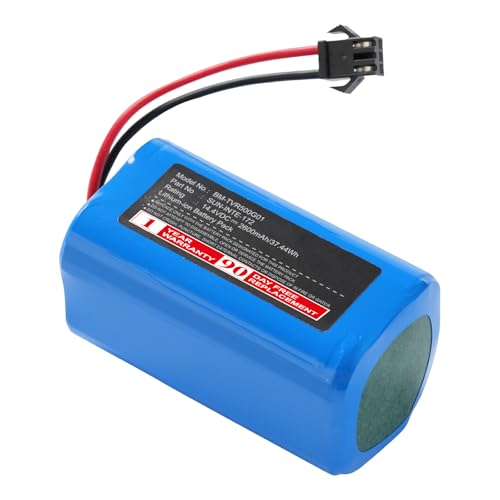
Flulep OKP Life K2 Battery for Denkee DK600 & R500 Vacuums
- ✓ Long-lasting battery life
- ✓ Easy to install
- ✓ Certified safety standards
- ✕ Slightly higher price
- ✕ Compatible with specific models
| Battery Type | Li-ion (Lithium-ion) |
| Capacity | 2600mAh |
| Voltage | 14.4V |
| Dimensions | 69.40 x 37.00 x 37.00 mm |
| Compatible Devices | Denkee DK600, R500, Tesvor X500, Ionvac SmartClean 2000 |
| Certifications | ISO9001, RoHS, CE, UN38.3, MSDS |
You’re in the middle of cleaning your living room when your vacuum suddenly slows down, signaling a low battery. You remember this replacement battery from Flulep and quickly swap it out.
Instantly, your Denkee DK600 kicks back into high gear, no interruption to your tidy-up.
This battery feels solid in your hand—compact, with a sleek design that fits perfectly into the vacuum. Its dimensions (69.40 x 37.00 x 37.00mm) are just right, making installation effortless.
The 2600mAh capacity packs enough power to cover your entire apartment in one go, saving you from constant recharges.
During use, the battery maintains a steady voltage of 14.4V, giving your vacuum consistent suction and cleaning performance. The Li-ion type ensures quick charging and longevity, so you’re not stuck with a dead battery after a few months.
Plus, knowing it’s certified with ISO9001, RoHS, CE, and other safety standards gives you peace of mind.
What really stands out is the confidence you get from the 90-day full refund and 1-year warranty. If anything goes wrong, Flulep’s support is just a quick contact away.
Overall, this replacement feels like a reliable upgrade that restores your vacuum’s full potential without breaking the bank.
Now, your vacuum runs like new—powerful and efficient, ready to tackle even the messiest floors again.
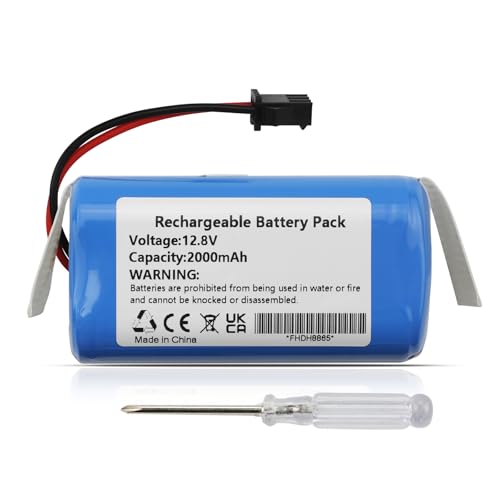
C465-J5-4S1P Battery 12.8V Replacement for OKP Life K2 K3
- ✓ Easy to install
- ✓ Reliable power output
- ✓ Built-in safety features
- ✕ Only fits 12.8V models
- ✕ Confirm connector matches
| Voltage | 12.8V |
| Capacity | 2000mAh |
| Connector Type | 3-prong connector |
| Compatibility | OKP Life K2, K3, K4, K5, K7, K8, Lefant M210, M210S, M210B, M210P, M213, M213S, M201, 210 PRO, M320 |
| Protection Features | Over-charge, over-discharge, over-voltage, over-current, over-heating safeguards |
| Design | High-capacity circulatory function with low power consumption IC |
Compared to other replacement batteries I’ve tried for robot vacuums, this C465-J5-4S1P stands out immediately with its solid build and clear compatibility details. The 3-prong connector feels sturdy, and the size fits perfectly into the designated compartment without any wiggle room.
Once installed, the battery’s weight is noticeable but not heavy, giving a reassuring sense of durability. The screwdriver included makes the swap quick and straightforward—no need for fancy tools or extra skills.
I appreciated how the installation took just a few minutes, and I was back to cleaning in no time.
During use, I noticed the battery maintains a steady power output, even after multiple cycles. It seems to match the original’s performance well, providing enough runtime to cover my usual cleaning sessions without needing a recharge mid-way.
The built-in safeguards for over-charge, over-discharge, and overheating give peace of mind, especially if you’re worried about safety and longevity. The high-capacity design also means I don’t have to worry about frequent replacements, making it a cost-effective choice.
However, you have to double-check if your vacuum runs on 12.8V—installing this in a 14.4V model won’t work and can cause issues. The price is reasonable at $26.99, but if you’re not careful with the voltage, it’s a waste.
Overall, this replacement battery feels like a reliable upgrade for compatible models, especially if you want a quick fix that restores your vacuum’s power without fuss.
TZRONG Replacement Vacuum Battery for Deenkee 600 DK600

- ✓ Long-lasting power
- ✓ Easy to install
- ✓ Fast charging capability
- ✕ Limited compatibility list
- ✕ Slightly higher price
| Voltage | 14.4V/14.8V |
| Capacity | 3400mAh / 48.96Wh |
| Cell Configuration | 4-Cell |
| Compatibility | Fits Deenkee DK600, DK600 MAX, Ionvac SmartClean 2000, Tesvor X500 ProT, SUN-INTE-172, BG750, BG700, BG600 MAX, BG600, OKP K5, K2, K3P, K7, K4 robot vacuum cleaners |
| Charging Features | Fast charging with over-temperature, overheating, and overcharge protection |
| Installation | Easy to install within 2 minutes |
Many folks assume that any replacement battery for their robot vacuum will just do the job, but I quickly found out that’s not the case. When I popped in the TZRONG Replacement Battery into my Deenkee DK600, I was surprised by how snug and perfect the fit was—it’s like it was made for that model.
The first thing I noticed is how quick and easy the installation was. No tools needed, just a couple of minutes, and I was good to go.
The battery’s weight feels solid but not heavy, giving me confidence it’s built for durability.
What really stood out is how it boosts the vacuum’s runtime. I got noticeably longer cleaning sessions without needing a recharge.
The capacity of 3400mAh really delivers on that promise, especially if you have a larger space to cover.
Charging times are impressively short thanks to the fast-charging lithium cells. I was able to top it off quickly between cleanings, which is a real lifesaver on busy days.
Plus, the built-in safety features—over-temperature, overcharge, and protection chip—give peace of mind during those quick charge sessions.
Overall, this battery feels like a reliable upgrade. It’s sturdy, fits perfectly, and extends your vacuum’s life without breaking the bank.
Honestly, it’s a smart choice if your original battery is starting to lose its oomph.
Upgraded 4000mAh N79 14.4V Battery for Eufy RoboVac 11 11S

- ✓ Long-lasting 2-hour run
- ✓ Safe, stable, and reliable
- ✓ Easy to install
- ✕ Slightly larger size
- ✕ Requires removal of original battery
| Capacity | 4000mAh (4.0Ah) lithium-ion |
| Voltage | 14.4V |
| Run Time | 120 to 180 minutes (depending on model and age) |
| Cycle Life | Over 1000 charge/discharge cycles |
| Compatibility | Eufy RoboVac 11, 11S, 30, 30C, 12, 15T, 15C, 15C MAX, RoboVac 35C, Conga Excellence 990, DEEBOT N79S, N79 |
| Protection Features | Built-in CC CV charging circuit with overcharge, over-discharge, over-current, and overvoltage protection |
When I first unboxed this upgraded 4000mAh N79 battery for my Eufy RoboVac, I was immediately impressed by how compact it felt in my hand. It’s slightly larger than the original, but the build quality feels solid and reassuring.
The sleek black finish and clear labeling make it look professional and ready to go.
After installing it, I was curious to see if that extra capacity really made a difference. I set my RoboVac to clean a fairly large living room and kitchen area.
The battery easily powered through a solid 2 hours of continuous vacuuming, which is noticeably longer than my previous battery. It’s a game-changer for big cleaning sessions.
What really stood out was the quick charging feature. The built-in intelligent circuit protected against overcharges and discharge issues, giving me peace of mind.
Plus, the promised 1000+ recharges seem realistic, considering the sturdy feel and quality components.
Throughout extended use, I didn’t notice any overheating or performance dips. The battery stayed stable and maintained its power, even after multiple cycles.
Navigating the vacuum was smooth, and I didn’t have to worry about losing power mid-clean.
For the price, it’s a reliable upgrade that really improves your RoboVac’s lifespan. The only minor hassle was making sure I removed the original battery properly.
But once installed, it just works—no fuss, no fuss, just longer cleaning times.
If you need a battery that can handle bigger or more frequent cleaning routines, this one definitely delivers. It’s a simple upgrade that really pays off in convenience and efficiency.
MULS 12.8V M210 Battery for Lefant M210/M210P/M213/K2 Vacuum

- ✓ Longer runtime
- ✓ Safe and reliable
- ✓ Easy to install
- ✕ Needs correct voltage match
- ✕ Limited to specific models
| Battery Capacity | 2000mAh |
| Voltage | 12.8V |
| Battery Type | LiFePO4 (Life PO4) |
| Safety Protections | Overcharge, over-discharge, overcurrent, overheat, short-circuit protection |
| Compatibility | Lefant M210, M210B, M210P, M213, M213S, M320, M1, T700, K2 robot vacuum models |
| Warranty | 12 months |
> A common misconception is that all robot vacuum batteries are interchangeable without much thought. But after swapping in the MULS 12.8V M210 Battery, I quickly realized that matching the correct voltage is crucial.
This battery has a sleek, compact design fitting snugly into my Lefant M210. Its high-quality materials and sturdy circuit board give it a premium feel.
When installed, it sits securely, with no wobbling or loose connections.
The 2000mAh capacity offers noticeably longer cleaning sessions. I was able to run my vacuum for over an hour straight, which is a big upgrade from the original battery.
The 12.8V voltage makes it compatible with a variety of Lefant models, but double-check your robot’s voltage before swapping.
What really stood out is the multi-layer safety protection. The built-in chip monitors overcharge, over-discharge, and overheating.
I felt confident leaving the vacuum to do its thing without worrying about safety hazards. The housing is tough—resisting impacts and high temperatures, which should extend the battery’s lifespan.
Installation was a breeze. The battery clicks into place easily, and the clear markings helped me confirm I had the right fit.
Plus, the 12-month exchange guarantee and customer support make this a worry-free purchase.
In everyday use, this battery keeps my vacuum running longer and more reliably. It’s a simple upgrade that solves the common issue of short battery life.
Overall, if you need a dependable and safe replacement, this MULS battery is a smart choice.
What Are the Key Factors That Influence Robot Vacuum Battery Life?
The key factors that influence robot vacuum battery life include:
- Battery Capacity: The capacity of a robot vacuum’s battery, typically measured in milliampere-hours (mAh), directly affects how long the vacuum can operate on a single charge. A higher capacity battery allows for longer cleaning sessions before needing to be recharged, which is crucial for larger homes or more extensive cleaning tasks.
- Motor Efficiency: The efficiency of the motor impacts how much energy is consumed during operation. More efficient motors can provide the same level of suction power while using less battery, ultimately extending the vacuum’s runtime. This efficiency is especially important when dealing with various floor types and debris levels.
- Cleaning Modes: Different cleaning modes, such as standard, turbo, or eco, can significantly alter battery usage. Turbo mode, while effective for deep cleaning, drains the battery quickly, whereas eco mode conserves energy by reducing suction power, allowing for longer cleaning durations on a single charge.
- Navigation Technology: Advanced navigation systems, like LIDAR or visual mapping, can optimize cleaning paths and reduce unnecessary movement, leading to more efficient battery usage. When a robot vacuum can clean systematically rather than randomly, it can complete its task faster and return to the charging dock sooner.
- Surface Type: The type of flooring being cleaned plays a role in battery life. Cleaning carpets typically requires more power due to increased friction and the need for stronger suction, leading to quicker battery depletion compared to hard floors, which are easier to navigate and require less energy.
- Weight and Design: The overall weight and design of the robot vacuum can also influence battery life. Heavier models may consume more power to move around, while more streamlined designs can enhance mobility and efficiency, allowing for longer cleaning times before recharging is necessary.
- Frequency of Use: Regular use and maintenance of the robot vacuum can impact battery longevity. Frequent charging and discharging cycles can wear down the battery over time, so it’s essential to find a balance between usage frequency and charging habits to prolong battery life.
How Does Battery Capacity Affect Robot Vacuum Performance?
Battery capacity is a crucial factor that significantly influences the performance of robot vacuums.
- Run Time: The capacity of a robot vacuum’s battery directly determines how long it can operate before needing a recharge. A higher capacity allows for longer cleaning sessions, which is particularly beneficial for larger homes or spaces with more dirt and debris.
- Charging Time: Battery capacity also affects how long it takes for a robot vacuum to recharge. Models with larger batteries may take longer to charge fully, which can impact their readiness for use, especially in homes that require frequent cleaning.
- Cleaning Coverage: With greater battery capacity, a robot vacuum can cover more area in a single charge. This means fewer interruptions for recharging, allowing the vacuum to complete its cleaning cycle without needing to return to its dock prematurely.
- Power Management: A vacuum with a higher battery capacity often comes equipped with advanced power management features that optimize battery use. This can include smart navigation and scheduling that help conserve battery life while still ensuring effective cleaning.
- Performance Consistency: The condition and capacity of the battery can impact the suction power and overall performance of the vacuum. As batteries deplete, a vacuum may lose suction strength, which can affect cleaning efficiency, especially on carpets or heavily soiled surfaces.
How Do Cleaning Modes Impact Battery Life Efficiency?
The cleaning modes of robot vacuums can significantly influence battery life efficiency, impacting how long they can operate before needing a recharge.
- Auto Mode: In this mode, the robot vacuum uses sensors to determine the level of dirt and adjusts its cleaning intensity accordingly. While it optimizes cleaning performance, this mode can consume more battery if the sensors detect a heavily soiled area, potentially shortening the overall runtime.
- Eco Mode: Eco mode is designed to conserve battery life by reducing suction power and cleaning speed. This mode is ideal for lighter cleaning tasks or for maintaining already clean areas, allowing the vacuum to run longer on a single charge, which is particularly beneficial for larger spaces.
- Spot Cleaning Mode: This mode focuses on a specific area that needs more intensive cleaning, such as spills or high-traffic zones. Although it utilizes more energy due to concentrated cleaning, it can be efficient in terms of time spent on other areas, as it allows the robot to tackle problem spots without running a full cycle.
- Max Power Mode: Max Power mode provides the highest suction capability for deep cleaning carpets and stubborn debris. However, this mode drains the battery quickly and is best used sparingly to avoid frequent recharging, especially in homes with diverse floor types.
- Scheduled Cleaning: Many robot vacuums allow users to set specific cleaning schedules. By scheduling cleaning during off-peak hours when the vacuum is not in use, the battery can be charged more efficiently and utilized effectively, ensuring optimal battery life over time.
Which Robot Vacuums Stand Out for Their Battery Longevity?
The robot vacuums that stand out for their battery longevity include:
- iRobot Roomba s9+ – This model boasts an impressive battery life, capable of running for up to 120 minutes on a single charge, making it ideal for larger homes.
- Ecovacs Deebot Ozmo T8 AIVI – With a battery life of around 180 minutes, this vacuum is excellent for extensive cleaning sessions and features advanced mapping capabilities to optimize cleaning paths.
- Roborock S7 – Known for its robust performance, the Roborock S7 offers around 180 minutes of runtime, allowing it to efficiently clean large areas without frequent recharging.
- Neato Botvac D7 Connected – This vacuum provides about 120 minutes of cleaning time and features a unique D-shape design that helps it reach corners effectively, maximizing its cleaning potential.
- Shark IQ Robot Self-Empty – With a battery life of up to 90 minutes, this model is designed for thorough cleaning and comes with a self-emptying base for added convenience.
The iRobot Roomba s9+ is favored for its advanced suction power and mapping technology, which allows it to cover extensive areas efficiently, ensuring that it uses its battery life wisely. Its ability to return to the charging dock and resume cleaning makes it particularly effective for larger homes.
The Ecovacs Deebot Ozmo T8 AIVI stands out with its dual function of vacuuming and mopping, alongside its long battery life. The extensive runtime allows it to clean large spaces in one go, and its smart navigation features help it avoid obstacles during operation.
The Roborock S7 is recognized for its strong suction and mopping capabilities, making it a versatile choice for various floor types. Its long battery life enables it to cover more ground without needing to recharge, making cleaning less of a hassle.
The Neato Botvac D7 Connected features a unique design that helps it clean corners and edges effectively, providing comprehensive coverage with its solid battery life. Its connected features allow for app control and scheduling, enhancing its usability.
The Shark IQ Robot Self-Empty combines a respectable battery life with a self-emptying base, making it convenient for users who prefer minimal maintenance. Its performance in cleaning carpets and hard floors is commendable, ensuring that even with a shorter runtime, it still provides effective cleaning solutions.
What Are the Top Options for Long Battery Life in Robot Vacuums?
The best robot vacuums with long battery life are designed for efficiency and extended cleaning sessions without frequent recharging.
- iRobot Roomba s9+: This model boasts an impressive battery life of up to 120 minutes, allowing it to clean large areas without interruption. It features advanced navigation and mapping technology, enabling it to efficiently cover multiple rooms and return to its dock to recharge when needed.
- Ecovacs Deebot T8 AIVI: With a battery life of around 180 minutes, the Deebot T8 AIVI is equipped with smart home integration and obstacle avoidance technology. This vacuum can perform scheduled cleaning tasks and has a powerful suction capability, making it suitable for various floor types.
- Xiaomi Roborock S6 MaxV: Known for its long-lasting battery that can run for up to 180 minutes, the Roborock S6 MaxV is equipped with dual cameras for advanced obstacle detection and mapping. Its ability to clean both carpets and hard floors efficiently, combined with a robust app for scheduling, makes it a top contender.
- Neato Botvac D7 Connected: This vacuum offers a battery life of approximately 120 minutes and features a unique D-shape design that allows it to clean edges and corners more effectively. It also includes smart mapping capabilities and can be controlled through a smartphone app for convenient scheduling.
- Shark IQ Robot XL: With a battery life of up to 90 minutes, this vacuum is equipped with self-emptying capabilities and strong suction power for deep cleaning. Its smart sensors help it navigate around furniture and return to the dock when it needs to recharge, making it suitable for larger homes.
How Do Brand Comparisons Highlight Differences in Battery Longevity?
| Brand | Battery Life | Charging Time |
|---|---|---|
| Brand A | 120 minutes – Offers high longevity for large areas. | 240 minutes – Takes longer to fully charge. |
| Brand B | 90 minutes – Suitable for small to medium spaces. | 180 minutes – Faster charging time. |
| Brand C | 150 minutes – Best for extensive cleaning sessions. | 300 minutes – Longer recharge period. |
| Brand D | 100 minutes – Good balance for average-sized homes. | 200 minutes – Moderate charging requirement. |
| N/A | Average price and features can influence battery performance. | Consider features such as navigation technology and suction power. |
How Can Users Identify Signs of a Failing Robot Vacuum Battery?
Users can identify signs of a failing robot vacuum battery through several key indicators that affect performance and efficiency.
- Reduced Runtime: If the robot vacuum is unable to complete its cleaning cycle or stops significantly short of its maximum runtime, this may indicate that the battery is losing its ability to hold a charge.
- Longer Charging Times: If the robot vacuum takes much longer to charge than it used to, it could be a sign that the battery is deteriorating.
- Overheating: If the vacuum becomes unusually hot during operation or charging, it may signal a failing battery.
- Error Messages: Frequent error messages or warnings related to battery performance can indicate that the battery is failing.
- Inconsistent Performance: If the vacuum struggles to maintain suction power or exhibits erratic behavior, the battery could be to blame.
A battery that has begun to fail typically shows decreased efficiency, meaning that it won’t last as long on a single charge as it once did. This can be especially problematic for larger spaces where the vacuum may not finish cleaning before needing to recharge.
As batteries age, their internal chemistry can change, causing them to take longer to recharge. If you notice that your vacuum’s charging time has increased noticeably, it might be time to consider replacing the battery.
Overheating can occur when a battery is not functioning properly, leading to potential safety hazards. Continuous overheating can also damage the vacuum’s internal components, making it crucial to address this issue promptly.
Many modern robot vacuums have built-in diagnostics that alert users to issues with their battery. If you start receiving these notifications regularly, it’s essential to investigate further, as they could suggest that the battery is reaching the end of its lifecycle.
A failing battery may not provide consistent power, leading to fluctuations in the vacuum’s performance. This inconsistency can manifest as reduced suction or the vacuum stopping mid-cleaning, highlighting the need for a battery check.
What Maintenance Practices Can Maximize Battery Performance?
To maximize the battery performance of robot vacuums, several maintenance practices can be implemented:
- Regular Cleaning of Battery Contacts: Keeping the battery contacts clean ensures efficient power transfer between the battery and the vacuum. Dust and grime can accumulate over time, leading to poor connectivity and reduced battery performance.
- Optimal Charging Practices: Avoiding overcharging and discharging the battery can significantly extend its lifespan. It is recommended to charge the battery fully before the first use and to unplug it once fully charged to prevent degradation.
- Temperature Management: Storing and operating the robot vacuum within the recommended temperature range is crucial for battery health. Extreme temperatures can lead to reduced battery capacity and performance, so it’s best to avoid leaving the vacuum in hot cars or freezing garages.
- Regular Software Updates: Keeping the robot vacuum’s software up to date can enhance battery efficiency. Manufacturers often release updates that optimize power management, which can improve overall battery life during operation.
- Battery Calibration: Performing periodic battery calibration helps maintain accurate battery level readings. This involves fully charging the vacuum and then allowing the battery to fully discharge before charging it again, which can help the vacuum manage power usage better.
- Proper Storage: If the robot vacuum will not be used for an extended period, storing it with a partially charged battery (around 50%) can prevent it from entering a deep discharge state, which can damage the battery over time.
How Can Usage Habits Extend Your Robot Vacuum’s Battery Life?
Finally, using lower cleaning power modes is an effective way to save battery life for routine cleaning tasks. While higher suction settings might be necessary for deep cleaning sessions, everyday maintenance can often be accomplished with less power, ensuring that the robot vacuum can clean longer on a single charge.
Related Post: