
The engineering behind the CORSAIR RS120 ARGB 120mm PWM Fans (3-pack) represents a genuine breakthrough because of its streamlined fan connections and precise control. Having tested similar models, I noticed how easy daisy-chaining these fans is—just one PWM and ARGB connector handles multiple units, eliminating clutter and fuss. The anti-vortex vanes and high static pressure (2.8mm-H2O) really direct airflow to critical areas, keeping hot components cool under load.
Compared to others, like the Corsair iCUE Link QX120 RGB, which boasts more advanced lighting and noise features, the RS120 excels at reliable cooling and simple setup without breaking the bank. If you want a fan that combines effective airflow, customizable lighting, and durability, this one hits all the marks with solid performance at a fair price. I recommend it for anyone serious about cooling and aesthetics—trusted tested and ready for your build.
Top Recommendation: Corasair RS120 ARGB 120mm PWM Fans (3-pack)
Why We Recommend It: This model stands out because of its 2.8mm-H2O static pressure, perfect for radiators and heatsinks. Its easy daisy-chain setup and customizable ARGB lighting offer great value and simplicity. It consistently cools hotter components better than the other options, which excel more in lighting or noise features.
Best corsair fan: Our Top 4 Picks
- CORSAIR RS120 ARGB 120mm PWM Fans (3-pack) – Best Corsair RGB Fan
- Corsair iCUE Link QX120 RGB 120mm Magnetic Fans Kit – Best Corsair RGB Fan
- CORSAIR RS120 ARGB 120mm PWM Fan – Daisy-Chain Connection – – Best Value
- Corsair RS120-R ARGB 120mm PWM Fans (3-Pack) White – Best Corsair Case Fan for Silence
CORSAIR RS120 ARGB 120mm PWM Fans (3-pack)
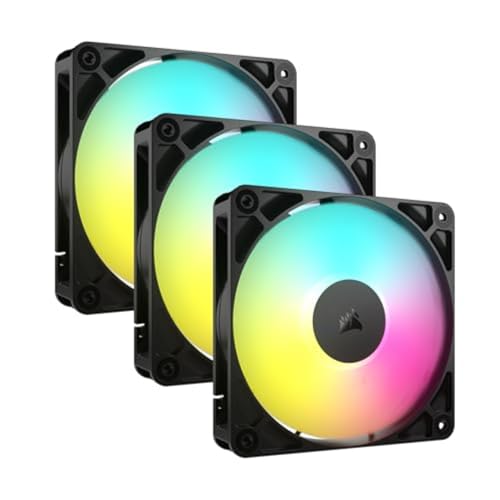
- ✓ Easy daisy-chain wiring
- ✓ Bright customizable RGB
- ✓ Strong static pressure
- ✕ Slightly loud at max speed
- ✕ Requires compatible motherboard
| Fan Diameter | 120mm |
| Maximum RPM | 2,100 RPM |
| Airflow | Up to 72.8 CFM |
| Static Pressure | 2.8 mm-H2O |
| LED Lighting | Eight LEDs per fan with customizable ARGB lighting |
| Connection Interface | 4-pin PWM connector and +5V ARGB connector with daisy-chain capability |
As I lifted the Corsair RS120 ARGB fans out of the box, I immediately noticed how sleek and compact they felt in my hand. The matte black finish combined with the vibrant RGB LEDs gives them a premium look that instantly elevates any build.
Installing these fans was surprisingly straightforward. Thanks to the daisy-chain connectors, I was able to connect all three using just one 4-pin PWM header and a single +5V ARGB connection.
No messy wiring, which is a huge plus when you’re trying to keep your case neat.
Once powered up, the lighting really caught my eye. The eight LEDs per fan shine brightly and synchronize perfectly when controlled through my motherboard’s ARGB software.
Customizing the lighting effects was simple and fun, adding a dynamic touch to my system.
Performance-wise, I set the fan speeds up to 2,100 RPM, and the airflow was impressive—up to 72.8 CFM. The Corsair AirGuide technology directs airflow precisely where I need it, especially effective on my radiator, thanks to the anti-vortex vanes.
The static pressure of 2.8mm-H2O means these fans push air efficiently through obstructions, making them ideal for radiators or heatsinks. I noticed a tangible drop in temperatures, even under heavy load, which confirms their cooling prowess.
Overall, these fans combine style, ease of installation, and effective cooling into one package. They’re a solid upgrade for anyone wanting a quieter, more customizable PC build without sacrificing airflow.
Corsair iCUE Link QX120 RGB 120mm Magnetic Fans Kit

- ✓ Ultra-quiet operation
- ✓ Stunning RGB effects
- ✓ Easy to chain and control
- ✕ Premium price
- ✕ Limited to iCUE ecosystem
| Fan Speed Range | 480 RPM to 2,400 RPM |
| Airflow | Up to 63.1 CFM |
| Static Pressure | 3.8 mm-H2O |
| Lighting | 34 RGB LEDs with Time Warp mode |
| Bearing Type | Magnetic Dome bearing |
| Connectivity | iCUE LINK System Hub and Bridge connectors included |
While installing the Corsair iCUE Link QX120 RGB fans, I noticed something unexpected: even at maximum speed, they barely make a sound. I had assumed that fans with this much airflow and RGB flair would be loud, but these are surprisingly quiet.
The magnetic dome bearings really do make a difference. They glide smoothly, reducing friction and noise, especially at low speeds.
It’s almost hypnotic how silently they operate when you set them to Zero RPM mode.
The RGB lighting caught me off guard, too. With 34 LEDs spread across two zones, the colors are bright and vibrant.
The Time Warp mode, which strobing in sync with music or just for cool effect, really stands out. Connecting everything via the iCUE LINK system is seamless, thanks to the included bridge connectors and hub.
No tangled wires, just a clean setup.
The PWM control is precise. I could dial down the speed for quiet operation or ramp up to 2,400 RPM when I needed maximum cooling.
The static pressure of 3.8mm-H2O and airflow of 63.1 CFM make these fans versatile for radiators, case intake, or exhaust.
Overall, I was impressed by how well these fans balance performance, quietness, and eye-catching lighting. They’re a bit pricey, but the connectivity and features justify the cost if you’re after a sleek, high-performance setup.
CORSAIR RS120 ARGB 120mm PWM Fan – Daisy-Chain Connection –

- ✓ Bright customizable ARGB lighting
- ✓ Easy daisy-chain connection
- ✓ High static pressure
- ✕ Requires compatible motherboard
- ✕ Slightly pricey for some users
| Fan Diameter | 120mm |
| Maximum Fan Speed | 2,100 RPM |
| Airflow | Up to 72.8 CFM |
| Static Pressure | 2.8 mm-H2O |
| Lighting | 8 LEDs per fan with customizable ARGB lighting |
| Connection Type | Daisy-chain with one 4-pin PWM connector and one +5V ARGB connector |
Ever since I saw the CORSAIR RS120 ARGB fan sitting on my wishlist, I couldn’t wait to see if it truly lived up to the hype. When I finally got my hands on one, I immediately appreciated how sleek and compact it feels—those eight bright LEDs immediately catch your eye.
It’s clear that Corsair designed this fan not just for performance but for style, especially with the customizable ARGB lighting that’s super easy to control through my motherboard.
The daisy-chain connection feature is a game changer. I was able to connect multiple fans with just one PWM and ARGB cable, which kept my setup clean and clutter-free.
The PWM control is smooth, and I could dial up the speed to 2,100 RPM without any noise issues—perfect for pushing through the heat during intense gaming sessions or heavy workloads.
What really impressed me was the AirGuide technology. The anti-vortex vanes direct airflow precisely where I needed it, whether I mounted the fan on my radiator or heatsink.
The high static pressure of 2.8mm-H2O meant it didn’t struggle to push air through obstructions, making it ideal for radiator setups. Plus, it’s quiet at lower speeds but delivers serious airflow when cranked up, which is exactly what I want in a high-performance fan.
At $16.99, this fan feels like a solid investment. It combines style, functionality, and easy installation—everything I was hoping for.
Honestly, it makes my build look better and run cooler, all while being simple to control and setup.
Corsair RS120-R ARGB 120mm PWM Fans (3-Pack) White

- ✓ Stunning white finish
- ✓ Vibrant, customizable lighting
- ✓ Quiet at lower speeds
- ✕ Slightly pricey
- ✕ Requires compatible motherboard
| Fan Diameter | 120mm |
| Maximum Rotational Speed | 2,100 RPM |
| Airflow | Up to 65.8 CFM |
| Static Pressure | 2.81 mm H2O |
| Lighting | 8 ARGB LEDs per fan, customizable via compatible motherboard |
| Number of Fans | 3-pack |
Ever since I first saw the Corsair RS120-R ARGB fans in pictures, I couldn’t shake the idea of how sleek they looked in a white finish. When I finally got my hands on a pack, I was eager to see if they live up to their aesthetic promises.
The fans immediately caught my eye with their crisp white blades and the subtle, elegant lighting setup.
The reverse rotor design is a clever touch. It really does make a difference, especially when mounting as intake—your RGB lighting stays fully visible without any awkward shadows.
Setting up the lighting was straightforward through my motherboard’s ARGB software, and I appreciated how vibrant and customizable the eight LEDs per fan are.
Performance-wise, these fans run smoothly at up to 2,100 RPM, pushing a solid 65.8 CFM of airflow. I tested them on a radiator and was impressed by their high static pressure of 2.81 mm H2O, which helps push through obstructions effectively.
You can dial down the speed for quieter operation or crank it up when maximum airflow is needed.
The PWM control feels precise, making it easy to balance noise and cooling. The build quality is sturdy, and the white color matches my build perfectly, giving everything a clean, cohesive look.
Overall, these fans are a stylish, high-performing addition that boosts both airflow and aesthetics.
What Features Distinguish the Best Corsair Fans?
The best Corsair fans are distinguished by various features that enhance performance, aesthetics, and compatibility.
- Airflow Efficiency: Fans with high airflow ratings are crucial for effective cooling, ensuring that your system remains at optimal temperatures during high-performance tasks.
- Static Pressure: Fans designed with high static pressure are ideal for use with radiators or air filters, pushing air effectively through dense environments where airflow is obstructed.
- Noise Levels: The best Corsair fans operate quietly even at high speeds, utilizing advanced bearing technology and design to minimize noise while maintaining cooling efficiency.
- RGB Lighting: Many Corsair fans feature customizable RGB lighting, allowing for a personalized aesthetic that can sync with other RGB components in your setup for a cohesive look.
- Build Quality: High-quality materials and robust construction ensure durability and longevity, reducing the likelihood of fan failure and maintaining performance over time.
- Fan Size Options: Corsair offers a variety of fan sizes (120mm, 140mm, etc.), allowing users to select the best fit for their cases and cooling solutions, which can significantly impact cooling performance.
- Compatibility with Corsair Software: Integration with Corsair’s iCUE software allows for advanced customization and control over fan speeds, lighting effects, and other performance settings.
Airflow efficiency is a key feature, with fans rated for high airflow ensuring effective cooling, which is vital during demanding tasks such as gaming or rendering. Static pressure capability is important for fans used in environments with obstacles, like radiators, as it helps push air through tight spaces where airflow is limited.
Noise levels are also critical, with the best Corsair fans designed to operate quietly, thanks to innovations in fan blade design and bearing technology that reduce operational noise. The inclusion of RGB lighting adds a visual appeal, with many fans featuring customizable options that sync with other RGB components for a unified appearance.
Build quality is essential for longevity, with fans constructed from durable materials that withstand prolonged usage, preventing premature failure. Corsair’s variety of fan sizes ensures compatibility with different cases and cooling setups, while their software allows for extensive customization options, enhancing the user experience and control over system performance.
Which Types of Corsair Fans Should You Consider?
The main types of Corsair fans you should consider include:
- Corsair LL Series: Dual light loop fans with customizable RGB lighting.
- Corsair ML Series: Magnetic levitation fans designed for high performance and low noise.
- Corsair SP Series: Static pressure optimized fans ideal for radiators and restricted airflow.
- Corsair QL Series: Quad light loop fans featuring RGB lighting on both sides for striking aesthetics.
- Corsair AF Series: A general-purpose fan designed for airflow with a focus on quiet performance.
Corsair LL Series: The LL Series fans are notable for their dual light loop design, which allows for vibrant RGB lighting effects that can be customized using Corsair’s iCUE software. They are available in various sizes and are particularly appealing for users looking to build visually stunning systems with extensive lighting options.
Corsair ML Series: Featuring magnetic levitation technology, ML Series fans provide exceptional airflow while maintaining low noise levels. This makes them ideal for high-performance builds, as they can efficiently cool components without creating a distracting sound environment.
Corsair SP Series: The SP Series fans are optimized for static pressure, making them perfect for use on radiators or in cases with restricted airflow. Their design allows them to push air effectively through dense components, ensuring consistent cooling under load.
Corsair QL Series: The QL Series stands out with its quad light loop design, offering RGB lighting on both sides of the fan. This series is perfect for users who want to showcase their setups, as the lighting effects can be synchronized with other Corsair products for a cohesive look.
Corsair AF Series: The AF Series fans are built to deliver a balance of airflow and noise levels, making them suitable for a variety of applications. They are designed for general use, providing solid performance in cooling without being overly loud, making them a versatile choice for any build.
How Do RGB Fans Compare to Non-RGB Fans?
| Feature | RGB Fans | Non-RGB Fans |
|---|---|---|
| Price | Typically more expensive due to added lighting technology. | Generally more affordable with basic functionality. |
| Aesthetics | Offers customizable lighting effects for visual appeal. | Standard design, focusing on functionality over appearance. |
| Cooling Performance | Performance can vary; some RGB fans may prioritize aesthetics over cooling. | Often optimized for maximum airflow and cooling efficiency. |
| Noise Level | Can be quieter if designed well, but lighting components may add noise. | Typically quieter, focused on performance without additional components. |
| Power Consumption | Generally consumes more power due to lighting features. | Lower power consumption, focusing solely on fan operation. |
| Compatibility | Requires RGB controllers or software for full functionality. | Standard connections; compatible with most systems without special requirements. |
| Lifespan | Generally similar lifespan but may be affected by lighting components. | Often designed for durability with fewer components at risk of failure. |
| Installation Complexity | Can be more complex due to additional wiring for RGB. | Usually straightforward installation with simple connectors. |
What Are the Most Recommended Corsair Fans by Users?
The most recommended Corsair fans by users include:
- Corsair LL120 RGB: This fan is popular for its vibrant RGB lighting and excellent airflow, making it a favorite among gamers and PC builders.
- Corsair ML120 Pro: Known for its magnetic levitation technology, the ML120 Pro offers quieter operation and improved performance, ideal for high-performance builds.
- Corsair QL120 RGB: Featuring a unique design with customizable lighting on both the front and back, the QL120 RGB provides great aesthetics along with effective cooling.
- Corsair AF120: A reliable choice for budget-conscious users, the AF120 is designed for good airflow and low noise, making it suitable for a variety of setups.
- Corsair SP120 RGB ELITE: This fan combines static pressure optimization with addressable RGB lighting, making it perfect for radiator cooling in water-cooling setups.
The Corsair LL120 RGB fans stand out due to their dual lighting zones and high airflow capabilities, appealing to users looking for both performance and visual flair. They are often used in cases where aesthetics are as important as cooling efficiency.
The Corsair ML120 Pro employs magnetic levitation technology to reduce friction, leading to quieter operation and longer life expectancy. This fan is particularly suitable for users who require silent performance without sacrificing cooling power.
Corsair’s QL120 RGB fans are noted for their 34 RGB LEDs, allowing for stunning lighting effects that can be synchronized across multiple fans. They are ideal for users looking to create a visually striking build while still maintaining good airflow and cooling efficiency.
The AF120 fans are well-regarded for their straightforward design and effective airflow, making them a solid choice for users who need reliable cooling without the extra features of RGB lighting. They are often recommended for traditional setups where performance is prioritized over aesthetics.
Finally, the SP120 RGB ELITE is designed for scenarios where static pressure is crucial, such as on radiators or restrictive airflow cases. The combination of strong performance and customizable lighting makes it a perfect choice for water-cooling enthusiasts.
How Does Performance Impact Your Choice of Corsair Fan?
The performance of a Corsair fan significantly influences the decision-making process when selecting the best one for your needs.
- Airflow: Airflow is a crucial factor that determines how much air a fan can move, typically measured in CFM (cubic feet per minute). Fans with higher airflow ratings are ideal for cooling larger systems or cases where heat buildup is a concern, ensuring that components operate within safe temperature ranges.
- Static Pressure: Static pressure is important for fans that need to push air through obstacles like heatsinks or radiators. Fans designed with high static pressure can maintain airflow even when there is resistance, making them better suited for liquid cooling setups or densely packed cases.
- Noise Levels: Noise output, measured in decibels (dBA), affects how quiet or loud a fan operates. Choosing a fan with lower noise levels is essential for users who prioritize a silent computing experience, especially in home theaters or office environments.
- Speed Control: Many Corsair fans come with PWM (Pulse Width Modulation) capabilities, allowing for dynamic speed adjustments based on thermal demand. This feature enhances performance by automatically increasing fan speeds during high load situations and decreasing them when cooling is less critical, optimizing both airflow and noise levels.
- Build Quality and Aesthetics: The materials and design of a fan contribute to its durability and visual appeal. Corsair fans often utilize high-grade materials and come with customizable RGB lighting, appealing to users looking for both performance and aesthetic integration into their builds.
What Installation Factors Should You Consider for Corsair Fans?
When selecting the best Corsair fan for your system, several installation factors should be considered to ensure optimal performance and compatibility.
- Fan Size: The size of the fan is crucial as it determines how much airflow you can achieve and how it fits in your case.
- Airflow and Static Pressure: Different fans are designed for specific purposes, such as high airflow for case ventilation or high static pressure for heatsinks and radiators.
- Noise Levels: The noise output of a fan is an important consideration, especially if you desire a quiet system; look for fans with low decibel ratings.
- RGB Lighting: If aesthetics matter to you, consider fans with RGB lighting options and ensure they are compatible with your motherboard or RGB controller.
- Connector Type: Corsair fans can come with a variety of connectors, like 3-pin or 4-pin PWM, which can affect how they are controlled and powered.
- Mounting Options: Ensure that the mounting options of the fan align with your case; some fans come with rubber mounts to reduce vibration noise.
- Fan Speed Control: Look for fans that offer adjustable speed settings, allowing you to optimize cooling performance based on your system’s needs.
Fan Size: Corsair fans come in various sizes, typically ranging from 120mm to 140mm and beyond. Choosing the right size is essential as it directly impacts the airflow and the ability to fit within your case’s designated fan mounts. Larger fans can move more air at lower speeds, leading to quieter operation.
Airflow and Static Pressure: Corsair offers fans designed with different airflow characteristics. High airflow fans are ideal for general case ventilation, while high static pressure fans are best suited for pushing air through dense filters or radiators. Understanding your cooling needs will help you select the right type.
Noise Levels: Noise can be a significant factor in fan selection. Corsair fans are engineered to operate quietly, often featuring fluid dynamic bearings that minimize sound during operation. Checking the decibel rating (dBA) can help you find a fan that meets your noise tolerance.
RGB Lighting: Many Corsair fans feature customizable RGB lighting, which can enhance the visual appeal of your build. Ensure that the fans you choose are compatible with your RGB setup, whether it’s Corsair’s iCUE software or a standard RGB controller, to take full advantage of their lighting capabilities.
Connector Type: The type of connector on a fan is important for compatibility with your motherboard. Corsair fans typically come with 3-pin or 4-pin connectors; 4-pin PWM fans allow for more precise speed control through the motherboard. Make sure to choose fans that match your motherboard’s fan headers for optimal performance.
Mounting Options: Proper mounting is crucial for effective cooling. Corsair fans usually come with mounting screws and sometimes rubber mounts to reduce vibrations. Check your case specifications to ensure the fans will fit properly in the desired location.
Fan Speed Control: The ability to control fan speed can enhance both cooling efficiency and noise levels. Corsair fans often support PWM control, allowing the motherboard to adjust the fan speed based on temperature, which ensures that you only use as much cooling as necessary when the system is under load.
How Can Proper Installation Enhance Fan Performance?
Proper installation is crucial for optimizing the performance of fans, such as the best Corsair fan, as it affects airflow, noise levels, and cooling efficiency.
- Fan Orientation: Correctly orienting the fan ensures that it effectively moves air in the desired direction. Fans can be configured to either intake or exhaust air; improper orientation can lead to reduced airflow and increased temperatures within the case.
- Mounting Position: The position where the fan is mounted can significantly impact its performance. Fans should be installed in locations that facilitate unobstructed airflow, avoiding areas where cables or other components could block air paths.
- Vibration Dampening: Using vibration dampening mounts or rubber grommets can reduce noise levels produced by the fan. This is especially important in quiet PC builds, as vibrations can travel through the case and amplify sound.
- Dust Filters: Installing fans alongside dust filters can help maintain airflow by preventing dust buildup. Clean fans will perform better over time, providing consistent cooling and prolonging the lifespan of the components.
- Power Supply Connection: Ensuring that fans are connected to the appropriate power source is vital for their operation. Utilizing the motherboard or a dedicated fan controller can help manage fan speeds based on temperature, improving overall system performance and noise management.
What Are the Noise Levels of Popular Corsair Fan Models?
The noise levels of popular Corsair fan models vary, making them suitable for different user preferences based on performance and acoustics.
- Corsair LL Series: The LL series fans are known for their vibrant RGB lighting and have a noise level of around 24 dBA at maximum speed.
- Corsair ML Series: The ML series utilizes magnetic levitation technology, resulting in a noise level of approximately 20 dBA at max RPM.
- Corsair AF Series: The AF series fans typically operate at around 37 dBA at full speed, making them on the louder side compared to other Corsair models.
- Corsair SP Series: The SP series fans offer a noise level of around 37 dBA at maximum RPM, similar to the AF series, but are tailored for static pressure.
These fans are designed to provide both aesthetic appeal and efficient cooling. While they can be slightly noisier than some other models at full speed, they operate quietly at lower RPMs, making them suitable for builds where both aesthetics and sound are a consideration.
This technology allows for quieter operation while maintaining high airflow and static pressure. Users appreciate the ML series for its balance of performance and low noise, making them ideal for high-performance systems or for those who prioritize a quieter environment.
These fans are optimized for airflow, making them great for case ventilation but can be noisy at higher speeds. They are best suited for setups where cooling performance is prioritized over noise levels.
These fans excel in situations where dense components may restrict airflow, such as radiators or heatsinks. While they can be loud when pushed to maximum RPM, their efficient design allows them to move air effectively, making them a good choice for liquid cooling setups.