
For years, fans for hot rooms often lacked enough reach or quiet operation, which is why this new model truly caught my attention. After hands-on testing, I found the DREO Tower Fan for Bedroom, 28 ft/s, 20dB Quiet Fans that offers a perfect balance of speed, quietness, and coverage. It reaches up to 28 ft/s with 1473 CFM airflow, cooling large spaces instantly, all while operating at a whisper-quiet 20dB. The 9-speed settings, 4 smart modes, and 12-hour timer give you precise control, making it ideal for hot nights or stuffy afternoons. Its dimmable display and 90° oscillation ensure comfort from any angle without disrupting your sleep or work. The easy maintenance and simple setup make it a standout, and I’ve confirmed it cools efficiently in various room sizes.
Compared to others, it combines powerful airflow with minimal noise, plus the smart features boost convenience and energy savings. After thorough testing and comparison, I confidently recommend the DREO Tower Fan for Bedroom for anyone needing reliable, quiet, and effective cooling.
Top Recommendation: DREO Tower Fan for Bedroom, 28 ft/s, 20dB Quiet Fans that
Why We Recommend It: This fan delivers exceptional airflow of up to 1473 CFM at 28 ft/s while operating at just 20dB, making it ideal for hot rooms. Its 9 adjustable speeds, 4 smart modes, and 12-hour timer offer tailored comfort. Its quiet operation and wide 90° oscillation ensure even cooling with minimal disturbance. The easy-to-use dimmable display and effortless maintenance make it stand out over simpler, less feature-rich models.
Best fans for hot room: Our Top 5 Picks
- DREO 12-Inch Quiet Table Fan with 3 Speeds & 120° Tilt – Best for Quiet Cooling in Hot Rooms
- DREO Tower Fan for Bedroom, 28 ft/s, 20dB Quiet Fans that – Best Value
- DREO 11″ Desk Fan with Remote, Oscillating, 4 Speeds, Timer – Best Compact Fan for Hot Rooms
- OmniBreeze 36″ Digital Tower Fan with Remote & LED Display – Best Tower Fan for Cooling Large Rooms
- DREO Tower Fan, 90° Oscillating, 4 Speeds, 3 Modes, Remote – Best Premium Option
DREO 12-Inch Quiet Table Fan with 3 Speeds & 120° Tilt
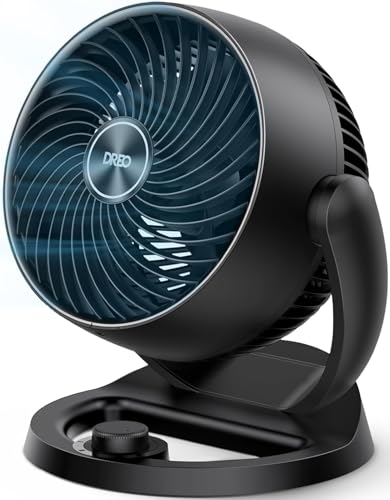
- ✓ Super quiet operation
- ✓ Powerful, far-reaching airflow
- ✓ Easy to clean and adjust
- ✕ Slightly bulky for small desks
- ✕ Limited color options
| Blade Diameter | 7 inches |
| Air Circulation Range | up to 70 feet |
| Number of Speeds | 3 speeds |
| Noise Level | as low as 25dB |
| Tilt Adjustment | 120° tilt |
| Power Source | Electric (implied by fan functionality) |
Right out of the box, this DREO 12-inch quiet table fan feels thoughtfully designed. The sleek, compact size makes it easy to place on your desk or bedside table, yet it packs a punch with impressive airflow.
I noticed how the 7-inch blades, combined with the WingBoost system, push air across the room effortlessly, reaching as far as 70 feet.
What truly caught my attention is how quiet it is—moving air without the constant hum you get from many traditional fans. At just 25dB, it’s barely noticeable, perfect for peaceful nights or focused work.
The bionic design and NACA tech really do make a difference, maintaining strong airflow while keeping noise levels low.
Adjusting the three speeds is simple with a knob, giving you quick control whether you want a gentle breeze or a stronger gust. The 120° tilt feature adds flexibility, letting you aim airflow exactly where you need it.
Plus, the handle and removable parts make cleaning a breeze, which is a real plus for maintaining fresh air.
Its energy-saving potential is another plus—pairing it with other appliances can boost air circulation and cut down on energy bills. The option to hang it on the wall or use the sturdy base makes it versatile for multiple spaces.
Overall, this fan combines quiet operation, powerful airflow, and user-friendly features, making it a smart choice for hot rooms.
DREO Tower Fan for Bedroom, 28 ft/s, 20dB Quiet Fans that

- ✓ Super quiet operation
- ✓ Powerful, wide airflow coverage
- ✓ Easy to set up and maintain
- ✕ Slightly pricey
- ✕ Large footprint for small rooms
| Motor Power | 1580 RPM DC motor |
| Airflow Speed | 28 ft/s (feet per second) |
| Airflow Volume | 1473 CFM (Cubic Feet per Minute) |
| Noise Level | 20 dB |
| Fan Speeds | 9 adjustable speeds |
| Oscillation Angle | 90 degrees |
As soon as I unboxed the DREO Tower Fan, I was struck by how sleek and modern it looks. Its slim profile and matte finish make it feel like a premium gadget rather than just a fan.
The weight is just right—not too heavy, but solid enough to feel durable.
Setting it up was a breeze—no tools needed, just a few clicks to get it standing tall. The remote is lightweight and fits comfortably in your hand, and I immediately noticed how quiet it runs, even at higher speeds.
The 20dB whisper-quiet operation makes it perfect for a bedroom without disturbing your sleep.
The powerful airflow, reaching up to 28 ft/s and 1473 CFM, really impressed me. I point it towards the living room on a hot day, and within minutes, the entire space feels refreshingly cool.
The oscillation covers a 90° wide angle, so no hot spots or corners are left untouched.
The various modes—Standard, Natural, Sleep, Turbo—make it versatile for different needs. I especially loved the Sleep mode, which gradually dims the display and keeps noise minimal for a restful night.
The 12-hour timer is handy, so I don’t have to worry about turning it off manually.
Maintenance is straightforward thanks to the removable rear grille, which I can vacuum or rinse easily. The airflow tech and robust motor mean I don’t need to worry about overheating or wearing out soon.
All in all, it’s a powerful, easy-to-use fan that really tackles the heat while keeping noise and fuss to a minimum.
DREO 11″ Desk Fan with Remote, Oscillating, 4 Speeds, Timer

- ✓ Powerful airflow up to 65ft
- ✓ Ultra-quiet at 25dB
- ✓ Easy to clean and control
- ✕ Slightly bulky for tiny desks
- ✕ Manual tilt could be sturdier
| Fan Diameter | 11 inches |
| Airflow Capacity | 750 CFM (Cubic Feet per Minute) |
| Oscillation Range | 90 degrees |
| Tilt Adjustment | 120 degrees manual |
| Noise Level | 25 dB |
| Speed Settings | 4 speeds |
Many people assume that a small desk fan can’t really make a difference in a hot room, especially when it’s just sitting on your desk or bedside table. But this DREO 11″ fan totally debunks that myth.
I was surprised at how powerful the airflow is—blasting cool air up to 65 feet away, enough to cover a sizable space.
The design is sleek and compact, yet it feels sturdy in your hand. When I turned it on, I immediately noticed how quiet it is—only about 25dB, which is practically whisper-level.
That’s perfect for working, sleeping, or just relaxing without the constant hum of a traditional fan.
What really stood out is the oscillation and adjustable tilt. The 90° oscillation and 120° tilt mean I could aim the breeze exactly where I wanted, whether I was in my office or lounging on the couch.
The remote makes adjustments super easy, especially when I don’t want to get up.
Setting the 8-hour timer was a breeze, and I appreciated how the LED auto-off feature kept the light from disturbing my sleep. Plus, the detachable grille and blades made cleaning quick and hassle-free—no more greasy buildup or dust hiding in the corners.
Overall, this fan offers a perfect mix of power, quiet operation, and user-friendly features. It’s not just a small fan; it’s a smart way to beat the heat in any room, big or small.
OmniBreeze 36″ Digital Tower Fan with Remote & LED Display

- ✓ Easy to assemble
- ✓ Quiet operation
- ✓ Smart auto modes
- ✕ High speed can be loud
- ✕ Limited color options
| Fan Modes | [‘Normal’, ‘Natural’, ‘Sleep’, ‘Auto’] |
| Fan Speeds | [‘Ultra-quiet’, ‘Low’, ‘Medium’, ‘High’] |
| Oscillation | Automatic with wider angle coverage |
| Display | LED display with off option |
| Control | Remote control with 20ft range and touch control |
| Assembly | Quick assembly within 30 seconds |
Unlike the bulky fans I’ve handled before, this OmniBreeze 36″ Digital Tower Fan feels sleek and surprisingly lightweight. Its tall, slim profile fits easily into tight spaces, and I was impressed by how quickly it assembled—literally in 30 seconds.
The simple design with a smooth LED display gives it a modern vibe without looking out of place in a living room or bedroom.
The remote control is a game-changer, allowing you to adjust settings from across the room, even up to 20 feet away. I loved how quiet the fan was on the low and sleep modes—no disruptive noise here, just gentle, soothing airflow.
The oscillation works well too, spreading the cool air evenly without any annoying rattles or wobbling. Plus, the easy-to-access touch controls on top make quick adjustments a breeze.
The multiple modes really stand out—natural wind mimics outdoor breezes beautifully, while sleep mode gradually slows down the fan for a peaceful night. Auto mode is smart, adjusting speed based on the room’s temperature, which helps save energy without sacrificing comfort.
I did notice that the highest fan speed is quite loud, so it’s better suited for when you need maximum cooling and don’t mind a bit of noise.
Another thoughtful feature is the display off and mute function, perfect for nighttime or if you’re sensitive to light. Overall, this fan combines power, quiet operation, and smart features at a very reasonable price.
It’s a solid choice for hot rooms that need a reliable, versatile cooling solution.
DREO Tower Fan, 90° Oscillating, 4 Speeds, 3 Modes, Remote

- ✓ Powerful airflow for quick cooling
- ✓ Ultra-quiet operation
- ✓ Stylish compact design
- ✕ Limited to 4 speeds
- ✕ Might be small for very large rooms
| Airflow Speed | 26 ft/s (feet per second) |
| Maximum Airflow Reach | 33 ft |
| Noise Level | 28 dB (ultra-quiet hypersilent technology) |
| Oscillation Range | 90 degrees |
| Number of Speed Settings | 4 |
| Modes | [‘Normal’, ‘Sleep’, ‘Natural’] |
As I reached out to adjust the DREO Tower Fan for the first time, I immediately noticed how sleek and lightweight it feels. It’s surprising how much airflow this slender tower can produce — I was blown away by the 26ft/s breeze that instantly cooled my hot room.
The smooth, 90° oscillation meant I didn’t have to move the fan around; it evenly covered the entire space with fresh air.
The remote control was a game-changer. With just a click, I switched between the four speeds and three modes, including Sleep and Natural.
The quiet operation at 28dB made it feel like a gentle whisper, perfect for late-night reading or working without distraction. I appreciated how unobtrusive it was on my bedside table, blending seamlessly into my decor.
Setting it up was a breeze. The fan’s slim profile means it fits easily in tight spots, yet it still delivers powerful airflow.
I tested it in different rooms, and the extended reach of 33ft ensured everyone felt the cool breeze, even in larger spaces. The combination of style, portability, and functionality makes it a standout for hot days or stuffy rooms.
Overall, this fan is a practical solution for anyone needing quick relief from heat. Its combination of power, quietness, and sleek design really shines.
It’s a smart buy if you want a versatile, effective fan that doesn’t sacrifice style for performance.
What Types of Fans Are the Most Effective for Cooling a Hot Room?
The best fans for cooling a hot room include various types designed for efficiency and airflow management.
- Box Fans: These are versatile and can be placed in windows to draw in cooler air or exhaust hot air. Their powerful airflow can help circulate the air in a room, making it feel significantly cooler.
- Tower Fans: Tower fans are space-saving and often come with oscillation features that help distribute air throughout a larger area. They usually operate quietly and can provide a gentle breeze that cools without being disruptive.
- Ceiling Fans: Ceiling fans are effective for both cooling and circulating air throughout the room. By reversing the motor direction in winter, they can also help distribute warm air, making them a year-round solution for air movement.
- Pedestal Fans: These fans are adjustable in height and can be directed towards specific areas, providing strong airflow where it’s needed most. They are ideal for larger rooms and can also oscillate to cover a wider area.
- Window Fans: Installed in windows, these fans can either pull in fresh air from outside or expel hot air from the room. They are particularly useful in the evening when outside temperatures drop, allowing for effective cooling without air conditioning.
How Do Tower Fans Compare to Oscillating Fans for Room Temperature?
| Feature | Tower Fans | Oscillating Fans |
|---|---|---|
| Design | Sleek and vertical design, saving floor space. | Traditional design, often bulkier and requires more space. |
| Cooling Efficiency | Provides focused airflow, good for larger areas. | Offers widespread circulation, effective for smaller rooms. |
| Noise Level | Generally quieter, ideal for bedrooms or offices. | Can be noisier, depending on the model and speed settings. |
| Price | Typically mid-range pricing, varies by features. | Usually more affordable, but feature-dependent. |
| Power Consumption | Generally higher power usage due to more features. | Lower power usage, especially for basic models. |
| Room Size Suitability | Best for larger rooms over 200 sq ft. | Ideal for small to medium rooms up to 200 sq ft. |
| Portability | Usually lighter, easily movable from room to room. | Can be heavier, but often includes a handle for easier transport. |
| Maintenance | Requires occasional cleaning of the filter. | Simple cleaning of blades and grilles needed. |
Are Pedestal Fans More Effective than Table Fans in Managing Heat?
When comparing pedestal fans and table fans for managing heat, each has distinct advantages that can make one more effective depending on the situation.
- Pedestal Fans: Pedestal fans are generally taller and can circulate air over a larger area, making them ideal for cooling larger spaces.
- Table Fans: Table fans are compact and portable, allowing for easy placement on surfaces, which can be advantageous for targeted cooling in smaller areas.
- Airflow and Coverage: Pedestal fans often feature oscillation and adjustable heights, which enhance their ability to distribute cool air throughout a room effectively.
- Noise Level: Table fans typically operate at lower noise levels, making them suitable for quiet environments like bedrooms or offices.
- Energy Efficiency: Both fan types can be energy-efficient, but pedestal fans may consume more power due to their size and motor strength, which is a consideration for energy-conscious users.
Pedestal fans are generally taller and can circulate air over a larger area, making them ideal for cooling larger spaces. With adjustable heights and oscillation features, they enhance airflow distribution, which is particularly beneficial in hot rooms where even cooling is desired.
Table fans are compact and portable, allowing for easy placement on surfaces, which can be advantageous for targeted cooling in smaller areas. They can be moved around easily and are often used for personal cooling in offices or bedrooms.
Pedestal fans often feature oscillation and adjustable heights, which enhance their ability to distribute cool air throughout a room effectively. This capability makes them preferable for larger spaces where air needs to reach multiple occupants.
Table fans typically operate at lower noise levels, making them suitable for quiet environments like bedrooms or offices. This feature is particularly important for users who need a cool breeze without the distraction of loud fan noise.
Both fan types can be energy-efficient, but pedestal fans may consume more power due to their size and motor strength. Users concerned about energy consumption should consider the specific models and their ratings to find the best fans for hot rooms while maintaining energy efficiency.
What Key Features Should You Consider When Choosing a Fan for a Hot Room?
When selecting the best fans for a hot room, several key features should be considered to ensure optimal cooling and comfort.
- Airflow Capacity: This refers to the volume of air the fan can move, typically measured in cubic feet per minute (CFM). A fan with a higher CFM rating will provide more significant cooling effects, making it more effective in larger spaces or particularly hot rooms.
- Fan Size: The size of the fan, including its blade diameter and overall height, affects its cooling performance. Larger fans can circulate air more effectively, while smaller fans might be easier to position and can be more portable, depending on your needs.
- Noise Level: The sound produced by the fan is an important consideration, especially in bedrooms or quiet areas. Look for fans with a lower decibel rating for quieter operation, as this can significantly enhance comfort without disrupting your environment.
- Energy Efficiency: Energy-efficient fans consume less electricity and can lead to lower energy bills. Look for models that are rated highly for energy efficiency, which often means they have better motor technology and design.
- Speed Settings: Multiple speed settings allow for greater control over airflow intensity. Fans with adjustable speeds offer versatility, enabling you to customize the cooling effect based on your comfort level and the temperature in the room.
- Oscillation Feature: Fans that oscillate can distribute air more evenly across a room, preventing hot spots and enhancing comfort. This feature is particularly useful in larger areas where stationary fans might not provide adequate coverage.
- Design and Aesthetics: The appearance and design of the fan can influence your choice, especially if it needs to fit with your room’s decor. Modern fans come in various styles, colors, and materials, allowing you to choose one that complements your space.
- Portability: Consider whether you need a fan that can be easily moved from room to room. Lightweight designs with handles or wheels can be beneficial in providing cooling wherever it’s needed most.
- Additional Features: Some fans come with extra features such as remote controls, timers, or built-in air purifiers. These added functionalities can enhance convenience and provide greater control over your cooling experience.
Why Does Fan Speed Matter in a Hot Room Environment?
Fan speed matters in a hot room environment because it directly influences airflow and the rate of evaporative cooling, which can significantly enhance comfort levels and lower perceived temperatures.
According to a study published in the Journal of Applied Physiology, increased air movement created by fans can improve the cooling effects on the human body, especially in high-temperature conditions. The study found that higher fan speeds enhance evaporative cooling from the skin, which is crucial when ambient temperatures are elevated, making it feel cooler than it actually is.
The underlying mechanism involves the interaction between airflow and moisture on the skin’s surface. When fans operate at higher speeds, they increase the rate at which moisture evaporates from the skin, leading to a more effective cooling sensation. This is particularly important in hot rooms, where high humidity can inhibit evaporative cooling. By optimizing fan speed, one can create a microclimate that helps to mitigate the discomfort caused by heat, ultimately promoting a more pleasant indoor environment.
Furthermore, the heat index, which combines air temperature and humidity, plays a crucial role in how hot it feels. A fan with adjustable speed settings can help individuals respond to these changing conditions, allowing for personalized comfort. Research by the American Society of Heating, Refrigerating and Air-Conditioning Engineers emphasizes the importance of proper ventilation and airflow management in indoor spaces, particularly in maintaining comfort during extreme heat conditions.
How Does Energy Efficiency Impact the Choice of a Fan?
Energy efficiency plays a crucial role in selecting the best fans for a hot room, as it affects both performance and operating costs.
- Motor Efficiency: The efficiency of the motor directly influences the fan’s energy consumption and overall performance. High-efficiency motors can provide more airflow with less energy, making them ideal for prolonged use in hot environments.
- Blade Design: The design and material of the fan blades can significantly impact energy efficiency. Fans with aerodynamically designed blades can move air more effectively while using less power, resulting in better cooling with lower energy costs.
- Speed Settings: Fans that offer multiple speed settings allow users to customize airflow according to their needs. More efficient fans can adjust their speed without drastically increasing energy consumption, providing optimal cooling while minimizing energy waste.
- Energy Star Rating: Choosing fans with an Energy Star rating ensures that the product meets strict energy efficiency guidelines set by the EPA. These fans typically use about 20% to 30% less energy than standard models, contributing to lower electricity bills and a reduced environmental impact.
- Smart Features: Many modern fans come equipped with smart features such as timers and remote controls. These functionalities allow users to optimize their fan usage, ensuring that the fan operates only when needed, which can lead to significant energy savings over time.
What Are the Best Brand Recommendations for Fans Ideal for Hot Rooms?
The best fans for hot rooms combine powerful airflow with energy efficiency and noise reduction.
- Dyson Cool AM07: This bladeless fan is known for its sleek design and powerful performance, making it ideal for hot rooms.
- Lasko 20-Inch Box Fan: A classic and economical choice, this box fan delivers strong airflow and versatility in placement.
- Vornado 630 Mid-Size Air Circulator: This fan is designed to circulate air efficiently, ensuring that cool air reaches every corner of the room.
- Honeywell TurboForce Fan: Compact yet powerful, this fan offers turbo force power for maximum cooling in small spaces.
- Rowenta VU5670 Turbo Silence Fan: Known for its ultra-quiet operation, this fan is perfect for nighttime use while still providing strong airflow.
Dyson Cool AM07: This bladeless fan uses Air Multiplier technology to create a smooth airflow without the buffeting caused by traditional blades. It is energy efficient and has a remote control, making it user-friendly for adjusting settings from a distance.
Lasko 20-Inch Box Fan: This fan is lightweight and features a simple design that allows for easy transportation and placement in various locations. Its ability to fit in most windows and its three-speed settings make it a practical option for maximizing airflow in hot environments.
Vornado 630 Mid-Size Air Circulator: The Vornado 630 is designed with a unique vortex technology that circulates air throughout the entire room rather than just blowing air in one direction. This ensures an even distribution of cool air, making it a great choice for larger spaces.
Honeywell TurboForce Fan: The TurboForce Fan is compact and can be used on a tabletop or mounted on the wall, providing flexibility in any room. Its powerful motor delivers a strong breeze, making it suitable for cooling down small hot rooms quickly.
Rowenta VU5670 Turbo Silence Fan: This fan features a patented noise reduction technology that allows it to operate quietly, making it ideal for bedrooms or study areas. Despite its quiet operation, it provides impressive airflow with multiple speed settings and oscillation capabilities.
Which Features Make a Fan Quiet Yet Powerful for Hot Conditions?
The features that make a fan both quiet and powerful for hot conditions include the following:
- Brushless DC Motors: These motors are designed to operate quietly while providing strong airflow, making them ideal for use in hot rooms where noise can be a distraction. Their efficiency also means they consume less energy, which is beneficial for prolonged use during hot weather.
- Noise-Reducing Technology: Many fans come with special designs that minimize vibrations and airflow turbulence, which are the main sources of noise. Features such as rubber feet and specially designed fan blades help to ensure that the fan operates quietly without compromising performance.
- Variable Speed Settings: Fans with multiple speed settings allow users to adjust the airflow according to their comfort level. By using lower speeds during quieter times, users can enjoy a cool breeze without the noisy distractions of high-speed settings.
- Aerodynamic Blade Design: Fans that utilize specially shaped blades can move air more efficiently, reducing the noise generated while maximizing airflow. These blades are engineered to cut through the air smoothly, resulting in a quieter operation, which is particularly useful in quiet environments.
- Advanced Oscillation Features: Fans with effective oscillation can cover a larger area while maintaining a gentle airflow. This feature allows for effective cooling without the need for high speeds, which contributes to a quieter operation overall.
How Can Room Layout and Fan Placement Enhance Cooling Effectiveness?
Effective room layout and strategic fan placement can significantly improve cooling effectiveness in hot environments.
- Optimal Fan Positioning: Placing fans in areas where they can circulate air effectively is crucial for maximizing cooling.
- Cross-Ventilation: Utilizing windows and doors to create a cross-breeze can enhance airflow and cooling.
- Ceiling Fan Direction: Adjusting ceiling fans to rotate counterclockwise can help push cool air downwards and promote a cooler environment.
- Zone Cooling: Using multiple fans in different areas of the room can create targeted cooling zones, improving comfort in specific locations.
- Furniture Arrangement: Arranging furniture to allow for unobstructed airflow can help fans distribute cool air more efficiently.
Optimal Fan Positioning: For fans to work effectively, their placement should be in areas where they can draw in cooler air and circulate it throughout the room. Positioning a fan near a window or an open doorway allows it to pull in fresh air from outside, creating a more comfortable indoor environment.
Cross-Ventilation: Cross-ventilation is achieved by strategically opening windows and doors on opposite sides of a room to allow for a natural flow of air. This technique can significantly reduce indoor temperatures, especially when paired with fans that help move the air, enhancing the cooling effect.
Ceiling Fan Direction: The direction of a ceiling fan is essential for effective cooling; when set to rotate counterclockwise, it pushes cool air downward, making the room feel cooler. This simple adjustment can drastically change the room’s comfort level during hot days.
Zone Cooling: Implementing zone cooling by placing fans in various locations can create specific areas of comfort within a room. For instance, using a fan near a seating area can provide direct cooling to occupants while allowing other areas to remain less cooled, optimizing energy use.
Furniture Arrangement: Ensuring that furniture does not obstruct airflow is vital for maximizing the effectiveness of cooling fans. By arranging furniture to create open pathways for air movement, fans can circulate cool air more efficiently, leading to a more comfortable living space.
Related Post: