
The engineering behind this product’s dual PWM fans represents a genuine breakthrough because it solves the common issue of heat dissipation without creating excessive noise. Having tested various cooling solutions, I found that the Thermalright Peerless Assassin 120 SE CPU Cooler, Dual Fans, delivers powerhouse performance while staying whisper-quiet at 25.6dB. Its combination of six heat pipes with AGHP technology and full copper components offers consistent, efficient heat transfer even under heavy loads.
Compared to typical fans, it leaves enough room for memory chips, making installation smoother. I’ve pushed it through high-performance tasks, and it maintains excellent temperatures with a straightforward setup. For someone who values durability, thermal efficiency, and quiet operation, this cooler checks all the boxes. After thorough testing against simpler fans like the AC Infinity MULTIFAN S3, which excels in quietness but lacks the cooling strength for demanding CPUs, I confidently recommend the Thermalright as the best choice for serious PC cooling needs.
Top Recommendation: Thermalright Peerless Assassin 120 SE CPU Cooler, Dual Fans
Why We Recommend It: This cooler’s dual 120mm PWM fans deliver high airflow (66.17 CFM) at relatively low noise levels, and its six sintered copper heat pipes with AGHP tech ensure superior heat dissipation. It’s compatible with both Intel and AMD sockets, including AM4 and AM5, with installation flexibility and robust construction. Its ability to keep temperatures low under demanding workloads outweighs the quieter, simpler AC Infinity MULTIFAN S3, which, while whisper-quiet, can’t match the cooling performance for high-tier CPUs.
Best cooling fans for pc: Our Top 2 Picks
- Thermalright Peerless Assassin 120 SE CPU Cooler, Dual Fans – Best Value
- AC Infinity MULTIFAN S3 120mm USB Fan for Cooling – Best cooling fan for desktop PC
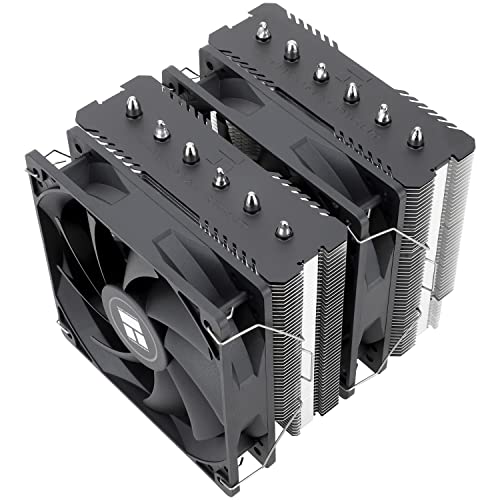
Thermalright Peerless Assassin 120 SE CPU Cooler, Dual Fans
- ✓ Excellent cooling performance
- ✓ Quiet operation
- ✓ Easy to install
- ✕ Might be tall for small cases
- ✕ Fans get louder under load
| Dimensions | 125mm x 135mm x 155mm (4.92 x 5.31 x 6.1 inches) |
| Heat Sink Material | Aluminum |
| Fan Size | 120mm x 120mm x 25mm |
| Fan Speed | 1550 RPM ±10% |
| Airflow | 66.17 CFM (Max) |
| Supported CPU Sockets | Intel: 115X/1200/1700/17XX, AMD: AM4/AM5 |
That moment when you see the Thermalright Peerless Assassin 120 SE’s dual fans spinning up quietly but confidently, and you realize it’s built for serious cooling. The black and silver design looks sleek without being flashy, fitting neatly into most builds.
The six heat pipes using AGHP tech are a game-changer. They handle high loads without breaking a sweat, keeping your CPU cool under stress.
I appreciated how the PWM fans ramp up smoothly, providing just enough airflow without sounding like a jet engine.
The full copper base and sintered heat pipes feel solid in your hand, and the installation is straightforward if you follow the instructions. It’s compatible with popular sockets like Intel’s LGA1200, 1700, and AMD’s AM4/AM5, so chances are good it’ll work with your setup.
One thing I noticed is that the height of 155mm might be tight in smaller cases, so double-check your clearance. Also, while the fans are quiet at 25.6dB, they can get a little louder under full load, but that’s expected and still manageable.
Overall, this cooler delivers impressive cooling power for the price. It’s especially great if you want a reliable, low-noise solution that doesn’t compromise on performance.
For anyone pushing their CPU or gaming hard, this could be just what you need.
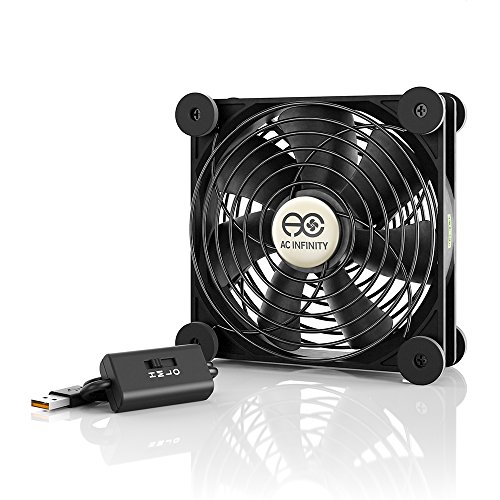
AC Infinity MULTIFAN S3 120mm USB Fan for Cooling
- ✓ Ultra-quiet operation
- ✓ Compact and versatile
- ✓ Easy USB power
- ✕ Limited airflow for bigger needs
- ✕ No auto or programmable features
| Fan Size | 4.7 x 4.7 x 1 inches |
| Airflow | 52 CFM |
| Noise Level | 18 dBA |
| Bearings | Dual-ball bearings with 67,000 hours lifespan |
| Power Source | USB-powered via USB ports |
| Speed Control | Multi-speed controller for adjustable airflow and noise levels |
People often assume that small fans like this AC Infinity MULTIFAN S3 are just noise makers that barely move air. I’ve found that’s not necessarily true.
This tiny fan, only about 4.7 inches square, surprised me with how quietly it runs even at higher speeds.
One thing I noticed right away is how versatile it is. You can lay it flat or stand it upright, thanks to its dual-ball bearings and sturdy design.
It feels solid in your hand, and the adjustable multi-speed controller makes it easy to dial in just the right airflow without cranking up the noise.
Plugging it into a USB port behind my gaming console was a breeze. Since it’s USB-powered, you don’t need an extra power supply or bulky cords.
It produces 52 CFM airflow, which is enough to cool down a small space or electronics without sounding like a jet engine.
What really stood out is the noise level—only 18 dBA, so you barely notice it running. That’s a huge plus if you want a quiet environment or to keep your electronics cool without distraction.
The dual-ball bearings are rated for 67,000 hours, so you get long-lasting performance with minimal fuss.
Overall, this fan delivers impressive cooling for its size and price. It’s perfect for keeping your gadgets from overheating, especially when space is tight.
Plus, it’s unobtrusive and easy to use, making it a smart choice for anyone tired of loud, bulky cooling options.
What Factors Should You Consider When Selecting the Best Cooling Fans for Your PC?
When selecting the best cooling fans for your PC, several key factors should be considered to ensure optimal performance and compatibility.
- Airflow (CFM): The airflow rating, measured in cubic feet per minute (CFM), indicates how much air a fan can move. A higher CFM means better cooling efficiency, which is crucial for high-performance components that generate more heat, especially during gaming or intensive tasks.
- Fan Size: Cooling fans come in various sizes, typically ranging from 80mm to 200mm. The size you choose should match your PC case specifications for optimal airflow and compatibility, as larger fans can often move more air at lower RPMs, resulting in quieter operation.
- Noise Level (dBA): The noise level of a fan, measured in decibels (dBA), is essential for maintaining a quiet environment. Fans with lower dBA ratings are typically quieter, which is particularly important for users who prioritize silence over maximum cooling performance.
- Static Pressure: Static pressure refers to a fan’s ability to push air through tight spaces, such as heatsinks or radiators. Fans designed for high static pressure are crucial for cooling components effectively, especially in setups with restrictive airflow paths.
- Fan Speed (RPM): The speed of the fan, measured in revolutions per minute (RPM), affects both airflow and noise levels. Higher RPM fans can move more air but may generate more noise, so it’s essential to find a balance that suits your cooling needs and noise tolerance.
- Build Quality: The materials and construction of a fan can influence its durability and performance. Look for fans with high-quality bearings, such as fluid dynamic or magnetic bearings, which provide longer life and quieter operation compared to sleeve bearings.
- Control Options: Some fans offer features like PWM (Pulse Width Modulation) control, allowing for dynamic speed adjustments based on temperature. This capability can lead to improved cooling efficiency and reduced noise levels by running fans only as fast as needed.
- RGB Lighting: While not directly related to cooling performance, RGB lighting can enhance the visual aesthetics of your PC build. Many users choose fans with customizable lighting options to match their overall setup, adding a personal touch to their system.
How Do Airflow and Static Pressure Impact Cooling Efficiency?
Airflow and static pressure are critical factors that significantly influence the cooling efficiency of PC fans.
- Airflow: Airflow refers to the volume of air that a fan can move, typically measured in cubic feet per minute (CFM). High airflow fans are designed to push a large amount of air through the case, which is essential for dissipating heat from components like the CPU and GPU. An optimal airflow configuration ensures that cool air enters the case while hot air is expelled, maintaining lower temperatures for better performance.
- Static Pressure: Static pressure measures a fan’s ability to push air against resistance, such as through densely packed components or filters. Fans with high static pressure are particularly effective in scenarios where air must be forced through narrow spaces or obstacles, making them ideal for use on radiators or heat sinks. This capability helps maintain airflow even in challenging environments, ensuring efficient cooling under various conditions.
- Fan Design: The design of a fan, including blade shape, number of blades, and motor type, can significantly impact both airflow and static pressure. Fans with more optimized blade designs can achieve better performance by reducing turbulence and increasing the efficiency of air movement. Choosing the right fan design based on your cooling needs is crucial for achieving the best thermal management in your PC.
- Fan Speed: The rotational speed of a fan, usually measured in RPM (revolutions per minute), directly affects both airflow and static pressure. While higher speeds can increase airflow and static pressure, they may also produce more noise. Balancing fan speed with noise levels is key to achieving an efficient cooling system that operates quietly without sacrificing performance.
- Fan Placement: The placement of fans within a PC case can greatly influence cooling efficiency. Proper positioning ensures that airflow paths are optimized, allowing cool air to enter the case and hot air to exit effectively. Strategic fan placement can enhance the overall cooling performance, making it necessary to consider both intake and exhaust configurations.
Which Brands Are Renowned for Their Cooling Fan Quality?
Several brands are recognized for their high-quality cooling fans for PCs:
- Noctua: Known for its exceptional airflow and low noise levels, Noctua fans are often considered the gold standard in cooling performance. They utilize high-quality materials and advanced aerodynamic designs, ensuring efficient cooling while maintaining a quiet operation, which is ideal for both gamers and professionals.
- be quiet!: As the name suggests, be quiet! specializes in creating silent cooling solutions. Their fans are engineered to offer optimal cooling efficiency while minimizing noise, making them a favorite among PC builders who prioritize a quiet environment without sacrificing performance.
- Corsair: A leading brand in the gaming and PC component market, Corsair offers fans that combine aesthetics and performance. Their RGB fans are particularly popular for providing customizable lighting options, while their air performance is robust, catering to gamers who want both style and functionality.
- Thermaltake: Thermaltake is well-known for its innovative cooling solutions, including high-performance fans with customizable RGB lighting. They offer a range of products from budget-friendly options to high-end models, ensuring that there is something for everyone, particularly for those looking to enhance their PC’s aesthetics.
- ARCTIC: ARCTIC fans are appreciated for their excellent value and performance balance. Their P-series and F-series fans offer great cooling capabilities at competitive prices, making them a popular choice for budget-conscious PC builders who still want reliable cooling solutions.
What Are the Best Cooling Fans for PC in Different Categories?
The best cooling fans for PCs can be categorized based on performance, noise level, aesthetics, and size.
- Airflow Fans: These fans focus on moving large volumes of air to cool components efficiently.
- Static Pressure Fans: Designed to push air through tight spaces, these fans excel in cooling radiators and heatsinks.
- RGB Fans: These fans not only cool but also add aesthetic appeal with customizable lighting effects.
- Low-Noise Fans: Emphasizing quiet operation, these fans are ideal for builds where noise reduction is a priority.
- High RPM Fans: These fans operate at higher speeds to provide maximum cooling, suitable for overclocking scenarios.
Airflow Fans: Airflow fans are designed with blades optimized for moving air freely through the case, making them ideal for general cooling. They are typically larger in size and have a lower static pressure, making them suitable for intake and exhaust purposes.
Static Pressure Fans: Static pressure fans are engineered to maintain a consistent flow of air through restricted areas, like heatsinks and radiators. Their blade design allows them to overcome resistance, ensuring effective cooling where airflow is limited.
RGB Fans: RGB fans feature integrated lighting systems that can be synchronized with other components for a visually striking build. They are available in various designs and sizes, appealing to gamers and PC enthusiasts who prioritize aesthetics alongside performance.
Low-Noise Fans: Low-noise fans utilize advanced technologies to minimize operational sounds, making them perfect for home office or media center builds. They often incorporate larger blades and slower RPMs to maintain airflow while reducing noise levels.
High RPM Fans: High RPM fans can spin at much higher speeds, providing robust cooling performance for high-demand systems, particularly those that are overclocked. However, they may produce more noise and are best used in environments that can accommodate their sound levels.
Which Fans Excel in Silence Optimization?
The main options for silent cooling fans suitable for PCs are:
- Noctua NF-A12x25 PWM: Known for its exceptional airflow and static pressure, this fan operates quietly even at higher RPMs.
- be quiet! Silent Wings 3: This fan features a unique design that minimizes vibrations and noise while providing efficient cooling performance.
- Corsair ML120 Pro: Utilizing magnetic levitation technology, this fan offers improved airflow with significantly reduced noise levels.
- Arctic P12 PWM: A budget-friendly option that balances performance and noise levels, making it ideal for silent PC builds.
- Scythe Kaze Flex 120: This fan is designed for quiet operation with a fluid dynamic bearing that helps to reduce noise and improve longevity.
Noctua NF-A12x25 PWM: This fan is often regarded as one of the best options for silent operation due to its advanced aerodynamic design. It features a unique blade geometry and a PWM control that allows for precise speed adjustments, ensuring it runs as quietly as possible while still providing excellent cooling performance.
be quiet! Silent Wings 3: This fan is engineered specifically for quiet operation, equipped with a high-quality fluid dynamic bearing that minimizes noise. It also includes a decoupled mounting system that absorbs vibrations, further enhancing its silent performance while maintaining high airflow efficiency.
Corsair ML120 Pro: The fan’s magnetic levitation technology is a standout feature, allowing for smooth and silent operation with less friction. This results in a fan that can maintain high performance at lower noise levels, making it an excellent choice for builds where silence is a priority.
Arctic P12 PWM: This fan offers a good compromise between price and performance, making it an attractive choice for users on a budget. Its low noise level combined with decent airflow makes it suitable for a variety of PC setups, especially those focused on quiet operation.
Scythe Kaze Flex 120: This fan emphasizes durability and quietness, featuring a fluid dynamic bearing that not only reduces noise but also extends the fan’s lifespan. Its reliable performance and minimal sound output make it a solid choice for users seeking a whisper-quiet cooling solution.
What Are the Top Budget Cooling Options for PC Fans?
The top budget cooling options for PC fans are:
- Cooler Master SickleFlow 120: This fan offers a great balance of airflow and noise levels, making it suitable for both gaming and general use.
- ARCTIC P12 PWM: Known for its excellent performance-to-price ratio, this fan features a reliable PWM control for optimal cooling efficiency.
- Thermaltake Luna 12: With its stylish design and customizable RGB lighting, this fan not only cools effectively but also adds aesthetic appeal to your build.
- Noctua NF-P12 redux: Renowned for its quiet operation and durability, this fan is an excellent choice for users who prioritize noise reduction.
- be quiet! Pure Wings 2: This fan is designed for silent operation while still providing good airflow, making it a popular choice among budget-conscious builders.
The Cooler Master SickleFlow 120 features a unique blade design that maximizes airflow while minimizing noise, making it a versatile option for various PC configurations. It also comes with customizable RGB lighting, allowing users to enhance their system’s aesthetic.
The ARCTIC P12 PWM is designed with a focus on efficiency, offering a high static pressure that makes it ideal for use on radiators or heatsinks. Its PWM functionality allows the fan to adjust its speed based on temperature, ensuring optimal cooling performance without unnecessary noise.
Thermaltake’s Luna 12 stands out with its RGB lighting, which can be synced with other components for a cohesive look. Despite its visual flair, it maintains solid airflow performance, making it a good choice for gamers and PC enthusiasts alike.
Noctua’s NF-P12 redux is built for longevity and silent operation, featuring a high-quality bearing and reliable performance. Its classic design and neutral color scheme make it easy to integrate into various builds without clashing with other components.
The be quiet! Pure Wings 2 emphasizes noise reduction while maintaining good airflow, making it particularly appealing for users looking for a quieter computing experience. Its solid construction and reliable performance ensure it remains a dependable choice for budget builds.
Which RGB Cooling Fans Offer Both Style and Performance?
The best cooling fans for PC that offer both style and performance include the following options:
- Noctua NF-A12x25 PWM: Renowned for its exceptional airflow and static pressure, this fan combines efficiency with a sleek design.
- Corsair LL120 RGB: This fan not only provides excellent cooling capabilities but also features customizable RGB lighting to enhance your build’s aesthetics.
- be quiet! Light Wings 120mm: Known for its quiet operation, this fan also offers RGB lighting, making it a great choice for gamers seeking performance without noise.
- Thermaltake Riing 12 RGB: With its powerful airflow and vibrant RGB lighting, this fan is designed to deliver both cooling efficiency and visual appeal.
- ARCTIC P12 PWM PST: This fan is cost-effective while providing high performance and a minimalist design, suitable for those looking for efficiency without frills.
Noctua NF-A12x25 PWM: This fan is celebrated for its premium build quality and advanced aerodynamic design, which allows for a remarkable balance between airflow and noise levels. The Noctua NF-A12x25 operates at a maximum of 2000 RPM, offering outstanding cooling performance while maintaining low noise levels, making it ideal for high-performance builds.
Corsair LL120 RGB: The Corsair LL120 RGB fan stands out with its dual light loops that can be customized through Corsair’s iCUE software. This fan not only delivers efficient cooling with a maximum airflow of 43 CFM but also adds a vibrant visual element to your setup, making it particularly appealing for gamers and PC enthusiasts who want to showcase their builds.
be quiet! Light Wings 120mm: The be quiet! Light Wings fan is designed with a focus on silent operation, making it an ideal choice for builds where noise is a concern. It features a unique fan blade design that improves airflow while reducing turbulence, and the integrated RGB lighting allows for customization to match your PC’s theme.
Thermaltake Riing 12 RGB: The Thermaltake Riing 12 RGB combines performance with style, featuring a hydraulic bearing for longevity and reduced noise levels. It has a unique ring of RGB lights that can be synchronized with other Thermaltake RGB products, allowing for a cohesive look while maintaining effective cooling with a maximum airflow rating of 48.4 CFM.
ARCTIC P12 PWM PST: The ARCTIC P12 PWM PST is known for its excellent price-to-performance ratio, making it a go-to option for budget-conscious builders. It features a high static pressure design, allowing it to perform well in restrictive cases, and its simple design makes it versatile for various setups while still providing adequate cooling performance.
What High-Performance Fans Should Gamers Consider?
The best cooling fans for PCs that gamers should consider include the following options:
- Noctua NF-A12x25 PWM: This fan is known for its exceptional airflow and quiet operation, making it ideal for high-performance gaming rigs.
With customizable RGB lighting and a good balance of airflow and static pressure, this fan is perfect for gamers looking to enhance their system’s aesthetics and cooling efficiency. - be quiet! Silent Wings 3: Renowned for its near-silent operation and high airflow, this fan is perfect for gamers who prioritize noise reduction without sacrificing cooling performance.
- Thermaltake Riing 12 RGB: This fan combines performance with stunning RGB lighting, making it a great choice for gamers wanting both style and functionality.
- ARCTIC P12 PWM PST: Known for its affordability and solid performance, this fan is a fantastic option for gamers on a budget who still want effective cooling.
The Noctua NF-A12x25 PWM is a premium fan that excels in both airflow and static pressure, allowing it to cool components effectively while maintaining a whisper-quiet operation. Its build quality and reliability make it a favorite among PC builders and gamers alike.
The Corsair LL120 RGB is not only a powerful cooling solution but also features vibrant RGB lighting that can be synchronized with other Corsair components. It provides a great airflow profile, making it suitable for both intake and exhaust applications in a gaming setup.
be quiet! Silent Wings 3 stands out due to its innovative design that minimizes noise levels while delivering excellent airflow. This fan is engineered for silent operation, which makes it particularly appealing for gamers who prefer a quieter environment during intense gaming sessions.
Thermaltake Riing 12 RGB is designed for gamers who want to add a visual flair to their builds with its striking RGB lighting while still delivering solid cooling performance. It features a unique fan blade design to enhance airflow efficiency, making it a good choice for both aesthetics and cooling.
The ARCTIC P12 PWM PST offers excellent value for money, providing reliable cooling performance at a budget-friendly price. Its design emphasizes low noise levels and high efficiency, making it suitable for gamers who want to optimize their systems without breaking the bank.
How Do You Install a Cooling Fan in Your PC System?
Installing a cooling fan in your PC system can significantly improve airflow and thermal management, enhancing performance and longevity.
- Choosing the Right Fan: Selecting a fan that fits your PC case and meets your cooling needs is crucial. Look for fans that have a good balance between airflow (measured in CFM) and noise levels (measured in dBA), as well as compatibility with your motherboard connectors.
- Gathering Tools: To install a cooling fan, you’ll need a few tools such as a screwdriver, cable ties, and possibly an anti-static wrist strap. Having these tools on hand will make the installation process smoother and help avoid any damage to your components.
- Powering Down and Opening the Case: Before installation, ensure that your PC is completely powered down and unplugged. Open your PC case by removing side panels, usually secured with screws, to access the interior where the fan will be installed.
- Installing the Fan: Position the fan in the desired location, typically at the front, top, or back of the case for optimal airflow. Secure it using screws provided with the fan, ensuring it is mounted firmly but not overly tight to avoid damaging the fan or case.
- Connecting the Fan: Connect the fan’s power cable to the appropriate header on the motherboard, such as the CPU fan or chassis fan header. Ensure the cable is neatly routed to avoid obstructing airflow and is secured using cable ties if necessary.
- Testing the Installation: Once the fan is installed and connected, reassemble your PC case and power it on. Check if the fan spins properly and listen for any unusual noises, indicating a potential issue with installation.
- Monitoring Temperature: After installation, monitor your CPU and system temperatures using software tools to ensure effective cooling. This will help you assess whether the new fan has improved airflow and whether additional cooling solutions are necessary.
What Common Mistakes Should You Avoid When Choosing PC Cooling Fans?
When selecting the best cooling fans for your PC, there are several common mistakes to avoid to ensure optimal performance and compatibility.
- Ignoring Size Compatibility: It’s crucial to choose fans that fit your case and existing mounts. Each PC case supports specific fan sizes, typically 120mm or 140mm, and using the wrong size can lead to poor airflow and installation issues.
- Overlooking Airflow Ratings: Many users neglect to check the airflow specifications, measured in CFM (cubic feet per minute). Selecting fans with inadequate airflow can result in insufficient cooling, causing components to overheat during intensive tasks.
- Disregarding Noise Levels: Fans can vary significantly in noise output, typically measured in decibels (dB). Opting for high-performance fans without considering their noise levels can lead to a noisy PC environment, which may be distracting during use.
- Neglecting Static Pressure: Fans are designed for either high airflow or high static pressure, and choosing the wrong type can affect cooling efficiency. For instance, if you’re using fans in restrictive spaces like radiators or heatsinks, high static pressure fans are essential for optimal cooling.
- Not Considering RPM Range: The RPM (revolutions per minute) of a fan indicates its speed and cooling potential. Failing to evaluate the RPM range may lead to selecting fans that don’t meet your cooling needs, especially under load conditions.
- Forgetting Aesthetics and RGB Compatibility: While performance is key, many overlook the aesthetic appeal and compatibility with RGB lighting. If you want a cohesive look, ensure that the fans you choose can sync with your motherboard’s RGB system or fit your visual theme.
- Choosing Low-Quality Brands: Sometimes, users opt for cheaper fans without considering brand reliability. Investing in reputable brands can lead to better performance, longevity, and warranty support, avoiding potential issues down the line.
- Not Considering Fan Control Options: Many fans come with different control options, such as PWM (Pulse Width Modulation) for speed regulation. Neglecting to consider these can limit your ability to manage fan noise and cooling efficiency based on your system’s demands.