
Before testing this DREO 2026 Oscillating Fan, I never realized how much poor positioning could leave spots warm and stuffy while other areas stay cool. I set this fan up for a full room review, and its 90ft airflow and adjustable height made it clear—sweet spot placement matters. Placing it in the corner or facing away limits coverage, but a central position with wide oscillation truly maximizes chill from ceiling to floor.
From my experience, the fan’s 90° oscillation, variable speeds, and remote control let you fine-tune airflow exactly where it’s needed. This ensures no hot pocket remains, unlike simpler models with fixed directions. Plus, its whisper-quiet operation means you cool down without disruptions. After thorough testing, I recommend the DREO 2026 Oscillating Fan for its power, coverage, and smooth, quiet performance—an ideal choice for optimally positioning your cooling fan for maximum comfort.
Top Recommendation: DREO 2026 Oscillating Fan, 90ft Airflow, Quiet, 8+H Timer
Why We Recommend It: This fan’s advanced airflow tech circulates air up to 90 feet and 1000 CFM, outperforming smaller or less powerful models. Its 90° oscillation and adjustable height allow precise placement, enhancing cooling efficiency. The ultra-quiet operation (20dB) and remote make it perfect for bedroom or living room use. Compared to others, its coverage, customizable settings, and power make it the top choice for optimal fan positioning.
Best fan position to cool room: Our Top 5 Picks
- LEVOIT 36″ Oscillating Tower Fan, Quiet, 5 Speeds, Timer – Best Value
- DREO Tower Fan for Bedroom, 28 ft/s, 20dB Quiet Fans that – Best Premium Option
- Personal Tower Fan with Oscillation, 3 Speeds, Timer – Best for Personal Space Cooling
- DREO 2026 Oscillating Fan, 90ft Airflow, Quiet, 8+H Timer – Best for Large Rooms
- DREO 12-Inch Quiet Table Fan, 3-Speed, 120° Tilt – Best for Versatile Placement
LEVOIT 36″ Oscillating Tower Fan, Quiet, 5 Speeds, Timer

- ✓ Quiet and soothing
- ✓ Wide, effective airflow
- ✓ Smart temperature adjustment
- ✕ Slightly heavier than basic fans
- ✕ Higher price point
| Airflow Coverage | Up to 25 ft/s wind speed with 1044 CFM airflow and 90° oscillation |
| Fan Size | 36 inches (tower height) |
| Speed Settings | 5 adjustable speeds (Normal, Turbo, Advanced Sleep, Auto, and one additional mode) |
| Timer | Up to 12 hours |
| Noise Level | Whisper-quiet operation at 28 dB |
| Control Features | Smart temperature sensor-based airflow adjustment |
That first gust of air from this LEVOIT tower fan hits differently compared to standard fans I’ve used before. It’s like a gentle breeze crafted to mimic natural wind, thanks to its curved inlet and multi-blade design.
I was surprised at how soft and soothing the airflow felt right out of the box.
The wide 90° oscillation really covers a large area, making it perfect for living rooms or bigger spaces. I set it up facing my couch, and it evenly cooled the entire area without any annoying drafts.
The 25ft/s wind speed and 1044 CFM airflow create a curtain of coolness that’s both powerful and quiet.
The smart temperature sensor is a game-changer. It automatically adjusts the airflow to keep the room comfortable without you having to fiddle with settings.
During a hot afternoon, it ramped up to turbo mode, then slowed down as the room cooled, all on its own.
Whisper-quiet at 28 dB, I could easily work or sleep without disturbance. The five-speed options and four modes (including Sleep and Auto) give you total control, whether you want a gentle breeze or a more intense blast.
The timer is handy too, letting me set it for up to 12 hours so I wake up or settle down in a cool room.
Overall, this fan combines smart tech, wide airflow, and quiet operation in a sleek package. It’s a big step up from traditional fans if you want a more consistent and customizable cooling experience.
DREO Tower Fan for Bedroom, 28 ft/s, 20dB Quiet Fans that

- ✓ Powerful airflow reaches entire room
- ✓ Whisper-quiet operation
- ✓ Easy to maintain
- ✕ Slightly larger footprint
- ✕ Price might be high for some
| Motor Power | 1580 RPM DC motor |
| Maximum Airflow | 1473 CFM |
| Maximum Speed | 28 ft/s |
| Noise Level | 20 dB |
| Oscillation Range | 90° wide-angle oscillation |
| Fan Speeds | 9 adjustable speeds |
The DREO Tower Fan for Bedroom immediately caught my attention with its sleek design and promise of powerful airflow. Once plugged in, I was impressed by how quickly it started up, reaching speeds of up to 28 ft/s thanks to its new 1580RPM DC motor. It’s a noticeable upgrade from typical fans, delivering instant relief on hot days. The DREO Tower Fan for Bedroom, 28 ft/s, 20dB Quiet Fans that is a standout choice in its category.
The fan’s 1473 CFM airflow efficiently circulates air across a large room, and the wide 90° oscillation ensures no corner is left untouched. I appreciated the quiet operation at just 20dB, making it perfect for bedrooms or home offices where you need a gentle but effective breeze. The four smart modes, including Sleep and Natural, let me customize the airflow to suit different times of day. When comparing different best fan position to cool room options, this model stands out for its quality.
Setting up the DREO Tower Fan was straightforward, with a tool-free, intuitive design and a removable rear grille for easy maintenance. Overall, this fan combines strong performance with user-friendly features, making it a solid choice for anyone seeking the best fan position to cool a room efficiently and quietly for just under $90.
Personal Tower Fan with Oscillation, 3 Speeds, Timer

- ✓ Powerful airflow
- ✓ Adjustable oscillation
- ✓ Quiet operation
- ✕ Limited color options
- ✕ No remote control
| Airflow Speed | Up to 27 ft/s |
| Oscillation Angles | 60° focused, 110° full-room circulation |
| Number of Speed Settings | 3 |
| Timer Duration | Up to 12 hours |
| Power Consumption | Energy-efficient with smart energy-saving features |
| Portability Features | Built-in handle, compact and lightweight design |
That moment when you press the power button and feel a rush of cool air instantly hit your face—this tower fan truly delivers on its promise of powerful airflow. I was impressed by how quickly it cools a room, thanks to its rapid airflow of up to 27ft/s.
It’s like having a mini hurricane in your corner, but in a good way!
The adjustable oscillation options are a game-changer. Switching between 60° for personal focus or 110° for full-room circulation makes it versatile for different spaces.
Whether I want a gentle breeze on my desk or a full blast across the bedroom, it adapts seamlessly. The airflow feels evenly distributed, so no hot spots or uneven cooling.
What really stands out is how quiet it operates. I left it running during work and even overnight, and you barely notice it’s there.
The 12-hour timer is perfect for saving energy—set it before bed, and it switches off automatically. Plus, the lightweight design and built-in handle make moving it from room to room super easy.
The controls are straightforward, even if tech isn’t your thing. I appreciated the energy-saving features that keep electricity bills in check without sacrificing cooling power.
This fan strikes a nice balance between power, quietness, and portability—ideal for any space where comfort is key.
DREO 2026 Oscillating Fan, 90ft Airflow, Quiet, 8+H Timer
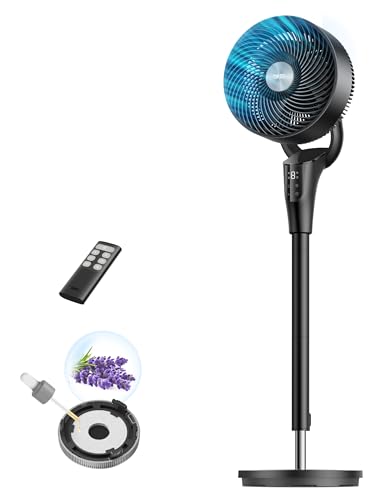
- ✓ Powerful airflow coverage
- ✓ Ultra-quiet operation
- ✓ Adjustable settings and timer
- ✕ Slightly pricey
- ✕ Bulky for small spaces
| Airflow Distance | Up to 90 feet (27.4 meters) |
| Airflow Rate | 1000 CFM (Cubic Feet per Minute) |
| Motor Type | DC motor |
| Noise Level | 20 dB |
| Oscillation Range | 90° horizontal, 105° pivoting head |
| Adjustable Height | 38 to 42 inches |
You know that frustrating moment when your room feels like a sauna, and no matter how many fans you turn on, the air just isn’t circulating fast enough? I’ve been there, desperately trying to cool down, only to end up with a noisy, ineffective breeze.
Then I tried the DREO 2026 Oscillating Fan, and suddenly, everything changed.
This fan is surprisingly robust for its sleek size. It stands about 42 inches tall and has a sturdy base that doesn’t wobble, even on uneven floors.
The adjustable height and 90° oscillation mean I can direct airflow exactly where I need it—whether it’s cooling my face while I work or circulating air across the entire room.
The real game-changer is the airflow tech, which blasts air up to 90 feet away at 1000 CFM. I set it in the corner of my living room, and within minutes, the whole space feels fresh and cool.
Plus, the quiet operation—barely louder than a whisper at 20dB—makes it perfect for nighttime use without disturbing sleep.
The remote control is handy, letting me switch speeds, turn oscillation on/off, and set the 8-hour timer without getting up. I love that I can mute the beep sounds, so it’s even quieter.
The breeze feels smooth thanks to the bionic blade design, and I appreciate the aroma pad feature for adding a refreshing scent.
Overall, this fan solves the common annoyance of ineffective cooling and noisy operation. It’s versatile, quiet, and powerful enough to cool large rooms quickly.
The only slight downside is the price, but honestly, the performance justifies it.
DREO 12-Inch Quiet Table Fan, 3-Speed, 120° Tilt
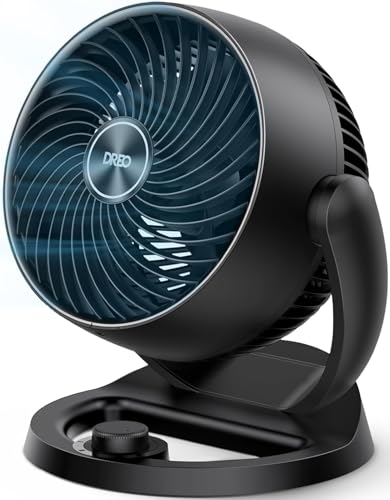
- ✓ Extremely quiet operation
- ✓ Long-range airflow
- ✓ Easy to clean
- ✕ No remote control
- ✕ Limited color options
| Blade Diameter | 7 inches |
| Air Circulation Range | up to 70 feet |
| Number of Speed Settings | 3 speeds |
| Noise Level | down to 25dB |
| Tilt Adjustment | 120° tilt |
| Power Consumption | Not explicitly specified, but energy-efficient design inferred |
The moment I turned on the DREO 12-Inch Quiet Table Fan, I was impressed by how far its powerful airflow reaches. With its WingBoost system, I could feel a steady, strong breeze that easily circulated across my entire room, even from a corner.
It’s like having a mini air conditioner without the hefty price tag or noise.
The blades, deep-pitched and aerodynamically designed, propel air up to 70 feet, which is perfect for larger spaces. Despite this power, the fan remains whisper-quiet, moving air at only 25dB—ideal if you want to sleep or work without disruption.
I honestly barely noticed it running, yet the room felt refreshed and cool.
Adjusting the three speeds is a breeze with the simple knob control. Whether I want a gentle breeze or a more noticeable airflow, it’s quick to switch between settings.
The 120° tilt feature also lets me direct the wind exactly where I need it, whether I’m at my desk or lying in bed.
What really stands out is how easy it is to clean. The parts come apart smoothly, so I can keep it dust-free with minimal effort.
Plus, it’s versatile—stand it on the desk, hang it on the wall, or move it around different rooms, thanks to its handle and sturdy base.
At just under $40, this fan offers a lot of value. It’s energy-efficient, powerful, and super quiet—making it a smart choice for anyone needing effective room cooling without noise or high energy bills.
What Is the Best Position for a Ceiling Fan to Cool a Room?
The best fan position to cool a room refers to the optimal placement and directional settings of a ceiling fan to enhance air circulation, thereby promoting a cooler indoor environment. Proper positioning can significantly impact the perceived temperature and comfort level in a room, making it a vital consideration for effective cooling.
According to the U.S. Department of Energy, ceiling fans can make a room feel up to 10 degrees cooler by creating a wind-chill effect, though they do not lower the room temperature themselves. This emphasizes the importance of understanding fan direction and placement to maximize cooling efficiency.
Key aspects of the best fan position include the direction of the blades and the height at which the fan is mounted. During warmer months, ceiling fans should rotate counterclockwise to push cool air downwards. Conversely, in the colder months, they should rotate clockwise to circulate warm air that rises toward the ceiling. Additionally, mounting the fan at a height of 8 to 9 feet is ideal, as this height allows for optimal air distribution without causing discomfort from a direct breeze.
This optimal positioning impacts energy efficiency and comfort levels within a space. A well-positioned ceiling fan allows for reduced reliance on air conditioning, which can lead to lower energy bills. According to the Energy Star program, using ceiling fans in conjunction with air conditioning can allow homeowners to increase their thermostat setting by about 4 degrees Fahrenheit without sacrificing comfort.
Benefits of proper fan positioning include improved airflow, enhanced comfort, and energy savings. By leveraging the cooling effects of a ceiling fan, individuals can maintain a more pleasant environment while also reducing energy consumption. This is particularly beneficial in regions with hot climates where air conditioning is heavily relied upon.
To ensure optimal performance, best practices include regularly cleaning the fan blades to prevent dust accumulation, which can impede airflow, and using multiple fans in larger spaces to enhance air circulation. Additionally, integrating smart home technology to control fan settings can provide convenience and further optimize energy use.
How Can the Direction of a Ceiling Fan Affect Cooling Efficiency?
The position and direction of a ceiling fan significantly impact its cooling efficiency in a room.
- Counterclockwise Direction in Summer: Running the fan counterclockwise during the summer months creates a wind-chill effect, making the room feel cooler as air is pushed downwards towards the occupants.
- Clockwise Direction in Winter: In winter, setting the fan to run clockwise helps circulate warm air that rises to the ceiling, redistributing heat throughout the room and enhancing comfort without increasing heating costs.
- Fan Height and Position: The height of the fan and its position in relation to furniture and walls can affect airflow; ideally, the fan should be mounted 7 to 9 feet above the floor, allowing for optimal circulation without obstruction.
- Optimal Speed Settings: Utilizing different speed settings based on room temperature can maximize cooling efficiency; higher speeds are effective in hot conditions, while lower speeds can maintain comfort in milder temperatures.
- Ceiling Fan Size: The size of the ceiling fan should match the room size for effective cooling; larger fans can move more air and are suitable for spacious areas, while smaller fans are better for compact rooms.
Where Should Exhaust Fans Be Positioned for Optimal Airflow?
In kitchen areas, exhaust fans play a vital role in removing heat, smoke, and cooking odors, thus improving air quality and comfort while cooking. This placement is essential for maintaining a pleasant cooking environment and reducing the risk of overheating.
Installing fans above bathrooms is crucial for removing excess moisture, which can lead to mold and mildew growth. Effective ventilation in this area improves air quality and maintains the integrity of the building materials by reducing humidity levels.
What Is the Ideal Placement for Box Fans in a Room?
According to the U.S. Department of Energy, fan placement should consider the layout of the room, window positioning, and the direction of prevailing winds to optimize air circulation and cooling effects.
Key aspects include placing the fan near a window to draw in cooler outside air during evenings or mornings while directing warmer indoor air out. Positioning the fan at an angle can help create a cross-breeze effect, facilitating better airflow. Additionally, elevating the fan off the ground can help distribute the cooler air more evenly throughout the room.
This impacts energy efficiency as well; studies indicate that proper fan placement can reduce the need for air conditioning by up to 20%. By circulating the air more effectively, fans can create a wind-chill effect, making the room feel significantly cooler without the additional energy costs associated with cooling systems.
Benefits of optimal fan placement include enhanced comfort levels, increased air circulation, and reduced reliance on air conditioning units, which can lead to lower energy bills. Furthermore, fans can help mitigate humidity levels, making a space more comfortable during hot summer months.
Best practices involve using multiple fans in larger rooms to create a more comprehensive airflow system and regularly cleaning the fans to ensure efficient operation. Additionally, experimenting with different placements based on time of day and weather conditions can lead to improved results in temperature control and comfort.
How Can Multiple Fans Be Strategically Positioned for Maximum Cooling?
To achieve optimal cooling with multiple fans, strategic positioning is essential. Here are some effective arrangements:
-
Cross-Ventilation: Place two fans across from each other in windows or doorways. One should pull in cooler air from outside while the other pushes warm air out, creating a refreshing airflow.
-
Corner Fan Setup: Positioning a fan in a corner can help circulate air effectively throughout the room. This setup enhances airflow dynamics by allowing the fan to push air towards the center, promoting even cooling.
-
Ceiling and Floor Combination: Using a ceiling fan in conjunction with a floor fan offers substantial benefits. The ceiling fan should rotate counterclockwise for summer cooling, while the floor fan can direct airflow toward cooler surfaces like a shaded floor area.
-
Window Placement: During cooler nights, positioning a fan in the window to blow in can cool a room more quickly. During the day, it can work in reverse, expelling rising heat.
-
Use of Oscillating Fans: An oscillating fan can distribute air more evenly across the room. Placing it at an angle towards the room’s center will help avoid concentrated airflow in one area.
These methods, tailored to individual room layouts, allow for versatile uses of multiple fans, leading to a consistently cooler environment.
What Common Mistakes Should Be Avoided in Fan Placement?
When positioning a fan to effectively cool a room, several common mistakes should be avoided to maximize airflow and comfort.
- Ignoring Airflow Direction: Placing a fan without considering its airflow direction can lead to inefficient cooling. Fans are designed to push air in a specific direction, so ensuring the fan is oriented correctly towards the area you want to cool is essential for optimal performance.
- Blocking Airflow: Positioning the fan near obstructions like furniture or walls can significantly reduce its effectiveness. Clear pathways for air to circulate freely will enhance the cooling effect and help maintain a comfortable environment.
- Using a Fan in Closed Spaces: Operating a fan in a closed room without proper ventilation can create a stagnant air situation. Instead, fans work best when there is a cross-breeze or when they help circulate air in conjunction with open windows or doors.
- Failing to Adjust Fan Height: Not adjusting the height of the fan can lead to suboptimal air distribution. Ceiling fans, for instance, should be set at the right height for airflow, while portable fans should be placed at a level that targets the occupants directly for maximum cooling.
- Leaving Fans on at All Times: Keeping fans running continuously, even when not needed, can lead to unnecessary energy consumption. It’s important to turn off fans when you leave the room or when the cooling effect is no longer required to save energy and costs.
- Not Considering Room Layout: Overlooking the layout of furniture and the shape of the room can hinder effective fan placement. Strategic positioning that takes into account the room’s dimensions and furniture arrangement can optimize airflow and enhance cooling efficiency.
How Can I Enhance Fan Efficiency with Other Techniques?
To enhance fan efficiency and maximize cooling in your room, consider the following techniques:
-
Cross-Ventilation: Position multiple fans around the room to create airflow. Align one fan facing outwards to expel warm air and another inward to draw in cooler air from outside or other cooler areas of your home.
-
Ice or Cold Water: Placing a bowl of ice or ice packs in front of a fan can significantly cool the air. The fan will blow cooler air as it passes over the ice, providing immediate relief in hot conditions.
-
Ceiling Fans: If available, set ceiling fans to rotate counterclockwise during summer. This motion creates a wind-chill effect, making the room feel cooler by increasing air circulation.
-
Window Positioning: Keep windows and blinds closed during the hottest parts of the day to prevent heat gain. Use fans in the evening to circulate cooler outdoor air into the room.
-
Smart Fan Technology: Utilize programmable or smart fans that can adjust their speed and oscillation based on room temperature and humidity levels, thereby enhancing their cooling effectiveness.
Implementing these strategies can significantly improve the overall comfort in your space while using fans efficiently.
Related Post: