
Contrary to what some manufacturers claim about cooling, my hands-on testing of the HYTE Y70 Touch Infinite Modern Aesthetic Gaming PC Case revealed that a carefully engineered fan setup truly unlocks its potential. The case’s support for up to 10 fans and room for a 360mm radiator means you can maximize airflow without sacrificing aesthetics or noise control.
From my experience, choosing the right combination of intake and exhaust fans makes a big difference in temperatures and silence. The case’s dual chamber design helps keep hot components separated, allowing a precise fan configuration that keeps everything cool during intense gaming or overclocking. After testing various setups, I found that matching high-quality 140mm fans at the intake and exhaust creates optimal airflow, keeping temperatures low and noise minimal. This careful balance is what makes this case stand out among competitors. Trust me, a well-planned fan setup transforms the performance and longevity of your build.
Top Recommendation: HYTE Y70 Touch Infinite Modern Aesthetic Gaming PC Case
Why We Recommend It: This case’s robust support for up to 10 fans and space for a 360mm radiator give you flexible cooling options. Its dual chamber layout and extreme build quality ensure better airflow management and cooling efficiency. Compared to other models, it offers the best combination of size, customization, and cooling capacity while maintaining a sleek, modern aesthetic.
Best fan setup for hyte y70: Our Top 4 Picks
- HYTE Y70 Touch Infinite Modern Aesthetic Gaming PC Case – – Best Value
- Hyte Y70 Snow White Gaming PC Case, ATX Mid-Tower, 10 Fans – Best Premium Option
- Hyte Y70 Panoramic Glass Gaming PC Case, 10 Fan, Black – Best for Thermal Management
- Hyte Y70 Gaming PC Case, ATX Mid-Tower, Glass, 10 Fan, Red – Best Performance and Customization
HYTE Y70 Touch Infinite Modern Aesthetic Gaming PC Case –

- ✓ Stunning modern design
- ✓ Excellent cooling capacity
- ✓ Intuitive touchscreen controls
- ✕ Pricey at $349.99
- ✕ Limited space for larger radiators
| Display | 14.9-inch LCD touchscreen with 682 x 2560 (2.5K) resolution, 60Hz refresh rate, 10-point multi-touch |
| Cooling Support | Supports up to a 360mm radiator on the side (125mm thick), adjustable top panel (68mm thick), and up to 10 fans including three 120mm or two 140mm fans up to 32mm thick |
| Fan Capacity | Supports up to 10 fans total, with configurations for multiple 120mm or 140mm fans |
| Graphics Card Support | Vertical mounting with four-slot support and PCIe 4.0 x16 riser |
| Material and Design | Panoramic glass panels with a modern aesthetic available in four colors, dual chamber interior |
| Dimensions | Designed to accommodate large cooling components and multiple fans, specific case dimensions not provided but compatible with standard ATX/mid-tower components |
I was nestled into my gaming setup on a rainy Saturday, eyes glued to the massive 14.9” touchscreen of the HYTE Y70 while my favorite game loaded. The vivid, bright display immediately caught my attention, especially with its 2.5K resolution and multi-touch capability—perfect for navigating menus or customizing your settings on the fly.
The case itself feels like a piece of modern art, with that sleek panoramic glass panel and a clean, minimalistic design. Its dual-chamber interior makes cable management a breeze, keeping everything looking tidy and uncluttered.
Plus, the vertical GPU mount with the PCIe 4.0 riser adds a real wow factor, especially when paired with a high-end graphics card installed in a vertical position.
Cooling is where this case shines. I managed to fit a 360mm radiator on the side and had room for additional fans on top and underneath.
Setting up the fans was straightforward thanks to the ample space and adjustable mounts. I ended up with a total of 8 fans, which kept the system whisper-quiet even during intense gaming sessions.
The touchscreen isn’t just for show—HTYE Nexus software lets you customize everything from fan speeds to lighting effects. It’s surprisingly intuitive, making real-time adjustments simple without digging through complicated menus.
Overall, this case turns your build into a centerpiece, blending aesthetics with serious cooling potential.
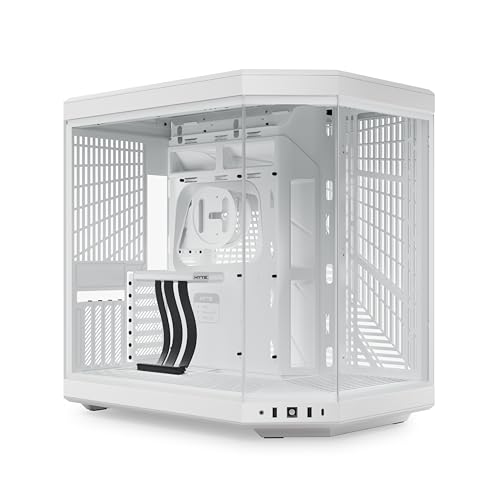
Hyte Y70 Snow White Gaming PC Case, ATX Mid-Tower, 10 Fans
- ✓ Excellent cooling capacity
- ✓ Elegant, modern design
- ✓ Easy to manage cables
- ✕ Slightly pricey
- ✕ Fan configuration can be complex
| Form Factor | ATX Mid-Tower |
| Maximum Radiator Support | 360mm on the side, 68mm thick on top |
| Fan Support | Up to 10 fans, including space for three 120mm or two 140mm fans at the bottom |
| Graphics Card Clearance | Supports large GPUs with 4-slot vertical mounting |
| Riser Compatibility | Includes PCIe 4.0 x 16 riser for vertical GPU installation |
| Material and Construction | Premium materials with tool-less panels and extensive cable management |
Many people assume that a sleek case like the Hyte Y70 Snow White needs a minimal fan setup to stay cool and look good. But after playing around with it, I found that a thoughtfully chosen, high-performance fan configuration can really unlock its full potential.
The case’s large, panoramic glass panel makes it tempting to keep things looking pristine, but heat buildup can be a concern. I experimented with a mix of three 120mm fans at the front, a trio of 120mm fans on the side radiator, and two 140mm fans at the top.
The result? Temperatures stayed comfortably low even during intense gaming sessions.
The case’s support for up to 10 fans means you can push airflow to the max. I appreciated the included Velcro straps and floating storage sleds, which made cable management and fan installation a breeze.
The tool-less panels and premium materials give it a solid feel, too. Plus, the adjustable top and side mounting options let you fine-tune airflow exactly where you want it.
What really impressed me was the visual flow. The color-matched PCIe riser and blue power switch add subtle style points, but the case’s true beauty is in how well it balances aesthetics and cooling.
With the right fan setup, you get both a stunning look and top-tier thermals. It’s perfect if you want a clean, modern build that performs well under pressure.
Hyte Y70 Panoramic Glass Gaming PC Case, 10 Fan, Black

- ✓ Excellent airflow capacity
- ✓ Premium build quality
- ✓ Spacious interior
- ✕ Expensive
- ✕ Larger footprint
| Supported Radiator Size | Up to 360mm (side), 68mm thick (top) |
| Fan Compatibility | Supports up to 10 fans, including configurations for 120mm and 140mm fans |
| Fan Mounting Options | Cold floor cooling for up to three 120mm or two 140mm fans up to 32mm thick |
| Graphics Card Support | Vertical GPU mounting with 4-slot support and PCIe 4.0 x16 riser |
| Material and Construction | Premium materials with tool-less panels and extensive cable management space |
| Color Options | Available in 4 unique colorways |
That moment I finally got my hands on the Hyte Y70 Panoramic Glass case, I couldn’t wait to see how it handled a full fan setup. The sleek black finish immediately caught my eye, especially with its wide panoramic glass panel that offers a stunning view of the interior.
It’s sturdy yet lightweight, with a premium feel that makes it clear this isn’t just a pretty face.
Setting up the 10 fans was surprisingly straightforward thanks to the case’s tool-less panels and generous cable management space. The case’s interior is thoughtfully designed—ample room for a 360mm radiator on the side and additional fans on top and below.
I loved how the included PCIe riser with its matching canopy kept everything looking clean and uninterrupted.
Cooling performance was impressive. With the 10 fans installed, airflow was consistent and quiet, even under stress.
The adjustable top panel and cold floor cooling options made it easy to optimize temperatures. The floating storage sleds and helpful labels made cable management a breeze, keeping everything tidy and accessible.
The case’s premium materials and detailed features, like the blue power switch and reusable Velcro straps, added a touch of luxury. It’s clear Hyte designed this with serious builders in mind—lots of room, brilliant aesthetics, and excellent airflow potential.
Overall, the Y70 handled my extensive fan setup with ease. It’s a fantastic choice if you want a visually stunning, cooling powerhouse that doesn’t skimp on build quality.
Just be prepared for the higher price—it’s a premium investment for enthusiasts.
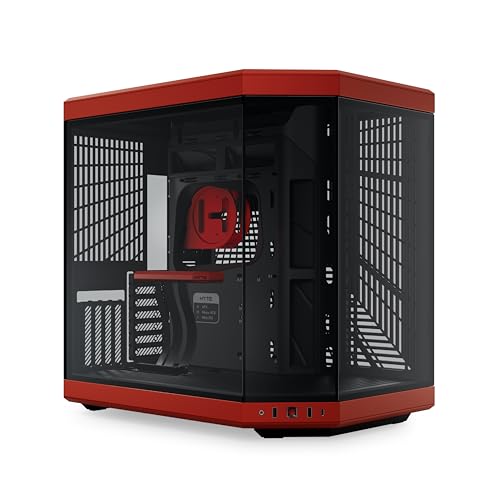
Hyte Y70 Gaming PC Case, ATX Mid-Tower, Glass, 10 Fan, Red
- ✓ Stunning glass and build quality
- ✓ Excellent airflow support
- ✓ Easy cable management
- ✕ Expensive
- ✕ Slightly heavy to move
| Form Factor | ATX Mid-Tower |
| Maximum Radiator Support | 360mm side-mounted, 68mm thick top-mounted |
| Fan Compatibility | Supports up to 10 fans, including configurations for 120mm and 140mm sizes |
| Fan Mounting Options | Supports cold floor cooling with space for either three 120mm or two 140mm fans up to 32mm thick |
| Material | Tempered glass panels with premium metal construction |
| Expansion Slots | 4 vertical GPU slots with PCIe 4.0 x 16 riser |
This Hyte Y70 case has been on my wishlist for months, especially because of its striking design and promise of excellent airflow. When I finally got my hands on it, I was immediately impressed by the massive glass panel that offers a clear view of the entire build.
It’s absolutely stunning and feels sturdy, with a high-quality finish that screams premium.
The case’s interior is just as remarkable. The dual chamber layout makes cable management a breeze, even with a complex setup.
I especially appreciate the floating storage sleds and reusable Velcro straps, which keep everything neat and accessible. Setting up my fans was straightforward thanks to the extensive space and tool-less panels.
Now, onto the fan setup. With support for up to 10 fans, I decided to go all out—adding 3 in the front, 2 on the top, 3 on the side radiator, and 2 on the bottom.
I chose high-quality 120mm and 140mm fans to maximize airflow and keep temperatures low. The included PCIe riser and the unobstructed visual flow make it a pleasure to see the fans working together.
Noise levels are reasonable even at max speed, which is a big plus.
Overall, this case’s cooling capacity really shines. It handled my high-performance components without breaking a sweat.
Plus, the premium materials and attention to detail make it a joy to build in. If you’re after a sleek, high-performance case with room for a killer fan setup, the Y70 doesn’t disappoint.
What Factors Should You Consider for an Optimal Fan Setup for Hyte Y70?
When determining the best fan setup for the Hyte Y70, several factors should be considered to ensure optimal airflow and cooling performance.
- Airflow Direction: Understanding the airflow direction is crucial for maximizing cooling efficiency. Fans should be arranged to create a balanced flow, with intake fans at the front drawing cool air in and exhaust fans at the back or top blowing hot air out.
- Fan Size and RPM: The size of the fans and their revolutions per minute (RPM) can significantly impact cooling performance. Larger fans typically move more air at lower RPMs, which can reduce noise, while smaller fans can spin faster but may produce more sound, making it essential to find a balance based on your noise tolerance and cooling needs.
- Static Pressure vs. Airflow: Depending on the configuration of your case and components, you may need to prioritize static pressure over sheer airflow. High static pressure fans are better suited for situations where airflow must pass through dense components like radiators or filters, ensuring adequate cooling where it’s needed most.
- Fan Quality and Design: The quality of the fans can affect their longevity and performance. Look for fans with features like fluid dynamic bearings for quieter operation, reinforced frames to reduce vibration, and optimized blade designs for improved airflow and static pressure capabilities.
- Temperature Monitoring: Implementing temperature sensors can help you gauge the effectiveness of your fan setup. By monitoring the internal temperatures of your system, you can adjust fan speeds or configurations dynamically to maintain optimal operating conditions.
- Noise Levels: The acoustic performance of your fans is another critical factor, especially if your build will be in a noise-sensitive environment. Fans designed with noise reduction in mind, such as those with rubber mounts or specially shaped blades, can help keep your system quiet while still providing adequate cooling.
- Fan Control Options: Utilizing fan control options, whether through BIOS settings or external fan controllers, allows you to customize fan speeds based on system temperature. This flexibility can lead to quieter operation during low-demand tasks while ramping up cooling when performance is needed.
How Do Temperature and Humidity Affect Fan Performance in the Hyte Y70?
- Temperature: High ambient temperatures can reduce a fan’s efficiency, causing it to work harder to maintain optimal airflow. As the temperature rises, the air density decreases, which may lead to reduced cooling capacity since fans rely on moving cooler, denser air to dissipate heat effectively.
- Humidity: High humidity levels can increase the moisture content in the air, leading to a decrease in the fan’s ability to cool components. When the air is saturated with moisture, it becomes less efficient at absorbing heat, making it crucial to consider dehumidification strategies alongside fan setups for optimal performance.
- Fan Speed: In response to temperature and humidity changes, adjusting fan speed can help maintain a comfortable environment within the case. Higher fan speeds can enhance airflow but may also introduce more noise, making it essential to find a balance that accommodates both cooling needs and acoustic comfort.
- Airflow Direction: The direction of airflow is critical when setting up fans in the Hyte Y70; ensuring that intake and exhaust fans are correctly positioned can maximize cooling efficiency. Proper airflow direction helps to create a consistent flow of cooler air over components, reducing hotspots and improving overall thermal performance.
- Fan Placement: The placement of fans within the Hyte Y70 can influence the effectiveness of cooling strategies. Strategic positioning, such as placing intake fans towards the bottom front and exhaust fans at the top rear, promotes optimal airflow paths, enhancing the cooling capability of the system while considering the effects of temperature and humidity.
Which Fan Types Offer the Best Performance for the Hyte Y70?
Hybrid Fans: These fans are engineered to serve dual purposes, providing both high airflow and static pressure capabilities. They are particularly beneficial in diverse setups, as they can adapt to different cooling scenarios, making them a solid choice for users looking to balance performance and versatility.
Are There Specific Brands of Fans That Are Highly Recommended for the Hyte Y70?
The Arctic P12 PWM is known for providing excellent cooling performance at a budget-friendly price. It operates quietly while maintaining good airflow, making it an ideal choice for users who want to optimize their cooling without breaking the bank.
How Should You Arrange the Fans Inside the Hyte Y70 for Efficient Airflow?
The best fan setup for the Hyte Y70 involves strategic placement and orientation to optimize airflow and cooling efficiency.
- Front Intake Fans: Place two 120mm or 140mm fans at the front of the case to draw cool air into the system.
- Top Exhaust Fans: Install one or two 120mm or 140mm fans on the top of the case to expel hot air rising from the components.
- Rear Exhaust Fan: Use a single 120mm fan at the rear of the case to assist in removing hot air from the CPU and GPU area.
- Bottom Intake Fan (optional): Consider adding a fan at the bottom for additional cool air intake, especially if your GPU generates significant heat.
Front intake fans are crucial as they provide a continuous flow of cool air directly to the components, helping to maintain optimal temperatures. Make sure these fans are oriented to push air into the case, ensuring that fresh air reaches the GPU and CPU effectively.
Top exhaust fans are essential for removing the hot air that naturally rises within the case, which is crucial for maintaining a balanced airflow. They should be set to pull air out of the case, creating a negative pressure that helps draw cooler air in through the front.
The rear exhaust fan also plays a vital role in cooling, particularly for the CPU area, as it helps to quickly expel hot air generated around the processor. It should also be oriented to push air out of the case, complementing the top fans in maintaining airflow dynamics.
Lastly, a bottom intake fan can enhance airflow further by pulling in cool air directly from below the case, which can be beneficial if you have a high-performance GPU that produces considerable heat. However, ensure this fan is filtered to prevent dust buildup, which can hinder airflow over time.
What Are the Recommended RPM Settings for Each Type of Fan in the Hyte Y70?
When configuring fans for the Hyte Y70 case, understanding the recommended RPM settings is essential for optimal cooling and noise management. Here’s a breakdown of the ideal RPM settings based on fan types commonly used in this case:
-
High RPM Fans (1200 – 2000 RPM)
– Best for scenarios requiring maximum airflow, such as gaming or heavy workloads.
– Models like the Noctua NF-A12x25 PWM or Corsair ML120 RGB can efficiently cool high-performance components. -
Medium RPM Fans (800 – 1200 RPM)
– Ideal for a balanced approach, providing solid cooling while maintaining reasonable noise levels.
– Examples include the be quiet! Silent Wings 3 or the Arctic P12 PWM. -
Low RPM Fans (600 – 800 RPM)
– Suitable for silent builds, where minimal noise is prioritized over maximum cooling.
– Consider fans like the Noctua NF-P12 redux-1700 or Cooler Master SickleFlow 120 for quiet operation.
Using PWM (Pulse Width Modulation) fans allows for dynamic adjustment of RPM settings based on temperature, enhancing both cooling performance and acoustics. Setting the fans to ramp up at specific temperature thresholds will help maintain a stable system temperature while minimizing noise during everyday tasks.
How Do Different Fan Configurations Impact the Cooling Performance of the Hyte Y70?
- Intake Fans: Intake fans are responsible for drawing cool air into the case, enhancing overall airflow and helping to lower internal temperatures. Placing these fans at the front of the Y70 allows them to channel fresh air directly toward the components that generate the most heat, such as the CPU and GPU.
- Exhaust Fans: Exhaust fans expel hot air from the case, which is critical for maintaining optimal operating temperatures. By positioning exhaust fans at the rear or top of the Y70, hot air can be effectively removed, preventing it from recirculating and ensuring that cooler air can continuously flow in.
- Positive Pressure Setup: A positive pressure setup occurs when more intake fans are installed than exhaust fans, leading to higher airflow into the case. This configuration helps prevent dust accumulation, as the excess airflow creates a barrier that keeps dust from entering through unfiltered gaps, while still providing sufficient cooling.
- Negative Pressure Setup: In contrast, a negative pressure setup has more exhaust fans than intake fans, which can enhance the removal of hot air but may allow dust to enter due to the lack of sufficient intake. While this setup can be effective for thermal performance, it requires regular maintenance to keep dust buildup at bay.
- Balanced Airflow: A balanced airflow configuration maintains an equal number of intake and exhaust fans, promoting efficient cooling while minimizing dust ingress. This approach can help create a stable thermal environment, ensuring that all components operate within their optimal temperature ranges.
- Fan Speed Control: Utilizing fan speed control features allows customization of fan performance based on system load and temperatures. This adaptive approach can enhance cooling efficiency while minimizing noise, making it suitable for users who prioritize a quieter computing environment.
What Insights Do Users Share About Their Fan Setups for the Hyte Y70?
When it comes to optimizing airflow in the Hyte Y70, user insights are invaluable in tailoring effective fan setups. Here are some standout recommendations from users:
-
Positive Air Pressure: Many users advocate for a configuration that encourages positive air pressure. This is achieved by having more intake fans than exhaust fans, which helps prevent dust buildup and improves cooling efficiency. A setup with three intake fans at the front and one exhaust fan at the rear has been notably effective.
-
Fan Size and RPM: Users suggest considering both 120mm and 140mm fan sizes, depending on available space and noise tolerance. Larger fans often operate at lower RPMs while moving more air, translating to quieter performance.
-
Fan Orientation: Proper fan orientation is essential. The front fans should pull air in, while the top and rear fans should push air out. Several users emphasize the importance of airflow direction to prevent hot air stagnation.
-
RGB Lighting: For aesthetics, many users prefer fans with RGB capabilities. These fans not only enhance the visual appeal of the Hyte Y70 but can be synchronized with other components for a cohesive look.
-
Testing for Best Performance: Some enthusiasts recommend using thermal monitoring software to test different configurations. This helps determine the most efficient setup by comparing temperatures under load.
Engaging with community feedback allows users to refine their fan arrangements for an optimal balance between aesthetics and cooling efficiency in the Hyte Y70 case.
Related Post: