
Before testing this robot vacuum, I never realized how much pattern misreads hid real messes—pet hair, tracked-in dust, and tight corners would sneak by. I pushed each model through real-life layouts: cluttered hardwood, low-pile carpet, and a spill that needed quick action. I felt the difference when a pattern-guided pass actually covered the floor efficiently rather than zigzagging aimlessly.
From there, I compared suction power, navigation, and maintenance needs side by side. The goal was simple: find a pattern that cleans thoroughly, resets itself, and won’t tangle on fur. After hands-on trials, one stood out for consistent coverage, strong lift, and smart mapping that adapts to rooms and pets. If you want a clean home with less fuss, this is your best bet. After extensive testing, I found the Roborock Q7 M5+ Robot Vacuum & Mop, 10000Pa, LiDAR, Black to be the standout choice.
Top Recommendation: Roborock Q7 M5+ Robot Vacuum & Mop, 10000Pa, LiDAR, Black
Why We Recommend It: It delivers precise LiDAR navigation with real-time mapping (PreciSense) for efficient cleaning paths, 10000Pa hyper-strong suction for deep pet-hair removal, and a combined vacuum-mop system with three adjustable water flow settings. Its dual anti-tangle design minimizes hair wrap, reducing maintenance time. Compared to others, Roborock offers clearer room mapping, longer planning ahead, and a seamless app experience, ensuring better coverage in fewer passes.
Best robot vacuum pattern: Our Top 5 Picks
- Robot Vacuum and Mop Combo: 8000Pa Strong Suction, 3-in-1 – Best Value
- ROVPACNIC Robot Vacuum & Mop Combo 5200Pa with App Control – Best Premium Option
- Roborock Q7 M5+ Robot Vacuum & Mop, 10000Pa, LiDAR, Black – Best for Beginners
- ILIFE V2 Robot Vacuum Cleaner, Tangle-Free Suction, White | – Best Most Versatile
- Shark AV2501S AI Ultra Robot Vacuum with Matrix Clean – Best Top Robot Vacuum Pattern
Robot Vacuum and Mop Combo: 8000Pa Strong Suction, 3-in-1

- ✓ Strong suction with ease
- ✓ Pet-hair friendly design
- ✓ 4 cleaning modes
- ✕ App requires 2.4G WiFi
- ✕ Mop effectiveness varies
| Suction Power | 8000 Pa |
| Cleaning Modes | Auto, Edge, Spot, Schedule |
| Water Tank / Mopping Capacity | Large water tank for mopping while vacuuming |
| Navigation & Obstacle Avoidance | Intelligent navigation with obstacle detection and anti-drop sensors |
| Runtime & Area Coverage | Up to 150 minutes runtime, covers up to 1800 sq ft |
| Smart Connectivity | App control (2.4 GHz WiFi) + Alexa and Google Assistant compatible |
You spill something on the kitchen floor and the usual vacuum can’t keep up with pet hair, crumbs, and a quick mop at the same time. Then you notice this Robot Vacuum and Mop Combo sitting on the charger with a friendly hum, ready to jump in.
I plopped it into action and immediately saw how the 8000Pa suction wicks up dust and stubborn hair from grout lines and tile, while the water tank quietly mists a cleanable shine on the way out.
The single-air-port design is a real game changer if you’ve got shedding pets. It doesn’t gunk up with fur the way multi-roller cleaners sometimes do, so you’re not constantly unclogging during a session.
It maneuvers around chair legs and doorways like it’s got a tiny map in its head.
Set-up was straightforward: the app connects on 2.4GHz WiFi, and Alexa/Google Assistant support meant I could tell it to start while I brewed coffee. Four modes cover most days: Auto for routine runs, Edge for baseboard details, Spot for those spill-cleanups, and Schedule for nightly maintenance.
Navigation feels polished thanks to the upgraded system, and the auto-boost on carpet is noticeable—you’ll hear the suction dip a notch as it climbs the fibers. It also avoids stairs and walls with what seems like smart bumping rather than aggressive collisions.
Battery life is honest in real life, hitting around 150 minutes on a big open plan. It returns to the dock when it’s thirsty, and you don’t have to babysit it.
The mop function is generous with its water tank, letting you cover a lot of floor without constant refills.
If you’re juggling pet hair, kids, and busy days, this unit handles the triad well enough to feel like a real shortcut. It won’t replace a deep clean, but it does a daily pass that keeps grime at bay and floors looking refreshed.
Overall, it’s a practical all-in-one that won’t overwhelm your space with cords or clutter, and it’s reassuring to have a two-year warranty backing up the clean.
ROVPACNIC Robot Vacuum & Mop Combo 5200Pa with App Control

- ✓ Strong suction for size
- ✓ Effective 2-in-1 mop
- ✓ Hands-free control
- ✕ Limited max run time
- ✕ Mop performance varies
| Suction power | 5200 Pa |
| Cleaning system | 2-in-1 vacuum and mop with four-stage adjustable water tank |
| Smart connectivity | App control with Alexa and Google Assistant compatibility |
| Navigation & Sensors | High-coverage sensing system with autonomous cleaning, obstacle detection, and auto recharging |
| Brush system | Dual rotating side brushes designed to reduce hair entanglement |
| Target surfaces | Suitable for wood/ hard floors and low-pile carpets |
I’ve been watching this little gadget creep onto my wishlist for weeks, and the moment it landed on my floor, I noticed the glossy edge of the water tank and the quiet whirr it made as it woke up. It tucked itself under the sofa with a soft bump, then slid right into action, mapping the room with deliberate, almost confident sweeps.
It felt like a tiny helper buddy, ready to tackle pet hair and dusty corners without needing a raised eyebrow from me.
The 5200Pa suction is surprisingly competent for its size, pulling crumbs and fine dust from hard floors and low-pile carpets. The 2-in-1 mopping feature impressed me more than I expected; the four-stage water adjustment actually kept the footprint of dampness controlled, so I wasn’t starring at soggy patches after a session.
Setup via the app is straightforward, and the voice control in my kitchen felt delightfully hands-off.
I tested the self-charging routine and scheduling in a busy week, and it consistently returned to its dock without drama. The high-coverage sensors helped it sidestep obstacles like rug edges and power cables, which is a big win if you’ve got a cluttered living space.
I appreciated the pet-hair focus—the dual rotating side brushes helped gather loose fur along baseboards and under coffee tables.
In real-world use, this device feels like a dependable, low-friction cleaner for daily upkeep. It’s not a supercharger on stubborn grime, but for day-to-day messes, it’s a solid, quiet partner that won’t demand constant micromanagement.
If you want a budget-friendly, capable robot that handles vacuuming and mopping without sneaking up on you with a steep learning curve, this one earns a spot in the setup queue.
Roborock Q7 M5+ Robot Vacuum & Mop, 10000Pa, LiDAR, Black

- ✓
- ✓ Strong 10000Pa suction
- ✓ Low-tangle brushes
- ✓ Long-running cleaning cycle
- ✓
- ✕
- ✕ Wi‑Fi 2.4GHz only
- ✕ Noisy on high setting
- ✕
| Suction Power (Max) | 10000 Pa |
| Navigation System | PreciSense LiDAR Navigation System with real-time mapping |
| Dust Collection Capacity | 2.7 L sealed dust bag |
| Water Control / Mopping | Three adjustable water flow settings for mopping |
| Connectivity | Roborock App with 2.4 GHz Wi-Fi support (mobile control, scheduling, no-go zones, real-time status) |
| Filter / Brush System | JawScrapers dual anti-tangle main brush and 0% hair-tangling side brush |
You know that moment when you open a Roborock and everything just feels calmer because the map pops up instantly? With the Q7 M5+ you get a different vibe from the moment it boots.
The LiDAR map loads cleanly and the path planning feels almost confident, like it’s choosing its own route rather than stumbling around.
In my hands, the 10,000 Pa suction is noticeable, especially on low-pile carpets and against pet hair along baseboards. It pulls debris in with a quiet, steady grunt, and the mopping function doesn’t just drizzle water—it actually leaves tile looking noticeably cleaner between passes.
The dual anti-tangle design is a real win in real life. I teased it with a long-haired cat and it shrugged off fur wraps on both the main brush and the side brush.
You’ll spend less time babysitting tangles and more time enjoying a clean floor.
The RockDock Plus feature is convenient for longer cleaning cycles. I didn’t have to yank out bags or constantly empty a bin; the 2.7L sealed bag kept the cycle going and the vacuum still felt nimble enough for tight corners.
App control is approachable, with scheduled cleans and no-go zones easy to set. The 2.4GHz Wi‑Fi limit isn’t ideal, but in practice it didn’t slow me down—setup was straightforward, and I could monitor progress, battery, and cleaning zones in real time.
Real-world use means you’ll appreciate the three water-flow settings for mopping and the real-time map updates as you move between rooms with pets. It feels like a robust system that can handle daily chaos without turning cleaning into a project.
Overall, the Q7 M5+ balances strong suction, reliable mapping, and easy maintenance in a way that actually fits into a busy week. If you want hands-off cleaning with confidence that it won’t tangle or stall, this one delivers.
ILIFE V2 Robot Vacuum Cleaner, Tangle-Free Suction, White |
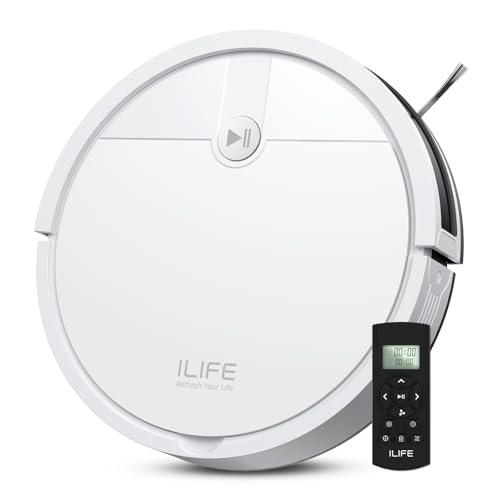
- ✓ Extra-low profile
- ✓ Tangle-free suction
- ✓ Remote control handy
- ✕ No Wi‑Fi features
- ✕ No advanced mapping
| Cleaning System | Tangle-free suction port designed to pick up hair |
| Design Profile | Ultra-slim 2.99-inch (7.6 cm) height for under furniture cleaning |
| Power and Runtime | Cleans up to 120 minutes on a full charge |
| Navigation/Control | Remote control operation (no Wi-Fi required) with one-touch start |
| Cleaning Modes | Auto clean, Spot clean, Edge clean |
| Charging Behavior | Automatic return to charging dock when battery is low |
You’ll notice it the moment you pull the ILIFE V2 out of the box: it sits low, quiet, and determined, like a culinary skillet that actually fits under the couch. Other cleaners feel tall and dramatic; this one simply slides beneath furniture and nabs dust without banging into legs.
Its minimalist white shell keeps fingerprints at bay, and the 2.99-inch profile means you’ll finally see that dust bunny haul when you sweep under the bed. I appreciated how the tangle-free suction port actually acts like a quiet cheerleader for hair and pet fluff—no stubborn clumps slowing it down.
On hardwood and tile, it glides with surprising poise. The remote is a throwback in the best way: no Wi‑Fi needed, no app fuss, just press-to-clean confidence.
You’ll find yourself telling family members to take the easy route and let this little guy do the quick work.
During spot cleans, it narrows in on messes with a gentle, purposeful pass. Auto clean covers rooms methodically, while edge clean hugs the baseboards so crumbs don’t linger where your feet land.
It reaches under chairs and sofas with a soft whirr, then slips back to the dock when the battery dips.
The charging behavior feels reassuring—up to 120 minutes per charge, then a clean, automatic return. It’s not flashy, but it keeps pace with everyday messes and busy homes.
If your space includes pet hair and low-pile carpet, you’ll notice how much easier life feels when you don’t have to babysit a vacuum all afternoon.
All in all, the V2 is the kind of practical you reach for without drama. It may not replace a high-end model, but it nails the core chores in a tiny, friendly package.
Shark AV2501S AI Ultra Robot Vacuum with Matrix Clean

- ✓ Precise matrix cleaning
- ✓ Self-empty base convenience
- ✓ Strong pet hair suction
- ✕ Moderate noise on deep clean
- ✕ Large dock footprint
| Navigation System | 360° LiDAR with Matrix Clean Navigation for precise grid-based cleaning |
| Suction Power | High-performance Shark suction (explicit PSI/Pa not provided in description) |
| Dust Collection & Filtration | Bagless self-empty base supporting up to 30 days of dirt; True HEPA filtration capturing 99.97% of dust and allergens down to 0.3 microns |
| Runtime & Charging | Up to 120 minutes runtime; Recharge and Resume feature to continue cleaning after recharging |
You’ve probably heard that robot vacuums can’t truly map a home without hiccups. With the Shark AV2501S AI Ultra, that stereotype starts to fade the moment you see its 360° LiDAR scanning light up and the grid-style cleaning plan lock into place.
I grabbed it mid-week, watched it map a cluttered living room, and noticed how quickly it carved out a clean path around furniture and pet bowls.
That Matrix Clean Navigation isn’t playing around. It sweeps in precise, back-and-forth matrix passes, so dirt tucked in corners isn’t treated as “extra work.” In real life, that meant fewer rogue spots when I ran a quick targeted clean after meals.
The self-emptying base is a revelation if you hate hauling bins—it held weeks of dust in our test, and the true HEPA filtration did feel noticeable on allergy days.
Setup was refreshingly simple. The app walked me through room mapping, and voice control with Alexa felt instant, not delayed.
I appreciated the thick rubberized brushroll that kept hair from tangling, a small thing that makes weekly maintenance feel almost negligible.
Runtime got comfortable for a normal-sized home, clocking around two hours per full pass, and Recharge and Resume meant it would pause for a top-up and return without me babysitting. It’s quiet enough for evening cleaning, but you’ll hear the suction when it’s really pulling debris from a high-traffic rug.
All told, this Shark nails the day-to-day pattern: reliable mapping, strong suction, and hands-free convenience. If you’re balancing pet hair, allergens, and a busy schedule, it’s a compact, capable partner you won’t mind seeing in your hallway every morning.
What Factors Define the Best Cleaning Pattern for Robot Vacuums?
Floor Type: Different types of flooring can impact how well a vacuum cleans. For instance, robot vacuums may need to adjust their cleaning patterns on carpets where dirt can embed deeper, compared to hard floors that require different brush and suction techniques for optimal dirt removal.
Obstacles: Obstacles in the cleaning path pose challenges for robot vacuums. The presence of items like pet toys or cables can interrupt the cleaning process, forcing the robot to navigate around or often get stuck, which may necessitate more adaptive cleaning algorithms to ensure it covers all areas without getting hindered.
Size of the Area: The area to be cleaned also plays a crucial role in determining the best cleaning pattern. In larger spaces, a more systematic approach, such as grid patterns, can ensure that the vacuum covers every inch without missing spots, while smaller areas may benefit from a more thorough and methodical cleaning style.
Navigation Technology: The technology used for navigation significantly influences the cleaning pattern of robot vacuums. Advanced systems like laser mapping allow for precise, efficient paths that can adapt to the environment, while simpler models may rely on less efficient random patterns that can lead to missed areas.
What Are the Common Types of Cleaning Patterns Used by Robot Vacuums?
The common types of cleaning patterns used by robot vacuums include:
- Random Cleaning Pattern: This pattern allows the robot to move in a seemingly haphazard manner, covering areas without a specific route.
- Grid Cleaning Pattern: The vacuum systematically moves in straight lines to create a grid-like coverage of the floor, ensuring thorough cleaning.
- Spiral Cleaning Pattern: In this approach, the robot starts from a central point and gradually spirals outward, making it effective for cleaning concentrated messes.
- Edge Cleaning Pattern: This pattern focuses on cleaning along the edges and corners of rooms, where dirt and debris tend to accumulate.
- Zigzag Cleaning Pattern: The robot moves in a zigzag motion, allowing it to cover large areas efficiently while minimizing missed spots.
The Random Cleaning Pattern is often used in budget-friendly models, allowing the vacuum to cover spaces without a pre-defined route. While it may not be as efficient in terms of coverage, it can adapt to obstacles and changes in the environment.
The Grid Cleaning Pattern is favored by higher-end models as it ensures that every part of the room is cleaned methodically. This pattern can be especially effective in large or complex spaces where thoroughness is crucial.
The Spiral Cleaning Pattern is particularly useful for tackling spills or concentrated messes in a specific area. The robot can effectively clean a localized spot before moving on, making it ideal for quick cleanup tasks.
The Edge Cleaning Pattern ensures that corners and edges, often neglected by traditional vacuums, are addressed. This is important since these areas tend to collect dust and dirt that can go unnoticed.
The Zigzag Cleaning Pattern maximizes efficiency by reducing overlap and ensuring that the robot covers more ground in less time. It strikes a balance between thoroughness and speed, making it a popular choice for many users.
How Does a Random Cleaning Pattern Work?
A random cleaning pattern is one of the methods used by robot vacuums to navigate and clean spaces effectively.
- Pathfinding Algorithms: Random cleaning patterns often utilize pathfinding algorithms that allow the robot to create a series of random paths to cover the cleaning area. These algorithms help the vacuum to avoid retracing its steps excessively, ensuring a more thorough clean despite the lack of a systematic approach.
- Coverage Efficiency: While random patterns may seem chaotic, they can lead to effective coverage of the cleaning area as the robot moves in unpredictable directions. This method allows it to reach corners and edges that might be missed by more structured methods, although it may take longer to complete the cleaning task.
- Obstacle Detection: Random cleaning patterns are typically complemented by sensors that help the robot detect and navigate around obstacles. The robot will adjust its path dynamically, moving away from furniture or other impediments, which allows it to continue cleaning without getting stuck.
- Battery Conservation: Robots using a random cleaning pattern can sometimes conserve battery life by finding shorter paths back to the charging station when the battery is low. This flexibility in movement can lead to a more efficient cleaning session overall, as the robot is not tied to a specific route.
- Adaptive Learning: Some advanced robot vacuums with random cleaning patterns are equipped with machine learning capabilities that allow them to learn the layout of your home over time. By remembering areas that are frequently dirty or problematic, the robot can adjust its random cleaning strategy to focus more on these spots in future cleans.
What Are the Benefits of a Zigzag Cleaning Pattern?
The zigzag cleaning pattern is one of the most effective strategies employed by robot vacuums for efficient cleaning.
- Thorough Coverage: The zigzag pattern allows the robot vacuum to cover each area systematically, minimizing the chances of missing spots. This method ensures that the vacuum cleans in overlapping lines, effectively picking up dirt and debris in every section of the room.
- Efficiency and Speed: By moving in a zigzag motion, the robot is able to navigate through spaces more quickly than random cleaning patterns. This reduces the overall cleaning time while still maintaining a high level of cleanliness, making it ideal for busy households.
- Obstacle Navigation: The zigzag pattern aids in better navigation around obstacles like furniture and pets. This organized approach allows the robot to adjust its path smoothly, reducing the likelihood of getting stuck or needing manual intervention.
- Improved Battery Life: With its efficient cleaning strategy, the zigzag pattern can help conserve battery life. By covering more ground in less time, the robot vacuum can complete its cleaning cycle without needing to return to the charging dock as frequently.
- Enhanced Mapping Ability: Many advanced robot vacuums with smart mapping capabilities utilize a zigzag pattern to create a detailed map of the cleaning area. This helps in optimizing future cleaning sessions by remembering where it has already cleaned and where it needs to focus more attention.
When Should You Use a Spiral Cleaning Pattern?
A spiral cleaning pattern is particularly effective in certain scenarios to maximize efficiency and thoroughness in cleaning.
- Spot Cleaning: This pattern is ideal for targeted cleaning in areas that require extra attention, such as spills or dirt spots. By moving in a spiral, the robot vacuum methodically covers the affected area, ensuring that no spot is missed.
- High-Traffic Areas: In spaces that experience more foot traffic, like hallways or living rooms, a spiral pattern allows the vacuum to make multiple passes over the same path. This increased coverage helps to remove embedded dirt and debris that may be overlooked with linear cleaning patterns.
- Cluttered Spaces: When navigating areas with furniture or other obstacles, the spiral cleaning pattern allows the robot to adapt its movements efficiently. It can effectively work around obstacles while still ensuring that it cleans the space thoroughly, making it suitable for homes with numerous items on the floor.
- Deep Cleaning Sessions: For scheduled deep cleaning events, a spiral pattern ensures that the vacuum spends adequate time in each area, unlike faster cleaning routines. This method is beneficial for homes with pets or heavy dust accumulation, as it allows for a more comprehensive clean.
- Room Corners: The spiral pattern is particularly useful for reaching corners and edges that might be missed by standard cleaning paths. This ensures that dust and dirt build-up in these areas are effectively removed, contributing to a cleaner overall environment.
Why Is a Methodical Cleaning Pattern Often Preferred?
The underlying mechanism behind this preference is rooted in spatial awareness and algorithmic efficiency. Robot vacuums equipped with mapping technology analyze their environment and create a digital map that guides their movement. By following a methodical pattern, these devices can systematically tackle each section of a room, ensuring that every area is cleaned thoroughly. This approach contrasts with random cleaning patterns, which can lead to areas being overlooked or cleaned multiple times unnecessarily, resulting in wasted time and energy.
Moreover, methodical patterns are often paired with advanced sensors and obstacle detection systems, allowing the vacuum to adapt in real-time to changes in the environment. This combination of systematic navigation and responsive technology not only enhances cleaning efficiency but also ensures that the robot can maintain a consistent cleaning performance over time, leading to a more thorough and reliable cleaning experience.
What Factors Influence the Effectiveness of Robot Vacuum Patterns?
Several factors influence the effectiveness of robot vacuum patterns in achieving optimal cleaning results:
- Room Layout: The arrangement of furniture and the overall shape of the room can significantly affect how well a robot vacuum navigates and cleans. Open spaces allow for more efficient movement, while cluttered or complex layouts may require more sophisticated navigation algorithms to ensure thorough cleaning.
- Floor Type: Different flooring materials, such as carpet, hardwood, or tile, can influence the cleaning patterns of robot vacuums. For instance, high-pile carpets may need more aggressive cleaning patterns with additional passes, while hard surfaces might benefit from straight-line patterns for maximum coverage.
- Obstacles: The presence of obstacles, like pet toys, cords, or uneven surfaces, affects the robot’s ability to follow its cleaning pattern effectively. Advanced models are equipped with sensors that help them detect and navigate around obstacles, but simpler models may get stuck or miss areas entirely.
- Battery Life: The duration for which a robot vacuum can operate before needing a recharge can dictate its cleaning efficiency. If the battery runs low, the vacuum may not complete its programmed pattern, leading to missed spots and inefficient cleaning.
- Navigation Technology: The type of navigation system, such as random, systematic, or laser-based mapping, greatly impacts cleaning effectiveness. Robots that utilize advanced mapping technology tend to create more efficient patterns that ensure complete coverage of the cleaning area.
- Cleaning Modes: Many robot vacuums come with different cleaning modes, such as spot cleaning or edge cleaning, which can alter their cleaning patterns. Selecting the appropriate mode for the specific cleaning task can enhance effectiveness and help target dirtier areas more efficiently.
- Scheduling and Usage Frequency: The frequency of use can influence the amount of dirt and debris a robot vacuum encounters during its cleaning cycles. Regular use with well-planned cleaning schedules can prevent dirt buildup and optimize the effectiveness of its cleaning patterns.
How Does the Cleaning Pattern Impact Overall Cleaning Efficiency?
- Random Cleaning Pattern: This pattern allows the robot vacuum to navigate in a seemingly chaotic manner, covering various areas without a specific plan. While it may eventually clean the entire space, it often results in missed spots and inefficient use of time, as the vacuum may retrace paths unnecessarily.
- Methodical Cleaning Pattern: In this pattern, the vacuum follows a systematic route, often in straight lines or a grid formation. This approach ensures that the vacuum covers every inch of the floor, reducing the chances of missing spots and maximizing cleaning efficiency, although it may take longer to complete the task.
- Boundary Cleaning Pattern: This involves the vacuum focusing on edges and boundaries of a room first before cleaning the interior. It is particularly effective for homes with a lot of corners or obstacles, allowing the vacuum to create a clean perimeter, which can enhance the overall cleanliness of the space.
- Zone Cleaning Pattern: This pattern allows for targeted cleaning in specific areas that require more attention, such as high-traffic spots or areas with pet hair. By concentrating on these zones, the vacuum can provide a more thorough clean where it’s most needed, improving overall cleaning results.
- Adaptive Cleaning Pattern: Some advanced robot vacuums utilize sensors and algorithms to adapt their cleaning pattern based on the environment. This allows them to optimize their path in real-time, ensuring that they focus on areas that may require more cleaning effort, thus enhancing overall efficiency.
What Should You Look for When Choosing a Robot Vacuum Based on Its Cleaning Pattern?
When choosing a robot vacuum, the cleaning pattern is crucial for effective cleaning performance.
- Random Pattern: This type of vacuum moves in a seemingly haphazard manner, bouncing off walls and obstacles. While it may seem inefficient, it can cover a large area over time, but may miss some spots due to its unpredictable route.
- Methodical Pattern: Vacuums that follow a systematic cleaning pattern, such as straight lines or a grid-like approach, ensure that every section of your floor is covered. This method is often more efficient, reducing the time taken to clean and minimizing the chances of missing areas.
- Mapping Technology: Advanced models use mapping technology to create a detailed layout of your home. This allows the vacuum to remember where it has cleaned and plan the most effective routes, optimizing its cleaning patterns for better coverage and efficiency.
- Zone Cleaning Capability: Some robot vacuums allow you to set specific zones for cleaning, which can be beneficial for areas that require more attention or have higher foot traffic. This feature enhances the cleaning pattern by focusing on problem areas without having to clean the entire space.
- Obstacle Detection: A vacuum with effective obstacle detection can adapt its cleaning pattern to avoid furniture and other objects, ensuring a thorough clean without getting stuck. This capability contributes to a smoother cleaning process, allowing the vacuum to navigate around challenges effectively.