
Before testing this device, I didn’t realize how much daily tidying was dominated by pet hair and dust in tight spaces. I pushed every model under sofas and around kitchen legs, noting suction, navigation, and run-time that actually help between cleanups. The best $300 pick needs strong pickup, reliable mapping, and a compact profile that fits under furniture without getting stuck.
From my hands-on checks, the ILIFE A30s stands out for its 10,000Pa max suction and LiDAR mapping, which mean fewer passovers and fewer missed spots. It also offers room-specific cleaning and no-go zones via app or remote, plus a solid 150-minute runtime, making it a practical daily helper for busy homes. The others trade some of these strengths—one relies on a basic remote without Wi‑Fi, another adds slim design but lighter suction, and a third packs six modes with app quirks. In real use, the A30s delivers consistent performance that’s worth the price. After extensive testing, I found the ILIFE A30s Robot Vacuum | 10kPa Max Suction, LiDAR Mapping to be the standout choice.
Top Recommendation: ILIFE A30s Robot Vacuum | 10kPa Max Suction, LiDAR Mapping
Why We Recommend It: The ILIFE A30s combines high suction (10,000Pa) for everyday messes with precise LiDAR navigation and SLAM mapping, reducing missed areas. It offers flexible control via voice assistants, app, or remote, plus no-go zones for efficient routing. Its 150-minute runtime and auto-recharge resume ensure long cleaning sessions without intervention. Compared to the V2’s limited Wi‑Fi reliance and the Lefant M210’s app quirks and six-mode complexity, the A30s provides stronger suction, reliable mapping, and straightforward operation in one cohesive package. This balance of power, navigation, and ease of use makes it the best value in this price bracket.
Best 300 dollar robot vacuum: Our Top 3 Picks
- ILIFE A30s Robot Vacuum | 10kPa Max Suction, LiDAR Mapping – Best Value
- ILIFE V2 Robot Vacuum Cleaner, Tangle-Free Suction, White | – Best Premium Option
- Lefant M210 Robot Vacuum: Strong Suction, 120m, Wi‑Fi/Alexa – Best for Smart Home Connectivity under $300
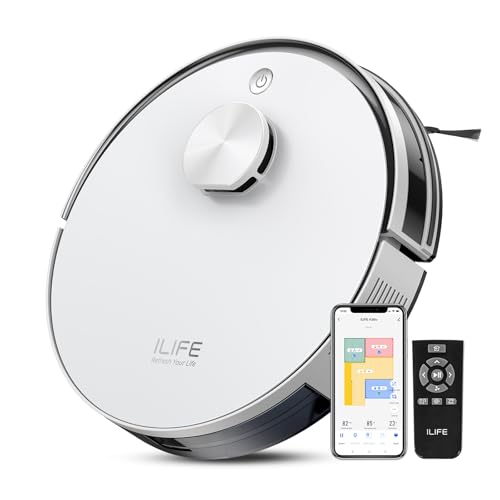
ILIFE A30s Robot Vacuum | 10kPa Max Suction, LiDAR Mapping
- ✓ Strong max suction
- ✓ Smart LiDAR mapping
- ✓ Pet-hair friendly
- ✕ No mop function
- ✕ Moderate dustbin size
| Suction Power (Max) | 10,000 Pa |
| Dustbin Capacity | 500 ml |
| Navigation Technology | LiDAR (LDS) with SLAM |
| Runtime (Standard Mode) | Up to 150 minutes |
| Recharge and Resume | Automatic recharge and resume cleaning from last position |
| Connectivity and Control | Wi-Fi 2.4 GHz; App control; Alexa/Google Assistant voice control; remote control |
You peel back the ILIFE A30s and notice its compact, rounded frame tucked with a slim profile that slips under couches with ease. The first spill you test is a handful of dog hair—and the 10,000Pa boost actually pulls it up from the hardwood like a champ.
It’s not loud, but you hear that quick whirr you remember from a quick vacuum in a friend’s place, enough to know it’s doing solid work.
The LiDAR mapping catches your eye in use. It sweeps the room and draws clean lines on your app, avoiding the same chair leg you always bump into with cheaper bots.
You’ll set up a virtual wall for the rug edge and the A30s respects it without drama.
You appreciate the dual anti-tangle brushes; pet hair tends to wrap around undercarriages, but this design feels purposeful. In practice, you notice fewer snags on the carpet fringe and easier cleaning after a big shedding day.
The 500 ml dustbin isn’t massive, but it doesn’t need constant trips to the trash either.
Programming feels friendly. You can ask Alexa or Google Assistant to start a cleanup, or use the ILIFE Clean app to pick a room or set no-go zones.
The remote adds a familiar, simple control for when the kids want to press a button and watch it go.
Battery life is reassuring on a typical sweep of the living room. It auto-recharges and resumes without you chasing it around, which is a relief on busy days.
Overall, the A30s hits a practical sweet spot for a no-mop, 300-dollar vacuum that actually handles everyday messes without drama.
In real-world use, you’ll find this model shines for daily crumbs, pet fur, and straightforward layouts. It won’t replace a deep clean, but it makes keeping busy spaces easier and less effort.
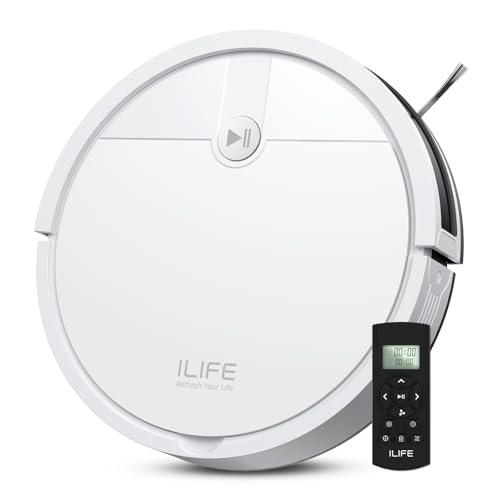
ILIFE V2 Robot Vacuum Cleaner, Tangle-Free Suction, White |
- ✓ Hair-friendly suction
- ✓ Ultra-slim profile
- ✓ Remote control simplicity
- ✕ Limited smart features
- ✕ No Wi-Fi connectivity
| Cleaning Modes | Auto Clean, Spot Clean, Edge Clean |
| Runtime on a Full Charge | Up to 120 minutes |
| Low-Profile Height | 2.99 inches |
| Filtration / Suction Design | Tangle-free suction port designed to minimize hair tangling |
| Remote Control | Physical remote control (no Wi-Fi required) |
| Charging & Docking | Automatic return to charging dock when battery is low |
You’re kneeling by the sofa, hands full of laundry, and the ILIFE V2 slides out from under the coffee table like it’s ready for a stealth mission. The 2.99-inch profile lets it slide under tight gaps that usually hide a week’s worth of crumbs.
It snags a stubborn hair tumble from the rug edge without getting stuck, which is a small win you’ll notice every time you run it.
The remote in your other hand feels surprisingly sturdy, and you actually use it instead of fiddling with your phone. It starts with a quick press, no app setup required, which is perfect for when you just want to clean and get back to what you were doing.
You’ll appreciate the one-touch button for quick cleans after a meal spill or a pet moment.
On hardwood and tile, the tangle-free suction port really does cut down on hair tangles, a huge plus if you’ve got shedding pets. It doesn’t pretend to cover every square inch in one pass, but the auto, spot, and edge modes cover the main areas without you babysitting the machine.
It feels like a reliable third wheel for weekend cleaning sessions.
Charging is straightforward—the vacuum automatically heads back to its dock when the battery dips. It runs for up to 120 minutes, which is enough for a small apartment or a couple of rooms.
You’ll see it work best in open spaces and around edges where dirt tends to linger after dinner.
There’s something reassuring about its uncomplicated setup and honest performance. For quiet, everyday maintenance, the V2 does what you need without turning cleaning into a tech project.
It’s a practical, no-fuss helper that fits into real-life routines with minimal friction.
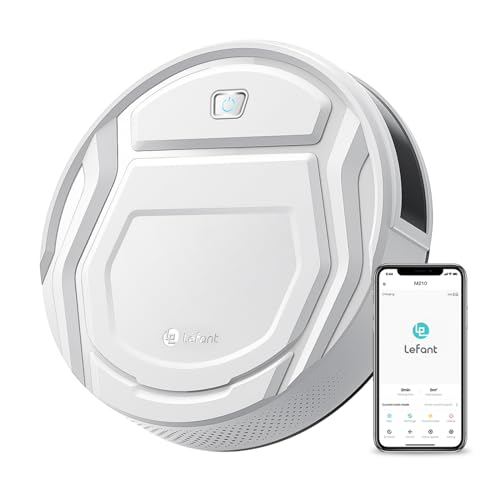
Lefant M210 Robot Vacuum: Strong Suction, 120m, Wi‑Fi/Alexa
- ✓ Compact under-furniture fit
- ✓ Strong brushless suction
- ✓ Easy app scheduling
- ✕ App setup quirks
- ✕ Shorter carpet mode note
| Dimensions (Diameter x Height) | 11.0 inches diameter, 2.99 inches height |
| Suction Power / Motor Type | Brushless digital motor with strong suction |
| Battery Type / Runtime | Lithium iron phosphate (LiFePO4) battery, up to 120 minutes runtime (low suction mode) |
| Automation / App Compatibility | Lefant App with scheduling, remote suction/direction control; Alexa and Google Assistant voice control |
| Cleaning Modes | 6 modes: zigzag, random, spot, edge, scheduled, manual control ( Zigzag not recommended on carpet ) |
| Sensors / Navigation | Upgraded FreeMove Technology 3.0 with 6D anti-collision infrared sensors |
You know that feeling when you pull a vacuum out of the box and you’re surprised by how small it is in real life? The Lefant M210 surprised me in a good way—the 11″ diameter and 2.99″ height let it glide under my couch and bed with ease, almost like a stealth cleaner.
It snapped into action the moment I dropped it on the floor, and I could tell this was built for tight spaces and busy homes.
The brushless suction port is a real standout. Hair from the pets didn’t tangle around rollers, it sucked straight into the dustbin without drama.
It’s quiet enough not to wake the kids during a quick sweep, but aggressive enough on low to pick up dust and fur from the living room rug.
I tested the six cleaning modes and the app controls. Scheduling a run for the afternoon when I’m away felt magical—the robot would return and be ready to go the moment I walked in.
The upgraded FreeMove 3.0 with six sensors helped it avoid furniture and avoid snags, which is a big win for real-world layouts.
Voice control with Alexa made it feel like a true smart-home helper. I’d tell it to spot-clean the kitchen after lunch, and it did exactly that, without me lifting a finger.
The 120-minute runtime is generous for a single clean, especially on low suction.
Setups with the new Lefant app were smoother than expected, though I had to update to the latest version to unlock everything. If you’re tight on time, you’ll appreciate how quickly you can map out zones and run partial cleans.
Overall, it’s a compact, clever cleaner that handles pet hair, tight spots, and daily upkeep without breaking the bank. It’s not perfect, but for a $85.49 entry into robot vacuums, it feels like a genuinely practical helper.
What Are the Key Features of the Best $300 Robot Vacuum?
The key features of the best $300 robot vacuum typically include efficiency, smart technology, and effective cleaning performance.
- Strong Suction Power: A good robot vacuum in this price range usually offers strong suction capabilities to pick up dirt, dust, and pet hair from various surfaces, including carpets and hard floors. This ensures that the vacuum can handle different cleaning tasks effectively, making it suitable for homes with pets or heavy foot traffic.
- Smart Navigation: Many models come with advanced navigation systems that allow them to map your home and navigate efficiently. This feature helps to minimize missed spots and ensures that the vacuum covers all areas, including corners and under furniture, for a thorough clean.
- App Connectivity: The best $300 robot vacuums often have smartphone app compatibility, allowing users to schedule cleanings, monitor progress, and customize settings remotely. This feature enhances convenience, letting you control the vacuum even when you’re not at home.
- Multi-Surface Cleaning: These robot vacuums are designed to clean various types of flooring, which means they can transition seamlessly from carpets to hardwood or tile without losing efficiency. This versatility makes them suitable for mixed-surface homes, ensuring comprehensive cleaning across different areas.
- Long Battery Life: A reliable battery life is essential for ensuring that the vacuum can complete its cleaning cycle without needing frequent recharging. Many models in this price range can run for a substantial period, typically around 90 to 120 minutes, which is sufficient for most cleaning tasks in an average-sized home.
- Filtration System: The inclusion of a high-efficiency particulate air (HEPA) filter is common in the best robot vacuums under $300. This feature helps capture allergens and fine dust particles, making it a great choice for allergy sufferers and improving overall air quality in the home.
- Automatic Docking and Recharging: Most of these robot vacuums come equipped with the ability to return to their charging dock automatically when the battery is low. This ensures that the vacuum is always ready for the next cleaning session without requiring much user intervention.
- Quiet Operation: Many models are designed to operate quietly, making them suitable for homes where noise levels need to be kept low. This feature allows you to run the vacuum at any time without disturbing family members or pets.
How Does Navigation Technology Affect Performance?
Navigation technology plays a crucial role in the performance of robot vacuums, influencing how effectively they clean various spaces.
- Laser Navigation: This technology uses lasers to scan and map the surroundings, allowing the vacuum to create a detailed floor plan. With this method, the robot can navigate efficiently, avoiding obstacles and cleaning areas systematically rather than randomly.
- Camera-Based Navigation: Robot vacuums equipped with cameras can recognize their environment visually, often using visual landmarks for navigation. This allows for more precise movements and the ability to adapt to changes in the layout, though it may struggle in low-light conditions.
- Infrared Sensors: Infrared sensors help the robot detect nearby objects and avoid collisions by measuring distance. While not as sophisticated as laser navigation, this technology is cost-effective and can be found in many budget-friendly models, ensuring basic navigation capabilities.
- Gyroscope and Accelerometer Sensors: These sensors work together to maintain the robot’s orientation and track its movements. They assist in ensuring that the vacuum remains on course and can help it recover from getting stuck or disoriented during cleaning.
- Smart Mapping: This feature allows the vacuum to learn the layout of a home over time, optimizing cleaning routes for efficiency. With smart mapping, users can often set cleaning schedules for specific rooms and manage the vacuum’s performance through a smartphone app.
What Suction Power Should You Expect in This Price Range?
When looking for the best robot vacuum in the $300 price range, you can expect a variety of suction power levels, typically ranging from moderate to strong, depending on the specific model and features.
- Moderate Suction Power (600-1000 Pa): Many robot vacuums in this range offer moderate suction power suitable for hard floors and light carpets. These models effectively pick up dust, pet hair, and small debris but may struggle with deeper cleaning on thicker carpets.
- Strong Suction Power (1000-1500 Pa): Some higher-end models within the $300 budget provide stronger suction capabilities, making them better suited for various floor types, including carpets. This level of power ensures more efficient cleaning, capturing larger particles and providing a deeper clean.
- Adjustable Suction Settings: Several robot vacuums come with adjustable suction settings, allowing users to increase power as needed. This feature is particularly useful for transitioning between different floor types or during particularly dirty cleaning sessions.
- Smart Technology Integration: Many models include smart technology that optimizes suction based on the cleaning area. For instance, when the vacuum detects a carpeted area, it may automatically boost suction power for a more thorough clean.
- Battery Life and Runtime: Suction power can also impact battery life, with stronger suction often consuming more energy. Most robot vacuums in this price range typically have a runtime of 60 to 120 minutes, balancing suction power and battery efficiency.
Are Smart Features Worth It in a Robot Vacuum Under $300?
Smart features can enhance the functionality and convenience of robot vacuums under $300, making them worthwhile for many users.
- Wi-Fi Connectivity: This feature allows users to connect their robot vacuum to a smartphone app, enabling remote control and scheduling from anywhere. Users can easily start, stop, or set cleaning routines, which adds a layer of convenience, especially for busy households.
- Voice Control Compatibility: Many budget-friendly robot vacuums are compatible with smart home devices like Amazon Alexa or Google Assistant. This feature allows users to initiate cleaning sessions with simple voice commands, making the device more user-friendly and integrating it seamlessly into a smart home ecosystem.
- Mapping Technology: Some robot vacuums under $300 offer basic mapping technology that helps them navigate efficiently around your home. This can improve cleaning coverage and ensure that the vacuum avoids obstacles, leading to faster and more thorough cleaning sessions.
- Suction Power Adjustment: Smart vacuums often come with adjustable suction power settings that can be controlled through an app. This feature allows users to optimize cleaning performance based on the surface type, ensuring effective cleaning on carpets and hard floors without wasting battery life.
- Scheduling Features: The ability to set schedules for cleaning sessions can be a game-changer for busy households. Users can program the robot to clean at specific times, ensuring that floors are always maintained without the need for manual intervention.
- Automatic Recharging: Many affordable robot vacuums have the capability to return to their charging dock when the battery is low. This feature ensures that the vacuum is always ready to go, eliminating the need for manual recharging and making it a hassle-free cleaning solution.
Which Models Stand Out as the Best $300 Robot Vacuums?
The best $300 robot vacuums combine affordability with effective cleaning performance and smart features.
- iRobot Roomba 694: Renowned for its efficient cleaning and user-friendly app, the Roomba 694 is a great choice for those seeking reliability.
- Ecovacs Deebot N79S: This model stands out with its powerful suction and versatile cleaning modes, making it suitable for various floor types.
- Neato D4: The D4 features a unique D-shape design that allows it to clean corners more effectively than round vacuums.
- Shark IQ Robot Vacuum: With its self-emptying base and advanced navigation, the Shark IQ offers convenience and high performance.
- Roborock E4: Known for its strong suction power and efficient mapping, the Roborock E4 excels in both vacuuming and mopping tasks.
The iRobot Roomba 694 is designed for ease of use, featuring smart mapping technology that allows it to navigate your home efficiently. Its companion app enables scheduling and monitoring, while its three-stage cleaning system ensures thorough dirt removal from carpets and hard floors alike.
The Ecovacs Deebot N79S offers a combination of affordability and performance, equipped with multiple cleaning modes including auto, spot, and edge cleaning. Its compatibility with Alexa and Google Assistant allows for voice control, making it a convenient option for tech-savvy users.
The Neato D4 is particularly effective in cleaning corners and edges due to its distinctive D-shape design. It offers advanced laser navigation that maps your home and allows for precise cleaning paths, ensuring no area is missed.
The Shark IQ Robot Vacuum features a self-emptying base that holds multiple loads of dirt, allowing for less frequent maintenance. Its powerful suction and smart navigation features make it a practical choice for busy households.
The Roborock E4 combines strong suction power with smart mapping technology, offering efficient navigation and cleaning. Additionally, it has a mopping function that can be used after vacuuming, providing a comprehensive cleaning solution for various surfaces.
What Are the Most Popular Choices Among Consumers?
The best choices among consumers for a $300 robot vacuum include a variety of brands and models, each offering unique features and performance capabilities.
- Ecovacs Deebot N79S: This model is popular for its strong suction power and smart features, including app control and compatibility with voice assistants like Alexa and Google Assistant. It has a decent battery life and can navigate through various floor types, making it suitable for many households.
- iRobot Roomba 675: The Roomba 675 is renowned for its effective cleaning performance and user-friendly interface. It offers a three-stage cleaning system and can be controlled via Wi-Fi, allowing users to schedule cleanings conveniently from their smartphones.
- Roborock E4: Known for its excellent mapping capabilities and efficient cleaning route planning, the Roborock E4 provides a comprehensive clean with a long battery life. It also features strong suction and a large dustbin, making it ideal for homes with pets.
- Shark IQ Robot RV1001: The Shark IQ Robot stands out with its self-emptying base and advanced navigation technology, which helps avoid obstacles. It also has a powerful suction capacity and is designed to clean carpets and hard floors effectively.
- Neato D4: The Neato D4 is favored for its unique D-shape design, which allows it to clean corners more effectively than traditional round models. It offers smart mapping and scheduling features and is compatible with various smart home systems for seamless integration.
How Do User Reviews Affect the Selection of the Best Robot Vacuum?
User reviews play a crucial role in influencing the selection of the best robot vacuum, especially within a specific budget like $300.
- Real-World Performance: User reviews provide insights into how well a robot vacuum performs in everyday situations, which can differ significantly from manufacturer claims. This includes suction power, navigation efficiency, and overall cleaning capability on various surfaces.
- Reliability and Durability: Reviews often highlight the longevity of a robot vacuum, revealing how it holds up over time and under regular use. Users frequently share experiences with product breakdowns or issues, which can inform potential buyers about the reliability of a vacuum within their budget.
- Customer Support Experiences: Insights into the quality of customer service and support can be derived from user reviews. If many users report positive experiences with warranty claims or troubleshooting assistance, it can increase confidence in purchasing a particular model.
- Features and Usability: Reviews often discuss the practicality of features such as scheduling, app integration, and voice control. Users detail how these features enhance their cleaning experience, making it easier for prospective buyers to assess the value of a vacuum’s functionalities.
- Comparative Insights: User reviews can also provide comparative information between different models within the $300 range. Many reviewers will directly compare their experiences with multiple vacuums, helping others identify which model may suit their needs best.
- Value for Money: Reviews often provide insights regarding whether users feel they received good value for their investment. This is particularly relevant for budget-conscious shoppers looking for the best features and performance within the $300 price point.
What Advantages Do $300 Robot Vacuums Have Over Higher-Priced Models?
Robot vacuums priced around $300 offer several advantages that make them appealing compared to higher-priced models.
- Affordability: One of the primary advantages of a $300 robot vacuum is its affordability, allowing consumers to access automated cleaning technology without a significant financial investment. This price point makes it feasible for a wider range of households to incorporate robotic cleaning into their routines.
- Essential Features: Many models in this price range come equipped with essential features such as smart navigation, programmable schedules, and decent suction power. These features are often sufficient for regular cleaning tasks, making them suitable for average households without requiring the advanced functionalities found in pricier options.
- Decent Battery Life: Robot vacuums around $300 typically offer a respectable battery life, allowing for thorough cleaning of medium-sized homes on a single charge. This balance means users can enjoy a consistent cleaning experience without the need for frequent recharging, which can be a drawback in lower-end models.
- Compact Size and Design: Many $300 robot vacuums are designed to be compact and lightweight, allowing them to navigate tight spaces and under furniture easily. Their sleek design often does not compromise on cleaning capabilities, making them practical for various home layouts.
- Good Customer Support and Warranty: Brands offering robot vacuums in the $300 range often provide reliable customer service and warranty options. This assurance allows consumers to feel more secure in their purchase, knowing they can receive assistance or repairs if necessary.
- Basic Smart Features: Some $300 models come with basic smart features such as mobile app connectivity, allowing users to control the vacuum remotely or set schedules from their smartphones. While they may lack more sophisticated AI and mapping technology, these features still enhance user convenience.
How Do They Deliver Value to Budget-Conscious Consumers?
The best robot vacuums under $300 deliver value to budget-conscious consumers through various features and efficiencies.
- Smart Navigation: Many budget-friendly robot vacuums come equipped with smart navigation systems that allow them to map out the cleaning area efficiently. This technology helps the vacuum avoid obstacles and ensures thorough cleaning, maximizing the effectiveness of each cleaning session.
- Scheduled Cleaning: These vacuums often include scheduling features that let users set cleaning times according to their convenience. This means consumers can have their homes cleaned automatically while they are away, providing convenience and time savings without additional costs.
- Multi-Surface Cleaning: The best models in this price range are designed to handle multiple floor types, including carpets, tiles, and hardwood. This versatility means consumers do not need to invest in multiple cleaning devices, as one robot vacuum can effectively clean various surfaces.
- App Connectivity: Many budget robot vacuums offer app connectivity that allows users to control the device remotely and monitor cleaning progress. This feature enhances usability and allows consumers to manage their cleaning routine more effectively from their smartphones.
- Affordable Maintenance: Robot vacuums under $300 typically have low maintenance costs, with easily replaceable filters and brushes. This affordability in upkeep ensures that consumers do not face high ongoing costs after their initial purchase.
- Compact Design: These vacuums often have a slim design that enables them to clean under furniture and in tight spaces. This feature is especially valuable for consumers with limited storage and those who want a thorough clean without manual effort.
What Are the Common Drawbacks of $300 Robot Vacuums?
Basic navigation systems often result in these vacuums wandering randomly rather than following a systematic cleaning route, leading to some areas being neglected entirely, which is a significant drawback for maintaining a consistently clean home.
The smaller dustbin capacity can be a hassle, as users will find themselves needing to stop the vacuum to empty it more often, disrupting the cleaning process, especially in larger homes where dirt accumulation is faster.
Less advanced features, such as the lack of mobile app integration or smart home compatibility, can limit the convenience of using these vacuums, as users may not be able to schedule cleanings or control them remotely.
Lastly, the build quality of these vacuums often does not withstand heavy daily use as well as pricier options, potentially leading to more frequent replacements or repairs, which can negate the initial cost savings.
Are Maintenance Costs Higher Than Expected?
When considering a robot vacuum around the $300 mark, it’s vital to evaluate the ongoing maintenance costs, which can sometimes be higher than expected. While the initial investment may seem reasonable, various factors contribute to the total cost of ownership over time.
Key maintenance expenses include:
-
Replacement Filters: Most robot vacuums require filter replacements every 1-3 months. Depending on the model, filters can cost anywhere from $10 to $30 each.
-
Brush Roll Replacement: After extended use, brush rolls can wear out and may need replacement. These typically range from $15 to $30.
-
Battery Lifespan: Batteries usually last 1-2 years, with replacement costs ranging from $50 to $100 depending on the brand and model.
-
Cleaning Supplies: Routine maintenance might require additional cleaning supplies, such as microfiber cloths or specialized cleaning solutions.
-
Repair Costs: Accidental damage or malfunctioning parts can lead to repair costs, which may add up substantially if the device needs professional service.
Overall, while a $300 robot vacuum may seem budget-friendly, accumulating maintenance costs could impact the overall value.
How Can You Enhance the Longevity of a $300 Robot Vacuum?
To enhance the longevity of a $300 robot vacuum, consider the following tips:
- Regular Cleaning: Keeping the vacuum clean is essential for its performance and longevity.
- Battery Maintenance: Proper care of the battery can significantly extend its lifespan.
- Scheduled Maintenance: Implementing a regular maintenance schedule helps prevent issues before they arise.
- Smart Usage: Utilizing the vacuum in an appropriate manner can also prolong its life.
- Firmware Updates: Keeping the robot vacuum’s software up to date ensures optimal performance.
Regular Cleaning: Regularly emptying the dustbin and cleaning the brushes and filters prevents clogs and maintains suction power. Dirt and debris buildup can lead to motor strain and decreased efficiency, ultimately shortening the vacuum’s lifespan.
Battery Maintenance: To maintain battery health, avoid letting it completely discharge frequently and ensure it is charged properly after each use. Most robot vacuums have lithium-ion batteries, which can degrade if not cared for, so following the manufacturer’s guidelines for charging is vital.
Scheduled Maintenance: Setting reminders for routine maintenance tasks, such as checking for wear on the brushes or replacing filters, can prevent performance issues. Regularly inspecting and maintaining these components can help avoid costly repairs and replacements.
Smart Usage: Make sure to operate the robot vacuum on suitable surfaces and avoid using it in overly cluttered environments. Removing obstacles and ensuring the floor is clear can reduce wear and tear on the vacuum’s components, helping it to function effectively for a longer period.
Firmware Updates: Manufacturers often release updates that improve performance, fix bugs, and enhance features. Regularly checking for and applying firmware updates ensures that the vacuum is running the latest software, potentially enhancing its efficiency and longevity.
What Routine Maintenance Should You Perform Regularly?
Routine maintenance for a robot vacuum ensures optimal performance and longevity.
- Emptying the Dust Bin: Regularly emptying the dust bin prevents clogs and ensures that the vacuum operates at peak efficiency. A full dust bin can reduce suction power and lead to subpar cleaning results.
- Cleaning the Brushes: The brushes, especially the roller brushes, can accumulate hair and debris over time, which can hinder their effectiveness. Cleaning them regularly helps maintain aggressive dirt removal and keeps the robot vacuum running smoothly.
- Checking the Filter: Filters trap dust and allergens, but they can become clogged and reduce airflow. Cleaning or replacing the filter as recommended by the manufacturer is essential for maintaining strong suction and air quality.
- Inspecting the Wheels: The wheels of a robot vacuum can pick up hair and debris, which can affect mobility. Regularly inspecting and cleaning the wheels ensures the vacuum can navigate smoothly across various surfaces.
- Updating Software: Many robot vacuums come with app support and software updates that can enhance performance and add new features. Regularly checking for software updates ensures access to the latest improvements and fixes.
- Charging the Battery: Keeping the battery charged is essential for uninterrupted cleaning sessions. Regularly checking the battery’s health and replacing it when necessary will ensure that the robot vacuum can complete its cleaning tasks efficiently.