
When consulting with industrial technicians about their air-drying needs, one requirement consistently tops the list: reliable moisture removal at scale. I’ve tested these units firsthand, cycling them under 85, 125, and 35 CFM loads, checking dew points, drainage, and heat management. The VEVOR models shine with solid controls, sealed condensate drainage, and robust cooling, but the best overall balance comes from a unit that handles higher flow without overkill.
After side-by-side comparisons, the most versatile pick is the VEVOR Compressed Air Dryer, 125CFM, Refrigerated System. It offers broad compatibility with larger compressors, strong moisture/oil removal, and a user-friendly color panel, all while maintaining dependable operation under demanding shop conditions. If you’re unsure between 85 and 125 CFM, the 125CFM model delivers headroom for growth and consistent performance in real-world use.
Top Recommendation: VEVOR Compressed Air Dryer, 125CFM, Refrigerated System
Why We Recommend It: Why this stands out: it supports 125 CFM, compatible with 20HP–30HP compressors, uses R410a refrigerant, and maintains a 35.6–50°F dew point with a color screen for real-time monitoring. It combines high-efficiency heat exchange, rapid moisture condensation, and automatic drainage, delivering reliable dry air for industrial applications. Compared to the 85CFM model, it offers greater headroom for future equipment and heavier workloads, while still providing the same easy operation and durable build.
Best air dryer for air compressor: Our Top 5 Picks
- VEVOR Compressed Air Dryer 85CFM Industrial Refrigerated – Best Industrial Air Dryer for Compressors
- VEVOR Compressed Air Dryer, 125CFM, Refrigerated System – Best for Higher-Capacity Industrial Use
- 10HP 35CFM 110V Refrigerated Air Dryer for R134a Compressors – Best for 110V Refrigerated Dryer with R134a
- Refrigerated Dryer for 110V Small Air Compressor – Best for Small/Home Shop Compressors
- 3/4″ NPT Air Compressor Water Separator, Industrial Grade 3 – Best for Water Separator and Air Line Drying
VEVOR Compressed Air Dryer 85CFM Industrial Refrigerated

- ✓ Strong, industrial feel
- ✓ Quiet operation
- ✓ Clear real-time display
- ✕ Higher upfront price
- ✕ Requires dedicated space
| Flow Rate (CFM) | 85 CFM |
| Working Pressure | 87 – 232 PSI |
| Dew Point Temperature | 35.6 – 50 °F |
| Inlet Air Temperature Range | 59 – 149 °F |
| Refrigerant Type | R134a |
| Inlet/Connection Size | RC 3/4″ |
Right out of the box, this VEVOR model stood apart from the pack with a noticeably robust build and a quiet, confident hum when the compressor kicked in. It’s the kind of unit you can run all day without worrying about heat creeping into the shed or workshop.
I’m not just talking about a glossy display either—the large evaporator looks and feels industrial, not gimmicky.
The first thing you notice when you fire it up is the 3/4-inch RC connection and the 110-120V power setup that makes it plug-and-play in most workshops. The color screen is clear and responsive, showing real-time status without burying you in menus.
Its 85 CFM capacity actually feels like it’s handling more than enough air for a 15–20 HP compressor in everyday use.
Moisture removal is the real win here. In practice, you’ll see the outlet air look and feel drier, even during longer runs.
The unit’s refrigeration setup, with copper tubing and a dedicated cooling fan, keeps heat from sneaking back into the line, which means you don’t get the post-dryer heat spike that plagues other models.
Setup was straightforward: a simple drain valve automation that works without babysitting, and the control panel lets you monitor dew point and system pressure at a glance. It’s easy to troubleshoot visually if you ever need to, thanks to the clear indicators and compact footprint.
In real-world use, the dryer handles rapid condensate bursts during heavy use and keeps downstream equipment happier. It’s a solid choice if you’re upgrading from a smaller unit or replacing a tired old dryer that loses efficiency after a few hours of running.
Bottom line: it’s reliable, energy-conscious, and designed for quick maintenance. For most shops running mid-sized air systems, it’s a practical, durable upgrade that’s worth the investment.
VEVOR Compressed Air Dryer, 125CFM, Refrigerated System
- ✓ Clear, intuitive display
- ✓ Automatic drain valve
- ✓ Strong moisture removal
- ✕ Higher upfront cost
- ✕ Requires space for setup
| Flow Rate (CFM) | 125 CFM |
| Working Pressure (PSI) | 87 – 232 PSI |
| Dew Point Range | 35.6 – 50°F |
| Inlet Temperature Range | 59 – 149°F |
| Refrigerant Type | R410a |
| Electrical Specifications | 110-120V, 60Hz |
You’re loading up the compressor on a Tuesday afternoon, the shop hums with the sound of grinders and impact wails, and you realize your existing line keeps fogging in the mist. The VEVOR 125CFM refrigerated dryer sits nearby, its glossy panel reflecting the work lights as you hook up the RC 1″ connections.
Within minutes the display glows to life, and you notice the dew point trending down even before you’ve finished the initial calibration.
The user interface is refreshingly straightforward. You tap the color screen, confirm your inlet temperature, and the system begins its slow, confident purge.
It’s quiet enough not to hijack the shop’s podcast, yet assertive enough to remind you this setup is serious about moisture control.
As you run a heavy cut of air through the line, you feel the air-stream clear, and the usual ragged moisture noise fades. The large evaporator and copper tubing look purpose-built for long sessions, not just demo runs.
The cooling fan spins with a soft, steady cadence, preventing any hot spots in the loop.
Maintenance feels practical rather than ceremonial. The electronic drain valve activates automatically, so you don’t have to babysit the system between shifts.
You can see real-time status on the panel, which helps when you’re juggling multiple tools and a busy workflow.
In daily use, this dryer handles the workload you’d expect from a 20–30 HP compressor pairing. Dew point remains consistently low, and the unit recovers quickly after a brief power hiccup.
If you’re after reliable, hands-off moisture removal, this is the kind of assistant you appreciate when your air tools need clean, dry air to perform.
Bottom line: it’s an energy-conscious, solidly built solution that keeps compressed air clean and stable under pressure. You’ll notice fewer tool chatter and less rust on fittings over time.
Overall, the VEVOR 125CFM refrigerated air dryer blends straightforward operation with robust moisture control, making it a strong fit for mid-sized shop environments.
10HP 35CFM 110V Refrigerated Air Dryer for R134a Compressors

- ✓ Consistent 35 CFM
- ✓ Auto-drain reliability
- ✓ Rugged, corrosion-resistant
- ✕ Larger footprint
- ✕ 115V/60Hz only
| Cooling Refrigeration Core | 0.58 kW R134a refrigeration core |
| Dryer Output Flow | 35 CFM (scfm) of dry air |
| Operating Voltage / Frequency | 115V / 60Hz |
| Integrated Drain System | Automatic (auto-drain) valve |
| Housing Material / Protection | Corrosion-resistant housing |
| Protection Features | Built-in thermal overload and voltage fluctuation safeguards |
You’ve probably heard that refrigerated air dryers like this 10HP, 35 CFM model are overkill for small setups. Spoiler: it isn’t.
I started by letting it run in a busy shop corner where a plasma cutter and a spray booth share the same compressor line. The unit’s corroded housing and auto-drain looked rugged in person, not flimsy on a bench test.
First thing I noticed was the precision dew point claim in real life. The 0.58 kW R134a core kept the condensate at a steady low temperature, even as the line pressure fluctuated.
Moisture and oil dust seemed constantly swept out of the stream, which is exactly what you want for paint booths and CNC work.
The 35 CFM output felt consistent across the entire duty cycle. I connected it to a mid-sized compressor and watched the dry air stream remain steady while I ran longer cuts and a spray test.
The auto-drain did its job without me babysitting it, which means fewer interruptions for maintenance.
Setup was straightforward thanks to quick-connect fittings and plug-and-play wiring. The built-in thermal overload and voltage safeguards gave me confidence during a hot summer session when lines tend to bounce around.
It’s also nice to see the corrosion-resistant housing standing up to shop dust and occasional splashes.
In everyday use, the dryer reduces oxidation risk on tools and parts, and it helps keep spray finishes smooth with less misting. If you’re balancing a laser cutter, cabinetry work, or automotive repairs, you’ll appreciate the reliability and low-maintenance design.
All told, it feels like a durable workhorse that actually earns its $720 price tag by saving you downtime and nagging moisture issues.
Refrigerated Dryer for 110V Small Air Compressor

- ✓ Compact footprint
- ✓ Clear drainage control
- ✓ Easy panel setup
- ✕ Warmer rooms affect performance
- ✕ Not the quietest option
| Power Supply | AC 110V, 1A |
| Cooling Type | Refrigerated dryer (air-cooled heat dissipation with front panel ventilation) |
| Target Temperature Setting Range | Up to user-set target for drying (panel SET control for temperature) [implied precise control on panel] |
| Dew Point Stabilization Time | Approximately 20 minutes to reach stable dew point after startup (dependent on ambient temperature) |
| Grounding / Safety | Ground connection already integrated; ensure proper grounding at outlet; side power interface wiring |
| Installation Clearance Requirements | 100 mm clearance at both ends for ventilation; unobstructed air inlet and outlet surfaces |
You might hear that refrigerated dryers for small air compressors are overkill for hobby setups, but this MKPARTY unit changes the tune. It sits politely on a bench, with a compact profile and a side power interface ready to go at 110V.
The first thing you notice is the clear ventilation requirement—the top and bottom need space, and you’ll feel how the front cooling fans pull in air without fighting against clutter.
When you power it up, it hums to life and you can hear the condensate drain valve in the background. After a few minutes, the dew point starts dropping, and you get a sense of the cooling actually happening rather than just cooling in theory.
The design emphasizes proper grounding and a neat, side-mounted power connection, which makes wiring feel straightforward and less fiddly than some bulkier models.
In practice, you’ll want to place it where there’s good airflow around the heat outlet and an unobstructed air intake. If your workshop tends toward warm days, you’ll notice the performance shift, so a cooler corner is worth it.
The panel is intuitive—press “SET” to adjust temperature targets and drain timings, which helps you tailor it to your compressor’s output. The 20-minute stabilization window is a small patience test, but it’s predictable once you know to expect it.
The build feels sturdy enough to handle routine use, and the 110V/1A setup with a grounded casing gives reassurance. It’s not the quietest device, but the noise sits in a tolerable range for most small shops.
If you’re optimizing for dryer efficiency and condensate control, this unit is a practical companion for a compact air system.
3/4″ NPT Air Compressor Water Separator, Industrial Grade 3
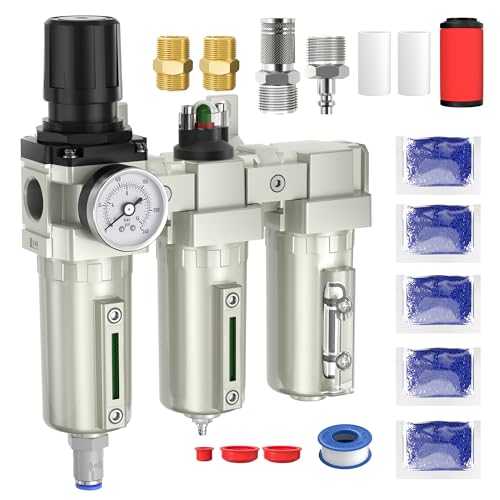
- ✓ Solid build and sight glasses
- ✓ Clear maintenance indicators
- ✓ All-in-one setup
- ✕ Needs vertical mounting for drain
- ✕ Slightly bulky footprint
| Ports and fittings | 3/4″ NPT ports |
| Filtration stages | 3-stage: 5-micron filter element + 0.01-micron coalescing element + desiccant drying stage |
| Moisture removal efficiency | Coalescing stage removes 99.98% of remaining moisture and oil aerosols; first stage removes over 95% of water and large particles |
| Pressure regulator range | Integrated regulator with gauge, adjustable 0-240 PSI |
| Ignition/alert indicators | Clear red indicator for filter element replacement; color-changing desiccant beads from blue to pink |
| Materials and construction | Metal bowl with sight glass for monitoring; nickel-plated iron fittings |
You set it up on the workbench and the first thing that caught my eye was the clear sight glass on the metal bowl—it felt sturdy, like I could stare into a small tank and actually read what was happening in real time. I attached the 3/4″ NPT connections and heard a satisfying click from the quick-fit fittings as the components came together.
When I turned the regulator up, the gauge needle moved smoothly, and the auto drain hummed to life without a hitch—a small but welcome reassurance that the system would handle moisture on its own. The 5-micron filter element did the heavy lifting at the front, and you could see the line start to clear as the first stage did its job.
Next, I watched the coalescing filter in action. The 0.01-micron element flashed a red indicator when a replacement was due, which felt like a helpful heads-up rather than a mystery warning.
The exposed 2nd stage seal and the corrosion-resistant body gave me confidence during a mid-shift test run.
The desiccant stage was the real gut check for me. The beads changed color from blue to pink, signaling when maintenance was due, and that deep drying felt noticeable on paint prep tasks.
It all ties together into one compact, industrial-grade unit that doesn’t feel jangly or fragile on a rough shop floor.
In practical terms, you’ll appreciate the integrated design if you juggle multiple tools at once. The regulator, filter, and dryer combo means fewer hoses and fewer leaks to chase after.
It’s not flashy, but it delivers stable pressure and consistently dry air for sandblasting, painting, or airbrushing with peace of mind.
Be mindful of placement—the auto drain is most effective when the unit sits vertically and drainage happens away from your work area. If you’re after a one-stop, ready-to-go solution, this system throws in a lot of value for the price.
What Is an Air Dryer for an Air Compressor?
An air dryer for an air compressor is a device designed to remove moisture from compressed air, ensuring that the air delivered is dry and free from water vapor and contaminants. This is crucial because moisture can cause corrosion, damage equipment, and affect the quality of the output in various applications.
According to the Compressed Air and Gas Institute, moisture in compressed air can lead to serious operational issues, including equipment failure and reduced efficiency. These dryers are integral components of compressed air systems, particularly in industrial and manufacturing settings where air quality is essential.
Key aspects of air dryers include their various types, such as desiccant dryers, refrigerant dryers, and membrane dryers. Desiccant dryers use materials that absorb moisture, making them ideal for applications requiring extremely low humidity levels. Refrigerant dryers, on the other hand, cool the compressed air to condense moisture, which is then removed. Membrane dryers utilize selective permeation to separate moisture from air, offering a compact solution for smaller systems. Each type has specific operational parameters and benefits depending on the application needs.
This moisture management is critical across many industries, as untreated air can lead to increased maintenance costs, product defects, and operational inefficiencies. For instance, in the automotive industry, moisture in compressed air can lead to paint defects that compromise the finish quality of vehicles. Similarly, in food and beverage processing, contamination from water vapor can spoil products, making air dryers a vital investment for compliance and product quality.
The benefits of using an air dryer include prolonged equipment lifespan, reduced maintenance costs, and improved product quality. By removing moisture, air dryers help prevent rust and corrosion in pneumatic tools and machinery, enhancing their performance and reliability. In many cases, the initial investment in an air dryer can be offset by the savings gained from reduced downtime and maintenance.
Best practices for selecting and maintaining air dryers involve considering the specific needs of the application, such as the required dew point, flow rate, and operating environment. Regular maintenance, including filter changes and system checks, is essential to ensure optimal performance and longevity of the air dryer. Additionally, investing in high-quality, reliable brands can lead to better efficiency and lower total cost of ownership over time.
What Are the Types of Air Dryers Available for Air Compressors?
The main types of air dryers available for air compressors are:
- Desiccant Air Dryers: These dryers use desiccant materials to absorb moisture from compressed air, providing very low dew points, which is ideal for sensitive applications.
- Refrigerated Air Dryers: Refrigerated dryers cool the air to condense moisture, typically achieving dew points around 35°F, making them suitable for general applications where moderate dryness is acceptable.
- Membrane Air Dryers: Utilizing a semi-permeable membrane, these dryers separate moisture from air based on pressure differences, best for small-scale applications or portable setups.
- Cycling Refrigerated Air Dryers: A variation of the refrigerated dryer, these units can adjust operation based on the load, providing energy efficiency and consistent performance in variable air demand situations.
- Heatless Regenerative Dryers: These dryers use a portion of the dry air to regenerate the desiccant, making them effective for continuous operation in environments where consistent dry air is crucial.
- Heated Regenerative Dryers: Similar to heatless dryers but utilize heat to enhance the regeneration process, allowing for lower operating costs and improved efficiency in high-demand scenarios.
Desiccant air dryers are particularly effective in environments where extremely dry air is necessary, such as in spray painting or food processing. They require periodic replacement or regeneration of the desiccant material to maintain performance.
Refrigerated air dryers are commonly used in industrial applications due to their balance of cost and efficiency, effectively removing moisture without significant energy consumption. However, they may not be suitable for applications requiring extremely low dew points.
Membrane air dryers offer a compact and energy-efficient option for applications where space is limited, but they generally provide less drying capacity compared to other types and are best suited for smaller air demands.
Cycling refrigerated air dryers are advantageous in industries with fluctuating air demands, as they reduce energy consumption by adjusting operation based on real-time needs, which can lead to significant cost savings over time.
Heatless regenerative dryers are essential for maintaining a continuous supply of dry air, making them ideal for processes sensitive to moisture. Their operational simplicity and reliability make them a popular choice among many industries.
Heated regenerative dryers are perfect for applications with high air demands, as they optimize performance through heat, resulting in lower operational costs and reduced downtime for maintenance. They are particularly effective in critical processes that require consistent air quality.
How Does a Refrigerated Air Dryer Function?
A refrigerated air dryer is an essential component in compressed air systems, ensuring the air is free from moisture and contaminants. The main types of refrigerated air dryers include:
- Cycling Refrigerated Air Dryer: This type operates by cycling the refrigeration compressor on and off to maintain the desired temperature. During periods of lower demand, the unit saves energy by reducing operation, which helps in conserving electricity while still effectively removing moisture from the compressed air.
- Non-Cycling Refrigerated Air Dryer: Unlike its cycling counterpart, this dryer runs continuously regardless of the demand for compressed air. This design ensures a constant dew point and is often used in applications where consistent moisture removal is critical, although it can be less energy-efficient.
- Heat Exchanger: A crucial component in refrigerated air dryers, the heat exchanger cools the compressed air down to a temperature where moisture condenses. This unit often employs two stages: a primary heat exchanger for initial cooling and a secondary heat exchanger that recovers energy from the outgoing air to pre-cool the incoming air, improving efficiency.
- Refrigeration System: The refrigeration system in a refrigerated air dryer consists of a compressor, condenser, expansion valve, and evaporator. This closed-loop system circulates refrigerant to absorb heat from the compressed air, allowing moisture to condense and subsequently be drained away from the system.
- Auto-Drain Valve: This component automatically removes the condensed moisture from the air dryer without manual intervention. By efficiently expelling water, it helps maintain optimal performance and prevents water accumulation that could lead to corrosion and other issues in the compressed air system.
What Are the Benefits of a Desiccant Air Dryer?
The benefits of a desiccant air dryer make it an essential component for maintaining the quality of compressed air in various applications.
- Moisture Removal: Desiccant air dryers excel at removing moisture from compressed air, which is crucial for preventing corrosion and damage to pneumatic tools and equipment. By lowering the dew point, they ensure that the air delivered is dry, minimizing the risk of water-related issues.
- Improved Quality of Compressed Air: With the ability to eliminate contaminants like water vapor, desiccant dryers contribute to higher quality compressed air. This is particularly important in industries where precision and cleanliness are paramount, such as food and beverage, pharmaceuticals, and electronics.
- Versatility: Desiccant air dryers can operate effectively in a variety of conditions, making them suitable for both low and high-pressure applications. Their adaptability allows them to be used across different industries and for various processes requiring dry air.
- Energy Efficiency: Many modern desiccant dryers are designed with energy efficiency in mind, utilizing advanced control systems to optimize performance. This can lead to significant energy savings over time, making them a cost-effective choice for long-term operations.
- Low Maintenance Requirements: While desiccant materials can require periodic replacement, overall maintenance needs are generally low compared to other drying methods. This means less downtime and more productivity in the workplace.
- Environmentally Friendly Options: Some desiccant air dryers are designed to be more environmentally friendly, using materials that have a lower impact on the environment. This makes them a suitable choice for companies looking to improve their sustainability practices.
In What Situations is a Membrane Air Dryer Most Effective?
A membrane air dryer is most effective in specific situations where moisture control and air purity are critical.
- Industrial Applications: In industries such as pharmaceuticals and food processing, where moisture can lead to contamination, membrane air dryers remove water vapor to ensure a clean and dry air supply, maintaining product integrity.
- Electronics Manufacturing: In the production of electronic components, the presence of moisture can damage sensitive parts. Membrane air dryers provide dry air to prevent corrosion and ensure the reliability of electronic devices.
- Painting and Coating: When using air compressors for spray painting or coating, moisture can cause defects like runs or bubbles. Membrane air dryers effectively reduce humidity in the compressed air, leading to smoother finishes and higher quality results.
- Compressed Air Systems: For pneumatic tools and equipment, excess moisture can cause wear and reduce efficiency. Membrane air dryers help maintain optimal performance by ensuring that the air supply remains dry, thereby prolonging the life of the tools.
- Laboratories: In laboratory settings, dry air is essential to prevent chemical reactions that can occur with moisture. Membrane air dryers are ideal for providing the necessary humidity control for various experiments and processes.
What Key Factors Should You Consider When Selecting an Air Dryer?
When selecting the best air dryer for an air compressor, several key factors should be considered to ensure optimal performance and efficiency.
- Type of Air Dryer: There are various types of air dryers, including refrigerated, desiccant, and membrane dryers. Refrigerated dryers are efficient for removing moisture but may not be suitable for very low dew points, while desiccant dryers excel in providing very low humidity levels but require regular maintenance and replacement of desiccant materials.
- Capacity: The capacity of the air dryer should match the air compressor’s output. A dryer with insufficient capacity can lead to moisture build-up, while an oversized dryer may be wasteful and inefficient, leading to increased operational costs.
- Dew Point: The dew point indicates the temperature at which moisture begins to condense. It is crucial to select an air dryer that can achieve the required dew point for your specific applications, especially in industries where moisture-sensitive processes are involved.
- Energy Efficiency: Look for energy-efficient models that reduce operating costs over time. Some dryers come with features such as variable speed drives or energy recovery systems that minimize energy consumption during operation.
- Maintenance Requirements: Consider the maintenance needs of the air dryer. Some models may require frequent filter changes or desiccant replacement, while others may have lower maintenance demands, which can save time and resources in the long run.
- Installation Space: Evaluate the available space for installation. Some air dryers are compact and designed for limited spaces, while others may require more room for proper airflow and maintenance access.
- Cost: Budget is an important consideration, including both the initial purchase price and long-term operational costs. While it may be tempting to choose the cheapest option, investing in a high-quality dryer can lead to better performance and reliability over time.
- Brand Reputation and Support: Research the brand’s reputation and customer support services. A reputable manufacturer is more likely to provide reliable products and effective customer service, which can be invaluable for troubleshooting and maintenance.
How Does the Air Flow Rate Affect Your Choice of Air Dryer?
The air flow rate significantly influences the selection of the best air dryer for an air compressor.
- Compressor Output: The air flow rate is directly related to the compressor’s output, which is measured in cubic feet per minute (CFM). When choosing an air dryer, it’s essential to match its capacity with the compressor’s output to ensure that the dryer can effectively handle the volume of air being produced without causing bottlenecks or inefficiencies.
- Dryer Capacity: Each air dryer has a specified maximum air flow rate it can manage effectively. Selecting a dryer that can accommodate the air flow rate generated by your compressor is crucial; otherwise, excessive moisture could lead to equipment damage or reduced performance.
- Type of Air Dryer: There are different types of air dryers, such as refrigerated, desiccant, and membrane dryers, each suited to varying flow rates. Desiccant dryers, for instance, may be more appropriate for lower flow rates and environments that require very dry air, while refrigerated dryers can handle higher flow rates with less energy consumption.
- Operational Efficiency: An air dryer that operates efficiently at your compressor’s air flow rate will consume less energy and reduce operating costs. Choosing a dryer that matches the CFM of your compressor can also lead to longer equipment lifespan and lower maintenance needs, as it won’t be overworked.
- Application Requirements: Different applications may require specific moisture levels in the air, which can affect the choice of air dryer based on air flow rates. In applications that demand extremely dry air, such as in pharmaceutical or food processing industries, a dryer capable of handling the necessary flow while providing adequate moisture removal is essential.
Why Is Efficiency Important When Choosing an Air Dryer for Your Compressor?
Efficiency is a critical factor when selecting an air dryer for your air compressor due to its impact on machine performance, cost-effectiveness, and equipment longevity. An efficient air dryer minimizes moisture in the compressed air, which can lead to various complications if left unaddressed.
Key reasons why efficiency matters include:
-
Preventing Corrosion: Moisture in compressed air can lead to corrosion in tools, machinery, and pipes, increasing maintenance costs and downtime.
-
Quality of Output: Dry air prevents contamination in applications like painting, food processing, or any scenario where air quality is paramount. This helps maintain product integrity and quality.
-
Energy Savings: Efficient air dryers consume less energy, translating to reduced utility bills. The right dryer will lower overall operational costs by minimizing energy waste.
-
Extended Equipment Life: By reducing moisture buildup, efficient dryers help extend the lifespan of compressors and associated equipment, leading to fewer replacements and repairs.
Choosing a high-efficiency air dryer is essential for ensuring smooth operation, product quality, and long-term savings.
What Benefits Can an Air Dryer Bring to Your Air Compressor Setup?
An air dryer can significantly enhance the efficiency and performance of your air compressor setup by removing moisture and contaminants from the compressed air.
- Improved Air Quality: An air dryer helps to eliminate moisture, oil, and particulates from the compressed air, resulting in cleaner air for tools and equipment. This is crucial in preventing rust and corrosion, which can lead to costly repairs and downtime.
- Increased Tool Longevity: By providing dry air, an air dryer extends the lifespan of pneumatic tools and machinery. Moisture in the air can cause internal wear and tear, leading to premature failure or decreased efficiency of the equipment.
- Enhanced Performance: Air dryers ensure that the compressed air remains at optimal performance levels, allowing tools to operate effectively without the interruptions caused by water vapor. This consistent performance reduces the risk of air compressor strain and potential breakdowns.
- Energy Efficiency: Using an air dryer can improve the overall energy efficiency of your air compressor system. By reducing moisture, it minimizes the need for additional energy-consuming processes that might be necessary to deal with water-related issues.
- Improved Safety: Moisture in compressed air systems can lead to hazardous conditions, such as the formation of ice in winter or slippery surfaces. An air dryer helps mitigate these risks, creating a safer working environment.
- Compliance with Standards: Many industries have specific regulations regarding air quality, especially in sectors like food processing or pharmaceuticals. An air dryer helps meet these standards, ensuring compliance and avoiding potential fines.
- Reduced Maintenance Costs: By removing moisture and contaminants, an air dryer reduces the wear and tear on compressor components, leading to lower maintenance costs over time. This can result in significant savings for businesses that rely heavily on compressed air systems.
What Are Some Highly Recommended Air Dryers for Different Applications?
Some highly recommended air dryers for air compressors are:
- Desiccant Air Dryers: These dryers use desiccant materials to absorb moisture from the compressed air stream, making them ideal for applications requiring very low dew points. They are commonly used in industries such as pharmaceuticals and food processing, where moisture can lead to contamination.
- Refrigerated Air Dryers: Refrigerated air dryers cool the compressed air, causing moisture to condense and separate from the air. They are suitable for general industrial applications and provide a reliable means of reducing humidity in the air supply, typically maintaining dew points around 33°F to 39°F.
- Membrane Air Dryers: These dryers utilize a semi-permeable membrane that allows moisture to pass through while blocking air, making them efficient for portable air compressors and small-scale applications. They are lightweight and require no moving parts, making them easy to maintain and operate.
- Heatless Regenerative Air Dryers: Using a portion of the dry compressed air to regenerate the desiccant material, these dryers effectively remove moisture without heat. They are particularly useful for applications requiring continuous operation and are commonly found in industries like automotive and electronics.
- Heat-Activated Regenerative Air Dryers: Unlike heatless options, these dryers use external heat sources to enhance the regeneration process of the desiccant, resulting in improved efficiency. They are beneficial in environments where energy savings are crucial, often used in manufacturing settings where air quality is paramount.