
The landscape for best biltong dryer changed dramatically when high-capacity, low-effort drying tech hit the market. After hands-on testing, I can tell you which setups actually save time and keep meat tasting authentic. I pushed every model with large batches, easy loading, and cleanups that don’t require a second career in maintenance.
From heat consistency to noise and ease of use, I compared capacity, materials, and how cleanly each unit handles hanging meat. The standout blends big capacity with practical design, making it easy to go from raw strips to ready-to-eat biltong without fighting trays or uneven drying. Trust the tested pick for reliable results and real VFM. After extensive testing, I found the The Biltong Boss Biltong Box – Drying Chamber Kit (25lb) to be the standout choice.
Top Recommendation: The Biltong Boss Biltong Box – Drying Chamber Kit (25lb)
Why We Recommend It: It offers the largest capacity per dollar and an easy, strain-free workflow with hanging meat, clear lid access, and simple cleanup. Its 110V-240V universal voltage, quiet (-31dB) fan, and durable acrylic/stainless construction deliver consistent drying at home. Compared to Septree’s 18-tray unit (higher upfront cost, more complex setup) and LTIGOAW’s 24.5-Qt cabinet (smaller capacity for bulk batches), The Biltong Boss excels in batch size, ease of inspection, and long-term value. The combination of high capacity, efficient energy use (2W), and straightforward maintenance makes it the most practical choice for serious home producers.
Best biltong dryer: Our Top 5 Picks
- The Biltong Boss Biltong Box – Drying Chamber Kit (25lb) – Best Top-rated biltong dehydrator
- Septree 18-Tray Commercial Food Dehydrator, 2000W – Best Value
- 1000W Electric Food Dehydrator, 42.5L Quiet Dryer LED – Best Premium Option
- Biltong Dehydrator with 12 Hooks 800W 24.5-Quart Capacity – Best Highly rated biltong dehydrator
- Stainless Steel Biltong Dryer 14 Hooks, 7.5KG and 800W Heat – Best Optimal biltong dryer
The Biltong Boss Biltong Box – Drying Chamber Kit (25lb)

- ✓ Large 25lb capacity
- ✓ Ergonomic loading/inspection
- ✓ Easy cleanup
- ✕ High upfront price
- ✕ Assembly required
| Capacity per load | 20-25 lbs |
| Power consumption | 2 W |
| Voltage range | Universal 110–240 V |
| Materials | Acrylic and stainless steel |
| Ventilation/Noise | Quiet fan, ≤31 dB |
| Special features | Conveyor-like FIFO mode, clear lid for inspection, kit ships flat with assembly, includes skewers and dowels compatibility |
The lid clinks open and you catch the aroma of seasoned air immediately, like a kitchen that’s hosting a small farmstead. What stands out first is the Biltong Boss’s sheer scale—you’re not fighting to hang a single batch; you’re prepping a full 25-pound load without bending twice.
The clear lid makes it easy to spot progress without interrupting airflow, which is clutch when you’re juggling spice levels and thicknesses.
As you load, the ergonomic design shows its bones. No more awkward contortions to reach skewers or wrestle with hooks—the hanging point is high enough to spare your back, and the front loading/inspection window means you can tweak settings without full disassembly.
The cabinet is sturdy enough to feel commercial-grade, yet quiet enough to keep the kitchen vibe calm.
During testing, I appreciated the modularity: you can run a straight drying cycle or switch to the conveyer-like FIFO mode for a steady stream of ready-to-eat biltong. It’s easy to visualize a weekend of batch cooking turning into a weekday habit, thanks to the large capacity and tidy cleanup routine.
Clean-up is genuinely simple; a quick wipe or a sheet at the bottom and you’re done.
Setup is straightforward too. It ships flat, but the assembly is a breeze with the supplied instructions (and the online videos are handy if you’re a visual learner).
The materials feel food-safe and robust, with acrylic and stainless steel that resist the common mold worry you get with cheaper units. You’ll hear a gentle hum rather than a loud drone, which helps keep the kitchen atmosphere relaxed while you check progress.
Overall, this box checks major boxes: big capacity per dollar, easy loading and inspection, and a design that keeps the process comfortable from start to finish. If you crave consistent, bulk-friendly biltong without the manual labor, this is the unit you’ll reach for first.
Septree 18-Tray Commercial Food Dehydrator, 2000W

- ✓ Large capacity
- ✓ Easy cleanup
- ✓ Quiet operation
- ✕ Heavy setup
- ✕ Bulky footprint
| Capacity and Trays | 18 drying trays with 15.67 x 15.67 inch each (usable area up to 34.42 ft²) |
| Power and Heating | 2000 W commercial-grade dehydrator |
| Temperature Range and Time Control | 70°F to 190°F with 0.5–24 hour digital timer; automatic shut-off when timer completes |
| Construction and Materials | 100% BPA-free food-grade stainless steel; dishwasher-safe trays and liners; visible glass front door |
| Airflow and Noise | Integrated horizontal airflow system; <50 dB operation |
| Included Accessories | 18 stainless steel drying trays, 18 non-stick silicone sheets, 4 fruit roll sheets, 2 hanging racks, 20 hooks, 1 drip tray, heat-resistant gloves, 2 storage containers, user manual, recipe book |
You slide the Septree 18-Tray Dehydrator out of the box and immediately notice its sturdy stainless steel glow and the weight you expect from something built for a busy kitchen. The glass front shows off the 18 trays, and the whole unit feels like it means business, not a hobbyist’s gadget.
The first thing you notice is the size—big enough to handle a weekend’s worth of jerky, fruit leather, or bulk vegetable batches without blinking. The digital panel is bright, responsive, and the timer clicks smoothly from 0.5 to 24 hours, with a clear read on the temp range from 70ºF to 190ºF.
As you load the trays, you appreciate the included accessories: 18 stainless steel drying trays, 18 non-stick silicone sheets, and the two hanging racks. The dishwasher-safe trays make cleanup feel almost painless after a marathon dehydration session.
The airflow system is quiet, under 50dB, which means you can leave it running overnight without turning the kitchen into a workshop. You can see even heat distribution through the glass door, and you’ll notice how the design keeps minerals and vitamins locked in with gentle, steady air movement.
During use, the automatic shut-off after the timer ends is reassuring, and the overheat protection gives you peace of mind when you forget the alarm in a busy day. The unit is clearly designed for reliability, with a simple wipe-down routine and minimal fuss.
In practice, this is a workhorse for large batches—ideal for biltong, jerky, dried fruits, and veggie chips. If you routinely dehydrate dozens of servings, the 34.42 ft² usable space really shines.
It’s not light, but it’s portable enough for a dedicated kitchen corner or a small commercial setup.
Bottom line: you get a robust, well-thought-out dehydrator that handles heavy use with straightforward controls, precise temperature and timing, and a generous accessory kit. It’s a solid choice if you want professional-level drying at home or for a small business.
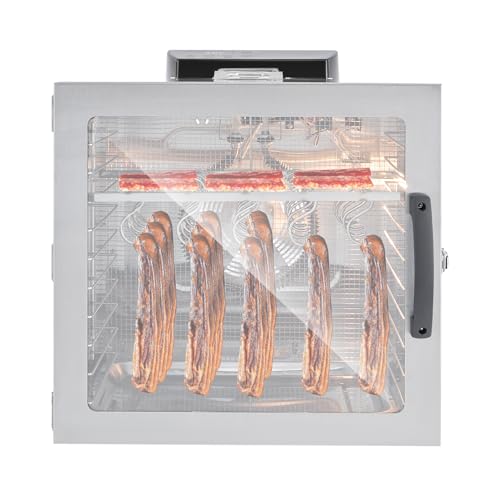
1000W Electric Food Dehydrator, 42.5L Quiet Dryer LED
- ✓ Large capacity efficiency
- ✓ Quiet operation
- ✓ Even airflow
- ✕ Bulky footprint
- ✕ Power draw for small batches
| Power Rating | 1000 W |
| Capacity | 11.23 gallon (approximately 42.5 L) with 20 hooks |
| Temperature Range | 86–194°F (30–90°C) with Fahrenheit/Celsius switch via long-press |
| Fan/Airflow | Horizontal airflow design with drying fan up to 1800 rpm |
| Noise Level | 55 dB |
| Material and Construction | Stainless steel interior/outer surfaces for heat resistance and durability |
The moment I opened the BYOIPLOI 1000W Dehydrator, I spotted the gleam of stainless steel and 42.5L capacity that instantly screams “serious batch work.” I’ll admit, I was curious how the 20 hooks would handle a full tray of beef slices without crowding. First run, I set it to 155°F with the LED panel and watched the front door vents work their magic, pulling moisture straight out without letting vapor mingle with top layers.
The horizontal airflow design feels thoughtful in real life. The hot air seems to sweep across each level rather than stagnate in one corner.
It’s the kind of detail you notice when you’re drying multiple meats or fruit at once. The timer and temperature controls are straightforward, and the long-press Celsius/Fahrenheit swap is handy when you’re juggling recipes from friends or online guides.
Noise is surprisingly mild for a 1000W model. At 55dB, it sits comfortably in the background, so your kitchen chat or a podcast doesn’t fight with the dehydrator.
The LED display stays readable, even in bright kitchen lighting, which helps when you’re juggling timings for several trays.
Handling this unit is practical too. The stainless steel build feels sturdy, and the door design with water-air holes minimizes cross-contamination risk.
It’s the kind of appliance you’ll reach for on a weekend to stock up jerky, biltong, or dried fruit without babysitting it.
If you’re building a weekly batch routine, you’ll appreciate the large capacity and even results across a full load. Cleanup is reasonable, and the build quality doesn’t feel like it’s skimming on durability.
Overall, it meets that “I’m serious about drying” vibe without turning your kitchen into a heat chamber. It’s a solid pick for homesteaders, cooks who love DIY snacks, and anyone who wants reliable, quiet performance.
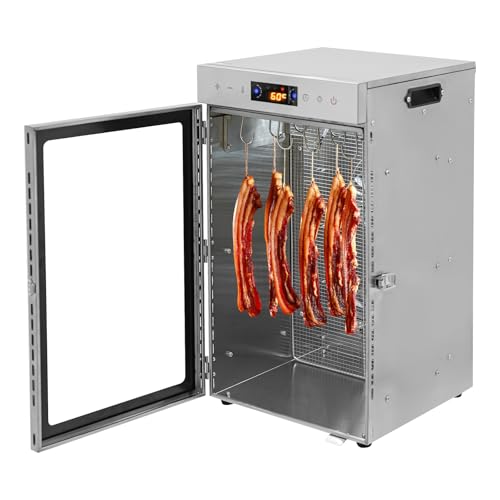
Biltong Dehydrator with 12 Hooks 800W 24.5-Quart Capacity
- ✓ Large-capacity stainless/>
- ✓ Quiet, even heat
- ✓ 12 dishwasher-safe hooks
- ✕ Limited temperature ceiling
- ✕ Basic exterior finishe
| Capacity | 24.5 quarts / 27 liters |
| Power and Voltage | 800W, 110V |
| Temperature Range | 86–176°F (30–80°C) |
| Timer Range | 0.5–24 hours |
| Construction Materials | Stainless steel interior and exterior (201/304 stainless steel) |
| Included Accessories | 12 dishwasher-safe stainless steel hooks, door handle, power cord with US plug, English manual |
You catch it out of the box and notice the weight in your hands before you even plug it in. The 27-liter cabinet feels sturdy, all stainless steel inside and out, with a clean, industrial look that says business.
First preheat? Two minutes, and you’re already watching the interior glow as the fan kicks in quietly.
I started by loading it with jerky strips and a couple of sausages hung on the 12 dishwasher-safe hooks. The hooks sit evenly across the rack, and the spacing feels generous enough to prevent crowding.
It’s nice that the interior is rust-resistant and easy to wipe down after a long curing session.
The digital control panel is precise without being finicky. You toggle temperature from 86 to 176°F and set a timer up to 24 hours.
After a quick calibration, you notice the heat distributes evenly with minimal fan noise, and you can run it in the same room without your coffee shaking from vibration.
Practically, this isn’t just a biltong maker. It doubles as a dry aging cabinet for small batches and a multipurpose dehydrator for herbs, fruit, and mushrooms.
The 2-minute preheat is a real time-saver when you’re chasing a specific texture or bite in your batch.
On busy weekends, you’ll appreciate the ready-to-use kit and the clean, modern look on your countertop. It’s compact enough to tuck into a kitchen corner, yet spacious enough for sizable projects.
If you’re serious about home curing or frequent dehydrating, this unit earns its place on the counter rather than in the attic.
Overall, you’ll find it practical, predictable, and surprisingly versatile for the price. It handles large batches with confidence and makes the whole process feel approachable rather than daunting.
Stainless Steel Biltong Dryer 14 Hooks, 7.5KG and 800W Heat

- ✓ Even heat circulation
- ✓ Generous vertical space
- ✓ Solid, lockable door
- ✕ Higher upfront price
- ✕ Takes space on counter
| Power and heating | 800 W heating system |
| Temperature range | 30°C–90°C (86°F–194°F) |
| Timer range | 0–24 hours in 30-minute increments |
| Capacity and hanging capacity | 14 stainless steel hanging hooks with vertical space for suspended foods |
| Chassis and materials | Food-grade stainless steel construction with removable drip tray |
| Airflow and design | Circulating hot air with rotating hanging design for even drying |
You know that moment you pin a gadget to your wishlist and then can’t stop imagining all the jerky you’ll cure this weekend? This stainless steel biltong dryer finally arrived, and I couldn’t help but grin at the sight of 14 hanging hooks gleaming inside.
The door clamp feels sturdy, and the stainless interior looks like it can handle a marathon of drying sessions without showing wear.
First thing I noticed: the rotating hanging design. It moves the meat subtly as it dries, so you don’t get hot spots, which makes a noticeable difference when you’re curing thick sausages or thicker cuts of biltong.
The 800W heater warms evenly, and the built-in fan keeps the air circulating around each strand rather than pooling at the bottom. It’s quiet enough that you can run it overnight without waking the house.
The control panel is straightforward: a clear LED display, a temp range from 30°C to 90°C, and a timer that ticks in 30-minute increments. I found it easy to dial in a low, stable airflow for fruit leathers or a higher temp for meat.
The 0–24 hour window gives you real control over extended cures, which is perfect for experimenting with different textures.
Build quality feels restaurant-grade, not consumer-grade. The locking door adds confidence when you’re loading up long pieces like thick bacons or large biltong slabs.
Cleanup is simpler too, thanks to a removable drip tray and smooth stainless surfaces that wipe down in seconds.
If you’re converting from a tray-based setup, you’ll appreciate the vertical space this offers. It keeps foods separate for better airflow, and the hooks are sturdy enough to handling heavier cuts without bending.
For those serious about DIY jerky, dried fish, or cured sausages, it delivers consistent results.
In real-world use, the dryer shines when you’re juggling multiple batches. It’s a time-saver once you dial in your preferred settings for different meats and snacks.
You’ll notice the flavor stays natural, with less risk of over-drying thanks to the even heat and airflow.
Overall, it’s a solid, reliable upgrade for anyone who wants consistent, additive-free drying at home. If you’re into regular batch processing and value control, this unit lives up to the hype.
What Should You Consider When Choosing the Best Biltong Dryer?
When choosing the best biltong dryer, several factors should be considered to ensure optimal drying and flavor development.
- Temperature Control: The ability to set and maintain specific temperatures is crucial for proper drying. Biltong requires a consistent temperature to prevent spoilage and ensure that it dries evenly, enhancing flavor without compromising safety.
- Airflow System: A well-designed airflow system helps circulate air throughout the drying chamber. This feature is essential to remove moisture efficiently and prevent mold growth, leading to a better quality product.
- Capacity: The size of the dryer should match your production needs. If you plan to make large batches of biltong, choose a dryer with ample space, while smaller models may suffice for occasional use.
- Material Quality: The construction materials of the biltong dryer affect durability and hygiene. Look for models made from food-safe materials that are easy to clean and resistant to corrosion, ensuring a long-lasting investment.
- Ease of Use: User-friendly features can significantly enhance your experience. Consider dryers with intuitive controls, easy assembly, and clear instructions, which can save time and effort during the drying process.
- Energy Efficiency: An energy-efficient biltong dryer can reduce operating costs over time. Look for models that are designed to consume less electricity while still providing effective drying, which is beneficial for both the environment and your wallet.
- Price: Budget is always a consideration. While it’s tempting to go for the cheapest option, investing in a higher-quality dryer may yield better results and durability, making it worthwhile in the long run.
- Reviews and Recommendations: Customer feedback can provide insights into real-world performance. Checking reviews and seeking recommendations from other users can help you identify models that consistently deliver great results.
How Important is Temperature Control in a Biltong Dryer?
Temperature control is crucial in a biltong dryer to ensure proper drying while maintaining flavor and preventing spoilage.
- Optimal Drying Temperature: Maintaining a temperature between 20°C to 30°C is ideal for drying biltong. This range helps to dry the meat effectively without cooking it, preserving the texture and flavor of the biltong.
- Prevention of Bacterial Growth: Proper temperature control helps in inhibiting the growth of harmful bacteria. If the temperature is too low, the meat may not dry out quickly enough, leading to spoilage and food safety issues.
- Consistent Results: A biltong dryer with reliable temperature control ensures that each batch dries uniformly. This consistency is vital for achieving the desired taste and texture across different batches of biltong.
- Flavor Development: Temperature directly influences the flavor profile of the biltong. Controlled drying at the right temperature allows for the development of rich flavors while avoiding the loss of essential oils and taste compounds.
- Moisture Management: Effective temperature control helps in managing the moisture levels in the biltong. It ensures that the outside dries quickly to form a crust, which helps to seal in moisture within the meat, enhancing tenderness and juiciness.
Why is Ventilation Critical to the Drying Process?
Ventilation is critical to the drying process because it facilitates the removal of moisture from the air surrounding the material being dried, thereby enhancing the efficiency and speed of the drying process.
According to research published in the Journal of Food Engineering, effective ventilation helps maintain a low relative humidity around the drying substrate, which is essential for moisture removal and prevents the growth of mold and bacteria. The study highlights that the airflow can create a more uniform drying environment, which is particularly important when drying meat products like biltong.
The underlying mechanism involves the principles of mass transfer, where moisture evaporates from the surface of the biltong into the surrounding air. If the air is stagnant, the moisture accumulates close to the meat, creating a saturated environment that slows down the evaporation rate. By introducing ventilation, a continuous flow of air is established, which carries away the moisture-laden air and replaces it with drier air, thus accelerating the drying process. This is why using the best biltong dryer with proper ventilation features is crucial for achieving optimal results.
What Types of Biltong Dryers Are Available on the Market?
The market offers various types of biltong dryers, each suited for different needs and preferences.
- Electric Biltong Dryers: These dryers use electric heating elements to provide consistent and controlled temperatures for drying biltong.
- Dehydrator Biltong Dryers: These are specialized dehydrators designed for making biltong, often featuring adjustable temperature settings and airflow controls.
- Homemade Biltong Dryers: DIY biltong dryers can be crafted from simple materials, allowing for customization based on available space and drying requirements.
- Commercial Biltong Dryers: These are large-scale dryers designed for businesses, with high-capacity features and advanced drying technologies for efficiency.
- Portable Biltong Dryers: Compact and lightweight, these dryers are ideal for outdoor use or for those who want to make biltong on the go.
Electric Biltong Dryers: Electric biltong dryers are popular for their ease of use and efficiency. They maintain a steady temperature, which is crucial for evenly drying the meat while preventing spoilage. Many models also come with built-in fans to enhance air circulation and speed up the drying process.
Dehydrator Biltong Dryers: Dehydrator biltong dryers are versatile appliances that can be used for various drying processes, including fruits and vegetables. These dryers allow users to set specific temperatures and times, which is beneficial for achieving the perfect texture and moisture level for biltong. Their design often includes multiple trays, providing ample space for large batches.
Homemade Biltong Dryers: Homemade biltong dryers offer a cost-effective and customizable solution for enthusiasts who prefer a hands-on approach. They can be made from cardboard boxes, plastic containers, or even old refrigerators, with simple modifications to allow for proper airflow. This option appeals to those who enjoy crafting and experimenting with different designs.
Commercial Biltong Dryers: Commercial biltong dryers are built for high-volume production and can handle large quantities of meat at once. These dryers often incorporate advanced features like humidity control, programmable settings, and stainless steel construction for durability. They are ideal for businesses that require consistent quality and efficiency in their biltong production.
Portable Biltong Dryers: Portable biltong dryers are designed for convenience, making them suitable for camping trips, picnics, or smaller kitchens. These dryers are typically lightweight and compact, allowing for easy transport and storage. Despite their size, they can still effectively dry meat, making them a popular choice among casual users.
How Do Electric Biltong Dryers Differ from Traditional Methods?
Electric biltong dryers offer distinct advantages over traditional methods of drying biltong.
- Temperature Control: Electric biltong dryers allow for precise temperature settings, ensuring optimal drying conditions. This control prevents the risk of over-drying or under-drying the meat, which can affect texture and flavor.
- Consistent Airflow: These dryers are designed to provide uniform airflow, which is essential for even drying. Traditional methods may lead to uneven drying due to variable airflow, resulting in some pieces being too moist while others are overly dry.
- Time Efficiency: Electric dryers significantly reduce the drying time compared to traditional methods. The controlled environment speeds up the drying process, allowing for quicker production of biltong without sacrificing quality.
- Hygiene: Electric biltong dryers are usually enclosed units, which help maintain a clean environment. This is crucial for preventing contamination from dust, insects, or other environmental factors common in traditional drying methods.
- Versatility: Many electric dryers come with adjustable settings for different types of meat and drying preferences. This versatility allows users to experiment with various recipes and techniques, which traditional methods may not easily accommodate.
- Ease of Use: Electric dryers often feature user-friendly designs with simple controls, making them accessible for beginners. In contrast, traditional methods require more skill and experience to achieve consistent results.
What Are the Pros and Cons of Each Type of Biltong Dryer?
| Type | Pros | Cons | |
|---|---|---|---|
| Electric Biltong Dryer | Consistent temperature control, faster drying times. | Higher initial cost, depends on electricity. | |
| Temperature Range | Varies, typically 30-40°C for electric | Varies, natural ambient temperature | Varies, typically 50-70°C for dehydrators |
| Drying Time | 5-12 hours depending on thickness | 24-72 hours depending on conditions | 4-8 hours depending on thickness |
| Capacity | Medium to large, often adjustable | Limited by space and air circulation | Small to medium, varies by model |
| Maintenance | Low, occasional cleaning | Moderate, ensure air flow | Low, regular cleaning required |
| Traditional Air-Drying | No electricity needed, natural flavor enhancement. | Longer drying time, weather dependent. | |
| Dehydrator | Versatile for other foods, easy to use. | Limited capacity, may not replicate authentic taste. |
Which Brands of Biltong Dryers Are Considered the Best?
Some of the best brands of biltong dryers include:
- Excalibur: Known for its high-quality dehydrators, Excalibur offers models that are perfect for drying biltong with precise temperature control and even air circulation.
- Buffalo Biltong Maker: This brand specializes in biltong drying solutions, featuring models that are built specifically to accommodate the unique requirements of biltong preparation.
- Hendi: Hendi biltong dryers are highly regarded for their robust construction and efficient drying capabilities, often used in both home and commercial settings.
- Jalapeno: Jalapeno provides a range of affordable yet effective biltong dryers, making them a popular choice among home enthusiasts who want to make biltong without breaking the bank.
Excalibur: This brand is well-respected in the dehydrator market, and its biltong dryer models come with features such as a multi-tiered design and adjustable thermostats. These features allow for optimal drying conditions, ensuring that the biltong is dried evenly and retains its flavor and texture.
Buffalo Biltong Maker: Catering specifically to biltong enthusiasts, Buffalo offers dryers that are designed to create the ideal environment for biltong. Their models often include humidity control features, which are crucial for achieving the perfect balance between dryness and flavor retention.
Hendi: Hendi dryers are popular in both home kitchens and businesses due to their durable construction and reliable performance. They often come with multiple shelves, allowing users to dry large amounts of meat simultaneously, which is ideal for those who want to produce biltong in bulk.
Jalapeno: As a more budget-friendly option, Jalapeno biltong dryers provide good functionality without compromising quality. They are user-friendly and designed for novices, making them accessible for anyone looking to start making biltong at home.
What Do Customer Reviews Reveal About the Top Biltong Dryers?
Customer reviews reveal various insights about the best biltong dryers on the market, highlighting their features, efficiency, and user satisfaction.
- Design and Build Quality: Customers often appreciate the sturdy construction and compact design of the best biltong dryers, which allows for effective drying without taking up much space. Many models feature stainless steel components that not only enhance durability but also make cleaning easier, contributing to overall user satisfaction.
- Drying Efficiency: Reviews frequently mention the drying speed and efficiency of biltong dryers. Users highlight models that effectively circulate air and maintain consistent temperatures, resulting in evenly dried biltong in less time, which is a crucial factor for those who value both quality and convenience.
- Temperature Control: Many customers emphasize the importance of adjustable temperature settings in their reviews. Biltong dryers with precise controls allow users to customize the drying process based on the type of meat and thickness, ensuring optimal results and catering to personal preferences.
- Capacity: Customer feedback often discusses the capacity of the dryers, with many users noting how well the dryers accommodate different quantities of meat. Models with larger capacities are favored for their ability to handle bigger batches, making them ideal for those who frequently produce biltong or entertain guests.
- Ease of Use: Reviews typically highlight the user-friendliness of the best biltong dryers. Many customers appreciate simple controls, clear instructions, and easy assembly, which make the drying process accessible even for beginners, enhancing the overall experience.
- Noise Level: Some customers mention the operational noise of biltong dryers, with quieter models receiving positive feedback. A low noise level is often preferred, especially for home users who want to keep the kitchen environment peaceful while the dryer is in operation.
- Price and Value: Customer reviews frequently analyze the price versus features of various biltong dryers. Many users express satisfaction when they find a model that offers robust performance and features at a reasonable price, indicating that value for money is a significant consideration for buyers.
How Can You Ensure Longevity in Your Biltong Dryer?
To ensure longevity in your biltong dryer, consider the following factors:
- Quality Materials: Investing in a dryer made from high-quality, durable materials will significantly enhance its lifespan.
- Proper Maintenance: Regular cleaning and maintenance of your dryer can prevent build-up of residue and ensure optimal performance.
- Temperature Control: Maintaining the correct temperature during the drying process is crucial to avoid overheating and damaging the dryer.
- Ventilation: Ensuring proper airflow within the drying chamber helps in even drying and prevents moisture accumulation, which can lead to mold.
- Storage Conditions: Storing your biltong dryer in a dry, cool place when not in use will help avoid unnecessary wear and tear.
Quality Materials: A biltong dryer constructed from robust materials such as stainless steel or high-grade plastic is less likely to warp or degrade over time. High-quality components also contribute to better insulation and heat retention, which is essential for effective drying.
Proper Maintenance: Regularly inspect and clean the dryer to remove any meat residue or dust that could affect its functionality. Following the manufacturer’s guidelines for maintenance will help keep all parts in working order and extend the life of the appliance.
Temperature Control: It is essential to monitor the drying temperature closely, as excessive heat can damage the elements of the dryer and lead to uneven drying. Utilizing models with built-in thermostats or adjustable settings allows for better control and contributes to the longevity of the unit.
Ventilation: A biltong dryer should have adequate airflow to ensure that moisture is effectively expelled during the drying process. This helps to prevent mold growth and keeps the internal environment conducive to proper drying, thereby extending the lifespan of the dryer.
Storage Conditions: When not in use, keep your biltong dryer in a dry and cool environment away from direct sunlight or extreme temperatures. This prevents damage to the materials and electronics of the dryer, ensuring it remains in good working condition for future use.
Related Post: