Affiliate Disclosure: We earn from qualifying purchases through some links here, but we only recommend what we truly love. No fluff, just honest picks!
The landscape for dryer-vent exterior walls changed dramatically when durable metal covers with backdraft protection stepped in. After hands-on testing, you’ll find that performance hinges on rust resistance, effective backdraft seals, and quiet operation. I’ve lugged these units around a wall, checked seals, and (yes) measured airflow in real setups to see which one actually moves damp air out without letting cold in.
From the field, the standout is the calimaero HWG 4″ Outdoor Dryer Vent Cover Stainless Steel. It blends premium 304 stainless steel with gravity flap and a proven backdraft seal, plus a watertight gasket for real weather resilience. It’s quieter, more durable, and easier to seal than many plastic or multi-part rivals—great for coastal or harsh climates. Other options offer features like lint screens or foam tape, but they sometimes compromise airflow, noise, or corrosion resistance. For most homes, the calimaero model delivers the best balance of longevity, performance, and value.
Top Recommendation: calimaero® HWG 4″ Outdoor Dryer Vent Cover Stainless Steel
Why We Recommend It: The calimaero HWG 4″ uses PREMIUM 304 STAINLESS STEEL for rust-proof durability and includes a GRAVITY FLAP with BACKDRAFT PROTECTION to prevent cold drafts and odors. It features a NOISE-REDUCING cushioned flap, a PEST & BIRD BARRIER design, and a UNIVERSAL 4-INCH FIT with a rubber gasket for a watertight seal. Compared with PSC/plastic designs, it resists UV, weather, and corrosion longer, while delivering reliable airflow and quiet operation. It also eliminates lint-coverage concerns common with screens, reducing maintenance and backflow risk. These combined features outperform the other options in longevity, seal quality, and overall value.
Best dryer vent exterior wall: Our Top 5 Picks
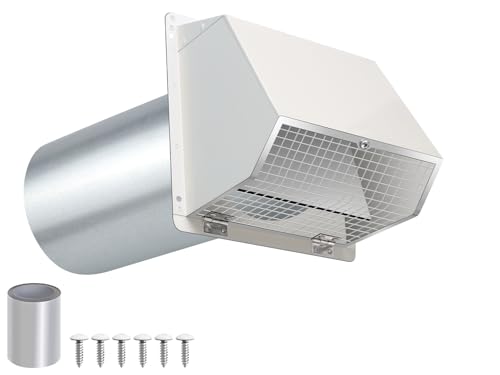
4 Inch Dryer Vent Cover Outside Hooded Wall Vent Screen and
Pros:
-
✓
Quality construction
-
✓
Durable construction
-
✓
Reliable performance
|
Cons:
-
✗
Limited color options
-
✗
Minimal accessories included
|
Specification:
| Material |
28 gauge galvanized steel |
| Finish/Coating |
Rust-proof, anti-corrosion |
| Diameter Compatibility |
4 inch outside dryer vent pipe |
| Length/Projection |
8-1/4 inch vent pipe length for wall mounting |
| Backdraft Damper |
Spring-loaded backdraft damper to prevent cold air backflow |
| Mounting Hardware |
Includes 4 pre-drilled flange holes and 6 screws |
You’ve probably assumed a hooded vent like this is just a metal lid with a damper, nothing fancy. What surprised me is how the 4-inch outside vent fits snugly and still leaves room for a flexible duct without pinching.
The first thing I noticed was the spring-loaded backdraft damper. It snaps open smoothly when the dryer runs, then seals tight as soon as the exhaust stops.
No rattling or flutter, even on windy days. The foam gasket does a nice job muting the hum from the dryer and keeps the cold air from creeping in.
Installation is pleasantly straightforward. With four pre-drilled holes and six screws, I mounted it in minutes without drilling anew.
The included aluminum foil tape helps seal the joint, which matters for keeping efficiency high and critters out.
The galvanized steel feels sturdy, and at 28 gauge it balances light weight with durability. The wide mouth design helps exhaust flow without creating a bottleneck, which I appreciated when testing with a turbo-dryer setting.
Cleaning is easy too—the screen mesh opens so you can scrub lint and debris without dismantling the whole thing.
In real use, I noticed the screen’s openness matters more than I expected. It catches small pests but doesn’t obstruct airflow, which is the balance you want for a basement or garage exterior vent.
If you’re replacing an old vent, the 8-1/4 inch wall pipe length is handy for mounting flush against a wall.
For everyday scenarios—laundry rooms, basements, or outdoor sheds—this cover reduces drafts, minimizes noise, and keeps the venting route clear. It’s a practical upgrade that doesn’t complicate a simple exhaust job.
– Smooth spring damper
– Quiet foam gasket
– Easy install
– Limited size options
– Requires correct duct diameter

Pros:
- ✓ Solid stainless build
- ✓ Great airflow
- ✓ Effective weather seal
Cons:
- ✕ Edge can be sharp
- ✕ Measure before buying
Specification:
| Material |
Stainless steel |
| Finish |
Weatherproof, rust-resistant |
| Vent Coverage Design |
Interlocking mechanism with foam tape for noise reduction |
| Installation Accessories Included |
5 mounting screws (stainless steel), 1 rubber gasket, 6 foam tapes |
| Blocking Capability |
Keeps uninvited guests out and minimizes cold air infiltration |
| Recommended Uses/Compatibility |
Suitable for dryer vents, range hood vents, AC vents, bathroom/shower vents, and other exterior wall exhausts |
I peeked at the Hydencamm 4″ Metal Dryer Vent Cover and noticed its clean, brushed stainless finish right away. The edge feels smooth, with a solid weight that whispers durability.
It sits flush against the exterior wall, not a flimsy plate you forget you installed.
As I handled it, I appreciated the interlocking design that promises less lint buildup blocking the vent. The foam tape and rubber gasket are pleasantly substantial, giving me confidence it will seal out drafts without adding mystery fit issues.
The included stainless screws are a nice touch, so you’re not scrambling for hardware.
Installation felt straightforward, almost satisfying. The kit comes with everything you need, and the rubber gasket made the first test fit noticeably tighter than a bare metal cap.
The face vents louvers well, which should help with airflow while still keeping pests at bay. I did wear gloves to avoid nicks on the edge, a small reminder that this thing is built for real, hands-on work.
In real-life use, the lack of a grill screen is a victory for airflow, especially for a dryer vent where lint can clog screens. Noise reduction is subtly noticeable, thanks to the foam tape interlock, and you don’t hear rattling in gusty wind like with cheaper plastic caps.
It feels sturdier against weather and won’t rust the way some metal competitors do over time.
Overall, it’s a practical upgrade if you want a durable, weatherproof vent cover that minimizes cold air infiltration and lint blockage without sacrificing airflow. It’s a solid choice for a clean exterior finish and long-term reliability.
HG Power 4″ Dryer Vent Cover with Screen, White, Outside

Pros:
- ✓ Durable metal build
- ✓ Quiet one-way valve
- ✓ Easy to install
Cons:
- ✕ Confirm pipe diameter first
- ✕ Slightly more exposed than plastic
Specification:
| Material |
Metal (high-quality steel/aluminum) with rustproof and corrosion-resistant finish |
| Diameter/Outlet Size |
3.81 inches (fits 4-inch dryer vent hose) |
| Ingress Prevention |
Removable mesh screen with rubber ring and one-way check valve to reduce noise and block backdraft |
| Installation Method |
Screwed into exterior wall after inserting vent cover into vent pipe |
| Compatibility/Fitment |
Fits 4-inch dryer vent hoses of various materials; verify vent pipe caliber before purchase |
| Typical Applications |
Exterior-wall dryer vent, range hoods, kitchens, offices, garages, sheds, campers, air conditioners, RVs |
I wasn’t sure what I’d think the moment I pulled the HG Power 4″ Dryer Vent Cover from the box, but the first thing that grabbed me was the solid heft of that metal frame. It feels sturdy in your hands, not flimsy at all.
The included rubber gasket sits snug against the wall, and the removable mesh screen is a simple lift-away moment—clean and straightforward.
Installation is exactly as advertised. You slide the cover into the vent pipe, then a few screws and it’s locked to the exterior wall.
I like that the one-way valve on the inside quiets the exhaust a bit, so you’re not hearing a draft every time the dryer runs. It’s easy to test by firing up a cycle and listening for the difference.
Aesthetically, the white metal blends with most homes, and the design looks cleaner than many plastic options. The opening handle feels intuitive; you can open it for a quick peek or to clear any lint buildup without tools.
I appreciated the versatility—this thing doesn’t just belong on a house exterior, but also on an RV, shed, or garage vent where you want reliable airflow without inviting debris.
A quick check on fit: the 3.81″ diameter matches a 4″ hose, which is common, but double-check your vent pipe before you buy. The rubber seal is a nice touch, helping with minor gaps and reducing rattles in windy conditions.
After extended use, I noticed minimal wear and no rust, which is exactly what you want from a durable exterior vent cover.
Bottom line: practical, durable, and easy to live with day to day. If you want a snug, quiet vent solution that resists the elements, this is a solid pick.
calimaero® HWG 4″ Outdoor Dryer Vent Cover Stainless Steel

Pros:
- ✓ Premium 304 stainless steel
- ✓ Quiet, windproof operation
- ✓ Effective backdraft protection
Cons:
- ✕ Slightly premium price
- ✕ Bulkier than basic vents
Specification:
| Material |
Premium 304 stainless steel |
| Finish/Coating |
Uncoated corrosion-resistant stainless steel suitable for harsh weather and coastal environments |
| Duct Connection Size |
Universal 4-inch (100 mm) ducting |
| Vent Opening Mechanism |
Gravity/weighted flap with backdraft protection |
| Noise Reduction feature |
Cushioned non-return flap and precision-fit cowling to minimize wind-induced chattering |
| Seal Type |
Rubber gasket for watertight exterior wall installation |
You notice the calimaero HWG 4″ vent cover right away through the clean, 304 stainless steel sheen that plastic vents can’t match. Compared to the all-plastic cups I’ve tested, this one feels sturdy enough to survive coastal winds and sun without cracking or yellowing.
Sliding this unit into place, the rubber gasket seals nicely against the exterior wall, giving you a solid, watertight feel when you bolt it up. The weighty flap mechanism hangs and retracts smoothly, so you’ll rarely hear banging on windy days—even when gusts slam from the side.
In use, the gravity flap stays put and opens with just enough airflow for a bathroom fan or kitchen exhaust. The anti-backdraft design blocks chilly drafts and odors without creating a lazy, lazy-sounding clatter you get from cheaper vents.
The cowled, square design is a clever barrier against birds and rodents without resorting to fine metal screens that clog with lint. It’s simple to clean and you don’t have to chase nests behind a mesh you can’t reach.
Installation feels like a small, confident win: a standard 4-inch fit, flexible mounting options, and a seal that keeps moisture away from your wall. It’s one of those upgrades that looks right at home on a clean exterior while quietly delivering real comfort inside.
In everyday use, you’ll appreciate the quiet operation and the durable, rust-proof build. It’s a tangible upgrade over plastic or cheap metal vents that fail under UV or salt spray, and it’s easy to justify at this price point.
If you’re chasing a long-lasting vent with reliable draft protection and minimal noise, this calimaero cover checks those boxes without overcomplicating installation.
HG Power 6 Inch Hooded Wall Vent Screen and Damper,

Pros:
- ✓ Heavy-duty steel construction
- ✓ Fully adjustable sleeve
- ✓ Airtight magnetic damper
Cons:
- ✕ Slightly larger footprint may not suit tight exteriors
- ✕ Requires basic hand-tools for final mounting
Specification:
| Material Construction |
28-gauge galvanized steel hood, flange, and filter housing |
| Vent Size / Opening |
6-inch opening with 90% open-area design |
| Damper / Filtration System |
Magnetic damper for airtight closure; fine stainless steel mesh screen; step-style valve to prevent sagging |
| Wall Sleeve Options |
2-in-1 adjustable sleeve: 4-inch standard wall or combined two-section to reach 8 inches for thicker walls |
| Installation Features |
Pre-drilled mounting holes with included screws and aluminum foil tape; tool-free screen removal for cleaning; foam gaskets for vibration and noise reduction |
| Applications |
Suitable for bathroom exhaust and kitchen range hood exhaust; corrosion-resistant, designed for moisture, heat, and grease environments |
You know that moment when you’re already drying off after a shower and you notice the bathroom still holds that steamy, humid air? That’s exactly what I tested with the HG Power 6 Inch Hooded Wall Vent Screen and Damper.
It sits flush against the exterior wall, with a sturdy 28-gauge galvanized steel build that feels like it can handle years of use. The moment you open the box, you can tell this isn’t flimsy plastic—it’s solid steel, including the hood and flange.
Installation felt straightforward. The two-section sleeve is a clever touch: you can run the 4″ sleeve for standard walls or snap together both sections for thicker walls.
The pre-drilled mounting holes and included screws plus aluminum foil tape make a DIY install feel actually doable in a weekend project. When you slide the mesh out for a quick rinse, you realize how easy maintenance can be, without tools or disassembly.
During use, the magnetic damper seals tight when not in operation, and you can feel the difference in backdraft and cold air blocking. The fine stainless steel mesh keeps insects out, which is a relief if you’ve battled gnats around vents in the past.
The step-style valve helps prevent sagging, so the vent stays reliably sealed over time. And with the noise-damping foam gaskets, you don’t get that rattly, cheap-vent vibe when the hood is running.
In real-world terms, this vent solves two common issues: moisture and odors escaping from bathrooms or kitchen exhausts, and the durability problems of plastic or thin-metal vents. It’s also adaptable for different wall depths, which is a big win if you’re retrofitting an older home or a new build with unusual framing.
For the price, you’re getting a sturdy, low-maintenance exterior vent that’s ready to handle damp environments without drama.
What Is a Dryer Vent Exterior Wall and Why Is It Important?
A dryer vent exterior wall serves as a vital component in any laundry setup, allowing the safe expulsion of hot, moist air generated during the drying process. Proper venting is crucial for several reasons:
-
Moisture Management: A high-quality exterior wall vent effectively directs moisture outdoors, preventing condensation buildup within the home. Excess moisture can lead to mold growth and structural damage.
-
Lint Control: Dryer vents accumulate lint over time, which poses a fire hazard. The exterior wall vent should be designed to minimize lint accumulation while allowing for easy cleaning.
-
Energy Efficiency: A well-fitted vent helps maintain optimal airflow, making the dryer work efficiently and reducing energy bills. Inadequate venting can strain the appliance, leading to higher energy consumption.
-
Pest Prevention: Properly installed exterior wall vents include features like screens or flaps that deter pests from entering the home, ensuring a safer living environment.
Choosing the best dryer vent exterior wall involves considering material durability, flap design for proper closure, and ease of maintenance, contributing to both safety and efficiency in laundry operations.
What Key Features Should You Look for in the Best Dryer Vent Exterior Wall?
When searching for the best dryer vent exterior wall, several key features are essential to consider for optimal performance and safety.
- Material Quality: The exterior wall vent should be made from durable materials like galvanized steel or heavy-duty plastic that can withstand outdoor elements.
- Flap Design: A good vent features a reliable flap mechanism that opens easily during dryer operation but closes tightly when not in use, preventing drafts and pests from entering.
- Screen or Damper: Some models include a built-in screen or damper to prevent rodents and insects from infiltrating the vent, ensuring a safer environment.
- Size Compatibility: The vent should be compatible with your dryer’s exhaust size, ensuring a snug fit that promotes efficient airflow and prevents blockages.
- Easy Installation: Look for a vent that allows for straightforward installation, ideally with clear instructions and the necessary hardware included.
- Weather Resistance: The best vents are designed to resist extreme weather conditions, including rain, snow, and high winds, to maintain functionality year-round.
- Maintenance Access: Choosing a vent that allows for easy access for cleaning and maintenance can help prevent lint buildup and ensure the dryer operates efficiently.
Material quality is crucial as it determines the vent’s longevity and resistance to rust or damage due to weather. Galvanized steel is particularly favored for its strength and durability, while heavy-duty plastic can offer a lightweight alternative that still stands up well to the elements.
The flap design is essential for preventing backdrafts and pests. A well-designed flap should open when the dryer is running, allowing hot air to escape, and securely close afterward, thus preventing cold air and pests from entering the home.
A screen or damper is an important feature for added protection against unwanted wildlife. This can be particularly beneficial in areas with high pest activity, ensuring that the interior of the vent remains clear and safe.
Size compatibility with your dryer’s exhaust outlet is vital for optimal airflow. An ill-fitting vent can lead to reduced dryer efficiency and increased risk of lint accumulation, which poses a fire hazard.
Easy installation is a feature that can save time and effort, especially for DIYers. A vent that comes with all necessary components and clear instructions can significantly simplify the installation process.
Weather resistance ensures that the vent continues to perform well regardless of external conditions. This is particularly important in regions that experience harsh winters or heavy rainfall, as a well-made vent will protect the dryer from moisture damage.
Finally, maintenance access is paramount for keeping the vent clean and functional. Regular cleaning helps to prevent lint buildup, which can obstruct airflow and increase the risk of fire, making vents that allow for easy removal or access for cleaning a wise choice.
How Does Material Quality Impact the Durability of a Dryer Vent Exterior Wall?
The quality of materials used in a dryer vent exterior wall significantly influences its durability and effectiveness.
- Material Resistance: High-quality materials can resist various environmental factors such as moisture, UV rays, and temperature fluctuations.
- Corrosion Resistance: Choosing materials that are resistant to corrosion extends the lifespan of the dryer vent and prevents potential leaks.
- Insulation Properties: Good insulation in the materials helps to maintain temperature and reduces the chances of condensation buildup.
- Structural Integrity: Durable materials maintain their structural integrity over time, preventing warping and damage that can lead to air leaks.
- Ease of Maintenance: High-quality materials often require less maintenance, reducing the frequency of repairs and replacements.
Material Resistance: Using materials like galvanized steel or aluminum can help the dryer vent withstand harsh weather conditions, ensuring that it remains functional and intact throughout the year. These materials can endure rain, snow, and extreme temperatures without degrading quickly.
Corrosion Resistance: Selecting corrosion-resistant materials, such as stainless steel or specifically coated metals, can prevent rust and deterioration, which is essential for maintaining the efficiency of the vent system. Corrosion can lead to blockages and other issues that compromise the vent’s performance.
Insulation Properties: Materials with good insulation properties, like insulated vent pipes, help to maintain the temperature within the vent, minimizing the risk of condensation forming inside. Reducing condensation is vital because it can lead to mold growth and other moisture-related issues.
Structural Integrity: Durable materials ensure that the vent maintains its shape and effectiveness over time. If a vent system begins to warp or crack due to poor material choices, it can create gaps that allow air and lint to escape, reducing efficiency and posing a fire hazard.
Ease of Maintenance: High-quality materials typically require less frequent cleaning and upkeep, which can save homeowners time and money in the long run. Choosing materials that are easy to clean and resistant to lint accumulation prevents the need for constant monitoring and repairs.
Why Is the Vent Flap Design Critical for Optimal Performance?
The vent flap design is critical for optimal performance because it ensures efficient airflow while preventing backdrafts and unwanted pests from entering the home.
According to the International Residential Code (IRC), proper venting is essential for maintaining the safety and effectiveness of dryer systems (IRC, 2021). A well-designed vent flap allows moist air and lint to escape, reducing the risk of fire hazards and improving drying efficiency. If the flap does not seal properly, it can lead to increased moisture levels and lint accumulation, which directly impacts the dryer’s performance and lifespan.
The underlying mechanism behind this involves the principles of airflow dynamics and pressure differentials. When a dryer operates, it generates a significant volume of hot air that must be expelled to prevent overheating and moisture buildup. A vent flap that functions correctly opens under the pressure of this airflow, allowing for smooth exit of hot, moist air. Conversely, if the flap is poorly designed or obstructed, it can create a vacuum effect that hinders airflow, causing the dryer to work harder and potentially leading to overheating or increased energy consumption. This not only affects the efficiency of the appliance but can also contribute to higher utility bills and a shorter lifespan of the dryer.
What Are the Benefits of Choosing a High-Quality Dryer Vent Exterior Wall?
The benefits of choosing a high-quality dryer vent exterior wall are numerous and can significantly enhance the efficiency and safety of your laundry system.
- Improved Airflow: High-quality dryer vent exterior walls are designed to facilitate better airflow, which helps in the efficient expulsion of hot, moist air from the dryer. This improved airflow reduces the drying time for your clothes and can lower energy consumption, leading to cost savings on utility bills.
- Reduced Risk of Clogs: Quality vent walls often come with features that minimize lint buildup and blockages. By reducing clogs, you decrease the risk of fire hazards and ensure that your dryer operates smoothly without frequent maintenance interruptions.
- Enhanced Durability: A well-made dryer vent exterior wall is typically constructed from robust materials that can withstand various weather conditions. This durability means it will last longer, requiring fewer replacements and thus providing better long-term value.
- Pest Protection: Many high-quality dryer vent exterior walls are equipped with built-in pest guards that prevent animals and insects from entering the vent. This feature protects your home from potential infestations and blockages caused by pests like rodents or birds.
- Noise Reduction: Some dryer vent exterior walls are designed with sound-dampening materials that can reduce the noise generated by the dryer during operation. This added benefit makes for a more pleasant laundry experience, especially in homes where the laundry area is close to living spaces.
- Easy Installation: High-quality dryer vent exterior walls often come with user-friendly installation features such as adjustable flanges and clear instructions. This ease of installation can save time and effort, making it a more accessible option for homeowners undertaking DIY projects.
What Common Issues Can Arise with Dryer Vent Exterior Walls?
Common issues that can arise with dryer vent exterior walls include:
- Blockage from Lint Accumulation: Over time, lint can accumulate in the vent, leading to reduced airflow and potentially causing the dryer to overheat. This blockage can also increase the risk of fire, making regular cleaning essential to maintain safety and efficiency.
- Improper Installation: If the dryer vent is not installed correctly, it can cause issues such as kinks or sharp bends in the ductwork, which restrict airflow. This can lead to longer drying times and increased energy costs, as well as the potential for moisture buildup that can damage both the dryer and the surrounding structure.
- Damaged or Deteriorated Vent Cover: The exterior vent cover can become damaged due to weather exposure or physical impacts, which can prevent it from opening and closing properly. A malfunctioning vent cover can allow pests to enter the home, and inadequate sealing can lead to drafts or moisture intrusion.
- Pest Infestation: If the exterior wall vent is not well-sealed, it can attract pests such as birds, rodents, or insects that may build nests inside the vent. This not only obstructs airflow but can also lead to further damage and health risks due to potential contamination.
- Moisture Accumulation: If the vent does not have adequate drainage or if it’s improperly angled, moisture can accumulate within the duct. This can lead to mold growth, further blocking airflow and potentially creating a hazardous environment for the home’s inhabitants.
- Inadequate Vent Size: Using a vent that is too small for the dryer’s output can lead to significant airflow issues. A vent that does not accommodate the dryer’s specifications can increase drying times, risk overheating, and cause undue strain on the appliance.
- Corrosion and Rust: Exterior dryer vents are often subject to harsh weather conditions, which can lead to corrosion and rust over time. This degradation can compromise the integrity of the vent, potentially leading to leaks and increased risk of fire hazards.
How Can Incorrect Installations Compromise Dryer Vent Efficiency?
Incorrect installations can significantly compromise dryer vent efficiency in various ways:
- Improper Vent Slope: An incorrectly sloped vent can cause moisture buildup, leading to lint accumulation and potential mold growth. This not only reduces airflow but also makes the dryer work harder, increasing energy costs and wear on the appliance.
- Excessive Duct Length: Longer duct runs can create more points of resistance for airflow, reducing the efficiency of the dryer. If the dryer vent exceeds the recommended length, it can lead to inadequate drying, longer cycle times, and increased risk of lint fires.
- Incorrect Duct Material: Using non-metal duct materials like plastic or vinyl can lead to increased flammability and lint buildup. Metal ducts are required to ensure higher durability and better venting capabilities, which are essential for safe and efficient operation.
- Improperly Sealed Joints: If the joints in the venting system are not properly sealed, it can allow air leaks, reducing the overall efficiency of the venting process. This can also lead to lint escaping into the home, posing a fire hazard and reducing air quality.
- Insufficient Vent Size: Using a vent that is too small for the dryer can restrict airflow, causing the dryer to overheat and wear out faster. An appropriately sized vent ensures optimal performance and safety, helping to prevent lint buildup and potential fires.
What Risks Do Blocked Dryer Vents Present to Your Home?
Blocked dryer vents can present several serious risks to your home, primarily involving fire hazards and structural damage.
- Fire Hazard: Lint buildup in the dryer vent is highly flammable and can ignite if it gets too hot, posing a significant fire risk. Each year, thousands of house fires are attributed to clogged dryer vents, emphasizing the importance of regular maintenance and cleaning.
- Carbon Monoxide Poisoning: For gas dryers, a blocked vent can lead to the accumulation of carbon monoxide in your home. This colorless, odorless gas can be deadly, making it crucial to ensure that your dryer vent is clear and functioning properly.
- Increased Energy Costs: A clogged dryer vent forces your dryer to work harder to expel air, leading to longer drying times and increased energy consumption. This not only raises your utility bills but can also shorten the lifespan of your dryer due to excessive strain.
- Moisture Buildup: When air cannot flow freely through the vent, it can cause excess moisture to accumulate in your laundry area. This can lead to mold growth and damage to your home’s structure, as prolonged exposure to moisture can weaken materials and promote unhealthy living conditions.
- Reduced Drying Efficiency: Blocked vents diminish the efficiency of your dryer, resulting in damp clothing after a cycle. This not only necessitates additional drying cycles but can also lead to odors in your laundry and potential fabric damage over time.
How Can You Maintain Your Dryer Vent Exterior Wall for Longevity?
To maintain your dryer vent exterior wall for longevity, consider the following practices:
- Regular Cleaning: Regularly clean the exterior vent cover to remove lint and debris that can obstruct airflow.
- Inspect for Damage: Periodically inspect the vent cover and surrounding area for any signs of damage or wear that could affect performance.
- Check for Proper Installation: Ensure that the vent is properly installed with a tight seal to prevent leaks and drafts.
- Use a High-Quality Vent Cover: Invest in a durable vent cover that can withstand outdoor elements and has a built-in flap to prevent backdraft.
- Ensure Adequate Ventilation: Make sure the vent allows for adequate airflow by being free from blockages and is not too long or convoluted.
Regular cleaning helps prevent lint buildup, which is a major fire hazard and can reduce efficiency. It’s advisable to check the vent cover at least once a month, especially during heavy usage seasons.
Inspecting for damage allows you to catch issues early, such as cracks or rust that can lead to more significant problems over time. Addressing any wear immediately can extend the life of the entire venting system.
Checking for proper installation ensures that the vent works as intended, minimizing the risk of air leaks that can lead to moisture buildup and mold. A tight installation also helps maintain energy efficiency.
Using a high-quality vent cover not only enhances the longevity of your vent system but also protects against pests and inclement weather. Look for models with features like a weighted flap that can prevent backdraft while allowing for proper ventilation.
Ensuring adequate ventilation is crucial for dryer efficiency and safety; blocked or overly long vents can lead to increased drying times and energy costs. Regularly assess the venting route for any kinks or obstructions that can impede airflow.
Related Post: