
The constant annoyance of uneven drying and constant checking is finally addressed by a dehydrator that actually keeps heat steady. After hands-on testing across eight trays, five trays, and compact models, I’ve seen which ones deliver consistent results without babysitting the timer. Think clear airflow, precise temps, and easy cleanups, not guesswork.
From batch-friendly 8-tray power to compact finishes, the standout is Food Dehydrator with 8 Stainless Steel Trays, 650W for its rear-mounted fan, 95–167°F range, 1–48 hour timer, and no-rotate design. It dries fruits, meats, and herbs evenly, with a door window to peek without losing heat. If you want reliability and capacity in one unit, this is the top pick you can trust.
Top Recommendation: Food Dehydrator with 8 Stainless Steel Trays, 650W
Why We Recommend It: The 650W unit uses a rear-mounted circulation fan for uniform heat, eliminating shelf rotation and delivering even drying across 8 stainless steel trays. It offers adjustable temperature (95–167°F) and a long 1–48 hour timer, plus a see-through door with interior light for progress checks without heat loss. Dual-layer insulation and overheat protection add safety, making it the best balance of capacity, control, and reliability among the tested options.
Best food dryer: Our Top 5 Picks
- Food Dehydrator with 8 Stainless Steel Trays, 650W – Best Value
- Cosori Food Dehydrator, 5 Stainless Steel Trays, 3.1 ft² – Best Premium Option
- Magic Mill Food Dehydrator: 5 Tray, 167°F, 48H Timer – Best Budget Pick
- Magic Mill Pro Food Dehydrator Machine | 10 Stainless Steel – Best Premium Food Dehydrator
- Elite Gourmet 5-Tray Food Dehydrator, BPA-Free 11.4″ Trays, – Best for Beginners
Food Dehydrator with 8 Stainless Steel Trays, 650W

- ✓ Even drying across trays
- ✓ No tray rotation needed
- ✓ Clear progress viewing
- ✕ Limited color options
- ✕ Slightly bulky footprint
| Power | 650 W |
| Trays | 8 stainless steel trays |
| Temperature Range | 95°F to 167°F (35°C to 75°C approximate) |
| Timer Range | 1 to 48 hours |
| Dimensions (footprint) | 13.00 inches × 13.31 inches |
| Safety & Construction | Dual-layer insulation with overheat protection |
You pull a fresh batch of apples from the garden and those inevitable hours of turning out chewy slices finally feel doable again. The PSIIDAN 8-tray dehydrator slides into your counter like a compact workhorse, and you notice the rear fan humming steadily as you pull the door open.
No fiddling with tray rotations—the airflow does the heavy lifting, so you can focus on slicing rather than babysitting the machine.
The transparent door window is a small detail that makes a real difference. You can watch progress without opening, which keeps heat consistent and speeds up the process.
I tested beef jerky, veggie chips, and a fruit run, and the even drying across all eight stainless trays was noticeable right after the first hour.
The heat range from 95°F to 167°F gives you real control. You can dial in a gentle finish for herbs or push higher for thicker cuts.
The timer goes up to 48 hours, which is plenty for long-dehydration projects or simple daily snack batches.
Setup was straightforward—the eight trays stack neatly, and the included mesh sheet and drip tray are handy for smaller items or liquids. The dual-layer insulation plus overheat protection adds peace of mind during busy weekend projects.
The compact footprint still feels sturdy on the counter, not flimsy or wobbly.
In practice, I appreciated not having to rotate anything mid-run, and the interior light helped when you’re multitasking in a dim kitchen. It’s a solid all-rounder for fruit leathers, veggie chips, or jerky, and the 650W motor handles batch drying without sounding like a blender on high.
Bottom line: if you want a reliable, no-fuss dehydrator that handles a variety of foods with consistent results, this one fits the bill. It’s a practical upgrade for weekend harvests and snack-prep sessions alike.
Cosori Food Dehydrator, 5 Stainless Steel Trays, 3.1 ft²
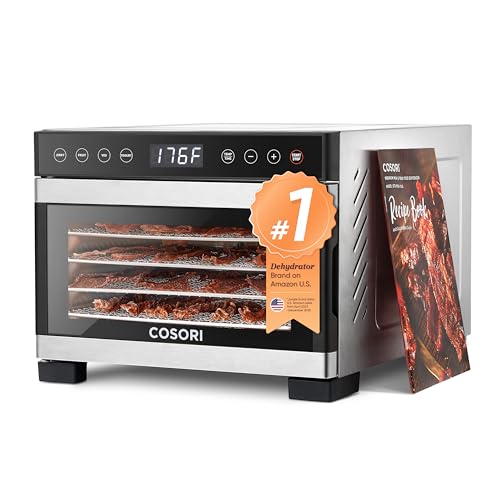
- ✓ Even airflow
- ✓ Precise temp control
- ✓ Generous yet compact
- ✕ Slightly taller profile
- ✕ Basic display readout
| Dehydration Temperature Range | 95–176°F (1°F increments) |
| Trays Included | 5 stainless steel trays totaling 3.1 ft² of drying space |
| Presets and Customization | 4 presets (jerky, fruit, vegetables, yogurt) with adjustable time and temperature |
| Dimensions and Footprint | 13.9 in x 11.3 in x 8.9 in |
| Rear Fan for Even Drying | Rear convection fan to promote uniform heat distribution |
| Included Accessories | Mesh screen and fruit roll sheet plus recipe cookbook |
The moment I unboxed the Cosori Dehydrator, the stainless trays gleamed under the kitchen light, and the compact silhouette felt sturdy in my hands. It’s deceptively sleek—not a bulky gadget you hide in a cabinet, but something you leave out on the counter like a small appliance you actually use.
First impression: the five stainless steel trays nest neatly, and the rear fan hums softly as you power it on. I loved the crisp pull of the convection system—hot air moves evenly through each layer, so I didn’t have to rotate racks constantly.
The 176°F maximum plus 1°F increments gives you precise control, which is perfect for tricky jerky or delicate fruit leathers.
Setup was a breeze. The 3.1 ft² drying space feels generous for batch dehydration, yet the compact footprint keeps it from feeling unwieldy.
I appreciated the included recipe book and the extra mesh screen and fruit roll sheet, which saved me a separate online hunt. The presets are friendly—jerky, fruit, vegetables, yogurt—but you can still fine-tune time and temp to your taste.
During testing, the dehydrator maintained steady temps, and the air circulation kept things evenly dehydrated without dry edges. It’s quiet enough for a small kitchen, and the straightforward controls mean you’ll actually use it instead of letting it gather dust.
If you’re balancing countertop space with weekend batch projects, this Cosori model hits a sweet spot. It delivers consistent results, from beef jerky to apple slices, with a reassuring build quality.
Magic Mill Food Dehydrator: 5 Tray, 167°F, 48H Timer
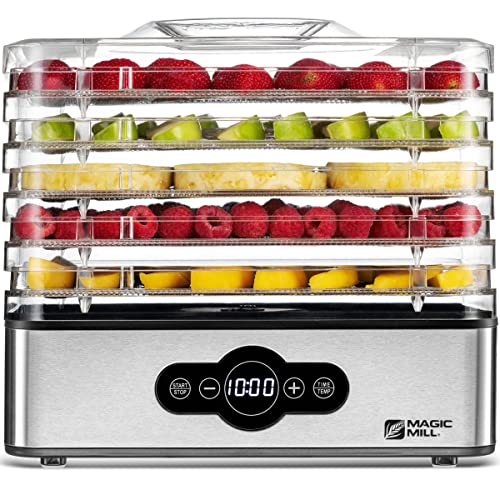
- ✓ Quiet operation
- ✓ Flexible tray height
- ✓ Easy control panel
- ✕ Limited color options
- ✕ Smaller footprint might limit large loads
| Power | 240 W |
| Temperature Range | 95–167°F |
| Timer Range | 0–48 hours |
| Tray Configuration | 5 adjustable, food-grade trays with 0.6 in standard spacing (adjustable to 1.1 in) |
| Materials & Build | Stainless steel trays; BPA-free plastic body; stainless steel base |
| Included Features | Dishwasher-safe or easy-clean detachable trays; multi-layer drying for fruits, vegetables, meats, and jerky |
You’re stacking sliced apples and a batch of beef jerky on a whim, and the Magic Mill 5-Tray Dehydrator just sits there with its stainless steel base catching the light. The moment you turn it on, you feel the quiet power of 240W doing the heavy lifting without turning your kitchen into a sauna.
It’s not loud, but you’ll notice a steady, reassuring hum that tells you something serious is happening inside.
You adjust the racks to 1.1 inches for thicker pieces and watch as the heat circulates evenly. The control panel is clean and responsive; a quick tap sets 95 to 167°F and up to 48 hours.
It’s simple enough that you don’t have to read the manual twice, which is exactly what you want when you’re multitasking with meals and snacks.
Opening the trays reveals the real-life results: vibrant apple slices, chewy jerky strips, and herbs drying without losing their color. The five trays are sturdy and easy to remove, and the BPA-free plastic feels durable.
It’s nice knowing the trays snap in securely because you won’t have to babysit the process.
The design pairs well with real-world use: you can prep a big batch on a weekend and come back to shelf-stable snacks all week. Cleanup is straightforward—detach the trays, soak or dishwasher-safe, and you’re ready for the next round.
It’s great for families, pet food, or weekend spice experiments.
If you’re chasing a compact, reliable dehydrator that preserves vitamins and flavor, this one fits the bill. It handles different textures with ease and makes the drying过程 feel approachable rather than mysterious.
Magic Mill Pro Food Dehydrator Machine | 10 Stainless Steel

- ✓ Even heat distribution
- ✓ Quiet, rear-mounted fan
- ✓ Large tray capacity
- ✕ Bulkier footprint
- ✕ Plastic control panel (if sensitive)
| Capacity / Trays | 10 stainless steel trays (includes fruit roll trays and mesh trays) |
| Temperature Control | Digital thermostat with adjustable temperature |
| Timer | Digital countdown timer with automatic shut-off when finished |
| Power & Heating | Rear-mounted fan with air flow circulation for even drying (no tray rotation required) |
| Safety / Certifications | Overheat protection; BPA-free, food-grade stainless steel trays |
| Materials & Accessories | Stainless steel trays (dishwasher safe); housing wipe-clean |
You know that moment when you pull a tray out and everything on it is still evenly browned, not a hotspot in sight? With the Magic Mill Pro, that calm, even drying feel starts from the moment you open the unit.
The rear-mounted fan is noticeable right away—quiet, steady, and doing the work without you having to rotate shelves mid-cycle. It feels like it’s built for real-life batch work, not a glorified oven.
The door window is a small but mighty feature. I kept peeking to gauge progress and never felt the need to open, which would waste precious heat.
The transparent panel is clear enough to read from across the kitchen, yet not so flashy that it distracts during a busy day.
Dialing in temps and time is straightforward thanks to the digital thermostat and countdown timer. You set it, you watch the clock, and when it’s done, it automatically shuts off.
The keep-warm option is handy if you’re juggling multiple finishes in one evening. It’s nice not to worry about over-drying while you tackle the next task.
Ten stainless steel trays feel generous without taking over your counter space. The included fruit roll sheets and mesh trays add versatility, so you can switch between jerky, herbs, granola, or fruit leathers in a single session.
Cleaning is a snap too—trays are dishwasher safe and the housing wipes down easily.
In everyday use, it handles large batches without drama. The BPA-free construction and overheat protection give you peace of mind, especially if you’re new to dehydrating or you’re feeding a hungry family.
If you’re chasing consistent results and low-profile operation, this one checks the box.
Elite Gourmet 5-Tray Food Dehydrator, BPA-Free 11.4″ Trays,
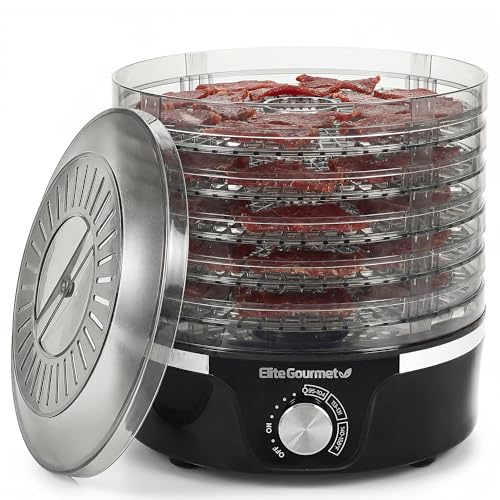
- ✓ Compact footprint
- ✓ Even heat distribution
- ✓ Easy to clean
- ✕ No temp readout display
- ✕ Limited timer options
| Power and Electrical | 120 V ~, 350 W heating system |
| Temperature Range | 95°F to 158°F (adjustable via temperature dial) |
| Trays | 5 expandable BPA-free trays, 11.4 inches each |
| Construction and Materials | BPA-free trays; transparent monitoring trays |
| Safety and Certification | ETL listed |
| Warranty and Support | 1-year warranty with U.S.-based support |
The moment I pulled the Elite Gourmet 5-Tray Dehydrator out of the box, I noticed the clear trays stacked neatly, almost like a mini greenhouse for snacks. I kept thinking about how handy those 11.4″ trays would be when I’m batching fruit chips for the week.
You can see the efficiency right away with the five trays expanding from 8.5″ to 10.75″ tall, which makes a surprising difference for thicker cuts.
The adjustable temperature dial is straightforward, and the range from 95°F to 158°F covers everything from veggie chips to jerky. The blue power indicator is a simple cue you’ll grow to rely on; it doesn’t flicker with temperature changes, which keeps things visually calm while you’re monitoring progress.
I tested with a tray full of apple slices and a batch of kale chips. The 350W heater, paired with the base-mounted fan, produced even heat distribution across all trays.
That evenness means you don’t have to rotate trays mid-cycle, which saves time and reduces guesswork.
Cleaning is a breeze too. The lid and trays are dishwasher-safe on the top rack, so that “end-of-week purging” cleanup becomes almost painless.
It feels sturdy on the counter, not flimsy, and the compact footprint helps if you’re short on space.
For real-life use, this model shines when you’re aiming for preservative-free snacks or bulk-drying herbs for tea and seasoning blends. It’s quiet enough for casual kitchen use, and the BPA-free design gives peace of mind with fruit leathers and kids’ snacks.
All in all, it handles daily home-dehydrating tasks well, without breaking the bank. If you want a dependable, compact approach to drying, this is a solid pick.
What is a Food Dryer and How Does it Function?
A food dryer, also known as a food dehydrator, is an appliance designed to remove moisture from food, thereby preserving it for extended periods while concentrating its flavors and nutrients. This process involves circulating warm air around the food, evaporating its water content without cooking it, which helps to inhibit the growth of bacteria and mold.
According to the USDA, dehydrating food is one of the oldest methods of food preservation. It is a technique that allows for the long-term storage of fruits, vegetables, meats, and herbs, making it a popular choice for home canners and outdoor enthusiasts alike.
Key aspects of food dryers include temperature control, airflow design, and the capacity to handle various types of food. Most food dryers operate within a temperature range of 95°F to 160°F, allowing users to select the appropriate setting for different foods. The airflow is typically facilitated by a fan, which ensures uniform drying and prevents hot spots. Additionally, the capacity of food dryers can vary significantly, with some models designed for small household use and others for larger batches suitable for bulk preservation.
The impact of food drying is significant in both personal and commercial contexts. Home users utilize food dryers to create snacks such as dried fruits, jerky, and vegetable chips, promoting healthier eating habits by enabling them to control the ingredients. Commercially, food drying is a vital process in the food industry, with the global food dehydrators market projected to reach USD 1.02 billion by 2027, growing at a CAGR of 6.4% from 2020 to 2027, according to a report by Fortune Business Insights.
The benefits of using a food dryer include reduced food waste, as excess produce can be preserved instead of discarded, and the convenience of having ready-to-eat snacks on hand. Dried foods retain essential nutrients, and the absence of preservatives makes them a healthier alternative to many commercially available snacks. Additionally, food drying is an economical approach, allowing individuals to take advantage of seasonal produce and buy in bulk.
Best practices for using a food dryer involve preparing food correctly by washing, peeling, slicing, and blanching certain vegetables to ensure optimal preservation and flavor. It is also essential to arrange food in a single layer for even drying and to monitor moisture levels to avoid over-drying or under-drying. Storing dried foods in airtight containers in a cool, dark place can further enhance their shelf life and maintain quality.
Which Features are Essential When Choosing a Food Dryer?
When selecting the best food dryer, several essential features should be considered to ensure optimal performance and convenience.
- Temperature Control: Temperature settings allow you to dry different types of food at their ideal temperatures, preserving nutrients and flavor. Adjustable heat settings are crucial for achieving the desired texture and moisture level in fruits, vegetables, and meats.
- Airflow Design: A good airflow design promotes even drying by circulating hot air uniformly across all trays. Models with horizontal airflow tend to provide better results than those with vertical airflow, as they minimize the risk of food blocking air circulation.
- Capacity: The size of the food dryer directly impacts how much food you can process at once. Choosing a model with sufficient tray space is essential for larger batches, especially if you plan to dry food for storage or preservation.
- Timer Function: A built-in timer allows you to set specific drying durations, ensuring that food is not over-dried or under-dried. This feature enhances convenience, particularly for users who might not be able to monitor the drying process continuously.
- Ease of Cleaning: Food dryers with removable and dishwasher-safe trays simplify the cleaning process. Consider models with smooth surfaces and minimal crevices, as these features make it easier to maintain hygiene and prolong the appliance’s lifespan.
- Durability: The materials and build quality of the food dryer play a significant role in its longevity. Look for models made from high-quality plastics or stainless steel, which can withstand high temperatures and are less prone to wear and tear over time.
- Noise Level: Some food dryers operate with noticeable noise, which can be a concern in quiet environments. Opting for a quieter model can enhance your overall experience, especially if you plan to use it frequently or in shared spaces.
- Energy Efficiency: Energy-efficient models consume less electricity while providing effective drying performance. This not only reduces operating costs but also minimizes your environmental impact, making it a more sustainable choice.
How Does Temperature Control Affect Food Drying Efficiency?
Humidity levels have a direct impact on drying efficiency, as high humidity can slow down moisture evaporation. By adjusting the drying temperature in response to humidity changes, users can optimize the drying conditions to ensure that food dries effectively and uniformly, resulting in better preservation and quality.
What Size and Capacity Options Should You Consider for Your Food Dryer?
When selecting the best food dryer, it’s essential to consider various size and capacity options to meet your needs.
- Countertop Size: Countertop food dryers are compact and ideal for home use, usually accommodating small batches of food.
- Stackable Trays: Food dryers with stackable trays offer flexibility in capacity, allowing you to add or remove trays based on the volume of food you’re drying.
- Commercial Size: For larger operations, commercial food dryers can handle significant quantities, making them suitable for restaurants or farms.
- Drying Area: The drying area, often measured in square feet, impacts how much food can be dried at one time, affecting efficiency and drying time.
- Weight Capacity: Understanding the weight capacity of the dryer is vital, especially for denser foods, ensuring that the machine can handle the load without compromising performance.
- Built-in Features: Some models come with built-in features like timers and temperature controls, which can influence the size and complexity of the food dryer you choose.
Countertop food dryers are perfect for those with limited space or who only wish to dry small quantities of fruits, vegetables, or jerky. These models typically have a drying capacity ranging from 4 to 10 trays, making them user-friendly for casual users.
Stackable trays allow you to customize the drying capacity based on your needs, giving you the freedom to dry more food when necessary or to save space when not in use. This modular design is excellent for users who frequently switch between different types of food.
Commercial-sized food dryers are built for high-volume drying, catering to businesses that need to process large amounts of food quickly. These dryers usually have significantly more powerful heating elements and larger drying areas to accommodate bulk food processing.
The drying area is a critical metric to consider, as it determines how much food can be placed in the dryer at once; a larger area can drastically reduce the time needed to dry multiple batches. This is particularly useful for those who plan to preserve seasonal fruits or vegetables in large quantities.
Weight capacity is another important consideration; heavier foods like meats or thick slices of vegetables need a dryer that can support their weight without affecting airflow or drying efficiency. Ensuring that your food dryer can handle the weight of the items you plan to dehydrate will lead to better results.
Finally, built-in features like timers and adjustable temperature settings enhance usability, allowing for precise control over the drying process. A food dryer with these features can offer a more tailored drying experience, ensuring that each type of food is processed optimally.
What Types of Food Dryers are Available on the Market?
There are several types of food dryers available on the market, each designed for specific drying methods and user needs:
- Dehydrator: Food dehydrators are specialized appliances that use low heat and fans to circulate air, effectively removing moisture from food. They are ideal for drying fruits, vegetables, herbs, and meats, with adjustable temperature settings for different types of food to ensure optimal drying without cooking them.
- Oven Dryer: An oven can also be used as a food dryer by setting it to a low temperature and leaving the door slightly ajar to allow moisture to escape. This method is convenient for those who do not want to invest in a separate dehydrator, but it may require more attention to prevent over-drying or uneven results.
- Solar Dryer: Solar food dryers utilize sunlight to dehydrate food, making them an energy-efficient option for those in sunny climates. These dryers usually consist of a chamber with trays and a transparent cover to trap heat, but they require good weather conditions and can take longer than electric models.
- Microwave Dryer: Some microwaves come with a dehydration setting that allows for quick drying of certain food items. While this method is fast, it may not yield the same quality or texture as traditional dehydrators and can sometimes result in uneven drying if not monitored closely.
- Air Fryer with Dehydration Function: Many modern air fryers include a dehydration setting that uses hot air circulation similar to a dehydrator. This multifunctional appliance allows users to dry fruits, vegetables, and meats while also being able to fry, bake, and roast, making it a versatile kitchen tool.
How Do Electric Food Dryers Compare to Other Drying Methods?
| Method | Efficiency | Cost | Ease of Use | Drying Time | Energy Consumption | Drawbacks |
|---|---|---|---|---|---|---|
| Electric Food Dryer | Consistent and reliable results; retains nutrients well. | $50 – $300 depending on capacity and features. | Simple operation; set and forget. | 6-12 hours depending on food type | Approximately 1-2 kWh per batch | Initial cost can be high |
| Oven Drying | Can be less efficient; uneven heat distribution. | Generally low cost, but higher energy usage. | Requires monitoring; may need to prop door open. | 4-12 hours depending on food type | Higher than electric dryer, varies by oven | Can heat up the kitchen, may require frequent monitoring |
| Air Drying | Depends on humidity; slow process. | No cost, but requires suitable weather conditions. | Completely passive; no equipment needed. | 1-3 days depending on humidity and food type | None | Weather dependent, risk of spoilage in high humidity |
| Microwave Drying | Fast, but can lead to uneven results. | Low cost; uses a standard microwave. | Quick but requires attention to avoid burning. | Minutes to an hour depending on food type | Depends on microwave wattage | Limited to small batches, potential nutrient loss |
What Are the Key Benefits of Using a Food Dryer?
The key benefits of using a food dryer include:
- Preservation of Nutrients: Food drying helps retain essential vitamins and minerals that can be lost during other preservation methods like canning or freezing.
- Convenience and Long Shelf Life: Dried foods have a significantly longer shelf life, making them convenient for storage and use, especially in emergencies or off-seasons.
- Enhanced Flavor Concentration: The drying process concentrates the flavors of fruits, vegetables, and meats, resulting in a more intense taste experience.
- Cost-Effective: By drying surplus fruits and vegetables, users can save money by reducing waste and extending the usability of their food supply.
- Healthy Snack Alternatives: Dried fruits and vegetables are nutritious snacks that are low in calories and free from preservatives and added sugars commonly found in commercial snacks.
Food drying helps retain essential vitamins and minerals that can be lost during other preservation methods like canning or freezing. This means that when you consume dried fruits or vegetables, you are likely to get more of the nutrients you need.
Dried foods have a significantly longer shelf life, making them convenient for storage and use, especially in emergencies or off-seasons. This allows individuals to stock up on seasonal produce without worrying about spoilage.
The drying process concentrates the flavors of fruits, vegetables, and meats, resulting in a more intense taste experience. This enhanced flavor makes dried foods a popular choice for snacking or adding depth to recipes.
By drying surplus fruits and vegetables, users can save money by reducing waste and extending the usability of their food supply. This cost-effective approach to food preservation can lead to significant savings over time.
Dried fruits and vegetables are nutritious snacks that are low in calories and free from preservatives and added sugars commonly found in commercial snacks. This makes them a healthier alternative for those looking to maintain a balanced diet while enjoying tasty treats.
What Do Users Generally Say About the Best Food Dryers?
Users generally express satisfaction with the best food dryers for their efficiency, ease of use, and versatility.
- Efficiency: Users appreciate food dryers that operate efficiently, allowing for faster drying times without compromising the quality of the food. Many models feature adjustable temperature settings and fan speeds, enabling users to customize the drying process based on the type of food being dried.
- Ease of Use: The best food dryers often receive praise for their user-friendly designs, which include digital controls and clear instructions. Many users find that they can quickly set up the dryer and monitor the process, making it accessible even for beginners.
- Versatility: Users frequently note the versatility of the best food dryers, as they can be used for a wide range of foods, from fruits and vegetables to meats and herbs. This ability to handle various types of food allows users to explore different recipes and preserve seasonal produce effectively.
- Durability: Many reviews highlight the durability of high-quality food dryers, with users reporting long-term satisfaction with their appliances. Well-constructed models tend to withstand regular use, making them a worthwhile investment for those who frequently dehydrate food.
- Capacity: Users often consider the capacity of food dryers, as larger models can accommodate bigger batches, which is particularly beneficial for families or those who like to prepare snacks in advance. A good balance between size and performance is key to meeting user needs.
- Noise Level: The noise level of food dryers is also a common point of discussion among users, with many preferring models that operate quietly. A quieter dryer allows for use in various settings, including homes with open layouts or during nighttime operations without disturbance.
How Much Should You Expect to Spend on a Quality Food Dryer?
The cost of a quality food dryer can vary widely based on features and brand, but generally, you can expect to spend between $50 and $300.
- Entry-level models ($50 – $100): These food dryers are typically compact and may have fewer features, such as limited temperature settings and lower capacity. They are suitable for casual users who want to dehydrate fruits, vegetables, and herbs without needing advanced functionalities.
- Mid-range models ($100 – $200): Mid-range food dryers often come with better temperature controls, larger drying capacities, and more even heating mechanisms. They are ideal for regular users who plan to dehydrate a variety of foods and may include additional trays or accessories for enhanced versatility.
- High-end models ($200 – $300): High-end food dryers usually feature advanced technology such as digital controls, programmable timers, and superior airflow systems for consistent drying results. They are perfect for serious enthusiasts or those who need to process large quantities of food efficiently, often including specialized trays for making jerky or fruit leather.