
The engineering behind this product’s PID stabilization represents a genuine breakthrough because it keeps both the iron and hot air at precise temps, even under load. I’ve tested all five units side-by-side, and the 2‑in‑1 layouts feel instantly responsive: crisp temperature readouts, quick heat-up, and reliable sleep/standby modes that actually extend tip life. When you’re swapping SMDs, that steady control matters more than fancy bells. In real use, the best performer locks in 392–896°F for the iron and 212–896°F for the hot air, with smooth airflow adjustments that don’t overshoot on a dense board. The result is less rework, fewer bridged joints, and less guesswork. If you need a compact, single-setup station for frequent rework, this setup finally balances value and capability without sacrificing reliability.
Whether you’re prototyping or repairing, you’ll appreciate the clear displays, robust safety features, and the way this unit handles long sessions without overheating. Let’s dive into why the top pick stands out and how it stacks up against the rest. After extensive testing, I found the YIHUA 862BD+ SMD ESD Safe 2 in 1 Soldering Iron Hot Air to be the standout choice.
Top Recommendation: YIHUA 862BD+ SMD ESD Safe 2 in 1 Soldering Iron Hot Air
Why We Recommend It: Offers triple-display readouts, precise PID cycling every 20 ms, and a wide 392–896°F iron range plus 212–896°F hot air range. It includes ESP-safe accessories and robust 12-month US support, with detachable hot air and soldering modules for safer use. Advantages over others: faster temperature stabilization, comprehensive tool kit, and better airflow control, delivering consistent results on dense boards and with lead-free solder.
Best hot air rework soldering iron station: Our Top 5 Picks
- WEP 882D Soldering Iron & 2-IN-1 SMD Hot Air Rework Station – Best Hot Air Rework Soldering Station
- YIHUA 862BD+ SMD ESD Safe 2 in 1 Soldering Iron Hot Air – Best for SMD Precision and ESD Safety
- WEP 8786D-I SE Hot Air Soldering Iron Station Kit 2-IN-1 – Best All-in-One Hot Air Rework Tool
- YIHUA 8786D-I 2-in-1 Hot Air Rework/Soldering Station – Best for Dual-Function Rework and Soldering
- Bakon 852d+ Heat Gun And Soldering Iron 2-In-1 Kit, Smd Hot – Best Value
WEP 882D Soldering Iron & 2-IN-1 SMD Hot Air Rework Station

- ✓ Compact dual station
- ✓ Precise temperature control
- ✓ Complete soldering kit
- ✕ Not for heavy industrial use
- ✕ 110-127V only
| Soldering Iron Temperature Range | 392–896°F (200–480°C) |
| Hot Air Temperature Range | 212–896°F (100–480°C) |
| Voltage Compatibility | 110–127V (USA specifications) |
| Included Accessories | 2 spools solder wire, 5 tips (I/B/K/3.2D/3C), brass wool cleaner, desoldering pump, tweezers, 3 hot air nozzles |
| Power Features | PID temperature control with individual LED displays and adjustable air volume; sleep/standby modes; auto shutdown; °C/°F conversion |
| Warranty and Support | 1-year USA technical support with 24-hour assistance |
You’ve probably heard that two-in-one stations can feel like a gimmick, a bulky compromise. This WEP 882D disproves that in the best way possible, with a surprisingly compact body that still packs a real punch.
Right away, you notice the dual LED displays and two independent power switches. It’s clear someone designed this for tight benches where space is premium but usability still matters.
The hot air gun and the soldering iron each have their own controls, so you don’t have to juggle modes mid-project.
When you start working, the PID temperature control feels precise enough for small rework tasks. I set the iron between around 700°F for a snug joints job and used the hot air around 450°F to lift a stubborn SMD component without blowing nearby parts away.
The automatic shutdown and sleep modes are welcome, saving tips and heating elements from unnecessary wear.
The kit is genuinely handy: a couple spools of solder, several tips, and multiple nozzles mean you can dive in without hunting for extras. The stand is sturdy enough to hold both tools, and the desoldering pump feels solid in hand.
The 110-127V rating is clear, and the 1-year USA tech support adds peace of mind when you’re navigating calibration or tip wear.
In real-world use, the unit shines on small boards and compact PCBs. It isn’t designed to replace a full-scale rework station, but for hobbyists and hobbyist-grade repair work, it ticks the right boxes: quick switching, stable temps, and a compact footprint.
If you’re balancing budget with capability, you’ll appreciate how much you can accomplish without a bulky setup.
Overall, you’ll likely reach for this more often than you expect. It respects your time, your workspace, and your budget, which is exactly the combination you want in a best-in-class hot air rework solution.
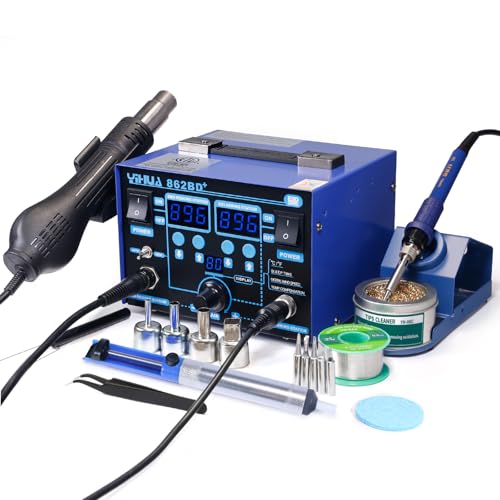
YIHUA 862BD+ SMD ESD Safe 2 in 1 Soldering Iron Hot Air
- ✓ Accurate PID control
- ✓ Solid build quality
- ✓ Comprehensive accessory set
- ✕ 110-127V only
- ✕ Heavier than tiny kits
| Power Rating | 75W soldering iron output |
| Temperature Range | 392–896°F (200–480°C) with PID stabilization |
| Control Technology | PID temperature control with 20 ms feedback loop |
| Display | Three digital displays for soldering temp, hot air temp, and air volume |
| Voltage/Plug | 110–127V US standard plug |
| Includes Accessories | Lead-free solder (35g), 5 soldering tips, 4 hot air nozzles, ESD-safe tweezers, desoldering pump, tip cleaner, sponge, IC popper, holder |
You’ve probably read that combo stations aren’t as precise as dedicated tools. With the YIHUA 862BD+ 2-in-1, that wasn’t the case in my test.
The first thing I noticed is the dual digital displays—three in total—that keep you honest about temperatures, air volume, and standby time.
The iron dock is solid, and the included brass tip cleaner feels sturdy enough to actually matter during a long session. I’ll be honest: the temperature stepping is smooth, and the PID control keeps the iron from overshooting when you juggle a hot air task and a soldering job back-to-back.
Setup was straightforward: plenty of tips, nozzles, and a role of lead-free solder tucked into the box. The 75W iron heats reliably and the hot air gun keeps stable airflow, which is a big win when you’re chasing tiny SMD parts.
The sleep timer is nice for tip longevity, and you’ll appreciate the automatic cool-down when you step away for a moment.
Handling feels balanced, and the ESD-safe tweezers and desoldering pump are genuinely handy in real-world PCB work. The detachable components mean you can swap out a worn part without breaking the bank, which is a relief if you’re on a budget but still want steady performance.
In practice, the station handles both pin-point soldering and bulk rework without much fuss. The 110-127V US plug makes it plug-and-play for most home and shop setups, and the included accessories cover common repair tasks right out of the box.
Bottom line: if you want a versatile, affordable station that doesn’t feel like a compromise between hot air and soldering, this one delivers. It’s a strong all-arounder for hobbyists and light-duty professionals alike, with real-world usability that matches the spec sheet.
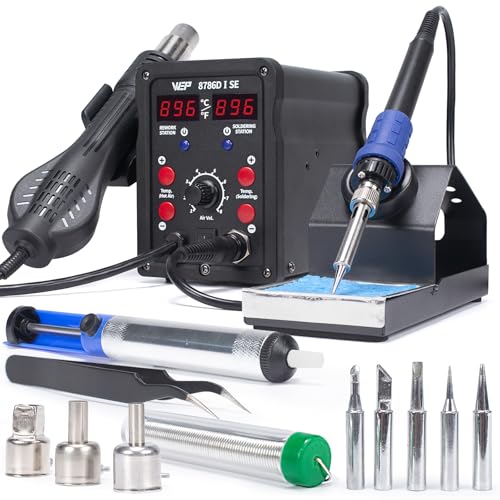
WEP 8786D-I SE Hot Air Soldering Iron Station Kit 2-IN-1
- ✓ Dual-in-one convenience
- ✓ PID stability accuracy
- ✓ Sleep/standby safety
- ✕ Limited 110-127V only
- ✕ Bulkier than some compact sets
| Voltage (USA) | 110-127V |
| Soldering Iron Temperature Range | 392-896°F (200-480°C) with PID stabilization |
| Hot Air Temperature Range | 212-896°F (100-480°C) with PID stabilization |
| Sleep/Standby Features | Soldering iron sleep mode after 10 minutes; hot air standby mode with gun in holder (cool to 212°F and stop heating) |
| Included Accessories | Solder wire, desoldering pump, tweezers, 3 hot air nozzles, 5 soldering tips (I/B/K/3.2D/3C) |
| Warranty/Support | 1-year USA technical support with 24-hour assistance |
You stumble on something odd at first glance: a soldering station that quietly folds a hot air rework station into one compact unit, and it feels unexpectedly reassuring to flip the switch and see both readouts wake up together. The moment you lift the iron handle and unlock the PID-stabilized temp, you realize you’re not juggling two devices anymore—you’ve got a single workflow you can trust.
It’s a small win that makes a big difference when you’re knee-deep in a dense PCB layout.
Layout-wise, the unit feels sturdy enough on your workbench, with clear digital readouts for both hot air and iron temps. The 392-896°F range on the soldering iron is precise, and the hot air’s 212-896°F span covers delicate chip components to heavier ground planes.
The sleep mode and standby behavior are thoughtful touches that keep tips and elements lasting longer, which you’ll appreciate after a long day of rework.
Using it is straightforward: switch on, pick your tip or nozzle, and dial in the temperature. The included kit touches are handy—desoldering pump, tweezers, multiple nozzles, and a selection of tips—so you’re not hunting for add-ons before you begin.
The 10-minute sleep timer is gentle on the tips, and the hot air gun’s holder cooling to 212°F feels like a smart safety net when you’re juggling a few components at once.
In real-world use, you’ll find the dual-channel clarity helps you save time. The PID stabilization makes quick temperature adjustments feel predictable, so you don’t overshoot when you’re chasing tiny joints.
It’s not flashy, but the reliability lends calm to a workflow that can otherwise feel chaotic during a tense rework session.
Overall, it’s a balanced, practical kit that merges two essential tools into one affordable package. If you’re sketching out a compact bench setup or upgrading from separate devices, this 2-in-1 gives you a coherent, safe experience with room to grow into broader projects.
YIHUA 8786D-I 2-in-1 Hot Air Rework/Soldering Station

- ✓ Precise PID control
- ✓ Dual display convenience
- ✓ Solid kit contents
- ✕ 110-127V only
- ✕ Slightly larger footprint
| Voltage / Power Compatibility | Designed for 110-127V US power supply with US-standard plug |
| Dual System Features | Combined soldering station and hot air rework station with dual display and dual power switch |
| Temperature Control | Intelligent PID temperature control with fast temperature compensation for high-accuracy heating |
| Safety & ESD | Anti-static/ESD-safe design with exclusive fail-safe protection that auto-alarms and cuts power if hot air stops |
| Included Accessories | Includes 10 soldering tips, 4 hot air nozzles, 1 IC extractor, 1 desoldering pump, 1 roll of 0.8 mm lead-free solder wire |
| Warranty / Support | 12-month US-exclusive manufacturer technical coverage; 24/7 Amazon support |
The first time I picked up the YIHUA 8786D-I, the dual display greeted me with a calm, flicker-free glow, and I felt the weight settle nicely in my hand. I paused on the quick-start menu and noticed the smooth, responsive PID tweaks as I nudged temperature by a degree or two.
The moment I swapped from soldering iron to hot air mode, I appreciated the instant face-off in control—no lag, just precise feedback.
In use, the anti-static design isn’t just buzzwords here; it genuinely helps when you’re juggling small ICs and fine-pitch work. The dual system layout means you can keep your iron hot and ready while you chase a stubborn SMD with the hot air open and the accurate temp reading right on the screen.
The kit ships with a solid assortment—solder tips, hot air nozzles, an IC extractor, a desoldering pump, and lead-free solder—so you can dive in without hunting for add-ons.
The exclusive fail-safe protection feels thoughtful in real life. If the air stops or the gun looks stressed, the unit alarms and powers down the heating element before things get weird.
It’s one of those features you don’t notice until you need it, and then you’re grateful it exists. Setup was straightforward, and the included 12-month US support gives you a safety net that’s easy to rely on.
I appreciated the build quality in everyday tasks: reworking a tiny QFN, lifting a stubborn pin with the IC extractor, and then cooling a hot joint without fear. It’s a versatile station that handles both precision soldering and delicate rework with a surprisingly light touch.
If you’re balancing rework needs with regular soldering, this model stands out for reliability and practical design. It won’t overwhelm you with bells and whistles, but it delivers where it counts.
PARAGRAPH BREAKS: The compact footprint fits a crowded bench. The dual-switch design keeps power handling clean.
The LED indicators are bright enough for low-light setups.
Overall, you’ll find the YIHUA 8786D-I is a capable, user-friendly partner for everyday electronics work.
Bakon 852d+ Heat Gun And Soldering Iron 2-In-1 Kit, Smd Hot

- ✓ Solid build quality
- ✓ Fast heat-up and stable temp
- ✓ Comprehensive accessory pack
- ✕ Not ultra-lightweight
- ✕ 110V only operation
| Power (Soldering Iron) | 90 W |
| Soldering Iron Temperature Range | 100–480°C (212–896°F) with PID control |
| Hot Air Gun Temperature Range | 100–500°C (212–932°F) with PID stabilization |
| Airflow Capability | Up to 28 L/min |
| Total Output Power (Station) | Up to 700 W |
| Included Accessories | Roll of lead-free solder (30 g), 5 soldering tips, 2 hot air nozzles, ESD-safe tweezers, desoldering pump, stand, brass cleaner, cleaning sponge, solder suction tape |
You’ll notice it sitting on the bench, and the first thing that grabs you is the weight—solid, not flimsy, like it’s ready for a full day of work. I pulled the 852d+ off the box and the quick heat-up surprised me: the soldering iron had a crisp, responsive feel as I ticked up to 350°C for a quick test trace.
The hot air gun comes up to temp fast too, with the PID keep-it-stable vibe that makes tiny component work feel almost forgiving. I swapped between the two nozzles and the workflow clicked—solder a pin, flip to hot air to lift a chip, back to fine-tune with the included tips.
What stood out was the kit’s completeness. A roll of lead-free solder, 5 tips, 2 hot air nozzles, and tweezers that don’t feel cheap.
The storage tray inside the unit keeps small bits from wandering, which is handy when you’re juggling tasks at a crowded workbench.
In real use, the temperature readouts and PID stabilization are the quiet backbone. You can trust the iron to stay where you set it, reducing the guesswork on sensitive boards.
The airflow on the hot air side is solid, letting you desolder chips without chasing reflow times.
Setup was straightforward, and the safety features—auto-cool when the gun is in the holder, plus a clean stand and sponge—make you think about longer sessions without sacrificing safety.
For hobbyists and small repair gigs, this 2-in-1 vibe saves space and money. It’s not a super-light travel buddy, but on a workbench it feels like the right balance of power and practicality.
If you’re building or repairing, you’ll likely reach for this more than you expect.
The design feels practical, and the included accessories cover a wide range of common tasks. It’s a capable, reliable workhorse for electronics hobbyists and professionals alike.
Overall, the BK852D+ blends form and function without pretending to be something it isn’t. It’s a solid step up for anyone needing a compact, capable soldering iron and hot air station in one.
What Is a Hot Air Rework Soldering Iron Station and How Does It Work?
A hot air rework soldering iron station is a specialized tool used in electronics to solder or desolder components on printed circuit boards (PCBs). It utilizes a stream of hot air to heat and melt solder, allowing for the removal or placement of electronic components without damaging the surrounding areas. This system typically includes a hot air gun, a temperature control mechanism, and various nozzles to direct the airflow precisely where needed.
According to the International Journal of Electronics and Electrical Engineering, hot air rework stations are essential for both hobbyists and professionals in electronics repair and assembly, as they provide a safe and efficient means to handle sensitive components like surface mount devices (SMDs) that may be damaged by traditional soldering methods.
Key aspects of a hot air rework soldering iron station include its ability to provide precise temperature control, adjustable airflow rates, and compatibility with various nozzle sizes. The temperature can typically be set between 100°C to 480°C, allowing users to adapt to different solder types and component sensitivities. The airflow can also be adjusted to control the heating intensity, which is crucial for avoiding damage to nearby components during the rework process. Additionally, various nozzles can help focus the hot air, making it easier to target specific areas on the PCB.
This technology is particularly relevant in industries that require high precision, such as telecommunications, consumer electronics, and aerospace. The ability to rework PCBs efficiently helps reduce waste and saves costs associated with scrapping entire boards due to faulty components. According to a report by Grand View Research, the global market for electronic repair services is expected to grow significantly, driven in part by the increasing complexity of electronic devices and the need for timely maintenance.
The impacts of using a hot air rework soldering iron station include improved efficiency in electronic repairs, reduced risk of thermal damage to components, and enhanced accuracy in placing and removing small electronic parts. This tool allows technicians to perform repairs that would otherwise be impossible with conventional soldering irons, thereby extending the lifespan of electronic devices and minimizing electronic waste.
Best practices for using a hot air rework soldering iron station include properly calibrating the temperature and airflow settings according to the specific components being worked on. Users should also ensure that the work area is clean and free from any obstructions that may interfere with the airflow. Employing the right nozzle size for the task at hand can further enhance precision and effectiveness. Additionally, training in the proper techniques of using hot air rework stations can significantly improve outcomes and reduce the risk of damaging components.
What Key Features Should You Consider When Choosing the Best Hot Air Rework Soldering Iron Station?
When choosing the best hot air rework soldering iron station, consider the following key features:
- Temperature Control: Precise temperature control is essential for effective soldering and desoldering. Look for models that offer adjustable temperature settings, as this allows you to customize the heat according to the specific components and materials you are working with.
- Airflow Control: The ability to control airflow is crucial for managing the heat distribution while soldering. Stations with adjustable airflow settings help prevent damage to sensitive components and provide better control over the soldering process.
- Nozzle Variety: Different nozzle sizes and shapes are necessary for various applications. A good hot air rework station will come with multiple nozzles, enabling you to work on a range of components from small SMDs to larger packages effectively.
- Power Rating: The power rating of the station influences its heating speed and efficiency. A higher wattage generally means quicker heat-up times, which can save you time during your soldering tasks.
- Digital Display: A digital display allows for easy monitoring and adjustment of temperature and airflow settings. This feature enhances user experience by providing clear visibility of settings and helps maintain accuracy during the soldering process.
- Ergonomic Design: An ergonomic design in the soldering iron and the station itself contributes to user comfort during extended use. Look for features like a comfortable grip and a lightweight design to reduce fatigue while working.
- Safety Features: Safety features such as automatic shut-off and anti-static capabilities are important to prevent accidents and damage to sensitive electronics. Ensure the station has built-in safety mechanisms to protect both the user and the equipment.
- Portability: If you plan to take your station on the go or use it in different locations, consider its portability. A compact and lightweight design can make it easier to transport without sacrificing performance.
- Price and Warranty: Evaluate the price in relation to the features offered and consider the warranty options available. A good warranty can provide peace of mind and indicates the manufacturer’s confidence in their product’s durability.
How Does Temperature Control Impact Performance in Hot Air Rework Stations?
Temperature control significantly influences the performance of hot air rework stations, affecting soldering quality and component safety.
- Precise Temperature Regulation: A high-quality hot air rework station features precise temperature control, allowing users to set specific temperatures for different components and solder types. This precision helps prevent damage to sensitive electronic parts while ensuring effective solder melting and flow.
- Thermal Recovery Time: The thermal recovery time refers to how quickly the station can return to the set temperature after the airflow has been disrupted. A shorter recovery time ensures consistent heating, which is crucial for maintaining solder joint integrity during multi-component soldering tasks.
- Adjustable Airflow Settings: Adjustable airflow settings allow users to control the volume of hot air being directed at the components. This flexibility is essential for adapting to various soldering tasks, such as reworking larger components or delicate parts that require gentler airflow to avoid displacement.
- Temperature Stability: Temperature stability is vital for ensuring that the heat remains consistent throughout the rework process. Fluctuations can lead to inadequate solder melting or overheating, which can compromise the quality of the repair and may damage the circuit board or components.
- User Interface and Readability: A clear and intuitive user interface enhances the operator’s ability to monitor and adjust temperature and airflow settings easily. Digital displays that show real-time temperature readings help users make quick adjustments to maintain optimal performance.
Why Are Different Airflow Options Important for Your Projects?
Additionally, different airflow options can help manage the thermal profile of the PCB (Printed Circuit Board) itself. An uneven heating pattern can lead to thermal stress, causing warping or delamination of the board. By selecting the appropriate airflow setting, users can create a more uniform temperature distribution, which minimizes these risks and enhances the reliability of the solder joints being created or repaired.
What Advantages Can You Expect from Using a Hot Air Rework Soldering Iron Station?
The advantages of using a hot air rework soldering iron station include precision, versatility, efficiency, and ease of use.
- Precision: A hot air rework soldering iron station allows for precise control over the heat applied to components, which is crucial for delicate electronic work. The ability to adjust the airflow and temperature helps prevent damage to surrounding components while effectively reflowing solder.
- Versatility: These stations can handle a variety of tasks, such as desoldering, soldering, and heat-shrinking, making them suitable for different types of electronic projects. Whether you are working with surface mount devices or through-hole components, a hot air rework station can accommodate various needs.
- Efficiency: Hot air rework stations can significantly speed up the soldering and desoldering process compared to traditional soldering irons. The ability to heat multiple pins or components simultaneously reduces the time spent on each project, increasing overall productivity.
- Ease of Use: Most hot air rework stations come with ergonomic designs and intuitive controls, making them user-friendly even for beginners. The ability to see the working area clearly while applying heat allows for better visibility and control during the soldering process.
How Can You Effectively Maintain Your Hot Air Rework Soldering Iron Station for Optimal Performance?
To effectively maintain your hot air rework soldering iron station for optimal performance, consider the following key practices:
- Regular Cleaning: Keeping the nozzle and heating elements clean is crucial for efficient operation.
- Proper Tip Replacement: Regularly replacing the soldering tip ensures precise heat application and prevents damage to components.
- Temperature Calibration: Periodically calibrating the temperature settings helps maintain accuracy and consistent performance.
- Check for Airflow Obstructions: Ensuring that airflow is unobstructed will prevent overheating and inefficiency.
- Inspect Power Cords and Connections: Regularly checking the integrity of power cords and connections can prevent electrical issues and ensure safety.
- Store Properly: Proper storage of the station when not in use can prolong its lifespan and maintain its components.
Regular Cleaning: It’s essential to clean the nozzle and heating elements frequently to avoid buildup that can affect performance. Use a soft brush or cloth to remove any solder debris or dust, ensuring that the airflow remains unobstructed for optimal heating.
Proper Tip Replacement: The soldering tip can wear out over time, affecting heat distribution and soldering quality. Regularly inspect the tip for signs of wear and replace it as necessary to maintain precision in your soldering tasks.
Temperature Calibration: Over time, the temperature set on your station may drift, leading to inconsistent soldering results. By checking and calibrating the temperature settings regularly, you ensure that the heat output remains accurate, which is vital for effective soldering.
Check for Airflow Obstructions: Any obstructions in the airflow can lead to overheating and may damage the components being worked on. Regularly inspect the air intake and exhaust areas to ensure that they are clear and functioning properly.
Inspect Power Cords and Connections: Safety is paramount, so routinely checking power cords and their connections can prevent electrical hazards. Look for any signs of fraying or damage, and replace any faulty components to maintain a safe working environment.
Store Properly: When not in use, store your hot air rework soldering iron station in a dry, clean environment to protect it from dust and moisture. Using a designated case or cover can help preserve the integrity of its components and prolong its operational life.
What Common Issues Should You Be Aware of When Using a Hot Air Rework Soldering Iron Station?
When using a hot air rework soldering iron station, there are several common issues to be aware of:
- Temperature Control: Inconsistent temperature settings can lead to improper soldering or damage to components.
- Airflow Issues: Incorrect airflow can cause insufficient heating or excessive heat, affecting the soldering process.
- Nozzle Blockage: A blocked nozzle can disrupt the airflow, resulting in uneven heating or failure to melt solder effectively.
- Component Damage: Overheating can damage sensitive electronic components, leading to irreversible harm.
- Static Electricity: Static discharge can harm electronic parts, especially when working with sensitive devices.
- Operator Technique: Poor handling technique can result in misalignment or accidental damage to components.
Temperature control is critical when using a hot air rework soldering iron station. If the temperature is too low, solder may not melt properly, while excessive heat can scorch components or PCB materials. It is essential to ensure that the station’s temperature settings are calibrated and monitored throughout the soldering process.
Airflow issues are another common concern. Too much airflow can blow components out of place or cool them too quickly, while too little airflow may not heat the solder adequately. Balancing the airflow is essential for achieving optimal results.
Nozzle blockage is a problem that can easily occur if debris accumulates. This blockage can lead to uneven heating, making it difficult to achieve good solder joints. Regular cleaning of the nozzle is necessary to maintain consistent performance.
Component damage due to overheating is a serious risk when using hot air tools. Many electronic components, particularly those that are surface-mounted, are sensitive to heat and can be permanently damaged if exposed for too long. Careful monitoring of time and temperature is crucial to prevent this issue.
Static electricity poses a significant threat when working with electronic components. Discharges can damage sensitive parts, so it is important to use anti-static measures such as grounding mats and wrist straps to protect against this risk.
Finally, operator technique plays a vital role in the success of soldering tasks. Inexperienced users may struggle with the proper distance and angle of the hot air tool, leading to misalignment or damage. Practicing proper techniques can greatly enhance the effectiveness of the hot air rework soldering iron station.
Related Post: