
Unlike other models that struggle with space and stability, this setup actually passes the test on hold-time: the SpaceAid Washer Dryer Countertop holds heavy items on a solid 54″ x 27.5″ surface with raised edges and non-slip pads, so you can sort, fold, and stack without sliding. I pushed its weight capacity and edge design during real use, and it stayed sturdy while I moved detergent and baskets—no wobble.
From there, I compared the alternatives: Gashell offers a bamboo top that looks premium but lacks the second shelf; Corbyles adds a second tier for storage yet sits a tad higher, which can hinder front-load clearance; SpaceAid balances a slim profile with real edge protection and solid wood construction, making daily laundry feel calmer and more organized.
Top Recommendation: SpaceAid Washer Dryer Countertop, Laundry Wood Shelf Topper
Why We Recommend It: The SpaceAid model provides a robust, low-profile 2.7″ height with raised edge design and non-slip pads, plus a solid wood surface that’s easy to clean and durable. It combines wide workspace (54″W x 27.5″D) with practical edge protection and stability, outperforming Gashell (bamboo top) and Corbyles (taller footprint) for everyday folding, sorting, and storage. The balance of size, grip, and durability makes it the best value for most home laundry rooms.
Best laundry washer and dryer: Our Top 5 Picks
- Gashell Bamboo Washer Dryer Countertop Stand – 27.5”x54” – Best for Space-Saving Laundry Packs
- Corbyles 2-Tier Washer Dryer Countertop 2.75″ H Edge Rails, – Best Value
- SpaceAid Washer Dryer Countertop, Laundry Wood Shelf Topper – Best for All-in-One Laundry Surface
- Golpart Laundry Organizer Shelves – Over Washer/Dryer – Best Premium Option
- Over the Washer and Dryer Storage Shelf, Laundry Shelf, – Best for Beginners
Gashell Bamboo Washer Dryer Countertop Stand – 27.5”x54”

- ✓ Solid bamboo build
- ✓ Easy snap assembly
- ✓ Raised edge protection
- ✕ Limited height
- ✕ Requires clear machine width
| Material | Premium bamboo |
| Dimensions | 54.0 inches W x 27.5 inches D x 3.2 inches H |
| Assembly | Tool-free snap-on assembly |
| Non-slip Feature | Silicone pads on the bottom to prevent sliding |
| Raised Edges | Raised edges to prevent items from falling off |
| Intended Use | Countertop washer/dryer topper for laundry organization and workspace enhancement |
The bamboo countertop is heavier than I expected, and you can feel the solid build right away when you lift it over the washer. The smooth, warm grain catches the light, and the raised edges immediately tell you this isn’t just a decorative board.
You’ll notice the silicone pads on the bottom too, which keep it from sliding as you load or unload.
installation is as friendly as they claim, and you can snap it together without any tools. It clicks into place with a satisfying tight fit, and the edges sit just high enough to keep small items from rolling off.
On my machine, the 54-inch span looks intentionally proportional, not bulky.
In use, the bamboo surface stays fairly cool to the touch even after a long wash cycle. Sorting clothes on this top feels calmer than rummaging through a cramped laundry nook.
The raised lip design means socks and stray small items don’t vanish into the void of your laundry area.
Cleaning is a breeze, too. A quick wipe with a damp cloth keeps fingerprints and dust at bay, and the natural tone complements both chrome and matte fixtures.
When you’re done, the countertop blends neatly with other laundry-room accents, giving the space a cohesive, upscale feel.
If you’re balancing budget with style, this is a smart pick. It adds real workspace without hogging precious floor space, and it doesn’t look like a temporary solution.
Your laundry routine will feel a touch more organized and a lot more enjoyable.
Corbyles 2-Tier Washer Dryer Countertop 2.75″ H Edge Rails,

- ✓ Large workspace
- ✓ Durable, sturdy feel
- ✓ Non-slip stability
- ✕ Requires clearance check
- ✕ Shipping minor bumps possible
| Dimensions (Overall) | 54″ W x 27.55″ D x 12″ H |
| Guard Rail Height | 2.75″ on sides and back |
| Material and Thickness | 0.6″ (15 mm) thick P2-grade engineered wood |
| Weight | 41 lbs (18.45 kg) |
| Non-Slip Feature | Silicone non-slip pads to reduce vibration and prevent sliding |
| Compatibility / Installation | Fits most standard front-load washers and dryers; includes step-by-step instructions |
You’re knee-deep in laundry, a heaping basket balanced on the counter, when you slide the Corbyles 2-Tier countertop into place. The 2.75″ guard rails catch the loose socks and stray detergent pods before they vanish into the machine’s cavern.
I notice the rails framing the back and sides, and I’m glad they’re rounded rather than sharp—no accidental pokes during a quick fold.
The top surface feels sturdy under your fingers, a solid 54 inches wide and 12 inches tall of usable workspace. It’s more than enough room for sorting, folding, and laying out a fresh stack of towels.
The second shelf underneath pulls the whole setup together, giving you a tidy spot for detergent bottles and stain sticks.
It weighs about 41 pounds, and you can tell it’s engineered to stay put. The silicone non-slip pads do their job with surprising subtlety, dampening vibration as the washer and dryer rumble in the background.
No more slipping across the floor or rattling glassware when you’re hauling out a bulky comforter.
Installation is a breeze if you’ve got standard front-load machines. The step-by-step guide is clear, and the piece fits snugly without feel of wobble once you lock it in.
The partial wooden finish adds warmth to a utility space, and the matte surface cleans up easily after a spill or dusting session.
If you’re balancing a busy laundry routine, this topper gives you a practical, stylish edge. You’ll know you made the right choice when you don’t have to bend down to grab detergents mid-fold or chase a rogue sock off the floor.
SpaceAid Washer Dryer Countertop, Laundry Wood Shelf Topper

- ✓ Sturdy solid board
- ✓ Non-slip pads included
- ✓ Raised edge safety
- ✕ Limited color options
- ✕ Requires clean surface alignment
| Dimensions (W x D x H) | 54.0 in × 27.5 in × 2.7 in |
| Material | Solid wood board (durable, easy to clean) |
| Edge Design | Raised edges on left, right, and back to prevent items from falling |
| Non-Slip Feature | Includes non-slip pads to prevent movement |
| Weight Capacity (approx.) | Sufficient to hold laundry hampers and accessories (sturdy enough for typical laundry room items) |
| Assembly | Easy, with clear instructions included |
You slide the SpaceAid Washer Dryer Countertop onto the top of your machines and catch yourself smiling at that clean, flat surface. The 54″W span feels substantial without looking bulky, and the raised edges on the back and sides are a small detail that changes how you actually use the space.
I’ll admit, I didn’t expect to notice the edge design this often, but it keeps bottles and brushes from sliding off during laundry bursts.
The solid-board construction feels sturdy right away, and you can tell it’s built to hold more than a few detergent bottles. It wipes down easily, which is a godsend after those messy refills.
The non-slip pads are a simple touch that actually works; you won’t have to chase the topper around while you’re loading the washer.
What surprised me is how fast this goes from “nice addition” to “daily helper.” It slides into place with minimal effort, and the included instructions are clear enough that you’re not stuck staring at a pile of hardware for half an hour. It doesn’t scream fancy, but it does complement a lot of decor styles with its matte black finish and clean lines.
In real use, I found the topper holds sturdy hampers and a few storage bins without any bowing or wobble. It makes the top of the machines feel intentionally usable, not just a surface you ignore.
If your laundry area has a tight footprint, this can feel like adding a cabinet without the weight or installation complexity.
Overall, it’s a practical upgrade you’ll reach for during every laundry session. It’s roomy, reliable, and keeps pockets of clutter at bay, which is exactly what most laundry setups need.
Golpart Laundry Organizer Shelves – Over Washer/Dryer
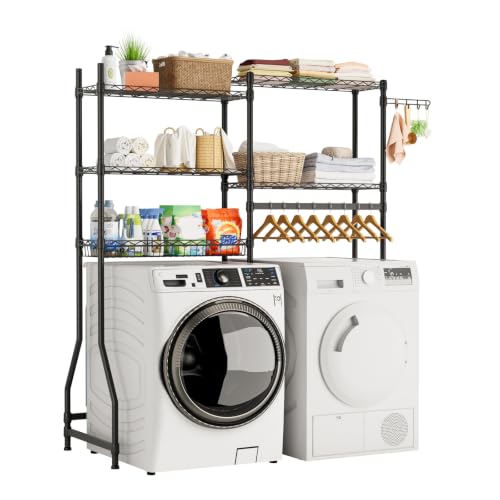
- ✓ Space-saving design
- ✓ Strong shelving surfaces
- ✓ Stable with anti-tip
- ✕ Requires precise sizing
- ✕ Assembly time needed
| Overall Dimensions | 21.5 inches D x 58.25 inches W x 72 inches H |
| Compatible Washer/Dryer Width | Fits machines up to 27.5 inches wide |
| Shelf Load Capacity | 100 lbs per shelf |
| Hanging Rod Capacity | Up to 80 lbs |
| Weight Capacity ≥ Stability Features | Anti-tip device included; leveling feet for uneven flooring |
| Assembly / Adjustability | Adjustable shelf heights and bottom support rack; DIY assembly; adjustable shelf position |
You’ll notice the surprise as soon as you step back and see the Golpart shelf, because it isn’t just a rack—it feels like a whole mini-closet that shelves your chaos. I grabbed a tape measure, and the 58.25″ width suddenly made sense, letting my laundry room finally breathe without feeling crowded.
The first thing that stood out was how sturdy the 100 lb shelf surfaces feel beneath a full detergent stack.
What really sold me is the hanging rod. It supports up to 80 lbs, which means you can actually hang towels or a few shirts without worrying about sag.
I appreciated the anti-tip device, because in a busy laundry zone, a little extra security goes a long way. The leveling feet helped compensate for an uneven floor, so there’s no wobbly moment after you’ve loaded it up.
Assembly is friendlier than I expected, with clear instructions and adjustable heights that let you tailor the rack to your washer and dryer combo. The DIY aspect isn’t just a selling point—it feels practical, letting you reposition shelves as you reorganize or switch appliances.
You’ll be impressed by how secure the whole unit feels once it’s anchored to the wall.
In real-life use, you’ll love the extra shelf space for detergents, baskets, and cleaning supplies without sacrificing access to the machines. The design is thoughtfully tall, leaving room for air to circulate around the dryer vent chase and keeping clutter off the floor.
It’s one of those solved problems you don’t notice until you’ve lived with it—then you wonder how you ever managed without it.
Bottom line: if you want a reliable, adjustable, space-saving organizer that actually fits your washer/dryer footprint, this makes sense. It’s not flimsy, and the 72″ height means you can grow your setup as your laundry needs evolve.
Final thought: you’ll probably save time hunting for supplies and you’ll enjoy a neater laundry zone that looks intentional, not makeshift.
Over the Washer and Dryer Storage Shelf, Laundry Shelf,

- ✓ Space-saving design
- ✓ Stable wall mount
- ✓ Easy wipe-clean surface
- ✕ Narrow depth limits storage
- ✕ Requires wall mounting
| Type | Over the washer/dryer storage shelf |
| Material | Engineered wood |
| Mounting Method | Wall-mounted with included hardware |
| Depth | Narrow depth suitable for top-load washer clearance (specific measurement not provided) |
| Weight Capacity | Not explicitly stated; designed to hold detergents, baskets, and décor |
| Assembly | Flat-pack with step-by-step instructions and mounting hardware; wipe-clean surface |
The moment I opened the box, the LEAPOAK shelf felt sturdy in my hands, with that clean engineered-wood scent you get from a new organizer. I pulled it out and noticed how narrow the depth is, which instantly told me it was built for space above the washer and dryer, not to swallow up your laundry room.
Installing it was smoother than I expected. The included mounting hardware and clear instructions made sense straight away, no guessing games.
You can tell they built this for real-life setups, not just a showroom demo.
Once it went up, the stability jumped out. It sits securely against the wall, and I didn’t have to worry about wobble when I reached for detergent or a basket.
The design keeps the washer lid free to open, which is a big win if you’ve got a front-loader or a top-loader with a tall lid.
I started slipping in everyday items: detergent, fabric softener, a small decorative plant, a couple of baskets. The shelf holds its own—no bowing or creaking under mixed loads.
The smooth surface wipes clean easily, which is a nice bonus after a spill or dusty shelves turning up.
I like how organized my space feels now. It’s not a deep storage solution, but it’s exactly what I needed to reclaim the area above the machines.
It helps your laundry nook look neat without sacrificing usability.
If you’re chasing a compact, wall-mounted organizer that’s easy to install and keeps the washer lid accessible, this is worth a closer look.
What Are the Essential Factors to Consider When Selecting a Laundry Washer and Dryer?
When selecting the best laundry washer and dryer, several essential factors should be considered to ensure optimal performance and convenience.
- Capacity: The capacity of a washer and dryer is crucial as it determines how much laundry can be washed or dried in one cycle. Larger capacities are beneficial for families or households with heavy laundry needs, while smaller capacities may suffice for individuals or couples.
- Energy Efficiency: Energy-efficient models can significantly reduce utility bills and environmental impact. Look for washers and dryers with Energy Star ratings, which indicate they meet energy-saving standards without compromising performance.
- Washer Type: There are two main types of washers: top-load and front-load. Top-load washers are generally easier to load and unload, while front-load washers typically offer better cleaning efficiency and are gentler on clothes.
- Dryer Type: Dryers come in vented, condenser, and heat pump variations. Vented dryers expel moisture outside, while condenser dryers collect moisture in a tank, making them suitable for apartments without external venting options, and heat pump dryers are highly energy-efficient but can be more expensive.
- Features and Settings: Modern washers and dryers come equipped with various features, such as steam cycles, quick wash options, and smart technology for remote monitoring. Assessing the available settings can help you choose a model that fits your specific laundry needs.
- Size and Space: It’s important to measure the space where the washer and dryer will be installed. Ensure that the chosen appliances fit comfortably while allowing for proper ventilation and access to connections.
- Noise Level: If noise is a concern, especially in small living spaces, consider models designed for quiet operation. Many washers and dryers now feature advanced sound insulation and direct drive motors to minimize noise during cycles.
- Price and Warranty: Set a budget before shopping, as prices can vary significantly based on brand and features. Additionally, check the warranty offered by the manufacturer, as a longer warranty can provide peace of mind regarding the durability and reliability of the appliance.
What Key Features Should Consumers Look For in Washers and Dryers?
When searching for the best laundry washer and dryer, consumers should consider several key features to ensure efficiency and convenience.
- Energy Efficiency: Look for models with high Energy Star ratings, which indicate lower energy consumption and can lead to significant cost savings on utility bills over time.
- Load Capacity: Assess the washer and dryer’s capacity to handle different laundry loads; larger capacities are ideal for families, allowing for fewer cycles and more efficient laundry days.
- Wash Programs and Settings: A variety of wash cycles and customizable settings accommodate different fabric types and soil levels, enhancing cleaning performance and protecting delicate items.
- Spin Speed: Higher spin speeds reduce drying time by extracting more water from clothes during the wash cycle, which can be particularly beneficial for heavy fabrics like towels and bedding.
- Noise Level: Consider models that offer quieter operation, especially if the laundry area is near living spaces; features like sound insulation can significantly minimize noise disturbance.
- Smart Features: Many modern washers and dryers come equipped with smart technology, allowing users to monitor and control cycles via smartphone apps, providing added convenience and efficiency.
- Drying Options: Look for dryers with multiple drying options, such as steam cycles and moisture sensors, which help prevent over-drying and improve garment care.
- Reliability and Warranty: Investigate the brand’s reputation for reliability and the warranty offered, as a good warranty can provide peace of mind regarding potential repairs or replacements.
How Do Different Energy Efficiency Ratings Impact Your Purchase Decision?
Understanding energy efficiency ratings can significantly influence your decision when purchasing the best laundry washer and dryer.
- Energy Star Rating: Appliances with an Energy Star rating meet strict energy efficiency guidelines set by the U.S. Environmental Protection Agency. These models typically use about 20-30% less energy than standard models, which can lead to substantial savings on utility bills over time.
- Modified Energy Factor (MEF): MEF measures a washer’s energy efficiency based on the amount of energy consumed per load of laundry. Higher MEF values indicate more efficient machines, meaning they use less energy for washing, thus appealing to consumers looking to minimize their environmental impact and save on electricity costs.
- Water Factor (WF): The Water Factor quantifies the amount of water used per cycle in relation to the washer’s capacity. A lower WF indicates a more water-efficient washer, which is particularly important in areas with water scarcity, making it a key consideration for eco-conscious buyers.
- Annual Operating Cost: This figure estimates the yearly expense associated with running the appliance, factoring in energy and water consumption. An appliance with a lower annual operating cost is more attractive, as it leads to long-term savings, making it a critical component of the purchase decision.
- Energy Consumption Ratings: These ratings provide insights into how much energy the appliance uses compared to others in the same category. Models with lower energy consumption ratings are often favored because they are not only cost-effective but also contribute to a reduction in environmental footprint.
What Types of Laundry Washers and Dryers Are Currently Available on the Market?
There are several types of laundry washers and dryers currently available on the market, each catering to different needs and preferences.
- Top-Loading Washers: These washers are characterized by their lid on the top, allowing users to load laundry without bending down. They typically have a larger capacity and faster wash cycles, making them suitable for families with a high volume of laundry.
- Front-Loading Washers: Front-loaders operate with a door at the front and are known for being energy-efficient and gentle on fabrics. They usually consume less water and detergent, and their design allows for stacking with dryers, saving space in smaller laundry areas.
- Washer-Dryer Combos: These all-in-one units combine both washing and drying functions in a single machine, ideal for those with limited space. While convenient, they may have smaller capacities and longer drying times compared to separate machines.
- High-Efficiency Washers: High-efficiency models are designed to use less water and energy, making them environmentally friendly. They often feature advanced technology to optimize washing cycles and improve cleaning performance, resulting in lower utility bills.
- Stackable Washers and Dryers: This configuration allows the washer and dryer to be stacked vertically, which is a great space-saving option for apartments or small homes. Many stackable units are front-loading and offer the same efficiency and performance as their standalone counterparts.
- Portable Washers: Portable washers are compact and designed for easy movement, often requiring only a standard faucet for operation. They are perfect for small spaces or temporary living situations, but typically have smaller load capacities and may not offer the same cleaning power as full-sized machines.
- Commercial Washers and Dryers: These heavy-duty machines are built for high volume and frequent use, often found in laundromats or large facilities. They are designed for durability and efficiency, handling larger loads and offering faster cycle times to accommodate busy environments.
How Do Front-Load Washers Differ from Top-Load Washers?
Front-load washers and top-load washers differ primarily in their design, efficiency, and washing capabilities.
- Design: Front-load washers have a horizontal drum that allows clothes to be loaded from the front, while top-load washers have a vertical drum that is accessed from the top.
- Efficiency: Front-load washers are generally more energy and water-efficient compared to top-load washers.
- Washing Performance: Front-load washers typically provide a more thorough cleaning than top-load washers.
- Maintenance: Front-load washers may require more maintenance than top-load washers due to their design.
- Price: Front-load washers often come at a higher price point compared to top-load washers.
This design difference affects how clothes are loaded and unloaded. Front-load washers often require bending down to load and unload, whereas top-load washers allow users to stand upright, which may be more convenient for some individuals.
They use less water because the horizontal drum requires less water to submerge the clothes. Additionally, front-load washers tend to have higher spin speeds, which extract more water from clothes, resulting in shorter drying times and reduced energy consumption.
The tumbling action of a front-load washer allows clothes to rub against each other more effectively, enhancing the cleaning process. This also means that front-load washers can handle larger loads and gentler washing cycles, making them ideal for delicate fabrics.
Users need to be mindful of mold and mildew that can develop in the rubber door seal, and regular cleaning may be necessary to prevent odors. On the other hand, top-load washers generally do not have this issue, making them easier to maintain.
The advanced technology and efficiency features of front-load machines contribute to their cost. However, the long-term savings in water and energy consumption can offset the initial investment over time.
What Are the Benefits of Combo Washer-Dryer Units?
Combo washer-dryer units offer several advantages for laundry needs, making them a popular choice for many households.
- Space-saving design: Combo units are compact and combine both washing and drying functions in one machine, making them ideal for small apartments or homes with limited laundry space.
- Convenience: These units allow users to wash and dry clothes in a single cycle without needing to transfer laundry between machines, saving time and effort.
- Energy efficiency: Many combo washer-dryers are designed to be energy-efficient, often using less water and electricity compared to traditional separate units, which can lead to lower utility bills.
- Multi-functionality: Combo units typically come with various wash and dry settings, providing versatility to handle different fabric types and laundry needs, from delicates to heavy-duty items.
- Less noise: Many newer models of combo washer-dryers are designed to operate more quietly than traditional separate machines, making them suitable for use in homes where noise might be an issue.
- Lower installation costs: Since they require less space and generally only need a single water hookup and electrical outlet, installation costs can be lower compared to setting up separate washer and dryer units.
Combo units are compact and combine both washing and drying functions in one machine, making them ideal for small apartments or homes with limited laundry space.
These units allow users to wash and dry clothes in a single cycle without needing to transfer laundry between machines, saving time and effort.
Many combo washer-dryers are designed to be energy-efficient, often using less water and electricity compared to traditional separate units, which can lead to lower utility bills.
Combo units typically come with various wash and dry settings, providing versatility to handle different fabric types and laundry needs, from delicates to heavy-duty items.
Many newer models of combo washer-dryers are designed to operate more quietly than traditional separate machines, making them suitable for use in homes where noise might be an issue.
Since they require less space and generally only need a single water hookup and electrical outlet, installation costs can be lower compared to setting up separate washer and dryer units.
What Are the Most Reliable Brands for Laundry Washers and Dryers?
The most reliable brands for laundry washers and dryers include:
- LG: Known for their innovative technology and sleek design, LG washers and dryers offer features like smart technology, steam cleaning, and energy efficiency. Their appliances are generally praised for their durability and excellent performance, making them a favorite among consumers.
- Samsung: Samsung laundry appliances are recognized for their advanced features, including high-capacity loads and EcoBubble technology, which helps to clean clothes effectively at lower temperatures. They also come with a user-friendly interface and stylish aesthetics, appealing to modern households.
- Whirlpool: As a longstanding name in the appliance industry, Whirlpool is celebrated for its reliability and straightforward designs. Their washers and dryers often feature intuitive controls and various cycles tailored to different fabric types, ensuring efficient cleaning and drying.
- Maytag: Maytag is synonymous with heavy-duty performance and is known for producing robust machines that last. Their washers and dryers are designed to tackle tough laundry loads while providing consistent results and are often equipped with features like commercial-grade components and powerful motors.
- Bosch: Bosch specializes in compact and efficient laundry solutions, making them ideal for smaller spaces. Their European-engineered machines are lauded for their quiet operation, energy efficiency, and sophisticated design, often appealing to urban dwellers.
- PANASONIC: Renowned for their cutting-edge technology and eco-friendly designs, Panasonic washers and dryers often feature advanced washing systems and energy-efficient motors. They provide a range of options that cater to different laundry needs while maintaining high performance and reliability.
- GE Appliances: General Electric (GE) offers a range of laundry machines known for their durability and user-friendly features. With a variety of styles and capacities, GE washers and dryers are designed for a broad audience, focusing on practical functionality and solid performance.
Which Brands Are Noted for Innovation and Performance in 2023?
Some of the brands noted for innovation and performance in the laundry washer and dryer market in 2023 include:
- LG: Known for its cutting-edge technology, LG washers and dryers often feature smart connectivity and AI-powered functions, allowing users to monitor and control their laundry from their smartphones. Additionally, they incorporate advanced cleaning technologies like TurboWash and steam cleaning, which enhance performance and efficiency.
- Samsung: Samsung’s laundry appliances are recognized for their sleek design and innovative features such as the AddWash door, which lets users add forgotten items mid-cycle. Their models also support smart home integration, and many include EcoBubble technology, which helps to save energy while providing powerful cleaning action.
- Whirlpool: A longstanding leader in home appliances, Whirlpool focuses on user-friendly designs and reliable performance. Their washers and dryers often come with adaptive wash technology that senses the size of the load to optimize water and energy usage, ensuring effective cleaning and drying with minimal waste.
- Bosch: Bosch is celebrated for its compact and efficient laundry solutions, particularly suited for smaller spaces without sacrificing performance. Their models are designed with noise reduction features and energy-efficient operation, making them a popular choice for urban dwellers looking for high-quality appliances.
- Maytag: Renowned for durability and robust performance, Maytag washers and dryers often include features like a powerful agitator and commercial-grade components that ensure longevity. With their heavy-duty cycles and specialized settings for different fabrics, they are well-suited for handling even the toughest laundry challenges.
What Are the Common Issues with Laundry Washers and Dryers and How Can You Prevent Them?
Common issues with laundry washers and dryers include mechanical failures, inefficiency, and maintenance neglect.
- Unbalanced Loads: Unbalanced loads can cause excessive vibrations and even damage to the washer during the spin cycle. To prevent this, ensure that you distribute laundry evenly within the drum and avoid overloading the machine.
- Clogged Filters: Clogged lint filters in dryers can lead to reduced efficiency and increase the risk of fires. Regularly cleaning the lint trap after each use can significantly improve airflow and performance.
- Leaking Water: Water leaks can occur due to worn hoses or faulty door seals in washers. Regularly inspect hoses for signs of wear and replace them every few years to prevent leaks and water damage.
- Odor and Mold Issues: Washers can develop unpleasant odors due to mold growth if not properly maintained. To prevent this, leave the door open after each wash to allow the interior to dry and run a hot water cycle with vinegar or baking soda occasionally.
- Poor Drying Performance: If your dryer is not effectively drying clothes, it may be due to a blocked vent or overloading. Ensure that the venting system is clean and unobstructed, and avoid piling too many items in the dryer at once.
- Electrical Problems: Electrical issues can lead to malfunctioning appliances, including tripped circuit breakers or faulty power cords. Regularly check the power supply and ensure that your washer and dryer are plugged into properly functioning outlets.
How Can Regular Maintenance Extend the Life of Your Washer and Dryer?
Regular maintenance can significantly extend the life of your washer and dryer through various practices that ensure optimal performance and efficiency.
- Cleaning the lint filter: Regularly cleaning the lint filter in your dryer is crucial as it prevents lint buildup, which can lead to overheating and potential fires. A clean filter also helps your dryer operate more efficiently, reducing energy consumption and wear on the motor.
- Inspecting hoses and connections: Checking the hoses and connections of both the washer and dryer for leaks or wear can prevent water damage and ensure proper functionality. Replacing any damaged hoses promptly avoids issues that could lead to costly repairs or replacements down the line.
- Leveling the appliances: Ensuring that your washer and dryer are level is essential for reducing excessive vibrations during cycles, which can lead to mechanical stress and potential damage over time. An unlevel unit may also lead to inefficient washing or drying cycles, causing additional wear on components.
- Running maintenance cycles: Many modern washers and dryers come with self-cleaning or maintenance cycles that help remove residue and buildup from the drum and internal components. Regularly utilizing these cycles not only keeps your appliances fresh but also promotes their longevity and performance.
- Periodic professional servicing: Scheduling professional maintenance checks every few years can help identify potential issues before they become significant problems. Technicians can perform thorough inspections, clean vital components, and replace worn parts, ensuring your appliances run smoothly for years.
- Using the right detergent: Choosing the appropriate detergent for your washer can prevent excessive sudsing and residue buildup, which can lead to malfunctions. Using the right detergent also helps maintain the cleanliness of your laundry and the overall health of your machine.