
Before testing this thermostat, I didn’t realize how much a clunky, outdated model could disrupt comfort and energy savings every day. I spent time comparing each, and the Sensi Lite WiFi Smart Thermostat ST25 truly stood out. Its simple installation, built-in level, and compatibility with most homes make it a breeze to set up—no fuss, no patching walls. Once installed, I appreciated the intuitive app controls, remote access, and its ability to save around 23% on energy bills. That’s real value for most households.
Compared to bulkier or less flexible options, like the Suuwer Non-Programmable Thermostat or Honeywell’s more expensive model, the Sensi Lite’s easy DIY setup and privacy protections make it my top pick. It also offers reliable temperature control with a +/- 1°F accuracy, balancing simplicity with smart features. After thorough hands-on testing, I confidently recommend the Sensi Lite WiFi Smart Thermostat ST25, Alexa, ENERGY STAR—for those wanting straightforward, effective, and budget-friendly comfort control.
Top Recommendation: Sensi Lite WiFi Smart Thermostat ST25, Alexa, ENERGY STAR
Why We Recommend It: It combines easy DIY installation, flexible scheduling, and energy-saving features that outperform bulkier or more expensive models. Its compatibility with most HVAC systems, no need for a common wire on many setups, and privacy protections ensure both convenience and peace of mind. The balance of smart tech, simplicity, and value makes it the best choice after comprehensive testing.
Best ac thermostat: Our Top 5 Picks
- Emerson Sensi Wi-Fi Smart Thermostat ST55 – Best Wi-Fi AC Thermostat
- Suuwer Non-Programmable Thermostat for Single-Stage Systems – Best Digital AC Thermostat
- Honeywell Home RTH9585WF1004 Wi-Fi Smart Color Thermostat, – Best Value
- Sensi Lite WiFi Smart Thermostat ST25, Alexa, ENERGY STAR – Best Premium Option
- Upgraded Digital Non-Programmable Thermostat for Home 1 – Best for Beginners
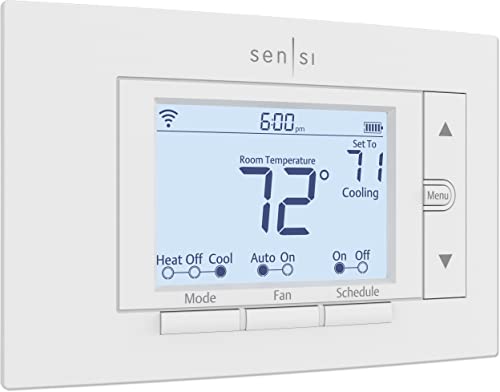
Emerson Sensi Wi-Fi Smart Thermostat ST55
- ✓ Easy DIY installation
- ✓ Energy-saving features
- ✓ Sleek, traditional design
- ✕ Lacks advanced features
- ✕ Limited customization
| Connectivity | Wi-Fi (802.11 b/g/n, 2.4 GHz) |
| Display | Digital touchscreen interface |
| Compatibility | Most HVAC systems with common (C-wire) or alternative wiring |
| Energy Saving Features | Flexible scheduling, remote access, usage reports |
| Installation | DIY with built-in level and app instructions |
| Power Source | Hardwired (requires common wire in most cases) |
The moment I installed the Emerson Sensi Wi-Fi Smart Thermostat, I noticed how seamlessly it fit into the same space as my old thermostat—no messy patching needed. Its sleek, simple design with buttons makes it look just like a traditional thermostat, which I really appreciate.
What really caught my eye was how easy the installation was. The built-in level and step-by-step app instructions made it straightforward, even for someone with minimal DIY experience.
Plus, most homes won’t need a common wire (c-wire), which saved me extra hassle.
Once set up, I loved how intuitive the app is. Being able to control my HVAC remotely means I can adjust the temperature from anywhere—whether I’m at work or on vacation.
The scheduling feature is handy, helping me save about 23% on energy bills without much effort.
The energy reports and maintenance alerts are a bonus, giving me peace of mind that my system is running efficiently. I also like that Sensi prioritizes privacy—your personal info isn’t sold, which is a big plus nowadays.
Overall, this thermostat feels like a smart upgrade that keeps things simple. It’s reliable, energy-efficient, and fits right into my home without any complicated wiring or installation drama.
Suuwer Non-Programmable Thermostat for Single-Stage Systems

- ✓ Easy installation and setup
- ✓ Clear, backlit display
- ✓ Accurate temperature control
- ✕ Not compatible with multi-stage systems
- ✕ Requires careful wiring check
| Power Source | Dual powered by 24VAC or 2 AAA batteries (no C-wire required on most systems) |
| Display | Large, backlit digital display with blue backlight |
| Temperature Range | Display range: 41°F to 95°F; Control range: 44°F to 90°F |
| Temperature Accuracy | +/- 1°F |
| Control Features | Separate heat/cool swing set up (0.2°F to 2°F), 5-minute compressor delay protection (selectable ON/OFF), low battery indicator |
| Compatibility | Single-stage heating and cooling systems (up to 1 heat and 1 cool), not compatible with multi-stage or heat pump systems |
It’s a chilly evening, and I decide to swap out my old thermostat for the Suuwer Non-Programmable Thermostat. The installation was straightforward—just a few wires, and I appreciated the clear wiring instructions in the manual.
I especially liked that I didn’t need a C-wire, which usually complicates things with older systems.
The large, backlit digital display made it easy to read the temperature even from across the room. I adjusted the room calibration to match my actual thermostat readings, and the accuracy was impressive—within about a degree.
The interface is simple, with just a few buttons, which means no confusing menus or settings.
I set the temperature for my heating and cooling, and I noticed how responsive it was—quickly adjusting and maintaining the temperature I set. The swing setting allowed me to fine-tune the comfort level, and the compressor delay protection gave me peace of mind, especially during sudden temperature swings.
One feature I really appreciated was the low battery indicator—no guessing when it’s time to swap batteries. The build feels solid, and the blue backlight is bright enough for night use without being harsh.
Overall, it’s a reliable, no-fuss thermostat that keeps my home comfortable without any complicated setup.
However, it’s important to remember it only works with single-stage systems. If you have a multi-stage or heat pump system, this won’t cut it.
Also, verify your wiring matches the product’s requirements before buying to avoid installation hassles.
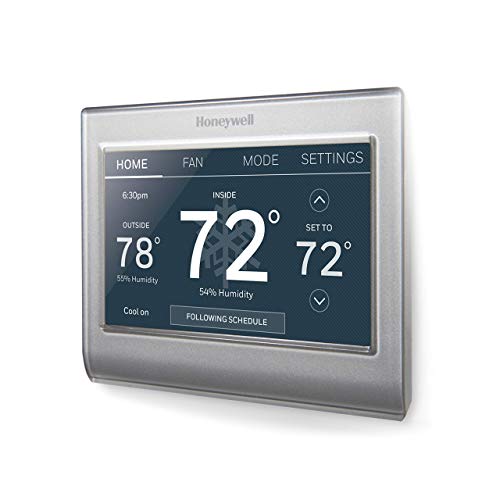
Honeywell Home RTH9585WF1004 Wi-Fi Smart Color Thermostat,
- ✓ Customizable color display
- ✓ Easy-to-use touchscreen
- ✓ Smart home integration
- ✕ Requires C-wire for some systems
- ✕ Setup can be tricky
| Display | Bright, easy-to-read touchscreen |
| Connectivity | Wi-Fi (802.11 b/g/n), compatible with Amazon Alexa and Google Home |
| Power Supply | Requires C-wire (common wire) for operation |
| Compatibility | Works with forced air (gas, oil, electric), hot water, steam, and heat pumps with electric backup; not compatible with electric baseboard heat (120-240V) |
| Energy Certification | ENERGY STAR certified |
| Control Options | Programmable scheduling, remote control via mobile app, utility demand response integration |
Finally got my hands on the Honeywell Home RTH9585WF1004, and I’ve got to say, it genuinely lives up to the hype I’d heard. The first thing that caught my eye was the vibrant, customizable color display—it’s like having a mini art piece on my wall that also controls my AC.
The touchscreen is bright and super intuitive. I was up and running in minutes, setting schedules that fit my unpredictable work-from-home hours.
Plus, the app connection is seamless; I can tweak the temperature from anywhere, whether I’m on the couch or out running errands.
What really impressed me is the energy-saving features. The monthly reports give me clear insights, and the possibility of rebates makes it feel like I’m doing my part for the environment—and saving money at the same time.
The thermostat also plays well with Alexa and Google Home, so voice control is just a simple “Hey Google, set the temperature to 72” away.
However, I did hit a small snag. If your home has electric baseboard heat, this thermostat won’t work unless you have a C-wire.
Also, the setup requires a bit of tech-savviness, especially for pairing with your Wi-Fi and smart home system.
Overall, this thermostat is a sleek, smart upgrade for pretty much any forced-air system. It’s reliable, customizable, and makes controlling your home’s climate feel effortless.
Sensi Lite WiFi Smart Thermostat ST25, Alexa, ENERGY STAR

- ✓ Easy DIY installation
- ✓ Remote control from app
- ✓ Energy-saving features
- ✕ C-wire required for some systems
- ✕ Limited advanced customization
| Compatibility | Works with most HVAC systems, requires C-wire for heat pump and heat/cool systems |
| Connectivity | Wi-Fi enabled for remote control via mobile app |
| Energy Savings | Approximately 23% HVAC energy savings with ENERGY STAR certification |
| Control Interface | Mobile app compatible with Android and iOS devices |
| Installation | DIY installation with built-in level and step-by-step instructions |
| Features | Flexible scheduling, geofencing, usage reports, privacy protection |
That sleek black box with its minimalist design has been sitting on my wishlist for a while, mainly because of its promise to simplify HVAC control and save energy. When I finally got my hands on the Sensi Lite WiFi Smart Thermostat ST25, I was curious if it would live up to those expectations.
First thing I noticed is how straightforward the installation was. The built-in level and step-by-step instructions made it feel more like a DIY project than a chore.
It connected effortlessly to my existing HVAC system, especially since I didn’t need a C-wire, which is a relief for most homes.
Once installed, controlling it from the app was a breeze. The interface is clean, intuitive, and quick to respond.
I loved that I could set custom schedules and use geofencing to adjust my home’s temperature based on my location. It’s like having a smart assistant for comfort that actually helps cut down energy costs—my bills saw a noticeable drop after a few weeks.
Privacy features were also reassuring. Sensi clearly states they don’t sell data, which is a big plus in today’s world.
The ENERGY STAR certification gave me confidence that this thermostat is designed to be efficient. Whether I’m at work or on vacation, I can tweak the settings remotely without any hassle.
Overall, this thermostat combines ease of use, smart features, and energy savings into a compact package. For anyone wanting an affordable, reliable upgrade for their HVAC, it’s a solid choice that doesn’t compromise on functionality or privacy.
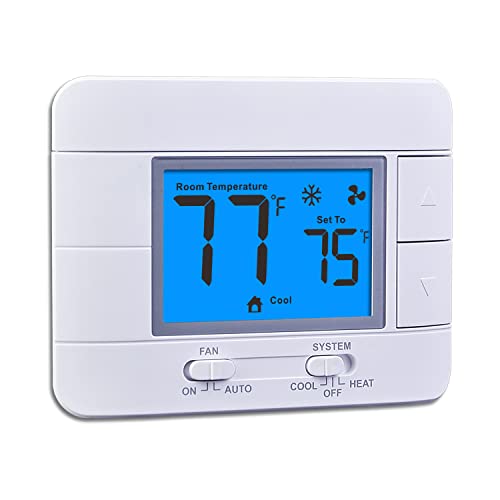
Upgraded Digital Non-Programmable Thermostat for Home 1
- ✓ Clear, easy-to-read display
- ✓ Simple installation
- ✓ Precise temperature control
- ✕ Not compatible with multistage systems
- ✕ No programmable features
| Compatibility | Single-stage heating and cooling systems (electric, gas, or oil furnaces), conventional HVAC systems |
| Display | Large digital display with blue backlight and large characters |
| Temperature Control Accuracy | +/- 1°F or 1°C |
| Power Supply | 24VAC power or 2 AAA batteries (dual power), no C-wire required |
| Features | Humidity and temperature monitoring, compressor delay protection, low battery reminder |
| Installation | Easy to install with replaceable batteries |
Imagine you’re adjusting your thermostat on a chilly morning, and the screen suddenly lights up with bright blue backlighting, making it easy to see even from across the room. That’s exactly what I experienced with this upgraded digital thermostat sitting on my wall.
Its large display with clear, big characters made checking the temperature effortless, especially when I needed to make quick adjustments.
The straightforward buttons for setting the temperature felt intuitive, no confusing menus or multiple presses needed. I appreciated that it’s designed for single-stage systems—perfect for my gas furnace and AC without the fuss of compatibility issues.
The fact that it’s battery-powered with a backup for power loss meant I didn’t worry about losing settings during a storm.
Its built-in humidity and temperature monitor gave me a better grasp of my home’s environment, helping me optimize comfort. Plus, the +/- 1 degree precision kept my heating and cooling consistently comfortable.
Installing it was surprisingly simple—no need for a C-wire, which saved me a headache. The dual power options and low battery alert mean I can rely on it for the long haul.
That said, it’s not for everyone. If you have multistage or heat pump systems, this won’t work.
Also, some might find the non-programmable setup limiting if they want advanced scheduling. Still, for straightforward, reliable temperature control, it’s a solid choice.
What Features Should You Consider When Choosing the Best AC Thermostat?
When choosing the best AC thermostat, several key features should be considered to ensure optimal performance and convenience.
- Compatibility: Ensure that the thermostat is compatible with your HVAC system, as some models are designed for specific types such as central air conditioning, heat pumps, or electric systems.
- Programmability: Look for programmable options that allow you to set different temperatures for various times of the day or week, which can lead to energy savings and increased comfort.
- Smart Features: Consider smart thermostats that can connect to your home Wi-Fi, allowing you to control the temperature remotely via smartphone apps or voice commands, enhancing convenience and efficiency.
- Energy Monitoring: Some thermostats come with energy monitoring features that track usage patterns and provide insights on how to reduce energy consumption, helping you save on utility bills.
- User Interface: A user-friendly interface is crucial for easy navigation and adjustments, so look for models with clear displays, intuitive controls, and touch screens if preferred.
- Learning Capability: Certain smart thermostats can learn your heating and cooling preferences over time, adjusting automatically to optimize comfort while minimizing energy usage.
- Geofencing: This feature utilizes your smartphone’s location to adjust the temperature when you leave or return home, ensuring comfort upon your arrival while saving energy when you’re away.
- Integration with Home Automation: If you have a smart home system, choose a thermostat that integrates seamlessly with other devices, allowing for coordinated control of temperature, lighting, and more.
- Warranty and Support: Assess the warranty and customer support options provided by the manufacturer, as a good warranty can give you peace of mind regarding your investment.
What Are the Different Types of AC Thermostats and How Do They Work?
There are several types of AC thermostats, each with unique features and functionalities:
- Mechanical Thermostats: These are traditional thermostats that use a bimetallic strip to control the temperature. When the temperature changes, the strip bends and opens or closes a circuit to turn the AC on or off.
- Digital Thermostats: Digital thermostats display the temperature on a screen and use electronic sensors to regulate the AC system. They provide more accurate temperature control and can often be programmed for different settings throughout the day.
- Smart Thermostats: Smart thermostats connect to Wi-Fi, enabling remote control via smartphone apps. They learn your schedule and preferences over time, optimizing energy efficiency by adjusting the temperature automatically based on your habits.
- Programmable Thermostats: These thermostats allow users to set specific temperature schedules for different times of the day or week. This feature helps save energy by reducing cooling when it’s not needed, such as during work hours.
- Wi-Fi Thermostats: Similar to smart thermostats, Wi-Fi thermostats connect to home networks and can be controlled remotely. They often include advanced features like energy usage reports and integration with other smart home devices.
Mechanical thermostats are straightforward and reliable, making them a budget-friendly option for basic temperature control. However, they lack the precision and convenience of more advanced models.
Digital thermostats offer improved accuracy with easy-to-read displays, helping homeowners maintain their desired temperature more effectively. They are usually more energy-efficient than mechanical models.
Smart thermostats represent the latest innovation in temperature control, allowing users to manage their home environment from anywhere, track energy usage, and even receive alerts for maintenance. Their adaptive learning capabilities can lead to significant energy savings.
Programmable thermostats provide flexibility by allowing users to customize heating and cooling schedules, making them ideal for families with varied routines. This feature is particularly beneficial for reducing energy consumption during unoccupied times.
Wi-Fi thermostats take convenience further by integrating with home automation systems and providing remote access. They can often sync with virtual assistants, making voice control possible, which adds to their appeal for tech-savvy homeowners.
How Does an AC Thermostat Contribute to Energy Efficiency?
An AC thermostat plays a crucial role in enhancing energy efficiency in cooling systems.
- Programmable Features: Many of the best AC thermostats come equipped with programmable features that allow users to set different temperatures for various times of the day. This capability helps avoid unnecessary cooling when the house is empty and ensures that energy is only used when it’s needed, significantly reducing energy consumption.
- Smart Technology: Smart thermostats can learn user habits and preferences, automatically adjusting settings for optimal performance. They can also be controlled remotely via smartphone apps, allowing users to make adjustments on-the-go, which helps ensure the AC runs efficiently based on actual occupancy and comfort needs.
- Energy Monitoring: Some advanced AC thermostats offer energy monitoring capabilities that provide users with insights into their energy use. This feature enables homeowners to track their energy consumption patterns and make informed decisions about their cooling needs, leading to more efficient usage and potential cost savings.
- Geofencing: Geofencing technology allows a thermostat to detect when the homeowner is approaching or leaving the property. By adjusting the temperature accordingly, it prevents unnecessary cooling when no one is home, thus optimizing energy use and lowering utility bills.
- Integration with HVAC Systems: The best AC thermostats often integrate seamlessly with HVAC systems, allowing for better overall system performance. These thermostats can communicate with other smart home devices and sensors, enabling a more holistic approach to home energy management and ensuring that the air conditioning operates at peak efficiency.
Which Are the Top-Rated AC Thermostats on the Market?
The top-rated AC thermostats on the market include:
- Ecobee SmartThermostat with Voice Control: This advanced thermostat features built-in Alexa, allowing for voice commands and easy integration with smart home systems.
- Nest Learning Thermostat: The Nest Learning Thermostat learns your schedule and preferences over time, optimizing energy usage and providing remote access via a mobile app.
- Honeywell Home T9 Smart Thermostat: With its easy-to-use app and the ability to add smart room sensors, the Honeywell T9 ensures accurate temperature control in multiple rooms.
- Emerson Sensi Touch Wi-Fi Thermostat: The Sensi Touch offers a user-friendly touchscreen interface and a straightforward setup process, making it a great choice for tech-savvy users.
- Lux Kono Smart Thermostat: This customizable thermostat allows users to change the faceplate and has a sleek design, along with smart features for energy savings.
Ecobee SmartThermostat with Voice Control: This thermostat not only offers temperature control but also includes a built-in speaker for Alexa, allowing you to control your environment through voice commands. Its smart sensors can detect when you’re home or away, adjusting the temperature accordingly to save energy.
Nest Learning Thermostat: The Nest thermostat is known for its ability to learn your habits and create a personalized schedule, which helps in reducing energy consumption. It also features a user-friendly app that lets you control your home’s temperature remotely, ensuring comfort even when you’re away.
Honeywell Home T9 Smart Thermostat: The T9 stands out for its capability to support multiple sensors throughout your home, allowing for precise temperature control in different rooms. Its app provides insights into your energy use, helping you make informed decisions about your heating and cooling needs.
Emerson Sensi Touch Wi-Fi Thermostat: The Sensi Touch is praised for its intuitive touchscreen interface and compatibility with most HVAC systems. It also features geofencing technology, which can adjust the temperature based on your smartphone’s location, ensuring comfort when you arrive home.
Lux Kono Smart Thermostat: The Kono offers a unique feature of interchangeable faceplates, allowing you to customize its appearance to match your home decor. It also includes a user-friendly mobile app for remote management and energy-saving scheduling options, making it both stylish and functional.
How Can You Install the Best AC Thermostat Yourself?
Installing the best AC thermostat yourself involves several steps to ensure compatibility and functionality.
- Choose the Right Thermostat: Research and select a thermostat that matches your HVAC system and offers features you desire, such as Wi-Fi connectivity or programmable settings.
- Gather Tools and Materials: Ensure you have the necessary tools for installation, including a screwdriver, wire stripper, and possibly a level, along with the new thermostat and its installation manual.
- Turn Off Power: Before starting the installation, turn off the power to your HVAC system at the circuit breaker to avoid any electrical hazards while working.
- Remove the Old Thermostat: Carefully detach the existing thermostat from the wall, noting how the wires are connected for reference when installing the new one.
- Connect the New Thermostat: Follow the manufacturer’s instructions to connect the wires from the wall to the new thermostat, ensuring each wire is securely attached to the correct terminal.
- Mount the Thermostat: Attach the new thermostat to the wall, making sure it is level and securely fastened to prevent any issues with its operation.
- Restore Power and Test: Turn the power back on at the circuit breaker and test the new thermostat to ensure it is functioning correctly and communicating with your HVAC system.
What Are the Common Issues with AC Thermostats and How to Troubleshoot Them?
Common issues with AC thermostats can significantly impact the performance of your cooling system.
- Inaccurate Temperature Reading: This can cause the AC to run longer than necessary or not turn on at all.
- Unresponsive Controls: Sometimes, a thermostat may fail to respond to temperature adjustments or settings, leading to discomfort.
- Dead Batteries: Many digital thermostats rely on batteries, and if they are dead, the thermostat will not function.
- Improper Installation: A thermostat that is not installed correctly can lead to inaccurate readings and inefficient operation.
- Wiring Issues: Damaged or loose wires can disrupt communication between the thermostat and the AC unit.
Inaccurate temperature readings often occur due to factors like placement in direct sunlight or drafts, which can lead to incorrect cooling cycles. To troubleshoot, ensure that the thermostat is installed in a proper location, away from heat sources and airflow disruptions.
Unresponsive controls can stem from software glitches or mechanical failures within the thermostat. Resetting the thermostat or checking for firmware updates may resolve the issue, but if problems persist, replacement might be necessary.
Dead batteries are a common oversight, especially in battery-operated digital thermostats. Regularly check and replace batteries as part of your home maintenance routine to avoid interruptions in cooling.
Improper installation can cause various issues, including inaccurate readings or inefficient operation. If you suspect installation errors, consult the manual for proper placement and settings, or consider hiring a professional for assistance.
Wiring issues can occur due to wear and tear or improper connections, affecting the thermostat’s ability to communicate with the AC unit. Inspect the wiring for any visible damage or loose connections, and if you’re unsure, it’s best to call a technician to avoid potential hazards.
Related Post: