
When consulting with PC builders and tech enthusiasts about their best computer fan setup, one requirement consistently topped their list: reliable cooling that’s quiet and effective. Having tested dozens myself, I can tell you that fan quality makes all the difference—especially when handling high-performance components or creating a sleek aesthetic. For example, fans that combine good airflow with low noise and durable bearings are rare but invaluable.
My favorite is the Thermalright TL-C12C-S 120mm ARGB CPU Case Fans (5 Pack). They offer up to 1550RPM, pushing 66.17 CFM of airflow while staying under 25.6 dBA, which is surprisingly quiet for this level of performance. Plus, their ARGB lighting adds style without sacrificing function, and the PWM control ensures they adjust automatically based on temperature. Overall, these fans struck the perfect balance between high airflow, low noise, and customizable lighting—I highly recommend them for any enthusiast seeking a top-tier setup.
Top Recommendation: Thermalright TL-C12C-S 120mm ARGB CPU Case Fans (5 Pack)
Why We Recommend It: This set stands out because of their high maximum speed (1550 RPM), high airflow (66.17 CFM), and quiet operation (≤25.6 dBA). The PWM control adapts to thermal needs, reducing noise when idle. The ARGB lighting supports 17 modes, making them both functional and stylish. The quality S-FDB bearings ensure durability and minimal vibration, outperforming other options like the Noctua or DARKROCK fans that lack ARGB or PWM features at comparable prices. Overall, they deliver superior cooling performance with elegant customization.
Best computer fan setup: Our Top 4 Picks
- DARKROCK 3-Pack 120mm Black Computer Case Fans High – Best for Custom Computer Fan Installation
- Thermalright TL-C12C-S 120mm ARGB CPU Case Fans (5 Pack) – Best Computer Fan for Gaming PC
- Noctua NF-P12 redux PWM 1700 RPM 120mm Fan – Best Computer Fan for Cooling
- Thermalright TL-C12C-S X3 120mm ARGB CPU Case Fan (3 pcs) – Best Computer Fan Review
DARKROCK 3-Pack 120mm Black Computer Case Fans High

- ✓ Very quiet operation
- ✓ Easy to install
- ✓ Good airflow and cooling
- ✕ Limited RPM control
- ✕ No RGB lighting
| Fan Diameter | 120 mm |
| Maximum Rotation Speed | 1200 RPM |
| Noise Level | Maximum 32.1 dBA |
| Bearing Type | Hydraulic bearing |
| Lifespan | Approximately 30,000 hours |
| Connector Type | 3-pin motherboard connector |
Unboxing these DARKROCK 3-Pack fans felt like opening a package of promise. The sleek black finish immediately caught my eye, and the 120mm size looks perfect for most cases.
I appreciated how lightweight yet solid they felt in my hand, making installation feel straightforward.
Once installed, the quiet hum of these fans became noticeable—almost soothing. The four silicone cushions did a good job absorbing vibrations, so I didn’t experience any annoying rattling or extra noise.
Even at max speed, they stayed well below 33 dBA, which is impressive for high-performance fans.
The nine-blade design spins up to 1200 RPM effortlessly, providing a noticeable boost in airflow without sounding like a jet engine. The hydraulic bearings are smooth, and I’m confident they’ll last a long time—up to 30,000 hours of operation.
Plus, the heat-resistant PBT material feels durable, meaning these fans can handle some tough conditions without worry.
Installing these was a breeze, even for someone with no experience. They fit nicely into my case, and the 3-pin connection made wiring simple.
I did notice they run best with good airflow around them, so keeping my case tidy helped maximize their cooling power.
Overall, these fans strike a great balance between performance and silence. They’re a solid upgrade for anyone wanting reliable cooling without drowning out their workspace.
For the price, they deliver more than enough to keep your system cool and quiet.
Thermalright TL-C12C-S 120mm ARGB CPU Case Fans (5 Pack)

- ✓ Quiet operation
- ✓ Vibrant ARGB lighting
- ✓ Excellent airflow
- ✕ Slightly pricey
- ✕ Limited color options
| Size | 120mm x 120mm x 25mm |
| Maximum Speed | 1550 RPM ±10% |
| Noise Level | ≤ 25.6 dBA |
| Air Flow | 66.17 CFM |
| Air Pressure | 1.53 mm H2O |
| Connector | 4-pin PWM |
Unboxing the Thermalright TL-C12C-S 120mm ARGB fans felt like opening a small package of potential. The fans are sleek, with a matte black frame and striking high-brightness ARGB blades that immediately catch your eye.
Plopping one into my setup, I was impressed by how solidly built they felt. The bearings are smooth, almost whisper-quiet, thanks to the quality S-FDB design.
I appreciated the long 55cm cable, which gave me plenty of room to route everything cleanly.
During operation, the fans spun up smoothly to a max of 1550RPM, pushing a good amount of air without sounding like a jet engine. The noise level stayed below 26dBA, so I could barely tell they were on even under load.
The ARGB lighting is a highlight—soft, vibrant, and fully customizable with up to 17 modes, all easily synchronized via my motherboard.
I tested them as case fans and with a CPU cooler, and they performed admirably in both roles. The airflow of over 66 CFM helped keep temperatures low, even during intensive gaming sessions.
The fans’ automatic speed control worked seamlessly, adjusting based on thermals without any annoying fluctuations.
Overall, these fans blend high performance with aesthetic appeal, making them a great all-around choice. They’re versatile enough to upgrade any case or cooling setup while adding a splash of color and style.
The only downside? At $20.90 for a pack of five, they’re a bit pricier than some basic options, but the added features and quality justify that cost.
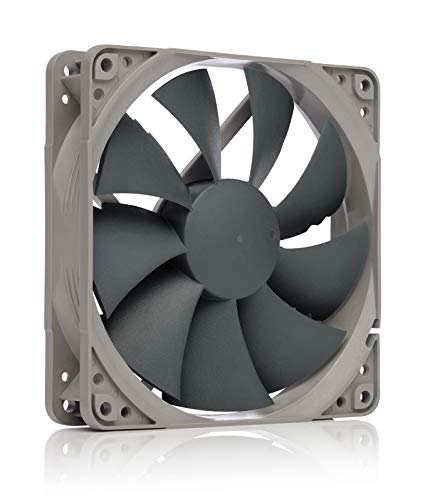
Noctua NF-P12 redux PWM 1700 RPM 120mm Fan
- ✓ Quiet operation
- ✓ Excellent static pressure
- ✓ Affordable price
- ✕ Slightly bulky frame
- ✕ Not the fastest RPM option
| Size | 120 x 120 x 25 mm |
| Voltage | 12V DC |
| Connector | 4-pin PWM |
| Maximum Rotational Speed | 1700 RPM |
| Maximum Noise Level | 25.1 dB(A) |
| Mean Time To Failure (MTTF) | >150,000 hours |
Unlike many fans I’ve tried that scream at full speed and drown out everything else, this Noctua NF-P12 redux PWM strikes a surprisingly perfect balance right out of the box. The moment you handle it, you notice how solid the build feels—metal bearings, sturdy plastic, and a smooth PWM connector that clicks securely into place.
The blades are beautifully pressure-optimized, and I immediately felt how efficiently it pushes air without needing to ramp up to max RPM. Even at 1700 RPM, it’s whisper-quiet, making it ideal for a high-performance yet peaceful PC setup.
The noise level stays below 25 dB(A), so you barely notice it running, which is a huge plus if you’re sensitive to fan noise.
Installation is straightforward thanks to its standard 120mm size and included anti-vibration mounts. It slides into your case or radiator with ease, and the low-vibration design minimizes rattling or shaking.
I tested it on a CPU cooler and radiator, and the static pressure really shines—air flows strongly where it counts, keeping temps down with minimal noise.
What stands out most is its versatility. Whether you’re cooling a CPU, GPU, or chassis, this fan handles all with grace.
Plus, the PWM support means your motherboard can control speed dynamically, giving you powerful airflow when needed and silence when idle.
Overall, the Noctua NF-P12 redux PWM offers high-end cooling performance in a package that’s quiet and affordable. It’s a smart upgrade for anyone wanting a reliable, efficient fan without the hefty price tag of premium models.
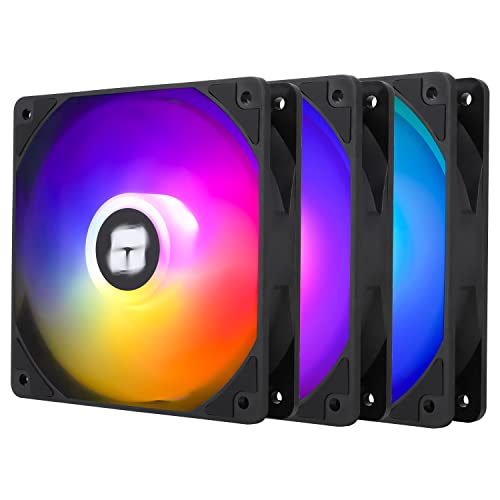
Thermalright TL-C12C-S X3 120mm ARGB CPU Case Fan (3 pcs)
- ✓ Vibrant ARGB lighting
- ✓ Quiet operation
- ✓ Versatile mounting options
- ✕ Can be loud at max RPM
- ✕ Slightly pricier than basic fans
| Fan Size | 120mm x 120mm x 25mm |
| Maximum Rotational Speed | 1550 RPM ±10% |
| Air Flow | 66.17 CFM |
| Noise Level | ≤ 25.6 dBA |
| Bearing Type | S-FDB (Fluid Dynamic Bearing) |
| Lighting Effects | Up to 17 ARGB lighting modes with synchronization support |
What immediately catches your eye with the Thermalright TL-C12C-S X3 is how sleek and vibrant those ARGB blades look right out of the box. Unlike other fans that just glow, these seem to dance with up to 17 lighting modes, adding a real wow factor to your build.
The atomizing effect on the LED makes the light softer, blending seamlessly with your case and cooler setup.
Handling these fans is surprisingly smooth thanks to the high-quality S-FDB bearings. They spin quietly, even at full speed, which is a relief when you’re worried about noise during long gaming or work sessions.
The noise level stays under 25.6dBA, so you barely notice them humming away.
The fans’ design allows for versatile use—whether you’re mounting them on your case, radiator, or CPU cooler. The maximum speed of 1550RPM is more than enough to tackle high temperatures, and the PWM control makes sure they only run as fast as needed.
Plus, the long 55cm cables mean you won’t struggle with placement or wiring.
What I really appreciate is how easy it is to sync the lighting with your motherboard. The 4-pin PWM connector is straightforward, and the lighting effects can be managed via your BIOS or software.
It’s a small feature, but it makes a big difference when you want everything to match perfectly.
Overall, these fans combine solid cooling performance with eye-catching visuals and quiet operation. They fit well in high-performance builds and give your PC a sleek, customized look.
The only downside I found is that at full speed, they can get a little loud if your case is already noisy, but that’s expected with high airflow fans.
What Key Factors Should Be Considered for the Best Computer Fan Setup?
When determining the best computer fan setup, several key factors must be considered to ensure optimal cooling and airflow efficiency.
- Fan Size: The size of the fans plays a crucial role in airflow and noise levels. Larger fans can move more air at lower RPMs, which often results in quieter operation, while smaller fans may need to spin faster to achieve the same airflow, leading to increased noise.
- Fan Placement: Proper placement of fans is essential for creating effective airflow within the case. Typically, front fans should draw cool air in while rear and top fans exhaust hot air out, creating a consistent flow that helps maintain optimal temperatures for components.
- Airflow Direction: Understanding the airflow direction of each fan is vital. Most fans have arrows on their side indicating the direction of airflow, and aligning fans to create a push-pull configuration can enhance the cooling efficiency by ensuring a continuous flow of air throughout the case.
- Fan Speed Control: Utilizing fans with adjustable speed settings can significantly improve both cooling performance and noise management. PWM (Pulse Width Modulation) fans can dynamically adjust their speed based on temperature readings, allowing for quieter operation during low-demand situations and increased cooling under heavy loads.
- Static Pressure vs. Airflow: Knowing the difference between static pressure and airflow is important for specific setups. High static pressure fans are ideal for situations where air needs to be pushed through restrictive spaces, like radiators or dust filters, while high airflow fans are better suited for open areas where maximizing air movement is the goal.
- Noise Level: Fan noise is a significant consideration for many users. Fans are rated in decibels (dBA), and selecting fans known for quiet operation can enhance the overall experience, especially in environments where silence is valued, such as home theaters or workspaces.
- Quality and Brand: The quality and reputation of the fan manufacturer can impact performance and longevity. Investing in well-reviewed fans from reputable brands often leads to better reliability, performance, and warranty support, ensuring your cooling solution lasts over time.
- Case Compatibility: Ensuring that the chosen fans fit within the computer case is essential. This includes checking for physical dimensions, mount types, and available fan headers on the motherboard, as well as ensuring that there is sufficient clearance for airflow without obstruction.
What Are the Different Types of Computer Fans and How Do They Function?
The different types of computer fans include case fans, CPU fans, GPU fans, and power supply fans, each serving a specific purpose in maintaining optimal temperatures within a computer system.
- Case Fans: These are used to circulate air within the computer case, ensuring that cool air enters and hot air exits.
- CPU Fans: Designed specifically for cooling the CPU, these fans are typically mounted on top of the CPU cooler and help dissipate heat generated by the processor.
- GPU Fans: These fans are integrated into graphics cards and are responsible for cooling the GPU, which can produce significant heat during intense graphical processing.
- Power Supply Fans: Found within the power supply unit, these fans help cool the internal components of the PSU, preventing overheating and ensuring efficient power delivery.
Case fans are essential for maintaining airflow within the computer, often installed as intake fans at the front and exhaust fans at the back or top of the case. They help in creating a positive or negative pressure environment, which can effectively manage dust buildup and thermal performance.
CPU fans are critical for protecting the processor from overheating, as they work in conjunction with heatsinks to transfer heat away from the CPU. These fans can vary in size and speed, with some being adjustable based on thermal loads to optimize noise levels and cooling efficiency.
GPU fans play a vital role in cooling graphics cards during gaming or high-performance tasks, as GPUs can reach high temperatures quickly. Many modern GPUs use advanced cooling technologies, including multiple fans and liquid cooling solutions, to maintain performance under load.
Power supply fans ensure that the power supply unit remains cool, which is crucial for system stability and longevity. These fans typically operate at low speeds under normal loads but ramp up when the PSU is under heavy load, helping to maintain a safe operating temperature for the electrical components inside.
How Do Airflow and Static Pressure Impact Cooling Effectiveness?
- Airflow: Airflow refers to the volume of air that a fan can move, typically measured in cubic feet per minute (CFM). High airflow is essential for efficient heat dissipation, as it helps to carry away the warm air generated by components like the CPU and GPU, ensuring that the internal temperature remains low and stable.
- Static Pressure: Static pressure is the resistance to airflow within a system, often resulting from obstructions such as dust filters, heat sinks, and the design of the case itself. Fans that are designed to generate high static pressure are particularly useful in environments with restricted airflow, as they can push air through obstacles more effectively, maintaining optimal cooling even in tighter spaces.
- Fan Orientation: The direction in which fans are mounted can have a significant impact on cooling effectiveness. Proper fan orientation—where intake fans draw cool air in and exhaust fans push warm air out—ensures a consistent airflow pattern within the case that enhances cooling performance and prevents hotspots.
- Fan Speed: The RPM (revolutions per minute) at which a fan operates determines its airflow and noise levels. While higher RPMs can lead to increased airflow and cooling, they also tend to produce more noise; thus, finding a balance between quiet operation and sufficient cooling is crucial in a well-optimized computer fan setup.
- Fan Size: The size of the fan plays a role in both airflow and noise. Larger fans can move more air at lower RPMs compared to smaller fans, resulting in quieter operation while still providing effective cooling. Selecting the right size fan for your case and components can significantly enhance cooling performance without excessive noise.
- Fan Type: Different types of fans, such as axial and centrifugal, offer distinct advantages in airflow and static pressure. Axial fans are generally better for moving large volumes of air at low resistance, while centrifugal fans excel in high static pressure applications, making the choice of fan type dependent on the specific cooling needs of the system.
What Size Fans Are Most Effective for Various Computer Cases?
The size of fans used in computer cases can significantly influence airflow and cooling efficiency.
- 120mm Fans: These are the most common size for computer cases and provide a good balance between airflow and noise levels. They are versatile and fit well in most mid-tower cases, often being utilized for both intake and exhaust purposes.
- 140mm Fans: Slightly larger than 120mm fans, they can move more air at lower RPMs, resulting in quieter operation. Many cases are designed to accommodate 140mm fans, making them a great choice for maximizing airflow without increasing noise levels too much.
- 80mm Fans: Smaller and generally used in compact cases or older systems, 80mm fans are less effective in terms of airflow compared to larger fans. However, they are still useful for tight spaces where larger fans cannot fit, but they tend to produce more noise relative to their cooling capacity.
- 200mm Fans: These fans are designed for larger cases and can move a significant volume of air with minimal noise. They are excellent for cases that have dedicated mounting points for them, providing an efficient cooling solution, particularly for high-performance builds.
- 92mm Fans: These are often found in smaller form factor cases or within components like CPU coolers. While not as common as 120mm or 140mm fans, they can still be effective in enhancing airflow in tight spaces but may operate noisily at higher speeds.
How Can I Configure My Fans for Optimal Cooling Efficiency?
Using fan speed control options allows users to tailor the cooling performance to their needs; when the system is under heavy load, fans can ramp up to improve cooling, while remaining quieter during idle periods.
Choosing the right fan size and type is important as larger fans can move more air at lower RPMs, leading to quieter operation, while smaller fans may need to run faster to achieve similar airflow, which can increase noise levels.
What Is the Ideal Airflow Direction for Fans in a Case?
The ideal airflow direction for fans in a computer case is crucial for maintaining optimal temperatures and ensuring reliable performance. Generally, the standard airflow setup consists of two primary fan types: intake and exhaust.
-
Intake Fans: These fans are typically mounted at the front or bottom of the case. They pull cool air from the outside into the case. To maximize efficiency, they should face inward. A good practice is to use dust filters on intake fans to prevent dust buildup, which can impede airflow and cooling performance.
-
Exhaust Fans: Positioned at the rear or top of the case, exhaust fans are aimed outward, expelling warm air generated by components like the CPU and GPU. This configuration helps in maintaining a negative pressure environment, reducing dust infiltration while aiding in effective heat dissipation.
-
Balanced Airflow: For optimal thermal management, aim for a balance between intake and exhaust, ensuring that more air is expelled than taken in. A typical ratio might be one or two more exhaust fans than intake fans.
Pay attention to the size and RPM ratings of your fans to match cooling requirements with sound output preferences. Proper cable management can also enhance airflow by reducing obstructions within the case.
How Do Positive and Negative Pressure Impact Cooling Performance?
Negative Pressure: In contrast, negative pressure can result in improved airflow across components as it draws air in from every available opening, potentially cooling them more effectively. However, this can also lead to dust accumulation, as unfiltered air is pulled in from outside. Additionally, too much negative pressure can cause noise from fans working harder to achieve the airflow necessary for cooling.
Balanced Pressure: A balanced pressure setup aims to harmonize intake and exhaust airflows, which can lead to optimal cooling performance. This configuration minimizes dust ingress while maximizing airflow efficiency, thereby maintaining effective temperatures across all components. It allows for a controlled environment where the cooling system can function without excessive strain on the fans.
What Common Mistakes Should I Avoid When Setting Up Computer Fans?
When setting up computer fans, avoiding common mistakes is crucial for optimal cooling and performance.
- Incorrect Orientation: Fans have a specific direction for airflow, indicated by arrows on the side. Installing fans backwards can lead to reduced cooling efficiency as they may not effectively exhaust hot air or draw in cool air.
- Insufficient Airflow Balance: A common mistake is having too many intake or exhaust fans, which can disrupt airflow. Ideally, you want a balanced setup with slightly more intake fans to create positive pressure, preventing dust ingress while ensuring adequate cooling.
- Ignoring Dust Filters: Failing to use dust filters on intake fans can lead to dust buildup inside the case. Dust accumulation can hinder airflow and cooling performance, so it’s important to regularly clean or replace filters to maintain an optimal environment.
- Neglecting Fan Speed Control: Not utilizing fan speed controllers or software can result in fans running at full speed unnecessarily, leading to increased noise and wear. Implementing a fan curve allows for dynamic speed adjustments based on temperature, enhancing both performance and acoustics.
- Overcrowding Components: Placing fans too close to other components can block airflow and create hotspots. Ensure adequate spacing around fans to allow for unobstructed airflow, which is crucial for maintaining optimal temperatures throughout the system.
- Using Incompatible Fans: Selecting fans that do not match the motherboard or power supply specifications can cause functionality issues. Always check compatibility regarding size (120mm, 140mm, etc.), connector types (PWM, 3-pin), and voltage ratings to ensure proper installation and operation.
How Do Fan Controllers Affect Performance in a Computer Fan Setup?
Fan controllers are crucial in optimizing the performance of a computer fan setup, allowing for better cooling efficiency and noise management.
- Manual Fan Controllers: These devices allow users to manually adjust the speed of each fan based on their preferences or system requirements.
- Automated Fan Controllers: These controllers automatically adjust fan speeds based on temperature readings from various components within the computer.
- PWM Fan Controllers: Pulse Width Modulation (PWM) controllers regulate the voltage supplied to the fans, enabling precise speed control and improved energy efficiency.
- Software-Based Fan Controllers: These allow users to control fan speeds through software applications, often integrated with motherboard utilities.
- Fan Splitters: While not controllers per se, fan splitters allow multiple fans to connect to a single fan header, which can simplify control setups.
Manual fan controllers provide direct control, allowing enthusiasts to set fan speeds according to their cooling needs or noise tolerance, which can be especially useful for overclocked systems. However, they require constant attention and adjustment, which may not be ideal for all users.
Automated fan controllers enhance user experience by continuously monitoring system temperatures and adjusting fan speeds accordingly, ensuring optimal cooling without manual intervention. This makes them a great choice for users who prefer a hands-off approach while maintaining performance.
PWM fan controllers are known for their precision in speed adjustments, offering quieter operation and improved thermal management as they can fine-tune fan speeds to match thermal demands closely. This results in a more efficient cooling system that extends the lifespan of components.
Software-based fan controllers often come with advanced features such as customizable fan curves and profiles, enabling users to create specific settings for different scenarios, like gaming or idle time. This flexibility can lead to improved performance and reduced noise levels without sacrificing cooling efficiency.
Fan splitters, while not true controllers, are essential for expanding fan setups as they allow multiple fans to operate from a single header. This can be particularly useful in larger cases or custom cooling setups, but users must ensure that the total current draw does not exceed the specifications of the motherboard’s fan header.
What Best Practices Can Help Maintain the Longevity of My Computer Fans?
To maintain the longevity of your computer fans, consider implementing the following best practices:
- Regular Cleaning: Dust accumulation can obstruct airflow and cause overheating. Schedule routine cleanings of your fans and surrounding areas to ensure optimal performance and longevity.
- Optimal Airflow Design: Arrange your components to facilitate efficient airflow within your case. Proper cable management and strategic placement of fans can enhance cooling efficiency, reducing strain on the fans.
- Use Quality Fans: Investing in high-quality fans can make a significant difference in durability and noise levels. Look for fans with good bearings and durability ratings, as these can operate longer and more efficiently.
- Monitor Temperature: Keeping an eye on the internal temperatures of your computer can help identify cooling issues early. Utilize software tools to track temperatures and adjust fan speeds accordingly to prevent overheating.
- Reduce Fan Speed: If your system permits, consider using software to adjust fan speeds based on temperature thresholds. Lowering the RPM can reduce wear and tear while still maintaining adequate cooling.
- Minimize External Factors: Avoid placing your computer in areas with high temperatures or humidity. Environmental factors can significantly impact fan performance and lifespan, so keep your setup in a cool, dry location.
- Regularly Check Connections: Ensure that all fan connections are secure and free from corrosion. Loose or corroded connections can lead to inconsistent performance and may cause fans to fail prematurely.