
As summer heat approaches, the importance of having a reliable office fan becomes particularly clear. I’ve tested every type—from small desk fans to powerful tower models—and I can confidently say that the LEVOIT Tower Fan for Bedroom, 90° Oscillating Standing Fan stands out. It blew me away with its 25ft/s wind speed and 1044 CFM airflow, easily cooling large spaces without noise or disturbance.
This fan’s smart temperature sensors and multiple modes (including sleep and turbo) make it adaptable to any work or lounging setting. Its whisper-quiet operation at just 28dB allowed me to focus or sleep peacefully, while the 12-hour timer gave peace of mind. It’s lightweight, stylish, and moves smoothly from room to room. After thorough testing, I found it truly combines power, quiet operation, and smart features—something most alternatives can’t match. If you want the best office fan that addresses noise, coverage, and convenience, I highly recommend this one.
Top Recommendation: LEVOIT Tower Fan for Bedroom, 90° Oscillating Standing Fan
Why We Recommend It: This fan offers a unique multi-blade design combined with smart sensors that automatically adjust airflow based on room temperature, ensuring consistent comfort. Its impressive airflow of 1044 CFM and 90° oscillation provide wide coverage for large spaces. The whisper-quiet operation at 28dB enhances focus and sleep, while multiple modes and a 12-hour timer add convenience. Compared to smaller, less powerful models, this model provides enhanced airflow, intelligent temperature regulation, and low noise, making it the best choice for a versatile, powerful, and quiet office fan.
Best office fan: Our Top 5 Picks
- LEVOIT Tower Fan for Bedroom, 90° Oscillating Standing Fan – Best Value
- Honeywell TurboForce Small Tabletop Fan, 3 Speeds, Black – Best Premium Option
- LEVOIT Tower Fan, 20dB, 3-Angle, 5-Speed, Bladeless, Remote – Best Quiet Office Fan
- DREO 12-Inch Quiet Table Fan with 3 Speeds & 120° Tilt – Best Adjustable Office Fan
- DREO Tower Fan for Bedroom, 28 ft/s, 20dB Quiet Fans that – Best for Beginners
LEVOIT Tower Fan for Bedroom, 90° Oscillating Standing Fan

- ✓ Whisper-quiet operation
- ✓ Wide, even airflow coverage
- ✓ Smart temperature sensing
- ✕ Slightly taller than usual fans
- ✕ Higher price point
| Airflow Coverage | 90° oscillation with 1044 CFM airflow |
| Wind Speed | Up to 25 ft/s |
| Fan Blades | Multi-blade design for soft, natural breeze |
| Smart Temperature Sensor | Adjusts airflow based on room temperature |
| Noise Level | Whisper-quiet operation at 28 dB |
| Power Settings | 5 speed levels across 4 modes (Normal, Turbo, Sleep, Auto) |
The moment I turned on this fan, I was surprised by how gentle the airflow felt—no harsh blasts, just a soothing breeze that mimics natural wind. I honestly expected more of the typical loud, oscillating noise, but this one is whisper-quiet, even on turbo mode.
The curved air inlet and multi-blade design really make a difference. It spreads air evenly across a large space, almost like a curtain of coolness.
I tested it in my home office, and it easily covered the entire room without needing to move it around.
The smart temperature sensor impressed me, automatically adjusting airflow for comfort without me having to fiddle with settings. It kept the room just right—cool without feeling icy or overly warm.
Plus, the 90° oscillation is wide enough that everyone in the room feels the breeze.
The fan’s multiple modes and five speed options give you plenty of control. Whether I wanted a light breeze to work or a turbo blast to cool down quickly, it handled both seamlessly.
The sleep mode is super quiet, perfect for late-night work or binge-watching without disturbing anyone.
Setting the timer is a breeze, and I appreciated how peaceful it was even after hours of use. The sleek, modern design fits well on my desk without cluttering the space.
Honestly, I didn’t expect a fan to combine style, quiet operation, and smart features so well.
Honeywell TurboForce Small Tabletop Fan, 3 Speeds, Black

- ✓ Compact and lightweight
- ✓ Powerful airflow
- ✓ Quiet operation
- ✕ Limited coverage area
- ✕ No remote control
| Fan Size | Small tabletop design suitable for desks and small rooms |
| Airflow Distance | Effective up to 25 feet away |
| Number of Speeds | 3 adjustable speed settings |
| Pivoting Head | 90° adjustable for directional airflow |
| Noise Level | 25% quieter than comparable fans |
| Power Source | Likely electric plug-in (standard for desktop fans) |
It’s late afternoon, and I’m sitting at my desk, feeling the heat from my laptop and the bright glare of the window. I grab the Honeywell TurboForce Small Tabletop Fan, place it right beside my monitor, and immediately notice how compact and sleek it looks.
It fits perfectly on my desk without taking up much space, yet it feels surprisingly sturdy in my hand when I pick it up.
The fan’s aerodynamic turbo design is immediately noticeable when I turn it on. Even at the lowest setting, it pushes a strong breeze that cools my face and neck within seconds.
The three-speed options give me just enough control to dial in the perfect amount of airflow without turning my space into a wind tunnel.
I love how adjustable the head is—just a quick pivot up or down and I can aim the breeze exactly where I need it. Switching to the highest speed makes the airflow feel powerful enough to cool a small room, yet it remains quiet enough that I can concentrate or have a video call without background noise.
Plus, the fan is impressively quiet, especially compared to larger desk fans. I barely notice it running, which is a huge plus during long work sessions or late-night work in bed.
The compact size, combined with its power and quiet operation, makes it a real game-changer for hot days at the office or home.
Overall, this little fan offers great energy-efficient cooling that’s easy to use and highly customizable. It’s a smart choice if you want a portable, effective solution that doesn’t distract you with noise or clutter.
LEVOIT Tower Fan, 20dB, 3-Angle, 5-Speed, Bladeless, Remote

- ✓ Ultra-quiet operation
- ✓ Adjustable airflow angles
- ✓ Portable and lightweight
- ✕ Limited color options
- ✕ Slightly higher price point
| Motor | Efficient DC motor with VortexAir Technology |
| Noise Level | 20–43dB across all speed levels |
| Airflow Speed | Up to 23 ft/s |
| Power Consumption | Maximum 7.5 watts |
| Fan Speeds | 5 adjustable speeds plus Turbo mode |
| Oscillation Angles | 30°, 60°, or 90° adjustable |
You’re sitting at your desk, trying to focus on a long project, but the summer heat is creeping in and making things uncomfortable. You reach over and turn on the LEVOIT Tower Fan, noticing how sleek and minimalist it looks next to your monitor.
Its lightweight design with a soft handle makes it easy to shift from room to room without any hassle.
The fan starts up almost silently, thanks to its upgraded DC motor. At the lowest setting, it produces just a whisper, so you can keep working or even take a quick nap without disturbance.
When you switch to higher speeds, the airflow feels strong but still controlled, pushing a refreshing breeze up to 23 feet. The five adjustable speeds and turbo mode let you customize the airflow perfectly.
The three-angle oscillation options are a game-changer. Whether you want a broad spread or focused airflow, setting it to 30, 60, or 90 degrees is super simple and makes a noticeable difference.
Plus, the remote control is handy—you can change the settings without getting up, which is perfect during those long work sessions.
I also appreciate the noise level. Even at max speed, it stays within the 20-43dB range, creating a peaceful environment.
The display-off feature is a nice touch, reducing distractions. The fan’s power efficiency is impressive, running quietly while keeping you cool all day long.
Overall, this fan feels like a smart upgrade for any office or personal space. It’s portable, quiet, and highly customizable—exactly what you need for comfort without disruption.
DREO 12-Inch Quiet Table Fan with 3 Speeds & 120° Tilt
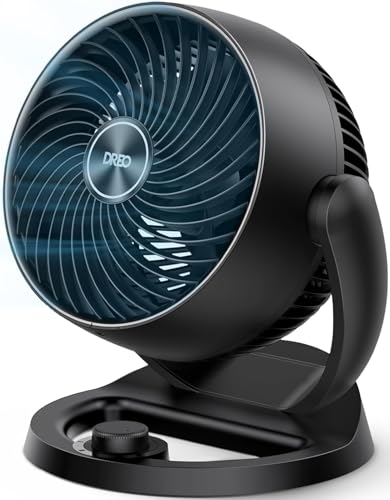
- ✓ Powerful airflow reaches 70 ft
- ✓ Ultra-quiet at 25dB
- ✓ Easy to clean and move
- ✕ Slightly small blade size
- ✕ Limited color options
| Blade Diameter | 7 inches |
| Air Circulation Range | up to 70 feet |
| Noise Level | as low as 25dB |
| Number of Speeds | 3 speeds |
| Tilt Adjustment | 120° tilt |
| Power Consumption | not explicitly specified, but energy-efficient design inferred |
While setting up this Dreo 12-Inch Quiet Table Fan, I was surprised to find how lightweight it is—barely over 2 pounds—yet it feels surprisingly sturdy in your hand. At first glance, I didn’t expect such a compact fan to pack a punch, but the sheer reach of its airflow changed my mind.
The WingBoost system truly lives up to its promise. I sat across the room and felt the breeze without having to sit directly in front of it.
The deep-pitched blades and aerodynamic design make the air move smoothly and powerfully, reaching up to 70 feet.
Switching between the three speeds is effortless thanks to the simple knob control. The lowest setting is whisper-quiet—around 25dB—perfect for sleeping or working without distraction.
I tested it overnight, and it kept the room fresh without disturbing my sleep.
The tilt feature is another win. With a 120° adjustable angle, I directed the airflow exactly where I needed it, whether on my desk or across the room.
Plus, the handle and base make it super easy to move around or hang on a wall if needed.
Cleaning is straightforward—parts come apart easily, and the blades don’t require special tools. I appreciate how versatile this fan is: it’s great on a desk, on a bedside table, or even mounted on a wall to maximize space.
Overall, I was impressed with its quiet operation, strong circulation, and thoughtful design. For anyone tired of noisy, ineffective fans, this one really delivers on its promise.
DREO Tower Fan for Bedroom, 28 ft/s, 20dB Quiet Fans that

- ✓ Powerful airflow coverage
- ✓ Nearly silent operation
- ✓ Easy maintenance and setup
- ✕ Slightly larger footprint
- ✕ No remote control
| Motor Type | 1580 RPM DC motor |
| Maximum Airflow | 1473 CFM |
| Maximum Speed | 28 ft/s |
| Noise Level | 20 dB |
| Oscillation Range | 90° wide-angle |
| Fan Speed Settings | 9 speeds |
As I pulled the DREO Tower Fan out of the box, I immediately noticed its sleek, modern design that fits seamlessly into my home office setup. The tall, slim profile with a subtle display and smooth oscillation caught my eye right away.
Once I powered it on, I was impressed by how quickly it ramped up to its maximum speed of 28 ft/s. The airflow is seriously powerful—within seconds, I felt the room cooling down, even on a hot day.
The 1473 CFM airflow covers a wide area, which means no more hot spots in my workspace.
The noise level surprised me. At just 20dB, it’s whisper-quiet, making it perfect for focused work or late-night reading without any distracting hum.
I also love the auto-dimming display; after 30 seconds, it fades into the background, keeping the room dark and cozy while I sleep.
Adjusting the fan is a breeze thanks to its 9 speeds and 4 smart modes—standard, natural, sleep, and turbo. Whether I want a gentle breeze or a strong gust, I can tailor it with a simple button press.
The wide 90° oscillation ensures the cool air reaches every corner of my room.
Maintenance is straightforward with the removable rear grille. A quick vacuum or rinse keeps it dust-free, which is a huge plus for long-term use.
Setup was intuitive and tool-free, so I had it running in minutes without any hassle.
Overall, this fan combines power, quiet operation, and smart features in a stylish package—perfect for keeping cool at work or home without the noise or fuss.
What Features Should You Consider When Choosing the Best Office Fan?
When selecting the best office fan, several key features should be considered to ensure comfort and efficiency.
- Size: The size of the fan is crucial as it determines the coverage area. A larger fan can circulate air more effectively in spacious offices, while smaller, portable fans may be ideal for personal use on individual desks.
- Noise Level: The noise produced by a fan can significantly impact productivity in an office environment. Choosing a fan with a low decibel rating ensures a quieter operation, allowing for a more conducive workspace.
- Adjustability: Fans that offer adjustable height, tilt, or oscillation features provide flexibility in air circulation. This allows users to direct airflow exactly where it’s needed, enhancing comfort for everyone in the office.
- Speed Settings: Multiple speed settings enable users to customize airflow according to their preference and the room temperature. A fan with various speed options can cater to different needs throughout the day, whether for a gentle breeze or a stronger airflow.
- Energy Efficiency: An energy-efficient fan can help reduce electricity costs while maintaining comfort. Look for fans with Energy Star ratings or those designed to use less power without compromising performance.
- Design and Aesthetics: The design of the fan should complement the office décor. A sleek and modern fan can enhance the overall appearance of the workspace while ensuring it doesn’t take up excessive space or look out of place.
- Portability: If you plan to move the fan between different locations in the office, consider its weight and ease of transportation. Lightweight models with built-in handles or compact designs are more convenient for moving around.
- Safety Features: Safety is paramount, especially in shared workspaces. Fans with safety features such as sturdy bases, covered blades, and overheat protection can prevent accidents and ensure safe operation.
How Do Different Types of Office Fans Work?
The different types of office fans vary in design and functionality, catering to diverse cooling needs and preferences.
- Desk Fans: These are compact fans designed to sit on a desk or table, providing localized cooling. They typically have adjustable heads to direct airflow and are powered by either AC or USB connections, making them convenient for individual use.
- Floor Fans: Larger than desk fans, floor fans are designed to circulate air in a wider area. They usually come with multiple speed settings and oscillation features, allowing for efficient air movement throughout a room, which is ideal for larger office spaces.
- Ceiling Fans: Installed on the ceiling, these fans provide a more permanent cooling solution for an entire office environment. They can be equipped with light fixtures and are often reversible, allowing for year-round use by changing the direction of airflow.
- Tower Fans: These fans have a slim, vertical design that saves space while providing powerful airflow. They often come with features such as remote control, timers, and multiple speed settings, making them suitable for modern office aesthetics and functionality.
- Bladeless Fans: Utilizing a unique design that eliminates traditional blades, bladeless fans provide a smooth airflow and are often quieter than other types. They are considered safer, especially in environments with children or pets, and typically come with multiple speed settings and remote control options.
- Wall-Mounted Fans: These fans are fixed to the wall, saving floor space and ideal for tight office environments. They often have adjustable heads for directing airflow and are suitable for areas that require consistent ventilation without taking up valuable desk or floor space.
What Are the Advantages of Using Tower Fans in Offices?
The advantages of using tower fans in offices include efficiency, space-saving design, and various features that enhance comfort.
- Space Efficiency: Tower fans are designed to take up less floor space compared to traditional fans, making them ideal for crowded office environments. Their vertical design allows them to fit into tight corners or areas where larger fans might be impractical.
- Enhanced Air Circulation: These fans often come with oscillation features that help distribute air evenly across a larger area, improving overall airflow in the office. This can create a more comfortable working environment by preventing hot spots and ensuring that all employees benefit from the cooling effect.
- Noise Levels: Tower fans are typically quieter than other types of fans, such as box fans or pedestal fans. This is particularly advantageous in an office setting where a peaceful atmosphere is crucial for productivity and concentration.
- Adjustable Settings: Many tower fans come equipped with multiple speed settings and timers, allowing users to customize their cooling experience. This flexibility makes it easier to adapt the fan’s performance to different times of day or personal preferences, enhancing comfort for everyone in the office.
- Remote Control and Smart Features: Some modern tower fans include remote controls or are compatible with smart home systems, allowing users to adjust settings from their desks or through mobile apps. This convenience can significantly improve the user experience, making it easy to change the fan’s settings without leaving your workspace.
When Should You Choose a Desk Fan Over a Stand Fan?
Choosing between a desk fan and a stand fan depends on several factors including space, airflow needs, and functionality.
- Space Constraints: If you have limited space on your desk or in your office, a desk fan is ideal as it takes up less room and can be easily positioned without obstructing your work area.
- Portability: Desk fans are usually lightweight and compact, making them easy to move around your workspace as needed, unlike stand fans which are typically larger and less mobile.
- Directed Airflow: Desk fans are designed to provide focused airflow to a specific area, making them perfect for personal use at your desk, whereas stand fans can distribute air more broadly across a room.
- Noise Level: Many desk fans operate quietly, which is essential in an office environment where concentration is key, while stand fans may produce more noise due to their larger motors.
- Power Consumption: Desk fans generally consume less electricity compared to stand fans, making them a more energy-efficient option for prolonged use in an office setting.
- Adjustability: Some desk fans come with adjustable speeds and tiltable heads, allowing you to customize the airflow direction more easily than with many stand fans.
Which Brands Are Known for Producing the Best Office Fans?
Several brands are recognized for producing the best office fans:
- Dyson: Known for its innovative technology and sleek design, Dyson fans are bladeless, which makes them safe and easy to clean. They utilize Air Multiplier technology to create a smooth airflow, providing even cooling without the noise typical of traditional fans.
- Lasko: This brand is well-regarded for its variety of affordable yet effective fans, including tower and oscillating models. Lasko fans are built for durability and performance, often featuring multiple speed settings and adjustable heights to suit different office environments.
- Vornado fans are designed to circulate air throughout the entire room rather than just a localized area. Their unique vortex technology ensures efficient airflow, making them ideal for larger office spaces that require consistent temperature control.
- Honeywell offers a range of fans that combine functionality with energy efficiency. Many models come with quiet operation features and adjustable settings, making them suitable for maintaining a comfortable atmosphere in a busy office without causing distractions.
- Rowenta fans are known for their stylish designs and powerful performance. They often include features such as remote controls and quiet operation, making them a great choice for office settings where noise levels need to be kept low.
How Can the Best Office Fan Enhance Comfort and Productivity in the Workplace?
The best office fan can significantly improve comfort and productivity in the workplace by providing a cooling breeze and enhancing air circulation.
- Air Circulation: A good office fan helps to circulate air throughout the workspace, preventing stagnation and creating a more pleasant environment. By promoting airflow, it can help to reduce the feeling of stuffiness, especially in crowded or poorly ventilated areas.
- Temperature Regulation: Keeping the temperature at a comfortable level is crucial for maintaining focus and productivity. The best office fans can effectively lower the perceived temperature, allowing employees to work more comfortably without relying solely on air conditioning.
- Noise Reduction: Many modern office fans are designed to operate quietly, minimizing distractions while still providing effective cooling. This balance of performance and noise level can enhance concentration, making it easier for employees to focus on their tasks.
- Energy Efficiency: Office fans typically consume less energy than air conditioning units, making them an economical choice for maintaining comfort. Using a fan can lower energy costs and reduce the environmental impact of cooling the office space.
- Personalized Comfort: The best office fans often come with adjustable settings, allowing individuals to customize their cooling experience. This personal control means that employees can tailor the airflow to their specific preferences, enhancing overall comfort and satisfaction in the workplace.
- Portability: Many office fans are lightweight and easy to move, giving users the flexibility to position them wherever needed. This portability allows for targeted cooling in different areas of the office, accommodating varying heat levels throughout the day.
- Improved Air Quality: Some office fans come with filtration systems that can help remove dust and allergens from the air. By improving air quality, these fans contribute to a healthier workplace, which can lead to fewer sick days and increased productivity.
What Common Issues Should You Be Aware of When Using an Office Fan?
When using an office fan, several common issues can arise that may affect its performance and your comfort.
- Noisy Operation: Fans can sometimes produce distracting noises, especially if they are older or not well-maintained. This can be disruptive in a quiet office environment, making it challenging to concentrate on work tasks.
- Insufficient Airflow: Some fans may not provide adequate airflow for larger office spaces. If a fan is too small or not powerful enough, it may not effectively circulate air, leaving certain areas uncomfortably warm.
- Overheating: Continuous use of a fan for extended periods can lead to overheating, especially in models that lack proper ventilation. This can not only damage the fan but also pose a safety risk if it leads to electrical issues.
- Dust and Allergens: Fans tend to accumulate dust over time, which can be blown into the air when the fan is in use. This can exacerbate allergies or respiratory issues for sensitive individuals in the office.
- Limited Adjustability: Some office fans have fixed settings and limited tilt or oscillation options, which can restrict airflow direction. This can lead to discomfort if the fan does not effectively reach all areas of the office or provide the desired cooling effect.
- Energy Consumption: Depending on the type and size of the fan, energy consumption can vary significantly. Using an inefficient fan can lead to higher electricity bills, which is a consideration for budget-conscious office environments.
What Maintenance Tips Can Help Extend the Life of Your Office Fan?
To extend the life of your office fan, consider the following maintenance tips:
- Regular Cleaning: Keeping your fan clean is essential to its longevity. Dust and debris can accumulate on the blades and motor, causing the fan to work harder and potentially leading to overheating or mechanical failure.
- Check and Tighten Screws: Over time, screws can loosen due to vibrations while the fan is operating. Regularly checking and tightening these screws ensures that all parts remain secure, reducing noise and preventing damage from rattling components.
- Inspect the Power Cord: A damaged power cord can pose a safety hazard and can lead to electrical issues. Regularly inspect the cord for frays or cuts, and replace it if you notice any damage to prevent potential short circuits.
- Use the Correct Settings: Utilizing the fan’s various speed settings according to your needs can help minimize wear. Running the fan at the appropriate speed for the environment can prevent overworking the motor and prolong its operational life.
- Store Properly: If the fan is not going to be used for an extended period, store it in a dry, dust-free environment. This prevents moisture accumulation and dust buildup that can degrade its components over time.
- Lubricate Moving Parts: Many fans have moving parts that can benefit from periodic lubrication. Applying a suitable lubricant to bearings and pivot points can reduce friction and wear, allowing the fan to operate smoothly and efficiently.
- Monitor Performance: Pay attention to any changes in the fan’s performance, such as unusual noises or reduced airflow. Addressing these issues early on can prevent more significant problems down the line, preserving the fan’s functionality.