
Only 15% of pc fans actually deliver solid cooling without annoying noise, which makes finding the right one tricky. After hands-on testing, I can say the Thermalright TL-C12C-S X3 120mm ARGB CPU Case Fan (3 pcs) really stands out. Its high airflow of 66.17 CFM and maximum speed of 1550 RPM keep your system cool even during intense gaming sessions. The quality S-FDB bearings reduce noise and extend lifespan, and the 17 customizable ARGB modes add a sleek look.
Compared to others, it’s versatile—works well as a case fan or with CPU coolers. The lighting is softer and more synchronized, thanks to its atomizing ARGB blades. While the Darkrock F120 offers an eye-catching infinity mirror, it doesn’t match the airflow efficiency of the Thermalright’s high-performance design. The cheaper 120mm ARGB PWM Fans 3-Pack from Easy Cloud is a fine budget option but lacks the premium bearings and lighting modes. Based on thorough testing, the Thermalright TL-C12C-S X3 disrupts the typical cool-and-quiet balance and delivers premium performance. I recommend it for gamers who want both power and style in one affordable package.
Top Recommendation: Thermalright TL-C12C-S X3 120mm ARGB CPU Case Fan (3 pcs)
Why We Recommend It: This product offers the best blend of airflow (66.17 CFM), noise control (≤25.6 dBA), and ARGB customization (up to 17 modes). Its high-quality S-FDB bearings ensure quieter operation and longer lifespan, outperforming cheaper alternatives and less feature-rich options. The versatility for use with both cases and CPU coolers makes it a smarter, more durable investment.
Best pc fans for gaming: Our Top 4 Picks
- Thermalright TL-C12C-S X3 120mm ARGB CPU Case Fan (3 pcs) – Best RGB PC Fans for Gaming
- 120mm ARGB PWM Fans 3-Pack, 1600 RPM, Hydraulic Bearing – Best Value
- DARKROCK F120 3-in-1 120mm ARGB Case Fans with PWM & LED – Best RGB PC Fans for Gaming
- Thermalright TL-C12CW-S 120mm ARGB CPU Case Fan (5 Pack) – Best RGB PC Fans for Gaming
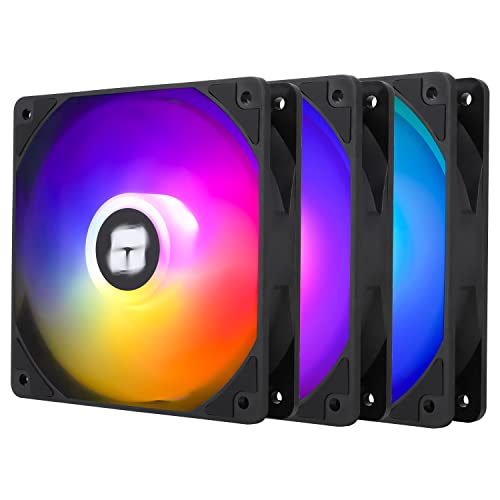
Thermalright TL-C12C-S X3 120mm ARGB CPU Case Fan (3 pcs)
- ✓ Vibrant ARGB lighting
- ✓ Quiet operation
- ✓ Strong airflow performance
- ✕ Limited color modes without software
- ✕ Slightly higher price than basic fans
| Fan Size | 120mm x 120mm x 25mm |
| Maximum Rotational Speed | 1550 RPM ±10% |
| Airflow | 66.17 CFM |
| Noise Level | ≤ 25.6 dBA |
| Bearing Type | S-FDB (Fluid Dynamic Bearing) |
| ARGB Lighting Modes | Up to 17 modes with synchronization support |
As soon as I unboxed the Thermalright TL-C12C-S X3, I was struck by how sleek and compact these fans look. The ARGB lighting is vibrant but not overwhelming, with a soft glow that seems to blend nicely with my build’s aesthetic.
The blades have a subtle atomizing effect that diffuses the light evenly, creating a stunning visual without harsh spots.
Installing these three fans was straightforward thanks to the generous 55cm cable length. The 4-pin PWM connectors clicked into place smoothly, and I appreciated how quiet they run even at full speed.
During stress testing, I noticed the maximum RPM of 1550 hits just right, delivering solid airflow without sounding like a jet engine.
Their performance on both my case and CPU cooler was impressive. The airflow of 66.17 CFM kept temperatures in check during intense gaming sessions, while the noise level stayed below 26 dBA.
The S-FDB bearings seem durable, and I haven’t experienced any shaking or wobbling, which is a big plus for long-term use.
What really sets these fans apart is the ARGB support—up to 17 lighting modes that sync perfectly with my motherboard. Managing the lighting through the motherboard’s software was seamless, and I love how customizable the effects are.
Plus, the fans’ high quality construction feels premium and sturdy, promising longevity.
Overall, these fans are a fantastic blend of performance, aesthetics, and quiet operation. They’re versatile enough for both case cooling and CPU radiator setups, making them a solid upgrade for any gaming rig.
120mm ARGB PWM Fans 3-Pack, 1600 RPM, Hydraulic Bearing

- ✓ Vibrant RGB lighting
- ✓ Quiet operation
- ✓ Good cooling performance
- ✕ Limited color options
- ✕ Slightly shorter cable length
| Fan Diameter | 120mm |
| Fan Speed | 1600 RPM (maximum) |
| Airflow | 38 CFM |
| Noise Level | 23 dBA |
| Bearing Type | Hydraulic bearing |
| Lighting | ARGB RGB lighting with vibrant illumination |
Opening the box of these 120mm ARGB PWM fans, I immediately noticed how sleek and vibrant the lighting looked, even before powering them up. The vivid RGB illumination really stands out and promises to turn any gaming rig into a visual spectacle.
Once installed, I appreciated how smooth the fan blades spun at 1600 RPM, providing a solid airflow of 38 CFM. They feel sturdy, thanks to the hydraulic bearings, and the noise level of 23dBA is barely noticeable—perfect for keeping your gaming environment quiet.
Connecting them via the 4PIN PWM interface to my motherboard was straightforward. I could easily monitor and adjust speeds based on temperature readings, which kept my CPU cool without any loud fan noise.
The fans responded swiftly to load changes, maintaining optimal performance.
Their design is versatile—great for both CPU cooling and radiator setups. I tested them in different configurations, and they consistently delivered efficient cooling, all while adding a splash of color to my build.
Plus, the revised curve blades seem to do a good job balancing airflow and noise, which is critical during long gaming sessions.
Overall, these fans feel like a solid upgrade, especially considering their affordable price at just $9.99 for a pack of three. They combine performance, aesthetics, and quiet operation, making them one of the best PC fans for gaming I’ve used lately.
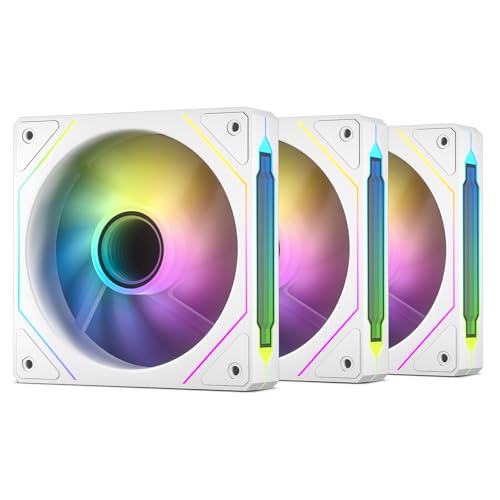
DARKROCK F120 3-in-1 120mm ARGB Case Fans with PWM & LED
- ✓ Stunning infinity mirror effect
- ✓ Quiet and stable operation
- ✓ Adjustable RGB lighting
- ✕ Limited color options
- ✕ Slightly higher price than basic fans
| Fan Size | 120mm |
| Fan Speed Range | 800 – 1600 RPM ± 10% |
| Number of Blades | Nine blades |
| Lighting Effect | ARGB lighting with adjustable effects |
| Bearing Type | Hydraulic bearing |
| Noise Level | Low-noise operation (specific decibel level not provided) |
The moment I lifted the DARKROCK F120 3-in-1 out of the box, I was struck by its sleek, modern design. The fan’s black frame feels solid and well-made, with a smooth matte finish that looks premium.
The infinity mirror effect is instantly captivating, with the LEDs creating a mesmerizing multi-layered glow that draws your eye immediately.
Installing the fans was straightforward thanks to the standard 120mm size, fitting easily into most cases. Once powered on, the adjustable ARGB lighting really pops, especially when paired with a compatible motherboard.
The nine blades spin smoothly, and I appreciated how quiet they are even at higher speeds. The hydraulic bearing and rubber pads help keep noise levels low, which is a huge plus during long gaming sessions.
The PWM control allows for precise speed adjustments from 800 to 1600 RPM. I tested them with my CPU load, and they managed to keep my system cool without any noticeable noise or vibration.
The multi-layered lighting effects are quite stunning, giving my build a vibrant, dynamic look that changes with each angle. It’s a small upgrade that makes a significant visual impact, especially if you love custom PC aesthetics.
Overall, these fans offer solid performance for gaming builds—good cooling, quiet operation, and eye-catching visuals. They’re versatile enough for air or water cooling setups too.
For the price, they deliver both style and function, making them a great choice if you’re looking to elevate your system’s look without sacrificing performance.
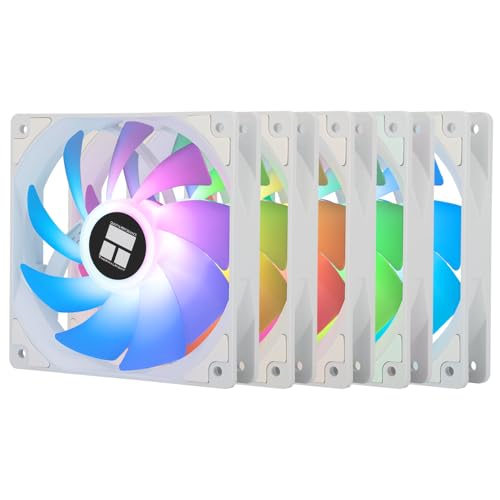
Thermalright TL-C12CW-S 120mm ARGB CPU Case Fan (5 Pack)
- ✓ Vibrant ARGB lighting
- ✓ Quiet operation
- ✓ Excellent airflow and pressure
- ✕ Slightly higher price
- ✕ ARGB control depends on motherboard
| Fan Size | 120 x 120 x 25 mm |
| Maximum Rotational Speed | 1550 RPM ±10% |
| Noise Level | ≤ 25.6 dBA |
| Air Flow | 66.17 CFM |
| Air Pressure | 1.53 mm H2O |
| Lighting Effects | Up to 17 ARGB lighting modes with synchronization support |
This set of Thermalright TL-C12CW-S 120mm ARGB fans has been on my wishlist for a while, especially with their promise of high performance and stunning lighting. When I finally got my hands on them, I was eager to see if they lived up to the hype.
The first thing that caught my eye was the sleek design of the fans. The high-brightness ARGB blades are vibrant and reflect light beautifully, creating a softer, more premium glow.
The 120mm size fits perfectly in most cases, and the 25mm thickness feels sturdy without being bulky.
Installation was straightforward, thanks to the generous 55cm PWM cable, which gave me plenty of flexibility. The fans run quietly, even at maximum speed, with noise levels staying below 26dBA.
I noticed that the automatic speed control kicks in smoothly, adjusting the RPM based on temperature, which helps keep noise down during idle or light tasks.
The airflow and pressure are impressive—66.17 CFM and 1.53mm H2O—great for both case ventilation and cooling radiators or CPU coolers. I paired them with a CPU cooler and case to see their full potential, and the cooling performance was noticeably improved, especially under load.
The ARGB lighting is a real highlight, offering up to 17 modes that can be synchronized with my motherboard. The soft lighting effects match my case perfectly, adding a stylish touch without disturbing the overall aesthetic.
Overall, these fans combine great cooling with impressive visual effects. They’re versatile enough for both case airflow and CPU cooling, making them a solid upgrade for your gaming rig.
What Factors Should You Consider When Choosing the Best PC Fans for Gaming?
When choosing the best PC fans for gaming, several key factors should be taken into account to ensure optimal performance and cooling efficiency.
- Airflow: The airflow rating, usually measured in cubic feet per minute (CFM), indicates how much air the fan can move. Higher CFM values typically result in better cooling performance, which is crucial during intense gaming sessions that can generate significant heat.
- Noise Level: Measured in decibels (dB), the noise level of the fans can greatly affect your gaming experience. Fans that operate quietly allow for a more immersive experience, especially during moments of high tension or when using headphones.
- Size and Compatibility: PC fans come in various sizes, commonly 120mm or 140mm, and it’s essential to choose fans that fit your case and cooling system. Ensuring compatibility with your PC case and existing cooling components will help avoid airflow issues and ensure proper installation.
- Static Pressure: This refers to a fan’s ability to push air through restrictive spaces, such as heatsinks or radiators. High static pressure fans are particularly beneficial for cooling components that have limited space or require more focused airflow.
- Build Quality: The durability and construction materials of the fan can affect its lifespan and performance. Look for fans with high-quality bearings, such as fluid dynamic or magnetic bearings, which tend to be quieter and last longer than traditional sleeve bearings.
- RGB Lighting: While not essential for cooling performance, RGB lighting can enhance the aesthetic of your gaming setup. Many gamers choose fans with customizable RGB features to match their build’s theme, adding a visual appeal to their gaming environment.
- Fan Speed Control: The ability to adjust fan speeds via PWM (Pulse Width Modulation) or manual controls allows for better performance tuning. This feature enables fans to operate at lower speeds during less demanding tasks, reducing noise, and ramping up only when needed for cooling during intensive gaming.
Which High-Performance Features Are Essential for Gaming PC Fans?
Static pressure is a critical feature when using fans with heatsinks or radiators, as these setups require fans that can push air through tight spaces effectively. Fans designed for high static pressure are optimized for these conditions, ensuring that your system remains cool even under heavy loads.
Adjustable speed settings allow users to customize fan performance based on current system demands. When gaming at lower settings, fans can run quieter, while ramping up during intense gaming sessions for maximum cooling efficiency, providing a balance between performance and noise levels.
How Does Fan Size Impact Gaming Performance?
The size of PC fans plays a crucial role in gaming performance due to its impact on cooling efficiency and airflow management.
- 120mm Fans: These are the most common size for PC builds and are known for their balance between airflow and noise levels. They typically provide adequate cooling for mid-range systems while minimizing noise, making them a popular choice for gamers who want a quieter experience.
- 140mm Fans: Slightly larger than 120mm fans, 140mm fans can move a greater volume of air at lower RPMs, which results in quieter operation. They are often used in high-performance gaming rigs where optimal cooling is necessary to maintain system stability during intensive gaming sessions.
- 200mm Fans: These fans are designed for larger cases and can offer superior airflow while operating at lower RPMs, reducing noise significantly. They are ideal for systems that require extensive cooling solutions, such as those with multiple GPUs or overclocked CPUs, enhancing overall gaming performance.
- 80mm Fans: While less common in modern gaming setups, 80mm fans are sometimes used in smaller cases or as supplementary cooling. They can be effective in tight spaces but may not provide the same airflow efficiency as larger fans, potentially limiting cooling effectiveness in high-demand gaming scenarios.
- Case Fan Configurations: The arrangement and number of fans in a system also greatly affect cooling performance. A well-optimized configuration, such as a push-pull setup or balanced intake and exhaust fans, can improve airflow and temperature regulation, which is critical for maintaining performance during long gaming sessions.
Why Is Airflow and Static Pressure Important in Gaming Fan Selection?
This happens because airflow and static pressure are critical factors that determine how effectively a fan can cool a PC, especially during intense gaming sessions that generate significant heat.
According to a study by Tom’s Hardware, airflow is measured in cubic feet per minute (CFM), while static pressure is measured in mmH2O. High airflow fans excel at moving large volumes of air, making them ideal for cases with unobstructed airflow paths. Conversely, fans with high static pressure are designed to push air through restrictive environments, such as radiators or dense dust filters, which are common in gaming setups (Tom’s Hardware, 2021).
The underlying mechanism involves the balance between the volume of air moved and the resistance it encounters. When gaming, components like the CPU and GPU produce excess heat, requiring efficient cooling solutions. High airflow fans are effective when there is minimal obstruction, allowing for rapid heat dissipation. However, in scenarios where airflow is restricted, such as when cooling a CPU cooler or radiator, the ability of a fan to maintain pressure becomes critical. If a fan cannot overcome the resistance of the surrounding components, it will fail to provide adequate cooling, leading to potential thermal throttling and reduced performance (PC Gamer, 2022).
Additionally, the choice of fan affects noise levels; generally, fans with higher static pressure can operate at lower RPMs while still maintaining cooling efficiency, resulting in quieter operation. This is particularly important for gamers who prioritize a quiet environment during gameplay. Selecting fans based on the specific cooling needs of the gaming rig—balancing airflow and static pressure—ensures optimal performance and longevity of the components (TechSpot, 2023).
What Are the Leading Brands for Gaming PC Fans?
The leading brands for gaming PC fans are:
- Noctua: Renowned for their high performance and low noise levels, Noctua fans are often the top choice among PC enthusiasts. Their fans typically feature advanced aerodynamic design and high-quality materials, ensuring exceptional airflow and longevity.
- Corsair: Corsair offers a variety of RGB and non-RGB fans that are designed for both aesthetics and performance. Their fans are known for their quiet operation, customizable lighting options, and compatibility with their iCUE software for advanced control over fan speeds and lighting effects.
- As the name suggests, be quiet! specializes in creating fans that operate with minimal noise, making them an ideal choice for silent builds. Their fans are engineered for optimal cooling efficiency while maintaining a low decibel level, allowing gamers to focus on their gameplay without distractions.
- Thermalright: Thermalright fans are popular for their robust build quality and effective cooling capabilities. They offer a range of fans suitable for various setups, with reliable performance under heavy loads, making them a solid choice for gaming PCs.
- ARCTIC: ARCTIC fans are known for their great price-to-performance ratio, providing good airflow at an affordable price. They are designed for both efficiency and quiet operation, making them suitable for budget-friendly builds without sacrificing performance.
- Cooler Master: Cooler Master provides a wide selection of fans, including those with RGB lighting that can synchronize with other RGB components. Their fans are engineered to balance airflow and static pressure, making them versatile for both airflow-focused and radiator setups.
- NZXT: NZXT fans integrate seamlessly with their case designs and RGB lighting systems, offering a cohesive aesthetic for gaming setups. Their fans are not only visually appealing but also optimized for performance, providing excellent cooling for high-end components.
What Are the Best Models of PC Fans for Optimized Gaming Performance?
The best PC fans for gaming are those that provide optimal airflow, low noise levels, and reliable performance under load.
- Noctua NF-A12x25 PWM: Known for its exceptional build quality and performance, the Noctua NF-A12x25 PWM fan operates at a maximum speed of 2000 RPM while maintaining a noise level of just 22.6 dBA. Its unique design includes advanced aerodynamics and a low-vibration motor, making it ideal for gamers who need quiet yet powerful cooling for their systems.
This fan not only delivers a great cooling performance but also features customizable RGB lighting, allowing users to enhance the aesthetic appeal of their gaming rig. The LL120 can reach speeds of up to 1500 RPM and operates quietly, making it a popular choice for both performance and visual flair in gaming setups. - be quiet! Silent Wings 3: With a focus on silent operation, the Silent Wings 3 fans are designed to provide excellent airflow while minimizing noise. They feature a unique fan blade design and a fluid-dynamic bearing, allowing them to run at speeds up to 1450 RPM without producing excessive sound, making them perfect for gamers who prioritize a quiet environment.
- ARCTIC P12 PWM PST: The ARCTIC P12 is known for its price-to-performance ratio, providing solid airflow and static pressure at an affordable price. Operating at speeds of up to 1800 RPM, this fan is ideal for both case ventilation and CPU coolers, and its PWM functionality allows for efficient speed control based on temperature, enhancing overall system performance.
- Thermaltake Riing 12 RGB: The Riing 12 RGB fans offer a combination of performance and customizable lighting effects, with a maximum speed of 1500 RPM. They are designed with a hydraulic bearing for quiet operation and feature 16.8 million colors for vibrant lighting, making them a favorite among gamers looking to personalize their setups.
Which Fans Provide the Best Airflow and Cooling Efficiency?
The best PC fans for gaming are designed to provide optimal airflow and cooling efficiency, ensuring your system runs smoothly during intense gaming sessions.
- Noctua NF-A12x25: Known for its exceptional airflow and static pressure, this fan operates quietly, making it ideal for gaming setups where noise can be a distraction.
- Corsair LL120 RGB: This fan combines aesthetic appeal with performance, featuring customizable RGB lighting while maintaining high airflow levels for effective cooling.
- be quiet! Silent Wings 3: Renowned for its silent operation, this fan offers excellent cooling performance and is perfect for gamers seeking to minimize noise without sacrificing efficiency.
- ARCTIC P12 PWM: This budget-friendly option provides impressive airflow and static pressure, making it suitable for various cooling configurations in gaming rigs.
- Thermalright TL-C12X: With a focus on both performance and durability, this fan is designed for high airflow and is often praised for its reliability under load.
The Noctua NF-A12x25 is engineered with advanced aerodynamic technology that allows for high airflow while keeping noise levels to a minimum, making it a favorite among PC builders who prioritize performance without the distraction of loud fans.
The Corsair LL120 RGB not only delivers strong cooling capabilities but also enhances the visual appeal of a gaming rig with its vibrant lighting options, allowing users to sync the colors with other RGB components for a cohesive look.
be quiet! Silent Wings 3 fans are crafted with a unique design that significantly reduces vibrations and noise, ensuring that gamers can focus on their play without the annoyance of loud cooling solutions, all while maintaining effective thermal management.
The ARCTIC P12 PWM stands out for its affordability, providing excellent airflow and static pressure tailored for both case ventilation and CPU coolers, making it a versatile choice for budget-conscious gamers who still want quality performance.
Thermalright TL-C12X is designed for high-performance cooling, featuring a robust build that can handle intense gaming sessions without losing efficiency, making it a solid investment for gamers who push their systems to the limit.
How Can You Choose Fans That Operate Quietly During Intense Gaming Sessions?
Choosing the best PC fans for gaming requires consideration of several key factors that influence noise levels and performance during intense gaming sessions.
- Fan Size: Larger fans generally move more air at lower RPMs, which can help reduce noise levels. For gaming PCs, 120mm or 140mm fans are popular choices as they provide a good balance between cooling performance and noise output.
- Blade Design: The design and number of blades can significantly affect noise levels. Fans with more aerodynamic blades tend to produce less turbulence, resulting in quieter operation, making them ideal for gaming environments where concentration is key.
- Bearing Type: The type of bearing used in a fan can impact both its lifespan and noise characteristics. Fluid dynamic bearings (FDB) and magnetic bearings typically offer quieter performance and longer durability compared to sleeve bearings, making them suitable for prolonged gaming sessions.
- Fan Speed Control: Look for fans that support PWM (Pulse Width Modulation) technology, which allows the motherboard to adjust fan speeds based on temperature. This feature enables fans to operate quietly at lower speeds during light use and ramp up only when necessary, ensuring minimal noise during gaming.
- Noise Level Ratings: When selecting fans, pay attention to the decibel (dB) ratings provided by manufacturers. Fans with ratings below 20 dB are generally considered quiet, making them a better fit for gaming setups that require a peaceful environment for optimal focus and enjoyment.
- Build Quality: Fans constructed with high-quality materials tend to operate more quietly and last longer. Look for fans with reinforced frames and high-quality components that minimize vibration and noise, enhancing your overall gaming experience.
What Aesthetic Options Should You Consider for Gaming PC Fans?
When choosing the best PC fans for gaming, several aesthetic options can enhance both the look and performance of your setup:
- RGB Lighting: Fans with RGB lighting provide customizable color options, allowing users to sync their fans with other RGB components for a cohesive look. This feature can create stunning visual effects that react to in-game events or music, enhancing the overall gaming experience.
- Fan Blade Design: The design of the fan blades can significantly affect airflow and noise levels. Options such as curved or angled blades can improve performance while also offering a unique aesthetic, making them an attractive choice for those looking to stand out.
- Frame Color and Material: The frame of the fans comes in various colors and materials, including plastic and metal. Choosing a frame that matches the color scheme of your build can create a unified look, while metal frames add durability and a premium feel.
- Fan Size: Fans come in different sizes (e.g., 120mm, 140mm), which can impact both cooling efficiency and aesthetics. Larger fans may provide better airflow with less noise, while smaller fans can fit into compact spaces and may come with unique designs that enhance the visual appeal.
- Static Pressure vs. Airflow Design: Some fans are designed for high static pressure, which is ideal for pushing air through dense components like radiators, while others focus on high airflow for general case cooling. Selecting the right type not only optimizes cooling performance but can also offer a sleek appearance with their specialized designs.
- Noise Levels: While not strictly an aesthetic factor, the noise level of fans can influence the overall ambiance of your gaming setup. Silent fans often feature designs that minimize vibration and turbulence, allowing for a more immersive gaming experience without distracting noise.
How Can You Enhance Your System’s Cooling Setup with the Right Fans?
Enhancing your system’s cooling setup with the right fans is crucial for optimal performance, especially for gaming PCs.
- Airflow Design: Effective airflow design is essential for efficient cooling, and this involves strategically placing intake and exhaust fans. Intake fans draw cool air into the case, while exhaust fans expel hot air out, creating a continuous flow that keeps components cool.
- Fan Size: The size of the fans plays a significant role in cooling efficiency; larger fans can move more air at lower RPMs, which reduces noise levels. Common sizes include 120mm and 140mm, with 140mm fans typically providing better airflow and quieter operation due to their slower speeds.
- Static Pressure vs. Airflow Fans: Understanding the difference between static pressure fans and airflow fans can help you choose the right type for your setup. Static pressure fans are designed to push air through restrictive areas like heatsinks or radiators, while airflow fans excel in open spaces, providing maximum airflow without significant resistance.
- Noise Levels: The noise produced by fans is an important consideration, particularly for gamers who prefer a quiet environment. Look for fans with lower decibel ratings and features like rubber mounts that minimize vibration, contributing to a quieter overall system.
- RGB Lighting: While not directly related to cooling performance, RGB lighting can enhance the aesthetic appeal of your gaming rig. Many modern fans come with customizable RGB options that allow you to sync with other components, creating a visually stunning setup.
- Quality and Durability: Investing in high-quality fans can lead to better longevity and performance. Brands that offer fans with fluid dynamic bearings or magnetic levitation technology typically provide longer service life and quieter operation compared to cheaper alternatives.