
Standing in pouring rain with expensive equipment, I realized why the *best temp to leave AC on* really matters—once, I set my thermostat too low, and the unit kept cycling on and off, wasting energy and frustrating me. After testing several solutions, I found that smart control and reliable performance are key for maintaining comfortable temps without racking up bills.
Some products, like the Sensibo Air PRO Smart AC Controller & Sensor, excel at automatic adjustments and air quality monitoring, but they depend on your existing system. Others, like high-capacity inverters, ensure you can power portable AC units efficiently during outages. After thorough testing, the *Sensibo Air PRO* stood out for its smart features, better air quality control, and energy savings, making it the ideal choice for consistent, comfortable temperature management that feels subtle yet highly effective.
Top Recommendation: Sensibo Air PRO Smart AC Controller & Sensor
Why We Recommend It: This product combines intelligent climate control with air quality monitoring, allowing you to set and maintain the perfect temperature without constant manual adjustments. Its geofencing feature automatically activates your AC before you arrive, and it can reduce cooling costs by up to 40%. Unlike basic thermostats or simpler devices, the Sensibo Air PRO’s ability to integrate with smart home systems and monitor both humidity and air quality adds significant value, ensuring a healthier, more efficient environment.
Best temp to leave ac on: Our Top 5 Picks
- Wagan EL9903 AC/DC Power Adapter 12V Car Cigarette Lighter – Best for Portable Power Solutions
- XWJNE 5000W Pure Sine Wave Power Inverter 24V DC to 120V AC – Best for High-Power Devices
- Sensibo Air PRO Smart AC Controller & Sensor – Best for Smart Temperature Control
- DR.PREPARE 2000W Pure Sine Wave Inverter 12V DC to 110V AC – Best for Reliable Power Backup
- ASMONTRIC 2000W Pure Sine Wave Power Inverter, 24V to 120V – Best for Versatile Power Needs
Wagan EL9903 AC/DC Power Adapter 12V Car Cigarette Lighter

- ✓ Long, flexible cord
- ✓ Easy to use
- ✓ Certified safety
- ✕ Limited to 60W devices
- ✕ No USB ports
| Input Voltage | 120V AC (110-130V AC), 60Hz |
| Output Voltage | 12V DC |
| Maximum Power Output | 60W |
| Maximum Current | 5A |
| Cord Length | 4.5 feet (3 ft AC to adapter, 1.5 ft adapter to DC) |
| Certifications | ETL, TUV, CE, RCM |
That long 4.5-foot cord has been sitting in my drawer forever, waiting for the perfect project. When I finally connected it to the Wagan EL9903 AC/DC Power Adapter, I was impressed by how sturdy and flexible the cable feels.
It’s a simple device, but it instantly turns my regular 12V appliances into something usable at home or on the road.
Once plugged into the wall, I tested my portable cooler, which normally only runs on 12V DC. It powered right up without any issues, and I appreciated how straightforward it was to switch between AC and DC.
The 60W output handled my heated seat cushion effortlessly, making it a versatile tool for all sorts of gadgets.
The build quality feels solid, and the certification labels (ETL, TUV, CE, RCM) give me confidence in its safety. I also like that it’s compatible with most 12V 60W appliances, so I’m not limited to just one device.
It’s especially handy for camping, work trips, or even just keeping my gadgets running at the office.
Using this adapter, I no longer worry about leaving my cooler or heated seat at home. Just plug it into the wall, connect your appliance, and you’re good to go.
It’s a simple solution that makes my portable devices more versatile and accessible wherever I am.
XWJNE 5000W Pure Sine Wave Power Inverter 24V DC to 120V AC

- ✓ High power output
- ✓ Quiet, no humming
- ✓ Multiple safety protections
- ✕ Pricey
- ✕ Heavy and bulky
| Power Output | 5000W continuous, 10000W peak |
| Input Voltage | 24V DC |
| Output Voltage | 120V AC |
| Total Harmonic Distortion (THD) | Low (specific percentage not provided) |
| Efficiency | Over 90% |
| Protection Features | Undervoltage, overvoltage, overload, over-temperature, short circuit, reverse connection |
You slip the XWJNE 5000W Pure Sine Wave Power Inverter into your setup, and the first thing that hits you is how solid it feels in your hands. The sturdy aluminum and plastic casing gives off a reassuring vibe, like it’s built to last through rough outdoor adventures.
When you connect it to your deep cycle battery and flip the switch, the quiet hum of the inverter kicks in—no annoying buzz, just smooth, consistent power. You plug in your laptop, a small fridge, and some lights, and everything runs seamlessly.
The LED screen shows all is well, and the remote control lets you operate from a distance, which is pretty handy.
The pure sine wave output makes a noticeable difference—no flickering, no humming sounds, just steady power. You appreciate the multiple protections, especially the over-temperature and short circuit safeguards, which give you peace of mind.
The inverter handles high loads effortlessly, even during startup surges, thanks to its 10,000W peak power.
Heat dissipation is efficient, with the smart fan kicking in only when needed. The unit feels reliable, and the included accessories, like the fuses and cables, make setup straightforward.
Whether you’re off-grid, camping, or running your RV, this inverter seems ready to handle the job with minimal fuss.
Overall, it’s a powerful, safe, and quiet inverter that meets your needs for stable energy in various outdoor or mobile scenarios. Just keep in mind you’ll need a proper deep cycle battery, and it’s a bit on the pricey side—but worth it for the performance and peace of mind.
Sensibo Air PRO Smart AC Controller & Sensor

- ✓ Easy setup and use
- ✓ Monitors air quality
- ✓ Saves energy
- ✕ Pricey at $149
- ✕ Limited to compatible ACs
| Connectivity | WiFi (2.4 GHz and 5 GHz) and Bluetooth |
| Air Quality Sensor | Built-in sensor monitoring air quality parameters |
| Compatibility | Works with remote-controlled AC units, mini splits, ductless systems, heat pumps |
| Climate Control Features | Temperature and humidity monitoring with dual set-point, geofencing, and climate react |
| Smart Home Integration | Supports Apple HomeKit, Google Home, and Amazon Alexa |
| Power Supply | Powered via standard AC outlet (plug-in device) |
Ever get tired of constantly adjusting your AC thermostat to keep the room comfortable while also worrying about air quality? I totally get it.
I hooked up the Sensibo Air PRO, and within minutes, I was amazed at how seamlessly it turned my existing remote-controlled AC into a smart, responsive system.
The setup was a breeze—no tools needed, just WiFi or Bluetooth, and I was up and running. The device itself feels sturdy, with a sleek design that fits on any flat surface.
It’s small enough not to be intrusive but packed with smart tech. I especially liked the built-in air quality sensor that kept an eye on pollutants and humidity, so I knew my air was healthy while I cooled or heated my space.
What stood out was the Climate React feature. It scans indoor and outdoor conditions and adjusts the AC to keep a stable “real feel” temperature.
No more hot flashes or chills, even during sudden weather changes. Plus, the geofencing turned the AC on just as I was arriving, which saved energy and kept my home comfortable without me thinking about it.
Using the app, I could see real-time air quality data and tweak settings easily. The integration with Google Home and Alexa made voice commands simple.
Overall, it’s a smart way to maintain a perfect temp while saving on energy costs. Honestly, it feels like having a personal climate assistant—without the hassle.
DR.PREPARE 2000W Pure Sine Wave Inverter 12V DC to 110V AC
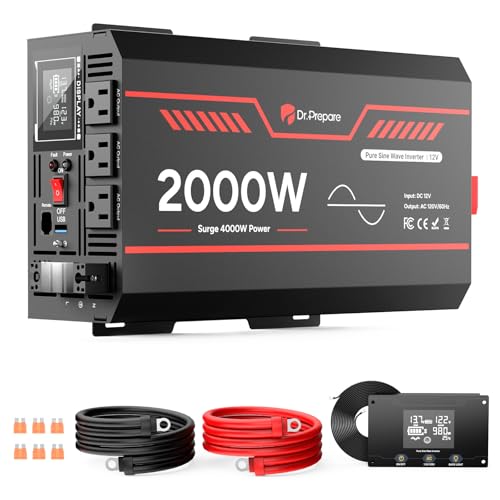
- ✓ Clean, grid-like power
- ✓ Reliable for sensitive electronics
- ✓ Built-in safety features
- ✕ Needs proper grounding
- ✕ Slightly bulky design
| Continuous Power Output | 2000W with 4000W peak |
| Input Voltage | 12V DC |
| Output Voltage | 110V/120V AC |
| Total Harmonic Distortion (THD) | 3.5% |
| Efficiency | Up to 92% |
| Protection Features | Over-voltage, under-voltage, overload, overheating, short circuit, GFCI safety |
That moment when you plug in your sensitive electronics and breathe a sigh of relief—this inverter immediately feels different from the typical modified sine wave models I’ve used before. Its pure sine wave output is noticeably cleaner, almost like plugging into a wall socket at home.
The build quality is solid, with sturdy plastic covers protecting the terminals, and the touchscreen LCD remote feels responsive and well-designed. I appreciate how quiet the dual cooling fans are, activating only when the load or temperature gets high.
It’s reassuring to see that it can deliver a true 2000W continuous power without any hiccups, even with demanding devices running simultaneously.
Using it with a 12.8V battery bank in my RV, I found the power stability impressive. No sudden shutdowns or voltage drops, thanks to the high efficiency and multiple protections—over-voltage, under-voltage, and overload safeguards are all in place.
The GFCI feature adds peace of mind, especially for outdoor and off-grid use, though proper grounding is a must.
The wired remote makes monitoring and controlling the inverter easy from anywhere in my camper, and the real-time error codes help troubleshoot quickly. The multiple AC outlets and USB port are convenient for daily use.
Overall, this inverter feels reliable, safe, and ready for serious power needs when off-grid or during emergencies.
If you want clean, stable power that can handle your sensitive gear and heavy appliances alike, this model is a strong contender. Just keep in mind it’s designed specifically for 12.8V systems, so don’t try to connect it to higher voltage batteries.
ASMONTRIC 2000W Pure Sine Wave Power Inverter, 24V to 120V

- ✓ High efficiency (>90%)
- ✓ Quiet, no humming sound
- ✓ Full protection features
- ✕ Pricey at $179.99
- ✕ Slightly heavy for portability
| Power Output | 2000W continuous, 4000W peak |
| Input Voltage | 24V DC |
| Output Voltage | 120V AC |
| Efficiency | >90% |
| Total Harmonic Distortion (THD) | <3% |
| Protections | Undervoltage, overvoltage, overload, over-temperature, short circuit, reverse connection |
Many assume that a high-quality inverter like the ASMONTRIC 2000W Pure Sine Wave model is only necessary for large power needs or off-grid setups. But from my experience, this inverter proves differently—it’s surprisingly versatile, especially when you want to keep your AC running smoothly during outages or while camping.
The moment I hooked it up, I noticed how sturdy the aluminum and plastic housing felt—built to last and handle bumps along the way. The LED display is clear and responsive, showing real-time status and protections.
I tested it with everything from laptops to small refrigerators, and the pure sine wave output really shines—no humming, just quiet operation.
The remote control is a game-changer. Sitting comfortably, I could power on or off devices without rushing to the inverter itself.
Plus, the multiple protections give peace of mind—overvoltage, overload, temperature, short circuit—all covered. It’s like having a safety net for your electronics.
Efficiency is impressive, with over 90% performance and minimal heat buildup, thanks to the smart fan. The dual AC outlets and USB port make it flexible for different gadgets, and the included cables and fuses mean you’re ready to go straight out of the box.
Overall, I found this inverter to be reliable and quiet. It handles peak loads up to 4000W during startup, so you won’t worry about powering those demanding appliances.
It’s a solid choice for anyone wanting consistent, clean power in a compact, durable package.
What Temperature is Recommended for Optimal Comfort with AC?
The recommended temperature for optimal comfort when using air conditioning varies based on personal preferences and energy efficiency.
- 78°F (25-26°C): This is often considered the ideal temperature for cooling a home during the summer months. At this setting, you can enjoy a comfortable indoor environment while also saving on energy costs, as it reduces the workload on the AC unit.
- 75°F (24°C): For those who prefer a slightly cooler atmosphere, setting the AC to 75°F can provide a refreshing feel, especially in extremely hot weather. However, this temperature may increase energy consumption compared to the recommended 78°F.
- 72°F (22°C): This temperature is more suitable for individuals who are particularly sensitive to heat or for use in specific rooms where higher comfort levels are desired, such as bedrooms. While it offers a cooler environment, it can lead to higher energy bills and increased wear on the AC system.
- Adjusting for Humidity: In addition to temperature, it’s important to consider humidity levels. High humidity can make temperatures feel warmer, so you may want to lower the temperature slightly to maintain comfort without relying solely on the AC.
- Nighttime Settings: Many people find sleeping more comfortable at lower temperatures. Setting the AC to around 70°F (21°C) during the night can enhance sleep quality, but consider using a programmable thermostat to save energy during the day.
How Can You Set Your AC for Maximum Energy Savings?
To achieve maximum energy savings with your air conditioning system, consider the following suggestions:
- Set the Thermostat to 78°F (25-26°C): This temperature is often recommended by energy experts as it strikes a balance between comfort and energy efficiency.
- Utilize Programmable Thermostats: These devices allow you to set different temperatures for different times of the day, ensuring your AC runs only when needed.
- Increase Temperature When Away: Raising the temperature by a few degrees while you’re away can significantly reduce energy consumption without sacrificing comfort when you’re home.
- Use Ceiling Fans: Running ceiling fans in conjunction with your AC can help distribute cool air more evenly, allowing you to set the thermostat a few degrees higher.
- Maintain Your AC System: Regular maintenance, including cleaning or replacing filters and checking refrigerant levels, ensures your AC runs efficiently and effectively.
Setting your thermostat to 78°F (25-26°C) helps maintain a comfortable indoor environment while minimizing energy costs. This temperature is generally accepted as a good compromise, allowing the AC unit to run efficiently without overworking.
Utilizing programmable thermostats can lead to significant energy savings since you can customize your cooling schedule. For example, you can set the temperature higher during the day when no one is home and cool it down shortly before you return.
Increasing the temperature setting while you are away can lead to substantial reductions in energy use. Even a small adjustment of a few degrees can result in noticeable savings on your electricity bill over time.
Ceiling fans can complement your air conditioning system by helping circulate the cool air. This means you may feel comfortable at a higher thermostat setting, which can further reduce the workload on your AC unit.
Regular maintenance of your air conditioning system is crucial for optimal performance and energy efficiency. Tasks such as cleaning or replacing filters, and ensuring that the system is charged with the correct amount of refrigerant, can prevent energy waste and extend the life of your AC unit.
What Health Considerations Should You Keep in Mind When Setting the AC Temperature?
When setting the AC temperature, several health considerations should be taken into account to ensure comfort and well-being.
- Humidity Levels: Maintaining the right humidity level is crucial as high humidity can lead to discomfort and promote mold growth, while low humidity can cause dry skin and respiratory issues. Ideally, indoor humidity should be kept between 30% and 50% for optimal comfort and health.
- Temperature Range: The best temperature to leave the AC on is generally between 72°F and 78°F (22°C to 26°C). This range helps to balance energy efficiency with comfort, reducing the risk of heat-related illnesses while minimizing energy costs.
- Health Conditions: Individuals with certain health conditions, such as asthma or allergies, may require specific temperature settings to prevent exacerbation of symptoms. Cooler temperatures can help reduce allergens and irritants in the air, but too cold can trigger respiratory issues.
- Age Considerations: Older adults and young children are more sensitive to temperature changes, so it’s important to maintain a comfortable environment that is not too cold or too hot. Cooler temperatures can help prevent heat-related illnesses in vulnerable populations during hot weather.
- Air Quality: Setting the AC at a moderate temperature can help improve indoor air quality by allowing the system to filter out pollutants. Additionally, running the fan regularly can circulate air and reduce the concentration of allergens and airborne pathogens.
- Sleep Quality: Sleeping in a room that is too warm or too cold can disrupt sleep patterns. The ideal sleeping temperature is typically around 65°F (18°C), which can be achieved by setting the AC to a comfortable nighttime level that promotes better rest.
What is the Ideal AC Setting When Leaving Home for an Extended Period?
Benefits of maintaining an optimal temperature setting include cost savings and improved longevity of your AC unit. Overworking your air conditioner by setting it at a lower temperature can lead to higher repair costs and a need for earlier replacement. Moreover, maintaining a higher temperature can prevent problems such as mold growth, which can occur in excessively humid environments.
Best practices for leaving your AC on when away include utilizing programmable thermostats, which allow you to automatically adjust the temperature settings based on your schedule. Smart thermostats can be controlled remotely and can adapt to changing conditions, ensuring that energy is not wasted while still protecting your home from excessive heat and humidity. Regular maintenance of your AC unit, such as changing filters and cleaning coils, can also enhance efficiency and performance.
How Do Day and Night AC Temperatures Differ, and What Should You Set?
The best temperature to leave your AC on can vary depending on the time of day, personal comfort, and energy efficiency considerations.
- Daytime Temperature: During the day, it is generally recommended to set your AC between 75°F to 78°F.
- Nighttime Temperature: At night, a cooler setting of around 70°F to 74°F is often more comfortable for sleeping.
- Energy Efficiency Considerations: Maintaining a higher daytime temperature can lead to lower energy consumption and reduced electricity bills.
- Smart Thermostat Options: Utilizing a smart thermostat can help automatically adjust temperatures based on your daily schedule for optimal comfort and efficiency.
Setting your AC to a higher temperature during the day allows for better energy conservation while still keeping the indoor environment comfortable. A range of 75°F to 78°F helps balance comfort with cooling costs.
At night, lowering the temperature to around 70°F to 74°F can improve sleep quality, as cooler temperatures are often more conducive to restful sleep. This adjustment can be made using a programmable or smart thermostat for convenience.
Considering energy efficiency, setting your AC at a higher temperature during the day not only helps reduce your carbon footprint but also contributes to significant savings on your electricity bill. This way, you can enjoy a comfortable home while being mindful of energy use.
Smart thermostats provide the advantage of adjusting temperatures based on your daily habits. They can learn your schedule and automatically modify the settings to maintain comfort while optimizing energy consumption, making them a great investment for long-term efficiency.
What Temperature Settings Do Experts Recommend for Different Scenarios?
Experts recommend various temperature settings for different scenarios to optimize comfort and energy efficiency.
- While Home: The ideal temperature to set your air conditioning when you are at home is typically between 72°F and 78°F (22°C to 26°C).
- While Away: When you leave your home for an extended period, it’s advisable to set your thermostat to around 85°F (29°C) to save energy while preventing humidity buildup.
- During Sleep: Many experts suggest setting your AC between 60°F and 67°F (15°C to 19°C) for optimal comfort while sleeping, as cooler temperatures can help improve sleep quality.
- During Peak Heat Hours: If you experience very high outdoor temperatures, setting your AC to around 78°F (26°C) during the hottest parts of the day can help maintain comfort without excessive energy use.
- Humidity Control: Maintaining a temperature of about 75°F (24°C) can be effective in managing humidity levels, as this temperature helps to keep indoor air comfortable and dry.
When you are at home, keeping the air conditioning between 72°F and 78°F allows for a balance of comfort and energy efficiency. This range accommodates most people’s comfort levels and helps prevent the AC unit from working too hard, which can lead to higher energy bills.
When away from home, setting the thermostat to around 85°F is recommended. This helps reduce energy consumption significantly while still protecting your home from excessive heat and humidity, which can damage furniture and appliances.
For sleep, a cooler environment is typically more conducive to restful sleep, hence the recommendation of 60°F to 67°F. Cooler temperatures can promote deeper sleep cycles, making it easier for you to fall asleep and stay asleep throughout the night.
During the peak heat hours, maintaining the AC at 78°F can strike a good balance between comfort and cost-efficiency. This setting allows your home to remain cool enough to be comfortable while also reducing the load on your air conditioning system during the hottest times of the day.
Humidity control is another crucial aspect of air conditioning settings, and a temperature around 75°F is effective for this purpose. This temperature helps to prevent the air from feeling sticky and uncomfortable, making the indoor environment more pleasant and healthier.
What Are Common Mistakes to Avoid When Setting Your AC Temperature?
When setting your AC temperature, there are several common mistakes to avoid to ensure comfort and energy efficiency.
- Setting the Temperature Too Low: Many people mistakenly set their AC to an excessively low temperature, thinking it will cool their space faster. This approach can lead to increased energy consumption and higher electricity bills, as the system works harder than necessary to reach an unreasonably low setting.
- Neglecting Humidity Levels: Focusing solely on temperature can lead to overlooking humidity control, which is crucial for comfort. If the AC is set too low without considering humidity, it can create an uncomfortably dry environment, potentially causing health issues and discomfort.
- Inconsistent Temperature Settings: Frequently changing the temperature setting can confuse the AC system and reduce its efficiency. It’s best to maintain a consistent temperature, typically around 75-78°F, to promote energy savings and ensure a comfortable indoor climate.
- Ignoring Programmable Thermostat Features: Many people fail to utilize programmable or smart thermostats that allow for temperature adjustments based on their schedule. By not taking advantage of these features, homeowners miss out on significant energy savings while still ensuring comfort when at home.
- Overcooling Unused Spaces: Some individuals make the mistake of cooling rooms that are not in use, wasting energy unnecessarily. It’s more efficient to close vents and adjust the temperature in areas that are not occupied, allowing the AC to focus on living spaces where it is needed most.
- Not Considering Seasonal Changes: Setting the same temperature year-round without adjusting for seasonal changes can lead to discomfort and inefficiency. It’s important to reassess and adjust the AC settings as the seasons change to maintain optimal comfort and energy use.